Our Response to the World War Against Women

This year on International Women’s Day, March 8, 2012, we find a growing World War against Women.

Some expected the next world war to be between nations, but it is clear that the current world war is by misogynists, extremists, groups, and men with a common cause: to oppress, degrade, dehumanize, and kill women. Such a coordinated attack by such an axis forces of misogyny is nothing less than a World War against Women.

In every part of the world, women are struggling for their universal human rights of dignity, equality, liberty, freedom of speech, and freedom of conscience. Women are struggling against human trafficking and slavery. Women are struggling against misogyny, violence, rape, and murder. We see women attacked by acid, women raped for seeking freedom, women sexually abused due to poverty, women raped and killed as a military tactic by sadists, women oppressed and abused, women denied education and opportunities, and women treated with disrespect and gutter language around the world – including by extremists in various areas within the United States of America.

Recognizing the World War Against Women

The World War continues on a daily basis against women. In too many parts of the world, women continue to resist those who claim they deserve death in so-called “honor killings” or by stoning. This is not merely a series of “isolated incidents” in different parts of the world, different nations, and different cultures. We must recognize this for the world war against women that it is.
— In Africa, we have seen women the target of genocide in Sudan, rape in the Congo, stonings in Somalia, religious-rationalized violence in Nigeria, and violence and oppression in many countries.
— In Egypt, even after the loss of the dictator Mubarak in Egypt, we have seen our sisters in humanity raped, beaten, attacked and denied rights.
— In Communist China and North Korea, the government forces there have long oppressed women’s rights to have children, their lives, and their freedom, with women of conscience forced to deny their faiths, and women imprisoned, beaten, and worse in concentration camps that harken to the Nazi era.
— In the Middle East, Afghanistan, and Pakistan, we have seen minority women the target of abuse, murder, rape, harassment, killings, prison, not just of those with minority religions, but also majority Muslim women targeted for oppression, beaten, and killed, simply because they ARE women.
— In Iran, we have seen women targeted by bully forces that seek to deny their freedom of speech, their right to protest against political regimes, and we have seen the sentencing of women to public stoning.
— In Israel, we see young girls and women harassed by religious extremists who seek to deny them the very right to walk in public, to deny them the right to sit where they want on the bus, and who spit on little girls.
— In the United States, we see so-called “honor killings,” and we see a culture where rape and murder – even of little girls – is too widespread and common. We see sexual harassment and abuse, efforts by extremists to seek to deny freedoms to women, and we see too many who tolerate words of hate and disrespect towards women in private and in public – with America’s so-called leaders in every corner choosing to selectively turn their head when it is not convenient. In America, the land of the free and the home of the brave, we see those who still seek to deny women Constitutional equality and we see bullies degrading women without readily felt consequences.
— These parts of the world are not the only ones with such problems; they are merely examples of the world war against women.

Our Response to a Coalition of Misogyny Against Women

The misogynists against women use different rationale for this world war. Some argue male supremacist views, some claim cultural reasons, some claim religious reasons, and some claim political reasons. But across their different rationales, their different identity groups, and their different nationalities, they have a consistency and an informal coalition – united under the disease of HATE.

Our response to this war against women must NOT be to match the violence and hate of those axis forces aligned against women. We must not offer an upraised fist, but an outstretched hand in our strength of LOVE for one another as sisters and brothers in humanity.

A response to the war against women begins with accepting RESPONSIBILITY. It requires a commitment to recognize that this is not just “someone else’s problem,” but it is our shared struggle. This war will not only attack someone else. Ultimately this global struggle will reach us personally – and it will reach our daughters, our sisters, our wives, our mothers, our friends, and our neighbors. This is no place to hide from or ignore this war against women. Unstopped, it will find its way to each of our front doors.

Our shared responsibility also must realize that we have different gifts, different skills, and different opportunities to end the war and free all of our sisters. We must take whatever personal action we can, appropriate to who we are and what we can do. Some will write. Some will petition. Some will speak. Some will march. Some will ensure existing laws are enforced. Some will create new laws. Some will simply provide comfort and courage to our sisters under attack. Whatever we can do, we must do. A war against women is a war against humanity itself, and we cannot afford to lose.

We must methods that reject hate and violence to seek change. We must demand that existing laws to protect women are enforced. Where laws don’t yet exist, we must build such new laws and new relationships to build love, dignity, respect, and equal rights for our sisters around the world.

We must convince the misogynists of this generation of the errors of their ways, and we must set an example for all of our children – boys and girls – to show them that misogynist views are consistently wrong and unacceptable – no matter who they are directed at. No exceptions.

Where misogynists are united in hate, so we must be united in love. Where they destroy, so we must build. We must build relationships based on mutual respect, dignity, and commitment to our shared universal human rights. But the burning flame of hate requires that act swiftly and with conviction. To reverse the destructive power of misogyny, for every relationship the powers of hate seek to destroy, we must build two new relationships. The relationships we build must be based on our shared universal human rights and our shared love for one another as sisters and brothers in humanity.

We Will Win Individually and Together as One Human Race

This brutal war against women is not simply a series of statistics and news stories. This is personal. The faces and the pain. The tears and the sorrow. In this world war against women, it is essential to remember in the vast statistics of global abuse that these women on the front line in the attack by misogynists are our fellow human beings. We know them. They are people we love and care about. They are family. They are neighbors. They may even be our children.

We will win this war by reaching to defend women around the world – INDIVIDUALLY one woman, one girl, at a time. We must try to change one life, then another, then another. Our efforts to support grand schemes and great ideas are meaningless – if we don’t put them in action for individuals.

But we will also win TOGETHER. While we make change one life at a time, we must not neglect the opportunity to also create new laws, change ways of thinking, and stand in solidarity together against outrageous attacks against our sisters in humanity.

Never in the history of humanity has there been a greater threat, and never in such history has there been a greater opportunity to organize, to work together, and the pool our resources to effect change.

While the misogynists have created their unwitting coalitions of hate against women around the world, we must create conscious, deliberate coalitions of love to defend women around the world. We can find solidarity, strength, shared ideas, and great courage in such coalitions. Our numbers exist, but most of us are fragmented, isolated, and frustrated. Imagine what we could do for women if we ORGANIZED. While any coalition is always difficult with diverse groups having different priorities and issues, if we can agree that we must end the war against women – end the misogyny, end the violence, end the killing, and end the hate – we will be on the right path.

Our group, Responsible for Equality And Liberty (R.E.A.L.), will be working to help build a new coalition for human rights this summer, and we will be glad to work with any other coalition that is United for Women’s Rights and Dignity.

When we see the waves of hatred against women in America and around the world, it is often daunting; we can wonder if there ever a chance to really change things. But we must never forget that such change comes one person at a time, one imagination at a time, and one commitment to human rights and dignity at a time. We will turn the tide in the war against women. We must be responsible, consistent, and courageous.

A great American president once said: “In the long history of the world, a few generations have been granted the role of defending freedom in its hour of maximum danger. I do not shrink from this responsibility. I welcome it.”

Those of us united for women’s rights and dignity will accept such responsibility.

To those who have declared war on women – know this – every day that war will be coming to an end.

Our sisters will be free.
Human Rights for Falun Gong Addressed at Human Rights Day Event

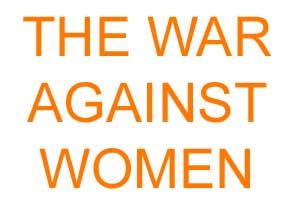
Jared Pearman, Spokesperson for the Falun Dafa Association of Washington, DC, spoke on behalf of human rights and human dignity for the Falun Gong / Falun Dafa at the 2011 Human Rights Day Event held at the National Press Conference in Washington DC. Below are his remarks.  R.E.A.L. has been reporting on Falun Gong human rights issues.

Jared Pearman, Spokesperson of Falun Dafa Association of Washington DC, oppressed in the PRC and denied their most basic human rights and dignity by those who view their practice and support for traditional Chinese values as a threat to the Chinese Communist Party (CCP) - Speaking at 2011 Human Rights Day Event

A YouTube Video is also available to provide the full video and audio of Mr. Pearman’s remarks on this issue.

=====================================

Statement by Jared Pearman, Spokesperson for the Falun Dafa Association of Washington, DC, at the National Press Club on December 8, 2011

Hello Everyone, It’s an honor to be here today to mark World Human Rights Day. I’d like to especially thank Jeffrey and everyone at Responsible for Equality And Liberty for putting today’s event together.

Some people here may be familiar with the persecution of Falun Gong in China, but perhaps for others, this is the first you’ll be hearing about this in-depth. So let me begin with a brief introduction to the issue followed by some of the key developments we’re seeing in China today.

Introduction

Falun Gong, which is often also called Falun Dafa, is a peaceful spiritual practice rooted in traditional Chinese culture. It consists of meditation, five gentle sets of exercises, and a moral philosophy centered on the values of truthfulness, compassion, and tolerance. Practitioners of Falun Gong aspire to live in accordance with these principles in their daily lives. It’s a very simple, very effective method of achieving a healthy mind, body, and spirit.

Although it is rooted in ancient Chinese spiritual tradition, Falun Gong was first taught publicly in China in 1992. It spread quickly through word-of-mouth as tens of millions of Chinese citizens took up the practice. By the mid 90’s every park in every city of China had people practicing the graceful movements of the exercises. Today, Falun Gong is practiced in over 80 countries worldwide by people of all ages and backgrounds. It is always taught free of charge by volunteers, and can be practiced individually or in groups.

Unfortunately, as Falun Gong grew in popularity throughout the 1990s, China’s communist leaders began to view the practice and its moral philosophy as ideological competition. Although Falun Gong is peaceful and possesses no political aspirations, the Communist Party of China does not tolerate large independent religious or spiritual practices. Thus, on July 20th, 1999, China’s rulers began a campaign to eradicate Falun Gong. Since then, like underground Christians and Tibetan Buddhists, millions of Falun Gong adherents have been denied the right to peacefully practice their faith.

Falun Gong in 2011

Now, let’s talk a bit about what’s happening with Falun Gong today. In the last year, Falun Gong practitioners in mainland China continued to be the targets of a severe, centrally-coordinated suppression at the hands of the Chinese Communist Party. Hundreds of thousands of practitioners are estimated to be detained extrajudicially in detention centers, labor camps, prisons, and in the network of ad hoc “transformation-through-reeducation” centers. In all these facilities, adherents of Falun Gong are subjected to varying degrees of psychological and physical torture and coercion as authorities seek to force renunciations of their beliefs. In the last several years, we’ve received verifiable reports of over one hundred deaths due to torture, and this year’s numbers sadly look to be on par with that, bringing our confirmed total to 3427. The real number could be many times higher.

The campaign against Falun Gong continues to be coordinated by what’s known as the 610 Office—an extrajudicial, Communist Party-based security agency named for the date of its creation on June 10, 1999. The 610 Office is overseen by the Central Leading Group for Dealing with Heretical Organizations, headed by Politburo member Zhou Yongkang. Corresponding local 610 Offices exist at the provincial, municipal, district, and neighborhood levels, as well as in some large workplaces and universities. Although they possess no legal authority, the 610 Office wields substantial influence in coordinating the anti-Falun Gong campaign, as well as the power to direct media entities, courts, and the state-based security forces.

In 2010, the central 610 Office ordered the launch of a three-year campaign to intensify the coercive “transformation” of Falun Gong practitioners nationwide. Transformation here refers to a process of ideological reprograming, the objective of which is to force the Falun Gong practitioner to renounce their belief in Falun Gong. If they fail to renounce their beliefs, they are sent to labor camps or sentenced in sham trials to lengthy prison terms.

In February, the Jiamusi Prison in Northeast China established a special unit to increase the transformation rate of incarcerated Falun Gong practitioners. Within two weeks of the unit’s establishment, three middle-aged, male Falun Gong practitioners were tortured to death in custody at the prison.

Although the majority of Falun Gong adherents unlawfully detained are held in reeducation-through-labor camps, in recent years a greater proportion of practitioners have been sentenced in sham trials to prisons. Most are tried under a vaguely worded provision that outlaws “using a heretical religion to undermine the implementation of the law.” Which laws are being undermined is never made clear. Moreover, as lawyers have pointed out, there are actually no laws in China that formally ban the practice of Falun Gong.

Lawyers who have sought to defend Falun Gong clients continue to face harassment by security agencies and the 610 Office. These lawyers have reported being denied access to clients, barred from entering courtrooms, or facing harassment, detention, imprisonment, and even torture for their advocacy on behalf of Falun Gong. Dozens of lawyers who have taken Falun Gong cases have been either disbarred or have been unable to renew their licenses to practice law.

Chinese authorities, under the direction of the Communist Party, have also continued to intensify the response to Falun Gong’s efforts to disseminate information to the general populace of China. This includes cracking down on underground “material sites” run by Falun Gong practitioners, which produce literature and information on the practice and its suppression. Ongoing crackdowns on black market satellite equipment, on the internet, and on shortwave radio broadcasts are also strongly linked in official literature to the anti-Falun Gong campaign.

Although the central 610 Office and Communist Party continue to pursue the eradication campaign as a national priority, grassroots opposition to the persecution has been steadily increasingly since approximately 2005, as has the efficacy of Falun Gong’s resistance to suppression. As I said, human rights lawyers continue to risk their careers and personal safety to defend Falun Gong adherents. In a series of wonderfully surprising events, thousands of ordinary Chinese citizens in multiple locales have openly petitioned for the release of imprisoned Falun Gong practitioners—something that would have been inconceivable only a few years ago. Anecdotal reports from across China speak of local 610 Officers and public security agents who have grown resentful of the central orders to crack down on Falun Gong, and who secretly protect the Falun Gong practitioners they are charged with persecuting. Similarly, many judges and prosecutors participating in anti-Falun Gong cases now do so with disdain, and sometimes openly express admiration for Falun Gong (though they still comply with 610 Office directions).

Perhaps the best evidence of the waning support for the party’s anti-Falun Gong campaign comes from official documents themselves. Publicly available documents published online in recent years describe Falun Gong’s resistance efforts as a potential existential threat to the party—a “matter of life or death.”

This erosion of grassroots support for the anti-Falun Gong campaign is significant. As with other political “douzheng” (struggle) campaigns launched by the Communist Party, the anti-Falun Gong campaign has been carried out with the support and participation of the citizenry, co-opted through propaganda. Although many citizens do continue to participate actively in the suppression, a growing proportion now refuse to be complicit. Some of these—perhaps tens of millions of people—have gone so far as to symbolically disavow their affiliations with party organizations in a movement known as Tuidang, which literally translates as “quit the part.”

Outlook

The trend lines are now clear: Falun Gong has not been crushed, and reports from China indicate that the number of practitioners is instead growing. Ordinary citizens are increasingly standing up in defense of Falun Gong and are refusing to participate in the persecution. At the same time, however, it is vitally important to make it clear that the Communist Party has not given up its campaign against the practice, and in all likelihood, it never will; to do so would be a potentially fatal admission of fallibility, one that would lay bare the truth of a campaign that has taken thousands of lives, costs billions of dollars, ruined innumerable families, and deceived a nation.

It is important to state here, that Falun Gong does not seek political power in China or elsewhere. The pursuit of worldly influence is viewed as being inconsistent with the transcendental objectives of our practice. Falun Gong has never prescribed what kind of system of governance China should adopt, nor participated in unrelated social or policy debates. Falun Gong is, and has always has been, apolitical. Our interest is purely to secure basic human rights.

Yet in the course of our efforts, we have presented an alternate vision of what China could be—an alternative way of conceptualizing Chinese national identity. Like Falun Gong itself, this vision connects with China’s moral and spiritual traditions of Confucianism, Buddhism, and Daoism, and holds that the cultivation of virtue, honesty, and humanness are the true sources of national greatness. Put simply, Falun Gong is challenging the Communist Party’s hegemony over what it means to be Chinese, and has done so in a manner that is credible, accessible, and inspiring to the Chinese people. If this vision gains momentum over the Leninist / Legalist paradigm currently in place, it is our belief that the Chinese people will enjoy greater freedoms and security, and China will become a more transparent, cooperative, and stable partner for the world.