Compassion and Nonviolence Leadership for Racial Justice

Justice begins with compassionate leadership. Compassion is more than our self-focused passion for what we want and need, but empathy, mercy, and respect for what others need. Compassion allows us to suffer together, and it is a fundamental keystone of a representative democracy and the concept of universal human rights. Compassion allows us to listen to one another, even when we are different, and feel the pain of another’s needs. Compassion respects diversity and differences among us, but it never loses sight of the fundamental bond that we share as fellow human beings.

This bond of our human brothers and sisters is essential in our causes for human rights, and our efforts to work for justice of every kind in our representative democracies.

Our fellow human beings don’t care how much you know, until they know how much you care.

If we believe in compassion as an essential element in our societal cohesion, we must recognize that we cannot only have compassion for those like us or those we like. We cannot just believe that compassion is worthy for a select few, who we believe “deserve it,” while we turn our back on the rest of our brothers and sisters in humanity. We can and we must be more compassionate human beings than that.

The long, long struggle for racial justice in America has been based on the victory of compassion over hate. It is, has been, and will be the way forward for any real social progress. Compassion and Love Wins.

This is what we must remember. We must find leaders who understand this and who are willing to defend compassion with the same vigor that challenge racial injustice.

For years, I have worked to share compassion in the struggle for racial justice and human rights in America and the world. The learning that one achieves from experience versus history books is stark. In life experience, we have moments of crystal clarity in our conscience and our mind, when we experience things that we know are wrong and must be changed.

On racial justice, my first moment of crystal clarity was in July 1966 in Virginia, while walking on the sidewalk, when I came across a public sign in front of a hotel that read “White Clientele Only.” For the first few moments, I genuinely couldn’t understand it. But as I stood there in shock, I came to realize the entrenched tenacity and determination of White Supremacy to divide and destroy the moral fabric of America.

America was once like that. And worse. In the same Virginia, and in too much of America, African-Americans were once enslaved. There has been a dark history of wrong that leaders of human rights and dignity have struggled for over 150 years to make right. It will always be a legacy of disgrace to overcome and to continue to work for change.  Let us wear this national badge of shame publicly, not with pride of what was, but in determination of how far we have come, and how committed we are to a more just future.

The path to change has been a continuing victory of compassion over hate. In the United States, that unequivocal struggle for compassion has required an organized, ideologically consistent and responsible force to struggle against hate and injustice. Our history shows that these partners in compassion for racial justice have come from every group, race, nationality, background, religion, profession, and walk of life. It has and must continue to be a national struggle for racial justice.

The growing violence in America over racial justice issues brings another moment of crystal clarity to our nation, as something unshakably wrong that must change. We cannot simply ignore it, avoid it, and wish it away. The dead bodies of our fellow Americans, of every race, are there, and their blood has been in the street.  Yet we have those praising killers and calling for more violence. We have those who seek to harden lines of hatred towards other Americans. We have those in denial of justice issues. We have those who openly praise those who would terrorize, injure, and murder the public representatives of our law enforcement. Those consumed by rage and anger no longer remember, and no longer care, that these victims are their fellow Americans and fellow human beings.

America has faced similar moments before.

In August 1964, Reverend Dr. Martin Luther King, Jr. went to the Watts neighborhood of Los Angeles after riots resulted in the death of 34 Americans and the destruction of $40 million in property damage. As Dr. King recounts, one of those supporting the riots told him “We Won!” Dr. King asked him “what do you mean, ‘we won’? Thirty-some people dead, all but two are Negroes. You’ve destroyed your own. What do you mean ‘we won’? And he said, ‘We made them pay attention to us.'”  Dr. King pointed out: “When people are voiceless, they will have temper tantrums like a little child who has not been paid attention to. And riots are massive temper tantrums from a neglected and voiceless people.”

This responsible leader of compassion did not simply ignore those who supported violent riots as a method of social change, but instead provided the leadership and guidance to promote nonviolence as a solution. As Dr. King wrote when he visited Watts, “[t]he people of Watts were hostile to nonviolence, but when we actually went to them and emphasized the dangers of hatred and violence, the same people cheered. Only minutes before the air had been thick with tension, but when they were reminded of the Rev. James Reeb and Viola Liuzzo, the martyrs of the Selma campaign, they cheered the thought that white people can and do cooperate with us in our search for jobs and dignity.” [White Americans Reverend James Reeb and Viola Liuzzo were murdered by white supremacist terrorists in March 1965, while working to assist Dr. King in Alabama on the Selma march.]

America needs such leaders of compassion and nonviolence today, in our important national issues of racial justice. Every movement needs a leader. The idea of “leaderless” movements are fine for short, brief events, but every long-term committed cause requires someone who can define an agenda, identify both problems and solutions, and guide the movement to work together responsibly for social change.

I was blessed to live through the years of seeing Dr. Martin Luther King, Jr., and then other Civil Rights leaders. I saw the level of leadership that they provided to the nation. The leadership that Dr. King provided was not just activism, but also a responsible leadership as a conscience for the nation, so that those working for Racial Justice could work together and responsibly. Such community and national commitment to nonviolent progress in racial justice has been a foundation of America’s human rights for the past 50 years.

His leadership addressed grievances and issues, but also provided an ideology of compassion and nonviolence, with an organized structure and consistent ethical commitment by his supporters.  America is a secular nation, and we achieve many areas of progress from our secular leaders, including progress in areas of morality, justice, human rights, and dignity. America’s history shows, however, that to effectively organize responsible, nonviolent demonstrations and social justice work for racial equality, we need the structure and value consistency of a faith-based organization within the leadership of such movements.

So as America continues to struggle with injustice, violence, and division, we must call upon leaders of faith-based groups in America for leadership in compassion and racial justice. We must urge faith leaders in every house of worship to share with their worshipers the message of our shared responsibility to support nonviolence and compassion for all of our fellow human beings, including those who face violence, persecution, and fear.

As Reverend Dr. Martin Luther King, Jr. stated: “In spite of the darkness of this hour, we must not despair. We must not become bitter; nor must we harbor the desire to retaliate with violence.” “Nonviolence is power, but it is the right and good use of power.” “Hate is just as injurious to the hater as it is to the hated.” “I cannot make myself believe that God wanted me to hate.” America needs such an organized commitment to compassion and nonviolence, as part of our racial justice campaigns.

Our responsible commitment to nonviolence is not in ignorance of injustice and violence, but rather it is because of our knowledge of the damage that injustice and violence creates. If we have the courage to promote nonviolence to challenge injustice, then we must also have the courage to challenge the violence against people of color, as well as the social violence of poverty, humiliation, despair, and attacks on human dignity and equality.

Dr. King wrote: “a mere condemnation of violence is empty without understanding the daily violence that our society inflicts upon many of its members. The violence of poverty and humiliation hurts as intensely as the violence of the club. This is a situation that calls for statesmanship and creative leadership.” Calls for nonviolence must not only be to dissuade those who praise, support, or act in riots and terrorism, but also to call for accountability and change by those with the authority and responsibility to provide governmental and political leadership.

Most of all, national campaigns for nonviolence and compassion in racial justice must be built on a structure and organization, which is committed to nonviolence and compassion as basic aspects of its mission.

We cannot expect such long-term, nationwide movements for racial justice, compassion, and nonviolence to be guided without the commitment of an existing structure founded on such principles.  We cannot be led to progress without responsible leadership that has an ideological basis in compassion and nonviolence.

While we all play a role, expecting just social media, protest activists, law enforcement, and the press to solve or even effectively address these issues is unrealistic. We must have reasonable expectations of those who seek to make changes in our society.  Expecting such small groups to become something they are not and judging them based on standards they cannot meet is counterproductive.

Over the past three years, the current Black Lives Matter leaders have provided a social media-based awareness campaign of injustices and racial justice issues, which need the attention of a structured group of compassion and nonviolence leaders.  The handful of activist leaders within the structure of that organization are dwarfed by the vast volume of the public that recognizes and is concerned about the need for social change; it is unreasonable to expect them to have the structure, organization, and ideological nonviolence leadership that a sustained racial justice movement requires.

Dallas Police Chief David Brown rightly points out “we’re asking cops to do too much in this country.”  Our police are there to enforce the law.  There are areas where they are continuing to look to make changes.  But they are not our national campaigners for social welfare justice, nor are they the enemies of our nation.  Like the rest of us, they are trying to do the best that they can, often under difficult circumstance, including regular threats to their lives.

Our press and media will cover events from the perspective and bias of individual reporters.   Such media are human rights campaigners, nor do they necessarily come from a position of balance and fairness.  They are there to provide news information which covers some segments of our community and national events.  They will move on, when the next story comes around.

Social actors in our communities will focus on what they know and understand.  We cannot expect those with a limited mission to do everything.

So it is with our faith-based organizations as well. Many of them too will also express that their primary mission is to organize worship services, to hold religious schooling, and to preach their religious views. However, in America, we must expect the most from such faith-based organization, especially when it comes to their vital leadership role in racial justice, using compassion and nonviolence. Our history has shown that such faith-based organizations and their value systems for compassion and nonviolence are essential to achieving social justice.

America today needs faith-based leaders with a commitment to nonviolence that can provide responsible leadership on work towards solving America’s problems, racial injustice, violence, and the need for shared respect for our shared law in a democracy.

America needs faith-based leaders with a commitment to nonviolence to show the courage to speak to all members of the community, and de-escalate the growing violence and hatred we see in our street. We need faith-based leaders as leaders of demonstrations that can show America and the world – we care about justice and violence issues, while not resorting to injustice and violence ourselves.

Dr. King stated “I cannot make myself believe that God wanted me to hate.” This is the type of leadership of compassion and nonviolence that we need today. If we want better tactics from those protesting injustice, then we need leaders who understand and are committed to nonviolence and compassion, not just for a single social justice campaign, but as an integral aspect of their identity and their mission.

We must call upon faith leaders to stand up and be counted in their community and nation at this hour of America’s need. It is not enough to expect activists, police, and others to provide the moral leadership of nonviolence and compassion in working for racial justice.

What type of religious values are we teaching to the faithful and our children if we stand by and watch while those without responsible guidance are being led to believe that violence is the answer?

Will our faith leaders be silent when those in their community are facing racial injustice and abuse?

Will they remain silent over too many instances of official abuse of authority and unnecessary deaths?

Will our faith leaders simply shake their head, as our police are now shot, attacked, and crippled?

Will they stay silent when extremists like the Nation of Islam’s Louis Farrakhan calls for violence and hate? Louis Farrakhan is telling our public: “there is no freedom without the shedding of blood,” “don’t let this White man tell you that violence is wrong,” and “God hates…I don’t why man thinks he is better than God.” Will our faith leaders just ignore such teachings, or will they offer a real alternative to our public?

Will our faith leaders remain silent as those without responsible guidance praise terrorists and vicious individuals as heroes and martyrs?

Defiance to injustice is not an invitation to violence and terrorism, nor can it be praise and support of criminal behavior. We cannot work to counter injustice by becoming and supporting violent criminals. We must do better. Our nation must do better. We need leaders who are unyielding in their commitment to compassion and nonviolence.

Our faith leaders must see that their organized leadership in compassion and nonviolence is necessary in America today. It is not enough to expect other groups to sort these issues out, without the responsible leadership, guidance, and commitment by faith-based organizations. If we seek to change the law or change aspects of our society, we must also be willing to respect the law and show consistent compassion for our society.
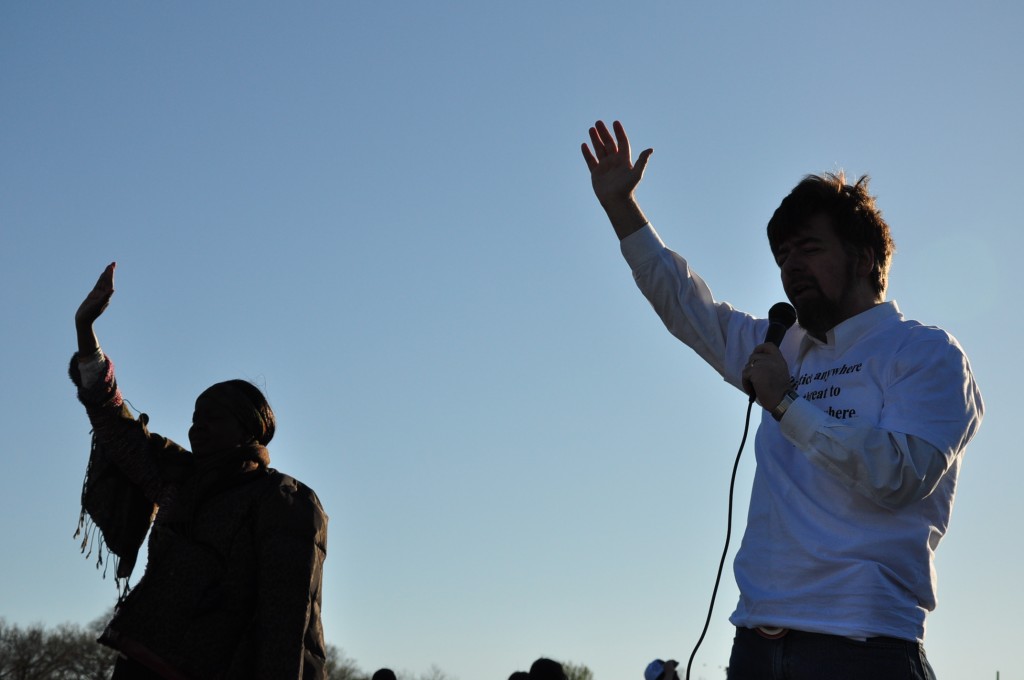
Prayer for Peace - Washington, D.C. - Lincoln Memorial
Prayer for Peace – Washington, D.C. – Lincoln Memorial

America desperately needs our faith leaders today to provide leadership in compassion and nonviolence for racial justice. America should welcome such responsible leadership from every faith.

The struggle for racial justice and peace in America is the unique responsibility of the American Christian community. Let there be no doubt to my American Christian brothers and sisters, this is first and foremost — OUR fight. The forces of racism, white supremacy, and violence have attacked our nation, and the soul of our nation since our inception. When we have sung the Battle Hymn of the Republic for our nation over the past 150 years, it is with a recognition of the unique and specific American Christian responsibility in seeking change for racial justice in America.

Over 100,000 American Christians have died for this cause. Our Christian churches were bombed by white supremacists and they murdered Christian children in houses of worship. Even as late as a year ago, we saw a wave of burning of African-American Christian churches, after the white supremacist terrorist Dylann Roof went in and murdered a Christian congregation in Charleston, South Carolina during a Bible study. The white supremacist forces of evil have even defamed the symbol of the cross in city after city across this great nation, lighting it on fire, and spreading their anti-Christian white supremacist hate. Our great Christian pastor Dr. Martin Luther King, Jr. gave his life and was killed for this cause. First and foremost, American Christians – this leadership for nonviolent compassion in working for racial justice is OUR responsibility. Of course, black lives matter, just as all lives matter in this nation. But it is not enough to know what is right – we must continue to work to build an America that is just and compassionate. The American Christian community has had, and continues to have a unique and unshakable responsibility to work to right the wrongs of a legacy of injustice in America.

Do not forget – Christian pastor Dr. King was not only concerned about the lives of those touched by such racial injustice; he was also deeply concerned about their souls. As much as Dr. King was concerned about freedom for black Americans, he was just as “concerned about our moral uprightness and the health of our souls. Therefore, I must oppose any attempt to gain our freedom by the methods of malice, hate, and violence that have characterized our oppressors. Hate is just as injurious to the hater as it is to the hated. Like an unchecked cancer, hate corrodes the personality and eats away its vital unity.” Our faith leaders cannot protect the souls of their fellow Americans, and look the other way when there are those promoting violence and hate. If such soul salvation is not seen as the mission of some our faith leaders, then truly what do they view as their role in society? This is priority number one.

There are faith leaders, including many Christians speaking out today and involved in the struggle for racial justice. But clearly, there are not often. Furthermore, there are certainly not enough leaders to provide the responsible guidance that any activist movement needs, as a guard rail, to help us from going off the road of nonviolence and compassion, into the ditch of rage and violence. There are not enough to tell activists to put down bricks, concrete, bottles, and even guns and rifles. There are not enough to tell those who praise actions of violence and even murder that the answer must be found in nonviolence and compassion towards our fellow Americans, who are brothers and sisters in humanity, no matter how much we agree or disagree with them.  We need more faith leaders to actively stand up and lead change for racial justice, nonviolence, and compassion in America today.

Some may be fearful to take an inflexible stand on compassion and nonviolence, because they may fear of being a minority among an angry crowd. The history of Dr. King in Watts may not be much comfort, because they may say, after all he was Martin Luther King, Jr. But pastor King has told us: “Take a stand for that which is right, and the world may misunderstand you, and criticize you. But you never go alone, for somewhere I read that one with God is a majority. And God has a way of transforming a minority into a majority.”

There is a majority that believes not only in racial justice, but also in the power of compassion and nonviolence. There is a majority that believes in seeking change through our democratic processes and the law. We must not fail our nation in its hour of need to reach that majority. If you find a group that rejects the values of this majority, remember that power is within YOU as a faith-based leader to change this group. As Dr. King stated, “a genuine leader is not searcher for consensus, but a molder of consensus.”

We have seen such responsible leaders of compassion and nonviolence change America again and again. Our history shows that this does make a difference.

Dr. King provided a recognizable leader, as a man not only of compassion and nonviolence, but also as a man of faith, to help bridge the gap between different Americans – both black and white. Dr. King not only stood up to racial injustice, but also he stood up and challenged those who sought violence as the answer. When Dr. King led a protest march, he made it clear to those who stood with him that, no matter what, the principles of nonviolence and compassion would be defended by those who witnessed their campaign.

Dr. King stated in Alabama: “I say to you this afternoon that I would rather die on the highways of Alabama than make a butchery of my conscience. I say to you, when we march, don’t panic and remember that we must remain true to nonviolence. I’m asking everybody in the line, if you can’t be nonviolent, don’t get in here. If you can’t accept blows without retaliating, don’t get in the line. If you can accept it out of your commitment to nonviolence, you will somehow do something for this nation that may well save it. If you can accept it, you will leave those state troopers bloodied with their own barbarities. If you can accept it, you do something to transform conditions here in Alabama.”

As he led nonviolent campaigns for compassion and justice, so our leaders today can do again today. Dr. King stated:”Let us rise up tonight with a greater readiness. Let us stand with a greater determination. And let us move on in these powerful days, these days of challenge, to make America what it ought to be. We have an opportunity to make America a better nation.”

We have gone from Slave states to Free states.
We have gone from segregation to integration.
We have gone from widespread unjust persecution of black Americans to black Americans serving in the highest courts of our land and leading in our law enforcement.
We have gone from black Americans struggling to get the vote to serving as the president of the United States.

Most of this, I have seen in my own lifetime and with my own eyes. Can we continue to make change for racial justice? There is no doubt that America can and America will. America needs the leaders of compassion and nonviolence to guide them in the difficult days of this nation.

We must continue to choose to face the future with a courageous commitment to compassion and nonviolence, because it is the right thing to do. For the future of justice in our nation, it must also continue to be the American thing to do.  That is the nation that we have always sought to be.
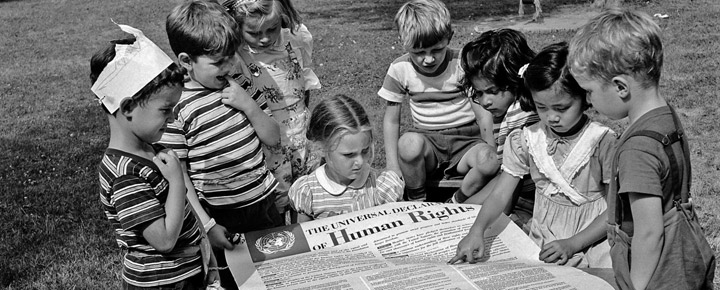
Countering Violent Extremism Begins with Commitment to Human Rights

It must not be too controversial for dialogue on extremism to take a consistent stand and commitment on our shared universal human rights, or then we have missed the primary challenge. We will not defeat extremism with political compromise, but by unyielding commitment to our shared universal human rights – for everyone, for every religion, for every identity group.

Extremist violence begins with denying the human rights, dignity, and security of others. Weakness in ignoring this reality only gives strength to those who seek power through violence, rejecting those human rights which they believe have no defenders.

When we offer a “counter extremist narrative,” we must ask, and what is that narrative based on – if not our universal human rights? What would appeal to diverse extremists of different ideologies that would be effective, if it is not grounded in our shared universal human rights? The ideas of building awareness and seeking intervention of the problem of such violence makes sense, but if such intervention is not based on our shared human right rights, we must ask “based on what?”

The economic aspect of the countering violent extremism (CVE) summit is worthy of consideration for some, but it is not going to be the answer to many, and we must keep human rights as our top priority. The fact is that people who have “something to lose” are (in general) less attracted to extremist violence. People may have extremist views in private, but when they have a family to support, a job to keep, and community responsibilities, the appeal of extremist violence is countered by the practical realities of other responsibilities in their lives. It is true that jobs and economic opportunity won’t stop people from pursuing a path to terrorism domestically or globally, but such other responsibilities will provide a distraction for some.

However, we will not convince many extremists that on solution focused on “prosperity,” “progress,” and other general terms are going to cause them to stop pursuing extremist goals and activities. We must recognize that for those with a different view on human rights, our chief objective must be a counter argument that all of our shared human rights will suffer, if we are not consistent on human rights for everyone.

When we lead with a commitment to our shared universal human rights, we don’t need explanations of “nuances” in policies to challenge violent extremist activity. There is no nuance in the call for our shared universal human rights to challenge violent extremist behavior.

The United Nations’ Universal Declaration of Human Rights (UDHR), ratified in 1958, creates a written standards of human rights for the people of the world. The UDHR was followed by an international treaty, the International Covenant on Civil and Political Rights. These standards of human rights provide the international agreements to counter violent extremist behavior from any ideology and any part of the world. Our leaders need to be governing based on these standards, which they are consciously ignoring. Those nations which have not ratified such human rights standards need to be challenged as to why they will not accept such fundamental human rights for all people.

The Hope for Our Children Around the World - A Commitment to Our Shared Universal Human Rights (Source: United Nations)

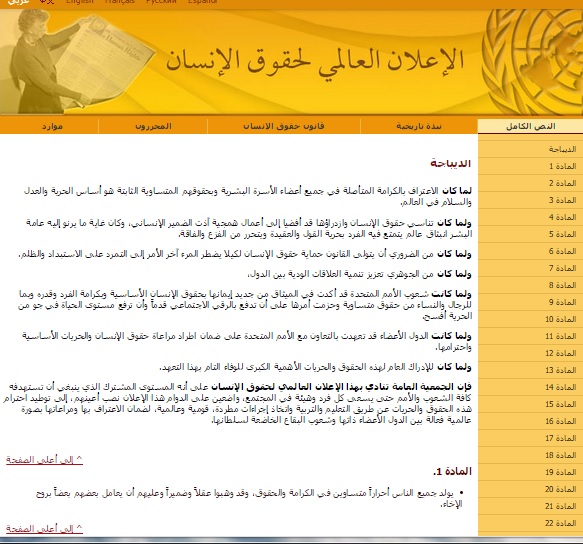
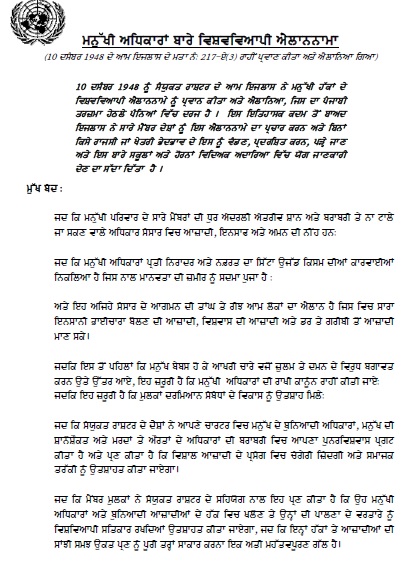
The UDHR is published in English, Arabic, PunjabCyrillic, Chinese, French, Spanish, and other languages. It must be a founding basis for discussions around the world on challenging violent extremist behavior.

While politicians typically focus on compromise, effective support of human rights requires consistency and sacrifice. Human rights campaigns are not a popularity contest, which appeals to politicians.

When we take a consistent stand on our shared universal human rights, the situation changes. We can challenge violent extremist activity by any ideology, because the activity is against our shared universal human rights. For example, from a human rights perspective, we must challenge both the terrorist activity by ISIS as well as the human rights abuses by Bashar al-Assad. Wrong is wrong, and our human rights matter in every instance.

A consistent stand is not the political one of making the “least bad choice,” but seeking support for shared human rights by all. If we really want to make change, if we really want to hear “grievances,” then this is where we start – consistency on our shared universal human rights.

It does not make sense for politicians and government leaders to extend an outstretched hand to groups known for extremist views, without urging them to support our shared universal human rights.

R.E.A.L. calls for a new summit, not of politicians, not of government leaders, but of individual leaders and identity group organizations to challenge violent extremist activity, who are willing to begin this discussion based on our shared universal human rights. R.E.A.L. calls for a summit based on support for our shared universal human rights, shared human dignity, and shared security.

We call for individuals and leaders to demand that our national leaders, our political leaders, and our representatives take a new view on challenging extremist activity, one where our share human rights is the focal point and the cornerstone, not swept aside as something we won’t talk about.

We call for national and global leaders to adopt and support the United Nations’ 1958 Universal Declaration of Human Rights (UDHR), and we call for leaders to use this as the basis to challenge and defy the ideologies of violent extremism in the United States of America and around the world.

The Universal Declaration of Human Rights is as relevant today as it was in the shadow of the atrocities by Nazi Germany, as described in its Preamble:

“Whereas recognition of the inherent dignity and of the equal and inalienable rights of all members of the human family is the foundation of freedom, justice and peace in the world,”

“Whereas disregard and contempt for human rights have resulted in barbarous acts which have outraged the conscience of mankind, and the advent of a world in which human beings shall enjoy freedom of speech and belief and freedom from fear and want has been proclaimed as the highest aspiration of the common people,”

“Whereas it is essential, if man is not to be compelled to have recourse, as a last resort, to rebellion against tyranny and oppression, that human rights should be protected by the rule of law,”

“Whereas it is essential to promote the development of friendly relations between nations,”

“Whereas the peoples of the United Nations have in the Charter reaffirmed their faith in fundamental human rights, in the dignity and worth of the human person and in the equal rights of men and women and have determined to promote social progress and better standards of life in larger freedom,”

“Whereas Member States have pledged themselves to achieve, in co-operation with the United Nations, the promotion of universal respect for and observance of human rights and fundamental freedoms,”

“Whereas a common understanding of these rights and freedoms is of the greatest importance for the full realization of this pledge,”

“Now, Therefore THE GENERAL ASSEMBLY proclaims THIS UNIVERSAL DECLARATION OF HUMAN RIGHTS as a common standard of achievement for all peoples and all nations, to the end that every individual and every organ of society, keeping this Declaration constantly in mind, shall strive by teaching and education to promote respect for these rights and freedoms and by progressive measures, national and international, to secure their universal and effective recognition and observance, both among the peoples of Member States themselves and among the peoples of territories under their jurisdiction.”

Article One of the UDHR provides the basis for challenging all violent extremist activity: “All human beings are born free and equal in dignity and rights. They are endowed with reason and conscience and should act towards one another in a spirit of brotherhood.”

We must have a summit of our fellow human beings, not based on political positioning, but based on our support of these shared universal human rights.

We urge all of our brothers and sisters in humanity to be Responsible for Equality And Liberty for all.

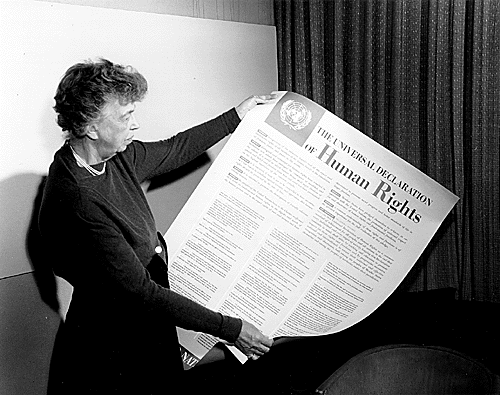
Eleanor Roosevelt Holding the Universal Declaration of Human Rights - in English (Source: United Nations)
Universal Declaration of Human Rights Preamble - in Arabic (Source: United Nations)
Universal Declaration of Human Rights Preamble - Punjab (Source: United Nations)

Pakistan: Human Rights, Religious Freedom, and Pope Francis’ Remarks

To those who have actively shared the struggle for our universal human rights within Pakistan and around the world, we have seen how those “offended” by comments regarding their religion can lead to denial of freedom, imprisonment, violence, and death, including denial of freedom of religion itself. Our universal human rights and the laws of free nations must reject any acceptance of violence as a “normal” response against those who feel their religious views are offended.

On January 16, 2015, in response to a question on the recent terror attacks in Paris, CBS News and other media have reported that Roman Catholic Pope Francis made remarks that “One cannot provoke, one cannot insult other people’s faith, one cannot make fun of faith.” Pope Francis continued, “If Dr. Gasbarri, a great friend, says a swear word against my mother, he’s going to get a punch in the nose. That’s normal, it’s normal. One cannot provoke, one cannot insult other people’s faith, one cannot make fun of faith.” Pope Francis concluded that: “There are so many people who speak badly about religions, who make fun of them… they are provocateurs. And what happens to them is what would happen to (my dear friend) if he says a word against my mother.”

Many would like to dismiss Pope Francis’ comments as unimportant, given the Pope’s condemnation later that “one cannot make war (or) kill in the name of one’s own religion.”

Responsible for Equality And Liberty (R.E.A.L.) respectfully disagrees with Pope France that insults to other people’s faith could “normally” expect a “punch in the nose.” With all due respect to Pope Francis and his 1.2 billion Roman Catholic worshipers, R.E.A.L. disagrees, based on our universal human rights, and based on the laws in free nations. Moreover. we have seen what happen in nations which abandon such universal human rights and who reject such freedoms, such as Pakistan.

The reality is, certainly in Pakistan, that those “offended” by debate over religious views have led to rules of blasphemy to control public discourse. These rules of blasphemy have been used to conduct a war on other faiths, and have allowed “killing in the name of one’s religion.” Yet it started with the simple view that such violence against “provocateurs” who offended your religious views was “normal” and somehow acceptable.

Pope Francis’ statement that such violence is a “normal” response to those who “insult other people’s faith” is a serious challenge – especially for Pakistan Christians and other religious minorities struggling for freedom and survival in Pakistan. In Pakistan, we have seen the human rights and religious freedom challenges that result from the type of thinking Pope Francis suggests, and how it has migrated into an oppressive blasphemy law and religious oppression and violence. This has included oppression and violence against Roman Catholics, among other people of faith.

In the nation of Pakistan, those who “insult” the Islamic faith (as defined by the government) are subject to criminal prosecution of “blasphemy,” under the oppressive Pakistan penal code Section 295-C. There is no real definition for what such “blasphemy” is; this allows it to become the opinion of whoever chooses to use this law to oppress others’ human rights. This “blasphemy” law and the social environment it promotes has been used to oppress, harass, and kill people of various religions, all “in the name of one’s own religion.”

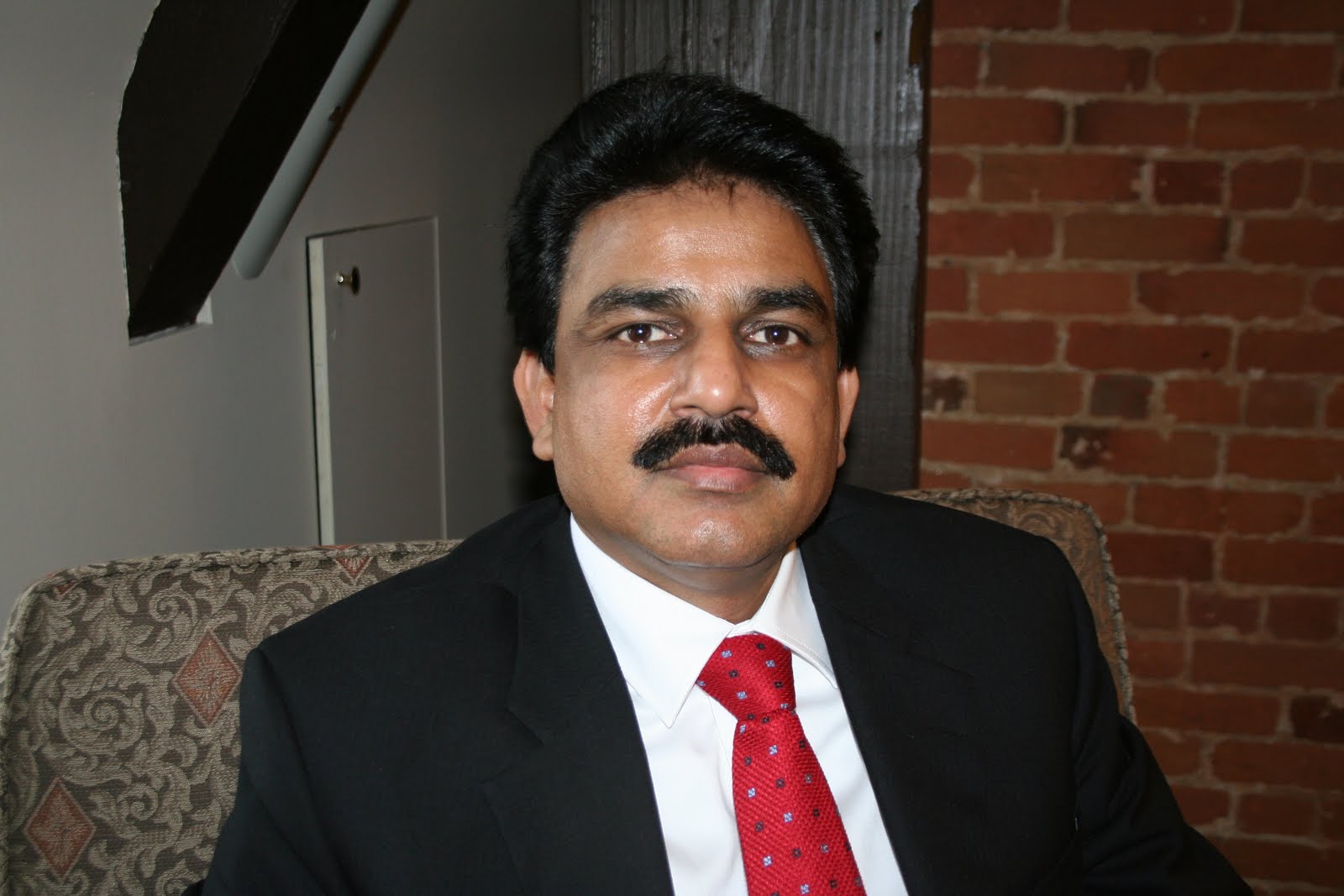
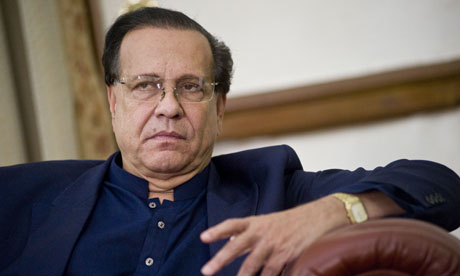
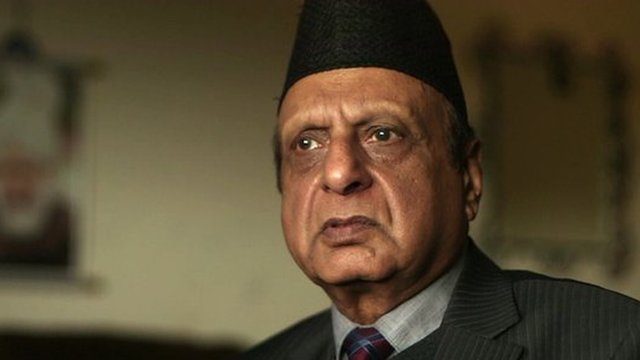
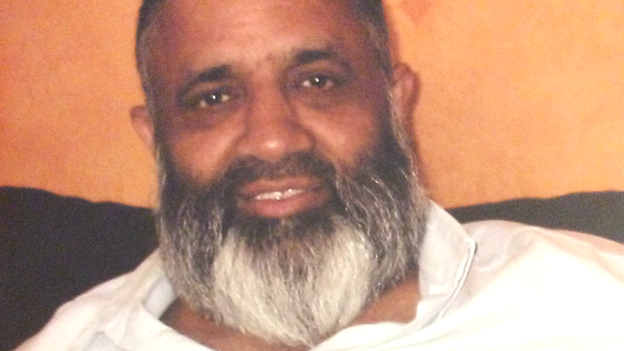
Pakistan government minister Shahbaz Bhatti opposed this Pakistan law within the government. He was the only Christian member of the Cabinet in Pakistan. For his stand, Shahbaz Bhatti was shot to death in March 2011. In January 2011, the governor of Punjab province, Salman Taseer (a Muslim), was also murdered for speaking out and challenging the Pakistan blasphemy law. Salman Taseer was shot 27 times by his own security guard, and 500 Pakistan clerics sought to ban public attendance at his funeral.

Pakistan Government Minister Shahbaz Bhatti - Christian Killed for Opposing Blasphemy Law

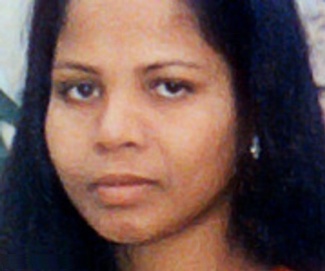
Pakistan Christian woman Asia Bibi (Aasiya Noreen) was convicted of “blasphemy” by a Pakistan court and has been on death row for over four years, despite the efforts of decent and courageous individuals struggling for her freedom. She was imprisoned because of an argument with some other women who were offended that such an “unclean” minority Christian would be drinking the same water as the Muslim women. When her religion was offended, she argued with them, and she was threatened with being charged with blasphemy if she did not convert to Islam. She refused this threat, and refused to renounce her religion. She was then charged with blasphemy. Since as a non-Muslim, her testimony was not as valuable as a Muslim’s testimony, she was convicted, and given the death penalty.

Aasia Bibi, Pakistan Christian Woman Sentenced to Death for "Blasphemy"

People around the world continue to struggle for her Asia Bibi’s freedom, and the former Pope Benedict spoke out for her. In respecting her oppression for religious freedom and her personal struggle for survival, surely her fellow Christians and Christian leaders can stand firm in rejecting the idea that it is never “normal” for violence and oppression against those who “offend” someone’s religious views.

Governor Salman Taseer spoke out in support of calling for her freedom, which cost him his life. This is what happens when it becomes “normal” in a society to allow violence to those who offend one’s religion, Pope Francis. This is the cost.

Pakistan Governor Salman Taseer - a Muslim Murdered for Rejecting Blasphemy Law

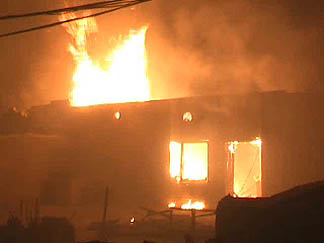
The blasphemy law took part in what many human rights activists have called the “Black Day” in Pakistan, when a false blasphemy charge was issued against two teenage brothers in the Punjabi city of Gojra. But the charges never made it to court. A mob of 20,000 “religiously offended” individuals marched to Gojra, Faisalabad and in the nearby village of Korian, known as “the Christian Colony” in 2009 and burned it to the ground, burning churches, homes, and killing the elderly, women, and children, most burned to death. More than 60 homes were destroyed, and 8 Christians murdered, with many more injured.

UCAN reports on Pakistan mob attack: "A Christian house set ablaze by Muslims"
"Black Day to Freedom" - Recognizing the Oppression of Pakistani Christians

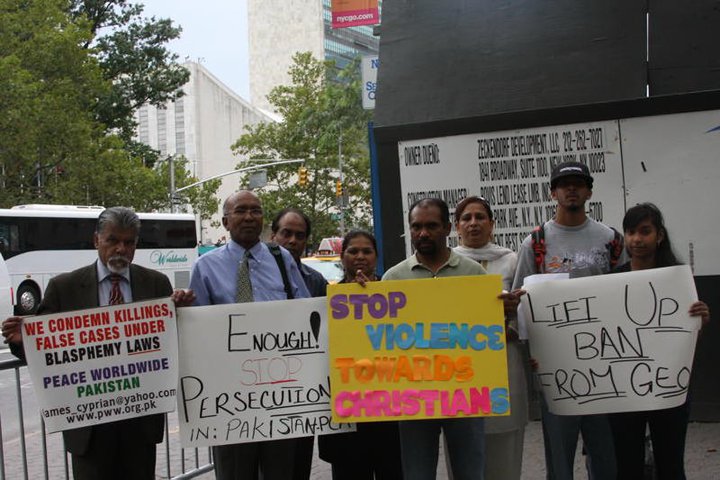
In response, human rights activists and Christians protested at the United Nations headquarters in New York City, and a year later an interfaith group held a remembrance to reject the blasphemy law in Washington DC. But over four years later, the lessons of Gojra have still not be learned. As of 2013, the Pakistan Christian Post reported that the murders who were “religiously offended” and who murdered Gojra Christians continued to remain free.

August 12, 2010 - United Nations - NYC - Pakistan Christians Protesting Oppression (Photo: Dr. Nazir Bhatti)

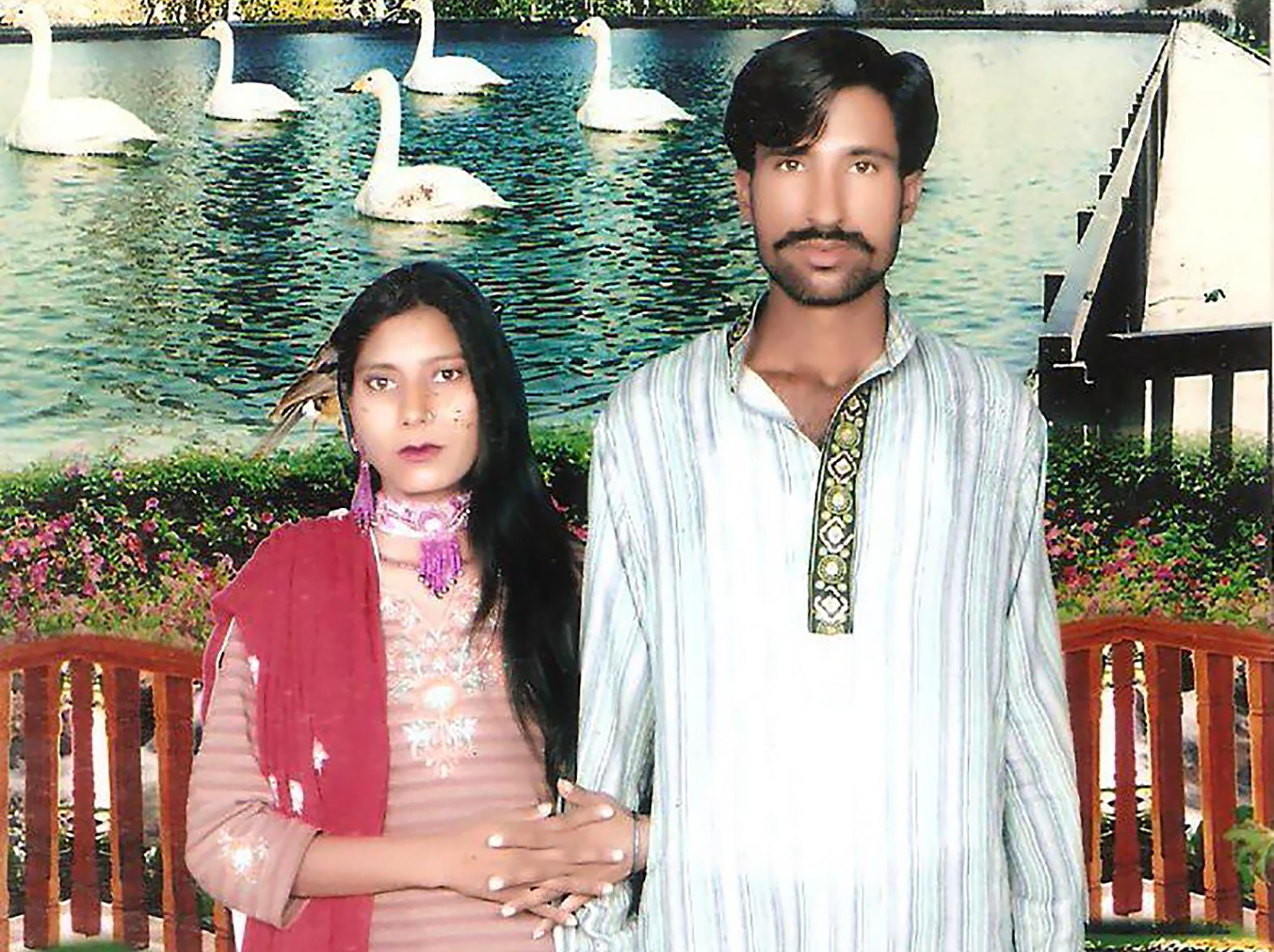
In November 2014, another Pakistan mob of 1,200 people claimed “blasphemy” that they were “religiously offended” as a justification to publicly torture and murder a Christian couple, Sajjad Maseeh and Shama Bibi, in front of their young children. They tortured the couple, broke their legs, and burned them alive, while the murderous mob chanted religious slogans from the Qur’an. The armed police stood by and did nothing to the unarmed crowd, and the remainder of the “police response” came after the couple was dead.

Shama Bibi and Sajjad Maseeh were killed by a mob in Kot Radha Kishan, Pakistan.

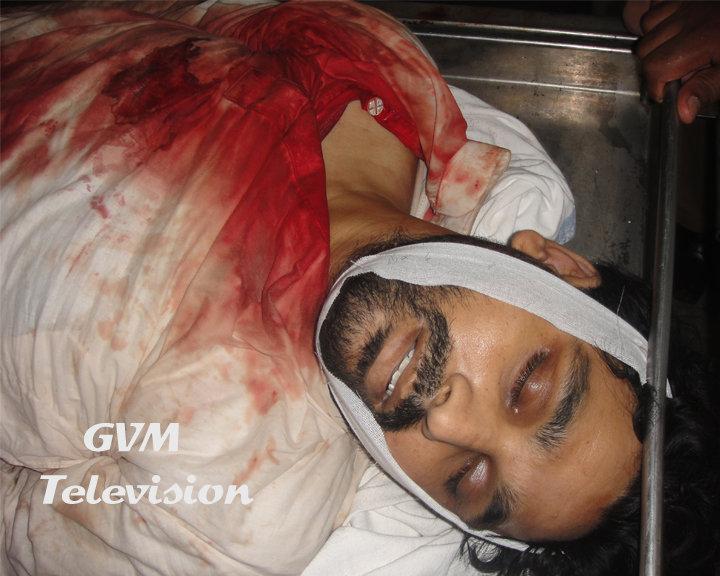
Christian brothers Pastor Rashid Emmanuel and his brother Sajid were arrested for blasphemy because a pamphlet had their name on it, and was allegedly disrespectful. They never made it to court. They were shot down in broad daylight while on the court steps. Those Christians who protested their murder were tear-gassed to silence them.

Pakisan: Christian Pastor Rashid Emmanuel Gunned Down in Faisalabad Court in Broad Daylight on July 19, 2010. (Photo by Jabran Inayat and GVM Television)

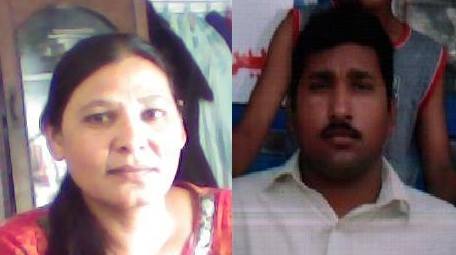
Pakistan Christians Shagufta Kausar and her disabled husband Shafqat Emmanuel were given a death sentence on blasphemy based on claims that blasphemous text messages were issued on a mobile phone that she had lost. The Pakistan Christian Post reports that during court hearings it was learned that the couple are “not educated and unable to send text messages in English and police failed to produce any forensic evidence of cell phone record and police tortured to get guilty plea from their clients.”

Pakistan Christians Shagufta Kausar and her disabled husband Shafqat Emmanuel were given a death sentence on blasphemy

The Pakistan’s blasphemy law is also used to oppress other Muslims and people of other faiths.

British Ahmadiyya Muslim man, Masud Ahmad, was targeted for blasphemy as a member of a minority Muslim faith, and his “crime” was being tricked into reading the Qur’an in a public space. Thankfully, he was freed in April 2014, but he has a first hand memory of the ordeal of what religious intolerance will do to people.

Pakistan: Ahmadiyya Muslim man, Masud Ahmad, was falsely arrested and imprisoned for blasphemy

Muslim Muhammad Asghar was also arrested and faced death penalty for letters he had which were viewed as “blasphemous,” and he was shot in jail by a police officer.

Pakistan: Muslim Muhammad Asghar arrested for blasphemy, shot in jail by police officer (Source: BBC)

After being released from “blasphemy” charges, another Muslim, Abid Mehmood, was shot to death 25 miles from Pakistan’s capital.

Nor does this blasphemy” oppression only extend to the average person, Pakistan’s Ambassador to U.S. Sherry Rehman was accused of “blasphemy” in 2013.

Pakistan courts are also calling for the arrest of individuals living in foreign countries for “blasphemy” such as actress Veena Malik, who is living in the United Arab Emirates.

In recent years, there have been many others oppressed by Pakistan’s blasphemy law, including
— Hector Aleem a Christian human rights activist in Pakistan
— Raja Fiaz, Muhammad Bilal, Nazar Zakir Hussain, Qazi Farooq, Muhammad Rafique, Muhammad Saddique and Ghulam Hussain – who were imprisoned for blasphemy and “forced to parade naked, and were suspended from the ceiling and beaten.”
— Shahid Nadeem in the missionary school of Faisalabad
— Ayub Masih, Pakistan Christian
— Dr. M. Younus Shaikh M.D.
— Mohammad Younus Shaikh of Kharadar, Pakistan.

At the moment you read this, there are people hiding, running for their lives, and living in daily oppression because of wild accusations of “blasphemy” made against them by someone with a grudge or someone who rejected them because they had a different religious faith. Many are Christians or other religious minorities living in oppression, in fear, and perhaps fleeing for their lives. Responsible for Equality And Liberty (R.E.A.L.) has been contacted directly about such Pakistan individuals in hiding due to their fear of blasphemy charges. I would urge Pope Francis to hear their cries, and consider the oppression that such a view that violence is “normal” for those whose religious views are offended.

In this context, how does the argument by Pope Francis sound that it is “normal” to seek to respond with violence to those who “offend” your religious views? It is not a “theoretical” issue to our brothers and sisters suffering in Pakistan today. It is the painful reality for Christians, Hindus, minority Muslims, Sikhs, and all other people oppressed in Pakistan.

But the oppression of religious minorities and others by those whose religious views are “offended” does not end with only blasphemy charges and mob violence.

“Provocations” by words and pictures are not the only source of “offense” to some who view their religion is “offended.” In fact, we know that there are those who claim they are “offended” and “provoked” simply by the practice of another religion in their city, their state, their nation. Acts of worship by people of other religions are viewed by some as a “provocation,” “insult,” and “offense” to some. As I have described in other articles, the view by some extremists is that the very act of worship by another, different religious faith is an “offense” and “provocation” to the extremist religious groups and individuals.

Throughout Pakistan, we have seen minority religious groups’ houses of worship attacked, burned, and bombed by those “offended” by the act of worship by others – by a wide range of groups rationalizing sectarian violence based on “offense” to their religion, Christians, Ahmadis, Shiites, Hindus, and other faiths.

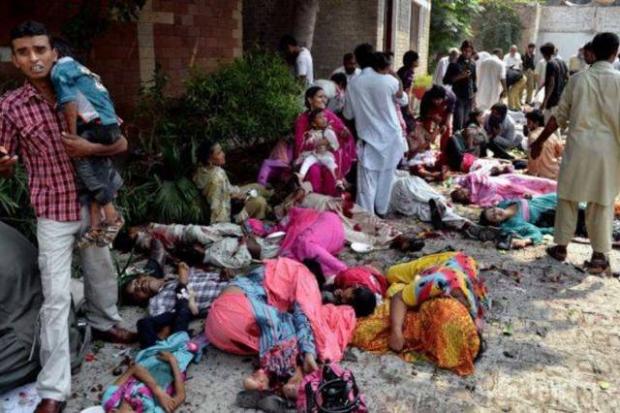
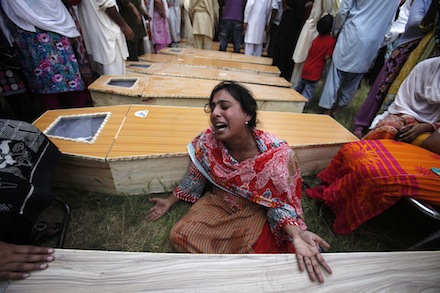
In Peshawar, the All Saints’ Church was attacked during a Sunday Christian worship service, by two suicide bombers, who murderous attack resulted in 80 dead and 150 injured.

Pakistan: Attack on All Saints’ Church in Peshawar (Source: AnglicanLink)
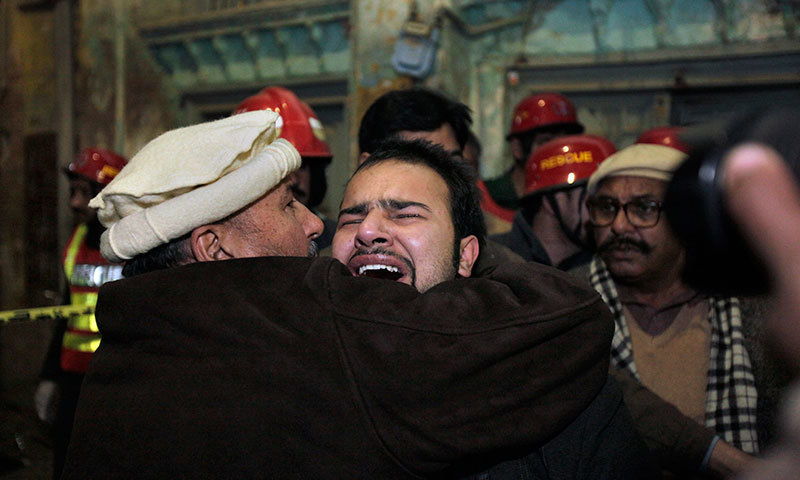
Pakistan: Woman Mourn Death of Her Brother after "Offended" Extremist Suicide Bombing of All Saints Church in Peshawar, Killing 81 Christians (Source: CNSNews, Fayaz Aziz)

In Gojra, the “Black Day to Freedom” attacks included burning of a Christian church as part of the mob of 20,000 attacking that Christian area.

Pakistan: Remnants of Gojra Church Burned in Attack (Source Acts 29 Network)

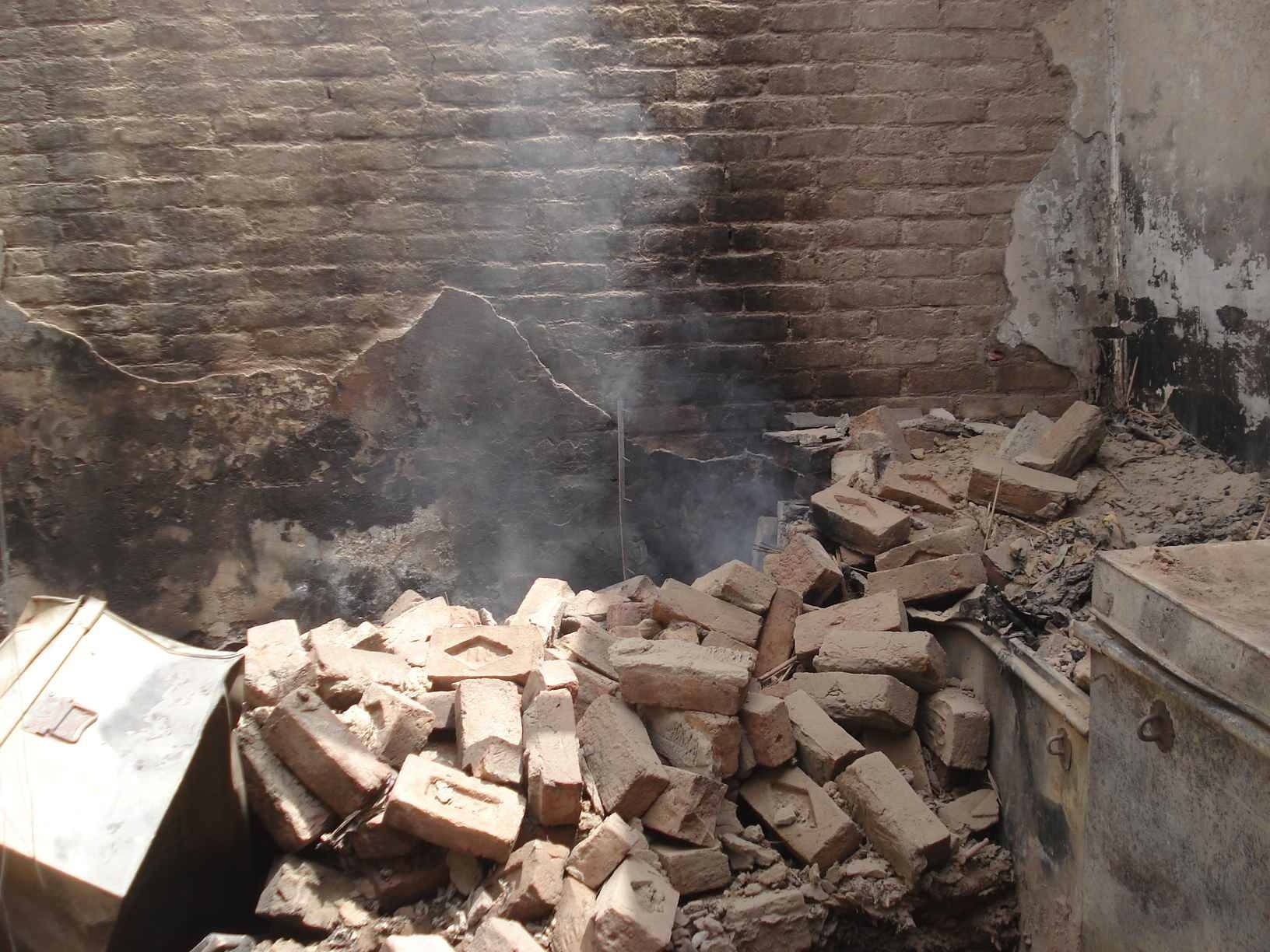
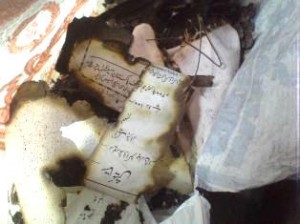
In Karachi, the Nasri Pentecostal Church in Shah Latif Town was attacked, vandalized, with Bibles burned, with another church bombed in Cantonment Area of Mardan City.

Pakistan: Attack on Nasri Pentacostal Church - Burned Remnants

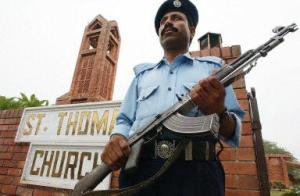
In Wah Cantt, the St. Thomas Roman Catholic parish was attacked, and attempts were made to burn it down.

Pakistan: St. Thomas Church protected after attempts to burn it down

There are so many more attacks on Christian houses of worship in Pakistan – attacks on the St. Dominic Church Bahawalpur, Islamabad Protestant Church, Chianwali-Daska Sialkot Church, Sangla Hill Church, churches attacked in Karachi and Sukkur, St. George Grecian Church. The grim list of terrorist intolerance by those who are “offended” goes on and on. This is not an encyclopedic study, nor is it intended to be. But the point is that human rights and security problems in a nation which legalizes “blasphemy” become nearly endless.
For the sake of my Catholic Christian friends, I first pointed out how this perspective on “religious offense” is a life and death struggle for their fellow Christians. But such oppression certainly does not end only with Pakistan Christians, and it continues to other religious minorities and people in Pakistan.

The attacks on houses of worship of religious minorities extends to Ahmadiyya, Shia, Hindu, Sufi, and other houses of worship. In addition to this violence, the sectarian violence throughout Pakistan extends to every part of the state: targeted killings, violence in markets, processions, other public areas, as well as kidnappings, and forced religious conversions.

This has included:

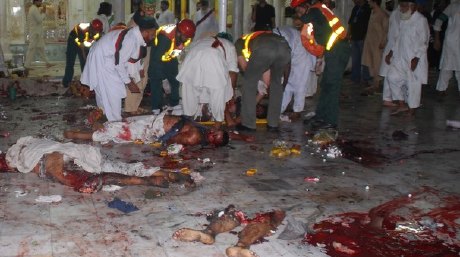
— In Lahore, terrorist attacks on two Ahmadiyya Muslim mosques, with grim and horrific casualties during Friday prayers by two suicide bombers, killing nearly 100 worshipers

Lahore: Twin Attacks on Ahmaddiya Mosques - Three Suicide Bombers hit ata Ganj Baksh shrine (Source: Nadeem Ejaz/Getty Images)

— In Parachina, near a Shi’ite mosque, suicide bombers killed 8 and wounded 7

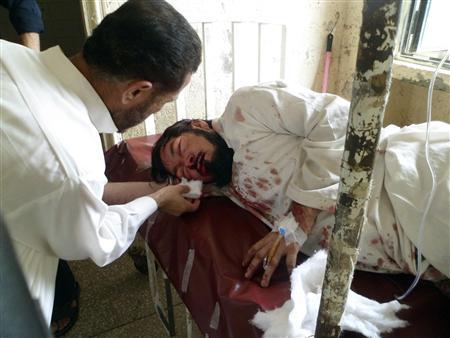
Pakistan: A Shia Muslim mourns over the death of his family member at the site of a blast in Rawalpindi on January 9, 2015 (Source: AP)

— In Rawalpindi, terrorist attack during worship in the Chitian Hatian area at a Shia Imambargah mosque and worship hall.

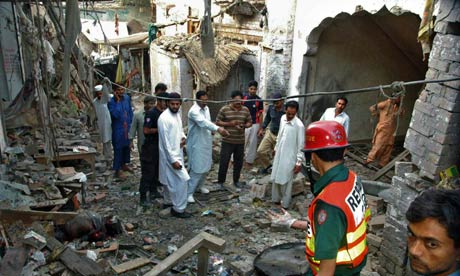
Pakistan: Attack Outside Shiite Mosque in Parachinar (Source: Reuters)

— In 2010 and 2011, 128 people were killed and 443 were injured in 22 attacks on Sufi shrines and tombs of saints and religious people in Pakistan, most of them Sufi in orientation

Pakistan: Bombing at Sufi Baba Farid shrine in Punjab during morning prayers (Source: AFP/Getty)

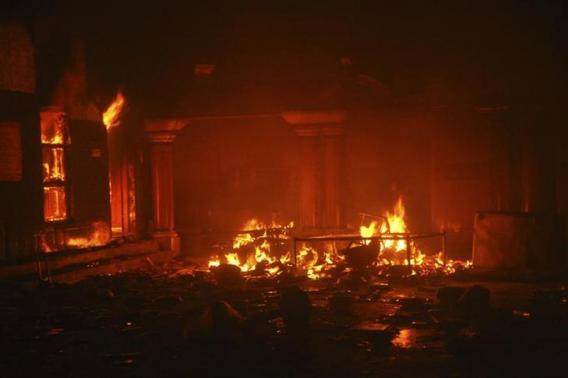
— In Sindh, the burning of a Hindu temple in the Tando Mohammad Khan area

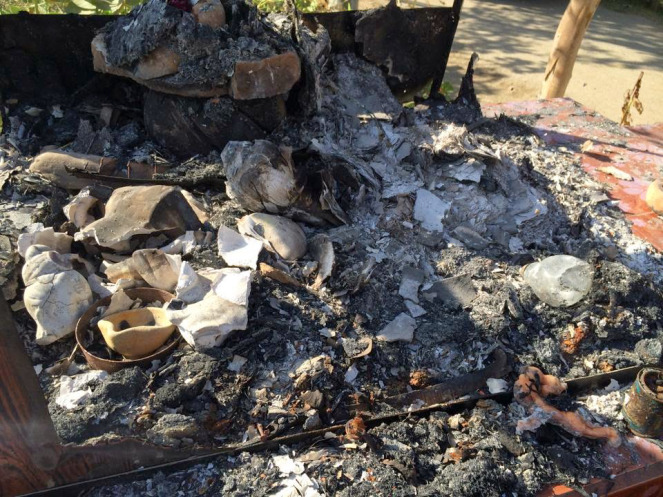
Pakistan's Sindh: Remnants of Hindu Shrine Burned Down in Tando Mohammad Khan area

— In Larkana, the burning of a Hindu temple and a dharmashala in Jinnah Bagh Chowk area

Pakistan: Hindu temple burned in Larkana, Sindh (Source: Reuters/Faheem)

— In Hyderabad, the burning of a Hindu temple near Fateh Chowk in Hyderabad, Sindh

It is notable, that when those “offended” by the religious practices of others burn and bomb the houses of worship of other faiths, the burned out remains look very much alike.
Such bombings and burning of diverse house of worship are all “terrorist” violence, which all sane people reject. This includes, of course, Pope Francis and all rational leaders who reject offensive comments to our religions also condemn. Pope Francis has specifically spoken against such terrorist violence and condemned this.
Pope Francis’ comments only indicated that someone who was provoked by those offending their religion, could reasonably expect a “punch in the nose,” for their offense, and that this was “normal.” Such comments may seem “harmless” to some.

But the pathway from the religiously pious offended giving a “punch in the nose” and the silencing of remarks considering offensive to religious leaders is a very short path to legalized and social “blasphemy” oppression. That is what has become “normal” in Pakistan.

When this becomes “normal” in a society, the next steps to routine terrorist violence against those whose other religious practice “offends” others becomes yet a new and more destructive “normal,” as we have sadly seen in Pakistan and other parts of the world. Then, burning a Christian church and blowing up a minority Muslim faith’s mosque becomes “normal” in such oppressive societies which lack the universal human rights which all human beings must have, including freedom of speech, freedom of religion, and the human rights of security and dignity.

We must learn the lesson of the mistakes in Pakistan of how wrong this path is for our shared human rights, human dignity, and security.

There has been blood literally running in the streets in Pakistan and in nations around world – all based on the view – that if someone offends your religious beliefs, there is a right to deny their human rights, there is a right to commit violence against them, there is a right to kill such individuals.

The nations of the world, the religious leaders of the world, and the government leaders of the world must reject such views without question and without qualification.

We don’t have to “imagine” what a world would look like where it is considered “normal” to use violence in response to an offense against your religious views. We already know what that world looks like today. We see it Pakistan, we see it in Saudi Arabia, and we see it in far too many other nations. But with Pakistan, the “blasphemy” law makes it very clear what will happen when we choose to silence anyone who “offends” your religious views.

Certainly, we need to continue to press for change and reform in Pakistan and around the world to promote religious and social liberty, freedom of speech, freedom of worship, and yes, even the freedom to offend and be offended. When the “normal” answer to every offense is violence, then violence will destroy every freedom we have.

We must urge our brothers and sisters in Pakistan to rise above the oppression that they have imposed upon themselves and others, and accept that our religious faiths all have the strength and resilience to accept criticism, diversity, and even offense. Our faiths and their pious believers can be stronger, wiser, and patient enough to let their actions of peace and dignity speak for themselves.

We must have change in Pakistan to release its people from the prison that intolerance has created. The rejection of our shared freedoms and the intolerance in Pakistan have turned the nation into a giant prison. Imagine a prison without walls. A prison where religious extremist laws and extremist social peer pressures can be used to oppress and harass people of any religious minority. A prison where people may have the illusion of freedom, but where mobs are allowed to burn down their homes, cities, and even kill them in the streets without fear of the authorities. A prison where the barbed wire, cell bars, and concrete walls are made up of religious extremist blasphemy laws intended to oppress any individual in the name of a religion.

This is where Pope Francis’ comments lead us – starting with the idea that it is “normal” to seek violence against those who insult one’s religion. It is easy to laugh off the “punch in the nose” comment, until you see where this thinking leads. This approach leads to the people in jail, the people shot in the street, the people burned alive, the churches and mosques burned and bombed, the neighborhoods attack and burned. That is why it is so important to challenge these views.

As a Christian myself, Christians must reject Pope Francis’ comments based on the Christian Bible teachings in Romans 12:17-21. Since I am a Christian, and I have the struggled for an end to the suffering of my brothers and sisters in Christianity and other religions, I am profoundly troubled by the pontiff’s remarks. I do not presume to represent myself as anything other than the meekest and poor excuse for a Christian that I know. But I do know the words of the Bible, and the direction of Jesus Christ on such matters. I know Pope Francis does as well. They do not support his position on this topic. We all make mistakes and say things that we regret. With all respect for his religious learning and wisdom, I will pray for Pope Francis to see that his remarks were not correct and not in keeping with his own faith, and that he will publicly retract such remarks.

To my Roman Catholic friends, I apologize if my comments have insulted your religious leader Pope Francis. I am a long time defender of the Roman Catholic Church’s religious freedom both publicly and privately. So I am uncomfortable with disagreeing with Pope Francis, and giving the inaccurate impression that I don’t stand with my brothers and sisters in humanity within the Catholic Church. Nothing could be further from the truth.

But I don’t know how one could know about all the oppressed people imprisoned or running for their lives, all the destroyed and burned down houses of worship, and all the caskets of the innocents, who have suffered because of such views on “blasphemy” and “religious offense,” and remain silent. I don’t how I could have prayed with my Christian, Muslim, Hindu, and other religious friends for an end to such violence and for those suffering and killed as a result of such views on “blasphemy” and remain silent when such world religious leader states that it is “normal” for violence as a result of an insult against one’s religion.

Based on my interfaith discussions with many people of different religions, I really don’t see how God, how our religious leaders and symbols, would be so insecure that they need us to “punch” for them due to some offensive remark, some cartoon, or someone else’s worship. I don’t see how people of faith can honor their holiness by unholy acts of hatred, strife, and violence.

Pope Francis, as a Christian myself, I know that Jesus Christ does NOT need me to “punch someone in the nose” for him. I would ask my Catholic friends and all of our religious brothers and sisters of any faith to make a similar statement on Twitter at #Religion4Peace.

The people we pray to do not need our upraised fists; they need us to set an example by our outstretched hands. That is the real courage they seek from us to demonstrate in this world.

Responsible for Equality And Liberty (R.E.A.L.) calls for the promotion of our shared universal human rights in every part of the world, we support our religious freedoms, and call for our social tolerance and respect for one another as part of these universal human rights, as defined by the nations of the world.

To our brothers and sisters in humanity in Pakistan and around the world, we offer our outstretched hands, not an upraised fist – responsible for equality and liberty.

Pakistan: Sindh Human Rights Officer Reports on Peace Marches

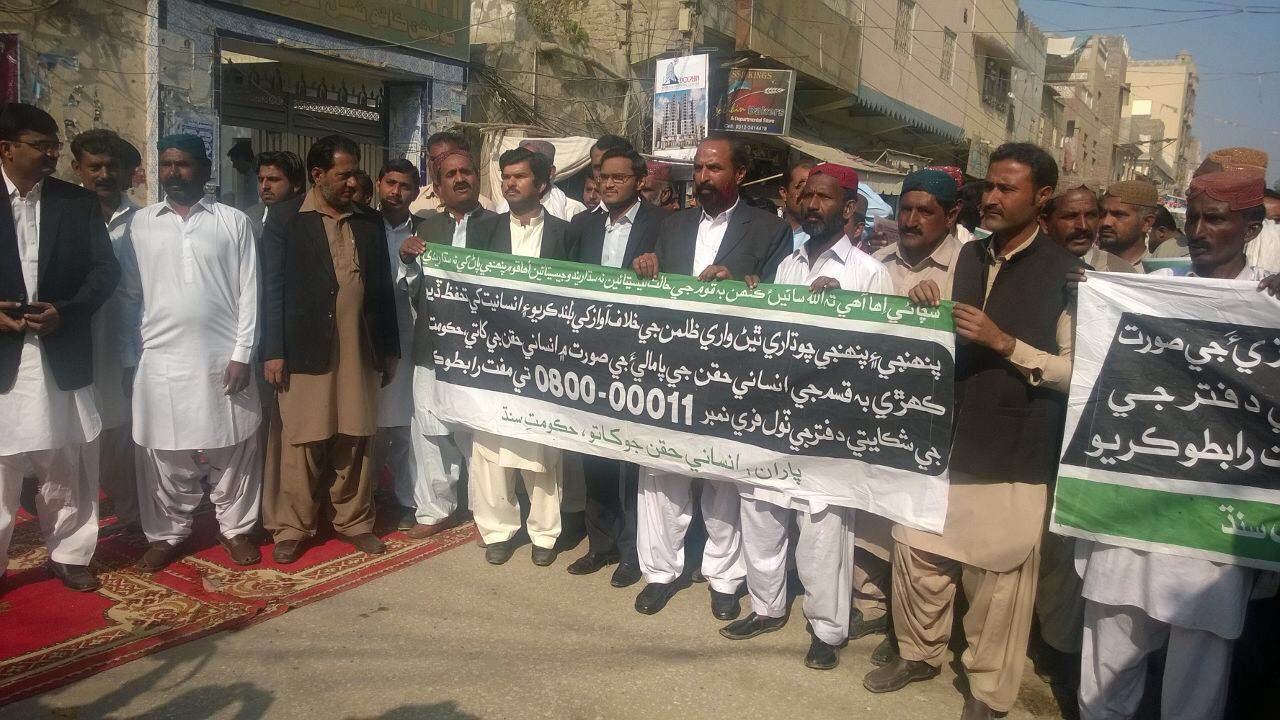
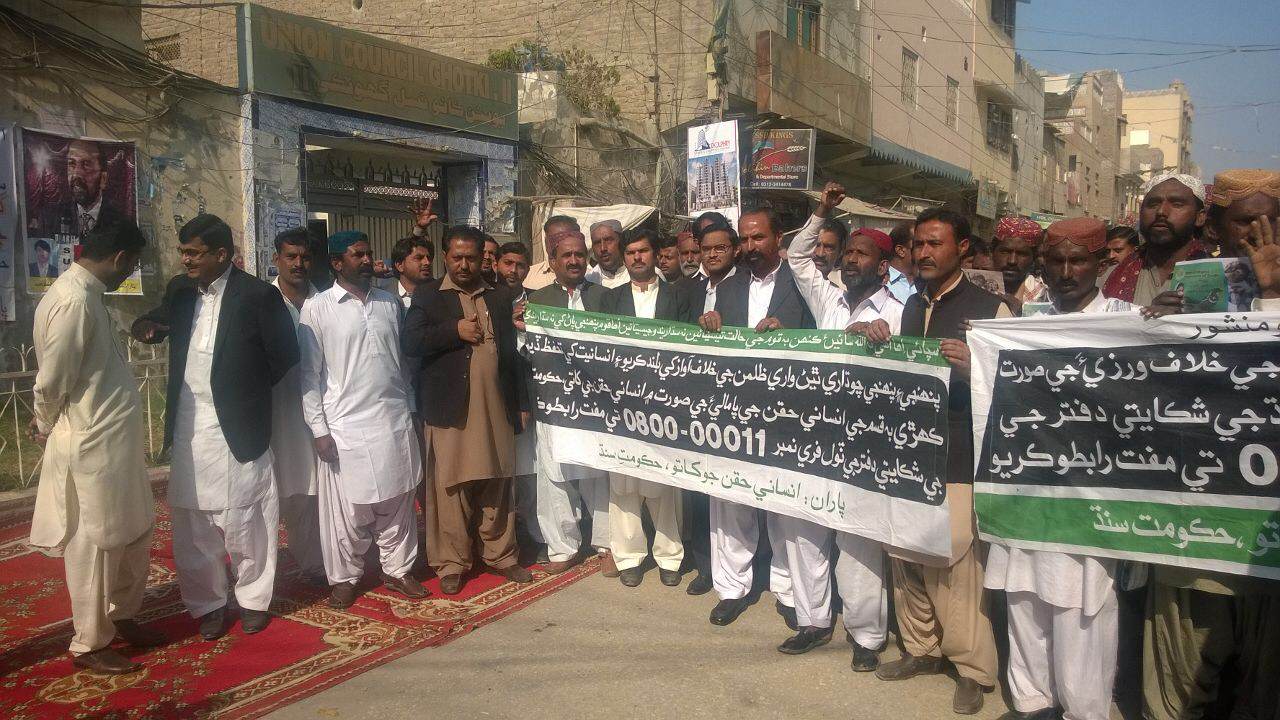
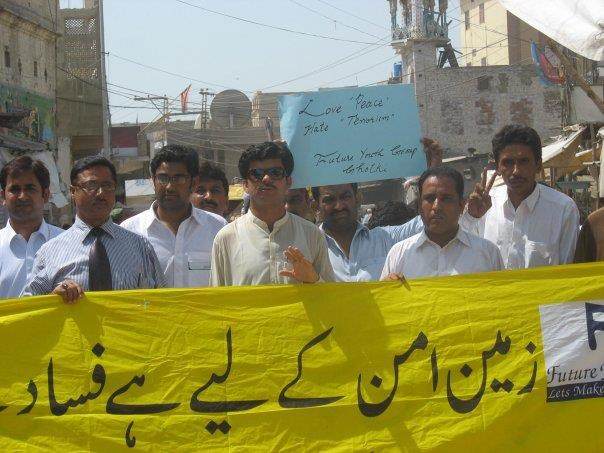
Responsible for Equality And Liberty (R.E.A.L.) has been informed by the Human Rights Officer with Government of Sindh, Pakistan, Riaz Bhutto, of recent marches in support of peace and in solidarity with minority Christians.

Riaz Bhutto has provided the following photographs of: ” ‘Walk for Peace’ on the occasion of International Day for Human Rights on 10 December 2014, and other one picture of Solidarity with Christian at Ghotki, Sindh Pakistan.

Human Rights Department Ghotki organized rally at the Eve of International Day for Human Rights on 10 Dec, to be celebrate"Walk for Human Rights" from AC/SDM office Ghotki to Press Club (Source: Riaz Bhutto)
Human Rights Department Ghotki organized rally at the Eve of International Day for Human Rights on 10 Dec, to be celebrate "Walk for Human Rights" from AC/SDM office Ghotki to Press Club (Source: Riaz Bhutto)
Pakistan: Solidarity March with Christians at Ghotki, Sindh Pakistan, (Source: Riaz Bhutto)

Responsible for Equality And Liberty (R.E.A.L.) welcomes and supports the efforts of all of our brothers and sisters in humanity, who are in support of our universal human rights.

We offer the challenge of an outstretched hand to all of our brothers and sisters in humanity to respect and be responsible for our universal human rights for all of our fellow human beings, of every identity group.

We urge all to be – responsible for equality and liberty.

December 10: Human Rights Protest Outside DC Pakistan Embassy

On December 10, Human Rights Day, members of human rights groups, Hindu groups, Christian groups, joined together outside the Pakistan Embassy in Washington, DC calling for an end to the abuse of human rights of religious minorities.

Pakistan Embassy – Washington DC; R.E.A.L.’s Imm Prepares for Protest

Human rights campaigners included: Pakistan Human Rights Collective, Hindu American Foundation (HAF),  and Responsible for Equality And Liberty (R.E.A.L.), among others. The protest took place on the 66th anniversary of the United Nations’ signing of the Universal Declaration of Human Rights (UDHR) on December 10, 1948.

The protesters called for the release of 12 year old Pakistan Hindu girl Kajal Bheel, whose forced abduction and forced religious conversion has drawn world-wide outrage. The protesters called for Pakistan courts to allow the release of Kajal Bheel from her forced abduction, and urged support for the legal efforts to defend Kajal Bheel by the Global Human Rights Defence organization (GHRD).

GHRD is planning for the next court case to defend her on December 19 in Pakistan, and they are calling for people to support her human rights by signing their petition at:
http://ghrd.org/get-involved/petitions/save-kajal/savekajal/
and on Twitter at #savekajal

Protesters also pointed out the recent of abduction and forced conversaion of other Pakistan Hindu girls, including Neelam Kohli (11 years old), Anjali Menghwar (12 years old), Kiran Kumari (14 years old), Parsa Kolhi, and Wali Kolhi. Protesters displayed signs condemning the practice of such child abduction and forced religious conversion to Islam.

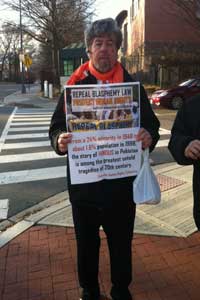
The oppression and attack on Pakistan Hindu religious minorities was also demonstrated by protesters who pointed out that Hindus went from a 24 percent minority in 1948 to about 1.6 percent of the Pakistan population in 1998.

R.E.A.L.’s Jeffrey Imm also pointed out how such human rights abuse of Hindu girls was a violation of the Universal Declaration of Human Rights, including articles 3, 16, and 18. Jeffrey Imm also denounced a pattern of attacks in Pakistan against Hindu temples.

R.E.A.L.’s Jeffrey Imm Calls for End to Pakistan Religious Minority Oppression

The protesters also decried the abuse of Pakistan Christians and other minorities, noting the recent mob attack on a Pakistan Christian couple (burning them to death), and called for an end to oppressive Pakistan blasphemy law used to give a death sentence to Christian Asia Bibi, which was used in the arrest of Christian Zafar Bhatti (who was shot to death), and oppression of other religious minorities. Protesters held signs condemning the Pakistan blasphemy law and calling for its change. Protesters called for the release of such Pakistan political prisoners as Christian Asia Bibi, who have been imprisoned on spurious “blasphemy” charges.

R.E.A.L.’s Jeffrey Imm called for the Pakistan government and the Pakistan people to end their oppression of all religious minorities (Hindu, Christian, Sikh, Ahmadiyaa, and Shiites) and called for Pakistan to show human reason and conscience to extend such basic human rights and human dignity to Pakistan religious minorities and all Pakistan citizens. Imm stated such oppression needed to end in all parts of Pakistan.

The protesters sought to inform the public of these conditions, while challenging the failure of the Pakistan government to protect the human rights of such citizens. Protesters also sought to demonstrate solidarity with other religious minorities in Pakistan who have protested their oppression.

R.E.A.L.’s Jeffrey Imm stated that while this protest was in Washington DC at this event, that protesters will seek to provide solidarity in human rights campaigns in Pakistan. He stated: “the day will come when we and others will have such calls for universal human rights and dignity in Islamabad, and throughout every part of Pakistan, Punjab, Sindh, Balochistan, and every territorial area. To those protesting there for human rights now, please know that we stand with you, and know that the day will come when we are standing side by side with you in Pakistan to call for human rights for all.”

Pakistan: Christian Sisters in Hiding After Kidnap and Forced Religious Conversion Attempts

Responsible for Equality and Liberty has received a report of the human rights violations of two women in Lahore, Pakistan. International human rights sources have advised that Christian sisters, “Hina” and “Marina” from Lahore have gone into hiding, after attempts by extremist to kidnap them, to force marriage on them, and to forcefully convert them to deny their Christian religion.

The sources state that Hina and Marina are from Lahore city near the Nishter police station area. The reports state that Hina and Marina have been followed and harassed by extremists, including one individual with a “green turban.” The reports state that extremists have sought to abduct the two sisters, force the sisters into marriage, and to force the sisters to reject their Christian religion and convert them to Islam. The reports state that according to police sources, Mulan’a Abdul Attiq took his son and nephew Hafiz Nasir and Abid Attri to arrange a forced wedding to both Christian sisters. The forced wedding attempts have been rejected by the Christian sisters and their families.

As a result of the sisters rejecting such attempts at forced marriage and forced religious conversion, reports indicate that the Punjab police in Lahore have stated that those two sisters and family have committed blasphemy when Muslim clerics sought to talk about the wedding attempts. The report states that police have filed FIR (under Pakistan law 295-C) against the family.

In accordance with the Universal Declaration of Human Rights, Responsible for Equality And Liberty continues to support the universal human rights, religious liberty, and freedom for all people, including religious minorities oppressed in Pakistan. We urge the Pakistan authorities to drop any charges against minority Christians being oppressed, harassed, and threatened, including these two Christian sisters, who have reportedly been threatened by attempts at abduction, forced marriage, and forced religious conversion. Responsible for Equality And Liberty also calls for the Pakistan government to end the oppressive blasphemy law used to oppress and harass religious minorities and so many other individuals. Responsible for Equality And Liberty also calls upon on our colleagues in human rights organizations to share this story and call for human rights protection for these sisters.

China: 76 Falun Gong Practitioners Confirmed Persecuted To Death In 2013

NDTV Reports: “While China’s notorious Re-education through labor system has finally ended its 57 years of practice, the over 14 year long persecution of the Falun Gong has not been terminated, and continues in the brainwashing centers and black jails. Minghui.org, which reports on Falun Gong and the persecution in China, reports that at least 76 Falun Gong practitioners are confirmed to have been persecuted to death in 2013 alone. According to data from Minghui.org, among the 76 Falun Gong practitioners who have been tortured to death in the persecution campaign, eight of them were tortured to death by police to extract confessions in detention centers. 10 were killed during violent mental and physical torture at brainwashing centers and labor camps. Twenty nine were tortured to death by prison guards, and 29 were killed after being repeatedly kidnapped by the regime. One third of those who were persecuted to death were young adults, many of whom were public servants, doctors, professors, and industrial managerial personnel. For instance, Deng Huaiying, who had a Masters of Finance from North China Electric Power University, was illegally abducted and detained by police on April 27, 2013. Within a month, he was tortured to death and the authorities secretly cremated his body. Yang Zhonggeng, a native of Zhejiang Province, was abducted by the police on June 24, 2013. He was beaten to death in just four days and died at the age of 38. His mother, suffering from mental trauma after seeing her son’s remains, has not been able to talk since. In addition, art teacher Huang Yuangren of Guangxi Teachers Education University at Changgang, and math teacher Zhang Yan of Bengbu City Middle School both died at young age, and their parents were left with suffering from the pain of losing their dear ones. Witnesses of the tragic scenes of the persecution have also been left with much sadness and trauma. Ms. Hu, Falun Gong practitioner in Chongqing: “While I was illegally detained in Chongqing Women’s Forced Labor Camp in 2011, there was a Falun Gong practitioner there named Xu Zhen. Because she refused to give up her beliefs, the guards ordered criminal inmates to tie her to a bed and brutally beat beat her. They ripped out her toenails, they force-fed water into her mouth and nose, and violently attacked her genitals with brushes, causing profuse bleeding. When she passed out, they woke her up to continue the torture. A few days before she died, we were awakened by her screams for two consecutive nights. Too horrible, I will never forget.” Data on Minghui.org shows that roughly 150,000 Falun Gong practitioners are confirmed to have been persecuted between January 2000 and August 2013. Among them, there were 6,889 Falun Gong practitioners killed by persecution. In fact, the regime’s blockage of the information and the authorities’ pressure on the victims’ families has left many more cases unexposed. The reported cases by Minghui.org are just the tip of the iceberg. Wang Zhiyuan, World Organization to Investigate the Persecution of Falun Gong spokesman: “The communist regime’s information blockade is extremely tight. What Minghui.org has reported are the ones that can break through numerous blockades and are confirm with real names. The ones that were kept unknown, untold, or unidentified are countless.” A conservative estimate by Zhengjian.org says that since the persecution of Falun Gong in China started on July 20, 1999, about 3.4 million practitioners have lost their lives. That equates to half of the Jews killed by the Nazi’s during World War II. Wang Zhiyuan: “The estimated data of Zhengjian.org is based on information collected from these many years of persecution, provided by multiple rescue organizations. These projected data are certainly very conservative, because there are many unclear situations in China. Since the persecution campaign began in 1999, large numbers of practitioners went on petitioning. When they were detained, they wouldn’t reveal their identities so as to avoid getting family and friends in trouble. Most of them have been imprisoned and then disappeared.” Many Chinese Communist officials, police, and thugs who were actively participating in the persecution of Falun Gong practitioners have suffered miserable and sudden deaths. For instance, many 610 Office (the office responsible for persecuting Falun Gong) officials throughout China have died of cancer. The 610 Office is thus also nicknamed, the death occupation.”   See also NDTV video.

End the Torture and Human Rights Abuse of Falun Gong!

Human Rights: Dignity and Identity of Elderly

Our universal human rights must include a commitment to the human rights of dignity and identity for our elderly citizens. Without a consistent commitment to their dignity and identity, every aspect of their human rights is endangered, including their equality and liberty.

On Human Rights Day, December 10, people around the world remember the guarantees of our Universal Human Rights for all people around the world. Human rights activists regularly speak to the continuing challenges that we see in human rights for those oppressed due to their ethnic, national, religious, gender, or other identities. We have human rights conferences for many of those who continue to be denied their rights, in many parts of the world, including women and children.

But our elderly citizens, who have struggled for this generation’s human rights, are denied such attention when their human rights are threatened. They are not recognized as a group which is being denied their human rights.

Many of our elderly citizens are routinely denied human rights that we all struggle to defend, and which many of us take for granted. They are challenged by those who would use force to steal from them and assault them. They are challenged by those who seek to cheat them, including criminals who regularly target them with fraudulent schemes to steal from them. They are challenged those who practice a discriminatory form of “ageism” to discriminate them and deny them equal rights in society, and by too many who abuse our elderly citizens as the source of derogatory and disrespectful comments.

But of all of these human rights challenges to our elderly citizens, the greatest threat is one which seeks to strip of every aspect of their dignity and identity, undermining the very basis of our human rights.

The Universal Declaration of Human Rights (UDHR) is based on recognizing the “inherent dignity and of the equal and inalienable rights of all members of the human family” as the cornerstone of our universal human rights. Yet that inherent dignity and even identity of too many of our elderly citizens is being stolen from them daily, and we have no rallies, no conferences, and no impassioned speeches to call for the defense of their rights.

The worst human rights violator today against our elderly citizens is not a dictator, not an oppressive regime, not a hate group – but it is a cruel, ruthless, and unrelenting destroying – disease.

Alzheimer’s Disease is not a “normal part of aging,” but is a progressive, fatal disease which attacks the brain, causing memory loss of one’s surroundings, and eventually memory loss of one’s own identity. Alzheimer’s Disease attacks every aspect of human dignity and liberty: our freedom of speech, our freedom of movement, our freedom of choice, and even our freedom of conscience. Alzheimer’s Disease attacks not just the body, but seeks the destruction of our elderly citizen’s minds, memories, and beliefs.

We have many human rights violators that seek to deny groups public expression of their values and even their public identities. But the human rights violator of Alzheimer’s Disease goes even further – it seeks to deny one’s private identity, one’s private thoughts, and even one’s private sense of self.

In the United States of America alone, there are over 5 million people suffering from the human rights violating illness of Alzheimer’s Disease. This cruel disease seeks to continually debilitate its victims until it has done everything to destroy every aspect of their human rights. As documented by the Alzheimer’s Association, the United States will see a 44 percent increase in victims of Alzheimer’s Disease by 2025. In 2013, Alzheimer’s will cost the United States $203 billion. This number is expected to rise to $1.2 trillion by 2050. Furthermore, this human rights-violating disease disproportionately attacks women as well. Two-thirds of Alzheimer’s Disease victims in the United States are women.

The human rights-destroying Alzheimer’s Disease knows no boundaries and no divisions in attacking our elderly citizens. Recently, researchers have indicated that the increase of Alzheimer’s Disease in developing countries will create massive societal problems. Dr. Molly Fox, who is an Alzheimer’s Disease researcher, states that “today, more than 50% of people with Alzheimer’s live in the developing world, and by 2025 it is expected that this figure will rise to more than 70%.”

When our elderly citizens struggle to remember their family, their surroundings, their lives, and even themselves, they are being denied a fundamental basis for any human rights in a society. When our elderly citizens attacked by the Alzheimer’s Disease cannot even remember or spell their own name, they are not only denied their inherent human rights of dignity, but they are denied their very identity.

Many of our most abused world citizens denied their human rights at least can recall who they are. But for millions and millions of our elderly citizens around the world – they are denied even such a basic human right of dignity and identity.

The generation that raised us deserves better than this. They too deserve their human rights of dignity and basic human identity. They too deserve the inherent equality and freedom that all of our human family is entitled to.

We rightly remember the many different human rights causes and campaigns on Human Rights Day. Let us also remember the human rights needs for the millions of elderly citizens who cannot speak out for themselves, who cannot rally and petition for their human rights, and who are too often forgotten and ignored by those who would not have a world or a life, without the sacrifices of our elderly citizens.

On this Human Rights Day, we must call upon our government and our medical industry to make serious, focused, and renewed efforts to battle and defeat this cruel disease that seeks to destroy the human rights, dignity, and identity of our elderly citizens.

Until they do, this human rights catastrophe will not end with the current generation of elderly citizens, but it will continue to your generation and to your children’s. If we seek to stand for our universal human rights for all, then we must also seek to stop this destroyer of human rights for our elderly citizens – today and tomorrow.

The Choice Americans Must Make for Human Rights

On November 6, 2012 in the United States, Americans will have elections throughout the country. They will be voting on many important issues of human rights at a state level and at a national level, they will vote in elections for their national representative and their next president.

Whatever choice you make as an American on Election Day, there is one choice that Americans must make in terms of Human Rights.

That is to choose one person to be committed and really make a difference for human rights in our nation: YOU.

Of all the candidates, all the speeches, all of the campaigns, none of them can really make a difference without your support.   While we will vote on November 6, the human rights campaigns for our nation and our world will continue on November 7.

On November 7, no matter which campaign is successful, we will continue to have the continuing campaigns for human rights to lead.

On November 7, no matter which cause is advanced, we will continue to have the continuing cause of human equality, liberty, and universal human rights to complete.

On November 7, no matter who is elected into office, we will have one person that we need to look to for responsibility in our future – that person is YOU, and we will need you to continue to be Responsible for Equality And Liberty.

On November 7 (and every day), it will always be a good day to be responsible for human rights, a good day to be responsible for women’s rights and Constitutional equality, a good day for racial harmony,  a good day to work for equal rights for people of every sexual orientation, a good day for freedom of religion and conscience, a good day to show respect to our brothers and sisters in humanity of every identity group, a good day to work for equality without question and without exception….and a good day to be responsible for equality and liberty – in America and around the world.

Make the Choice – to be the one committed to equality and liberty for all.

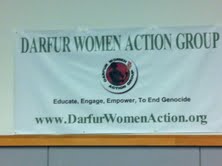
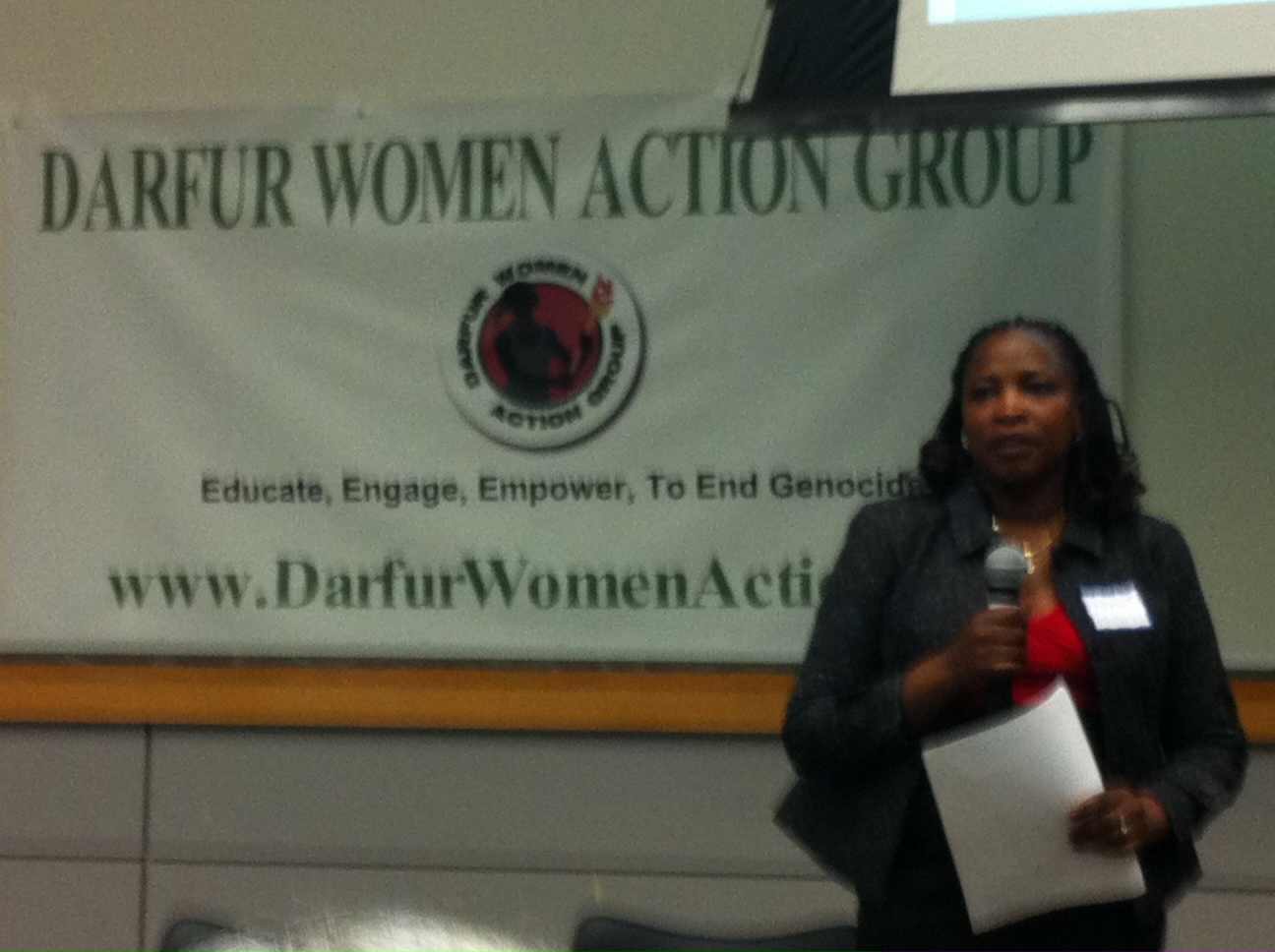
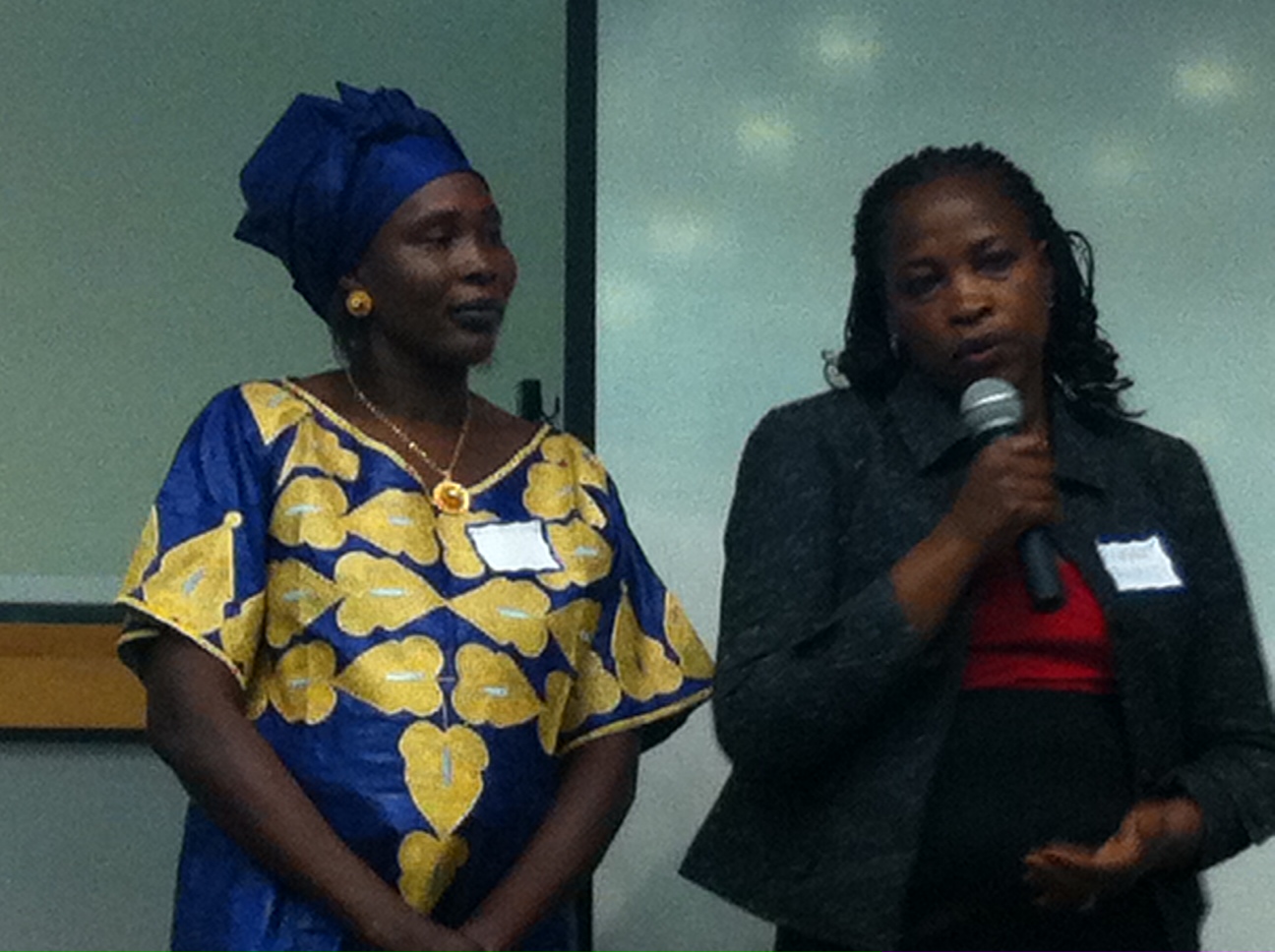
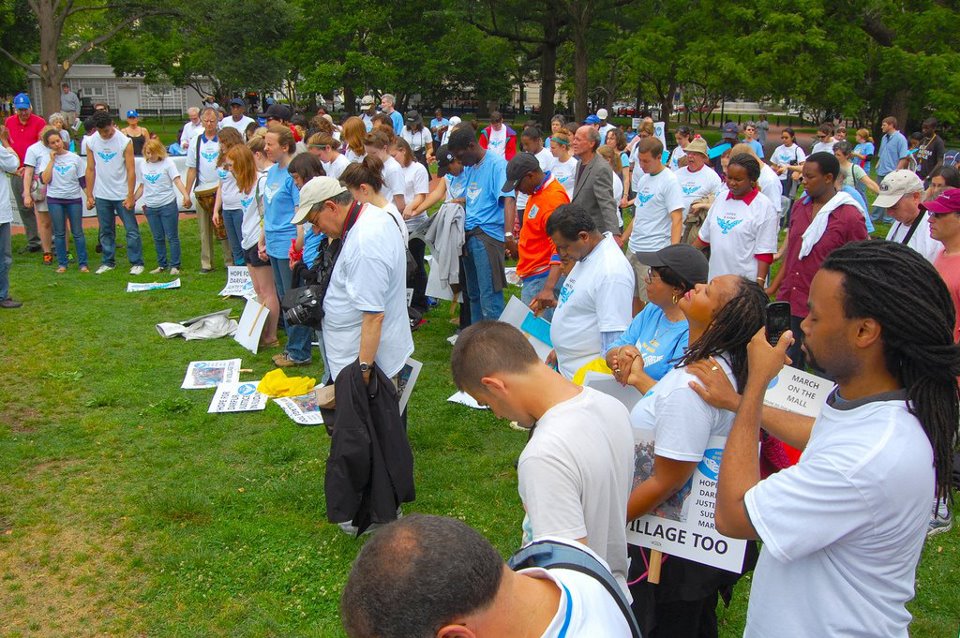
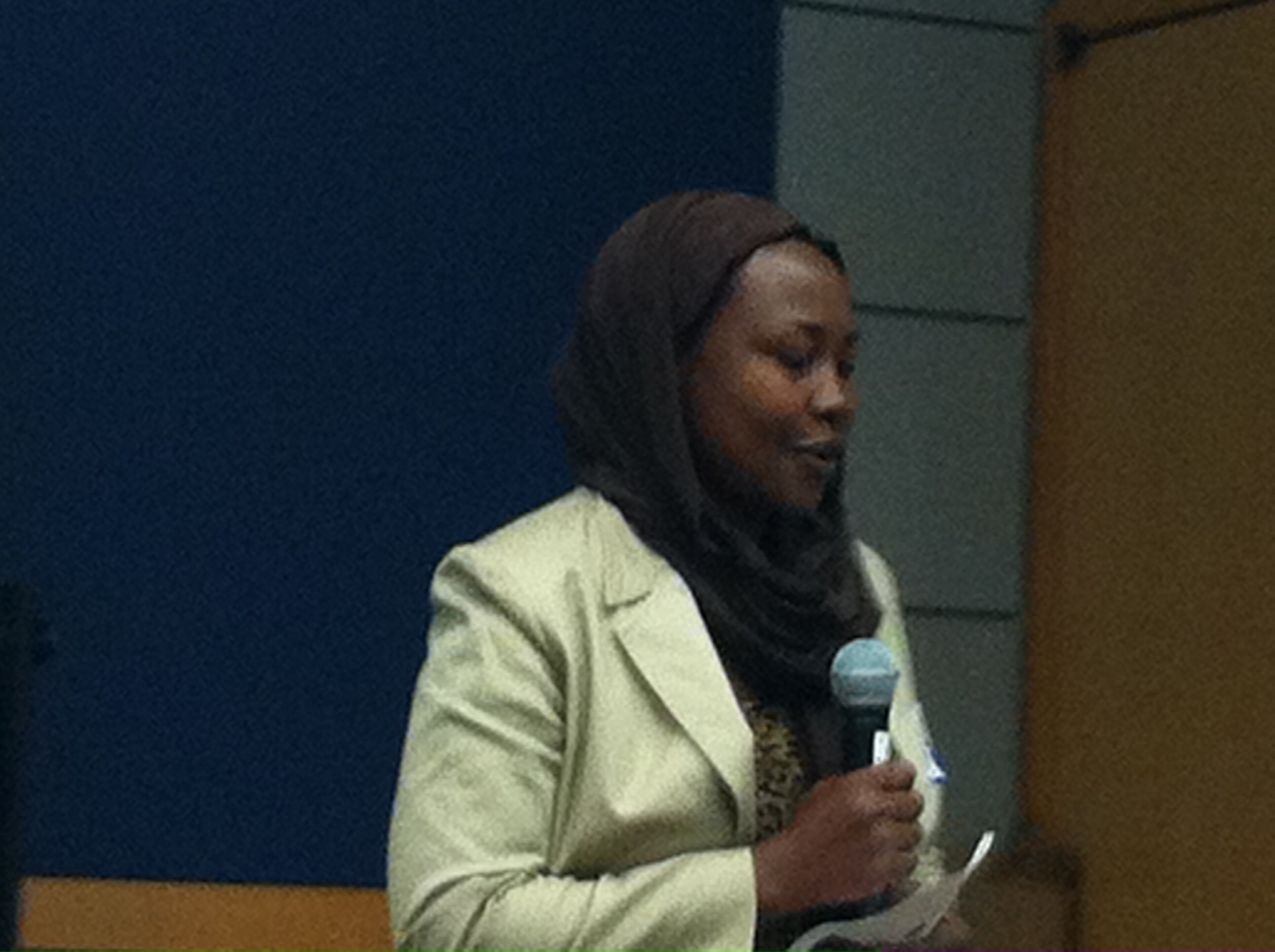
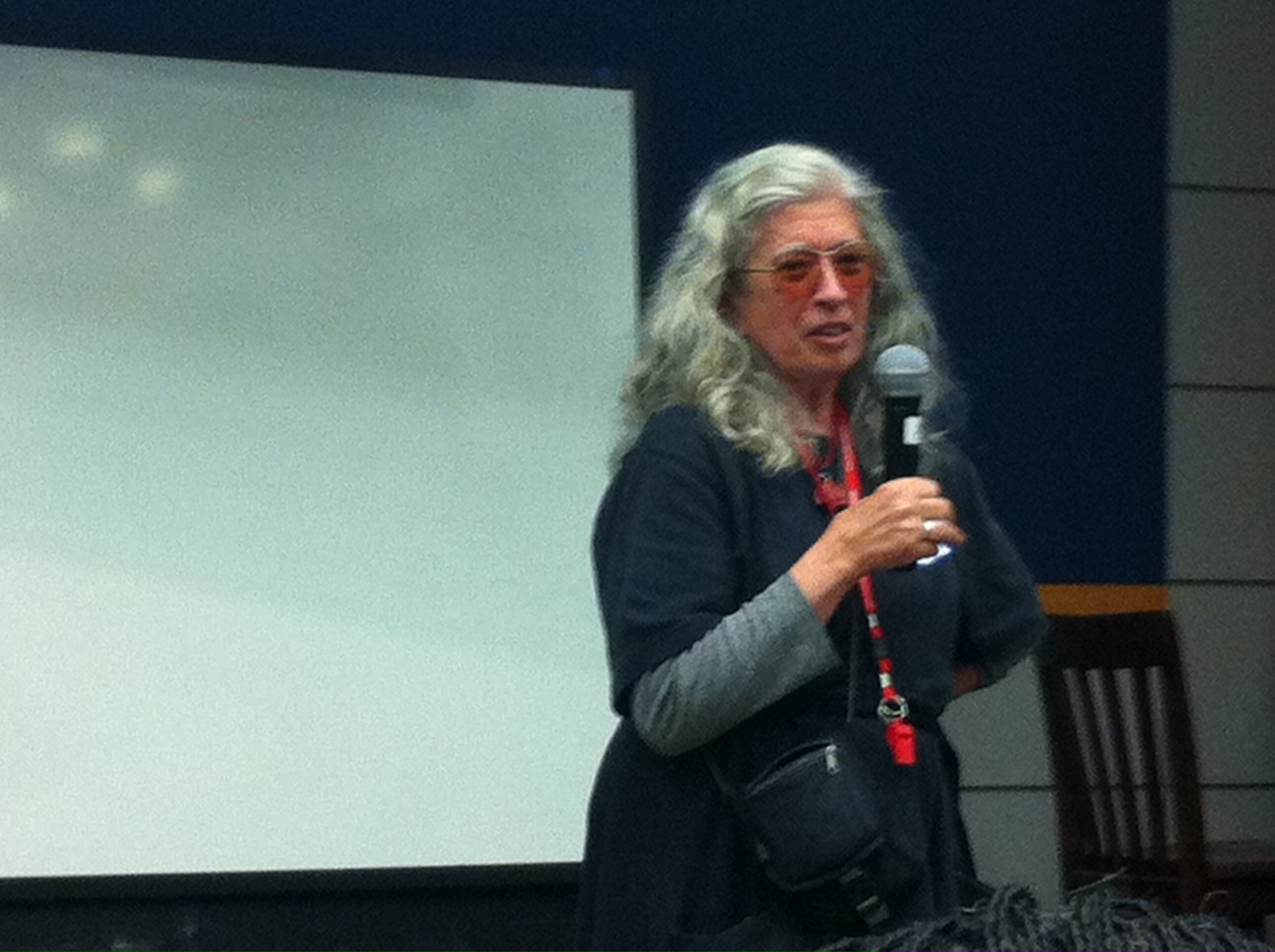
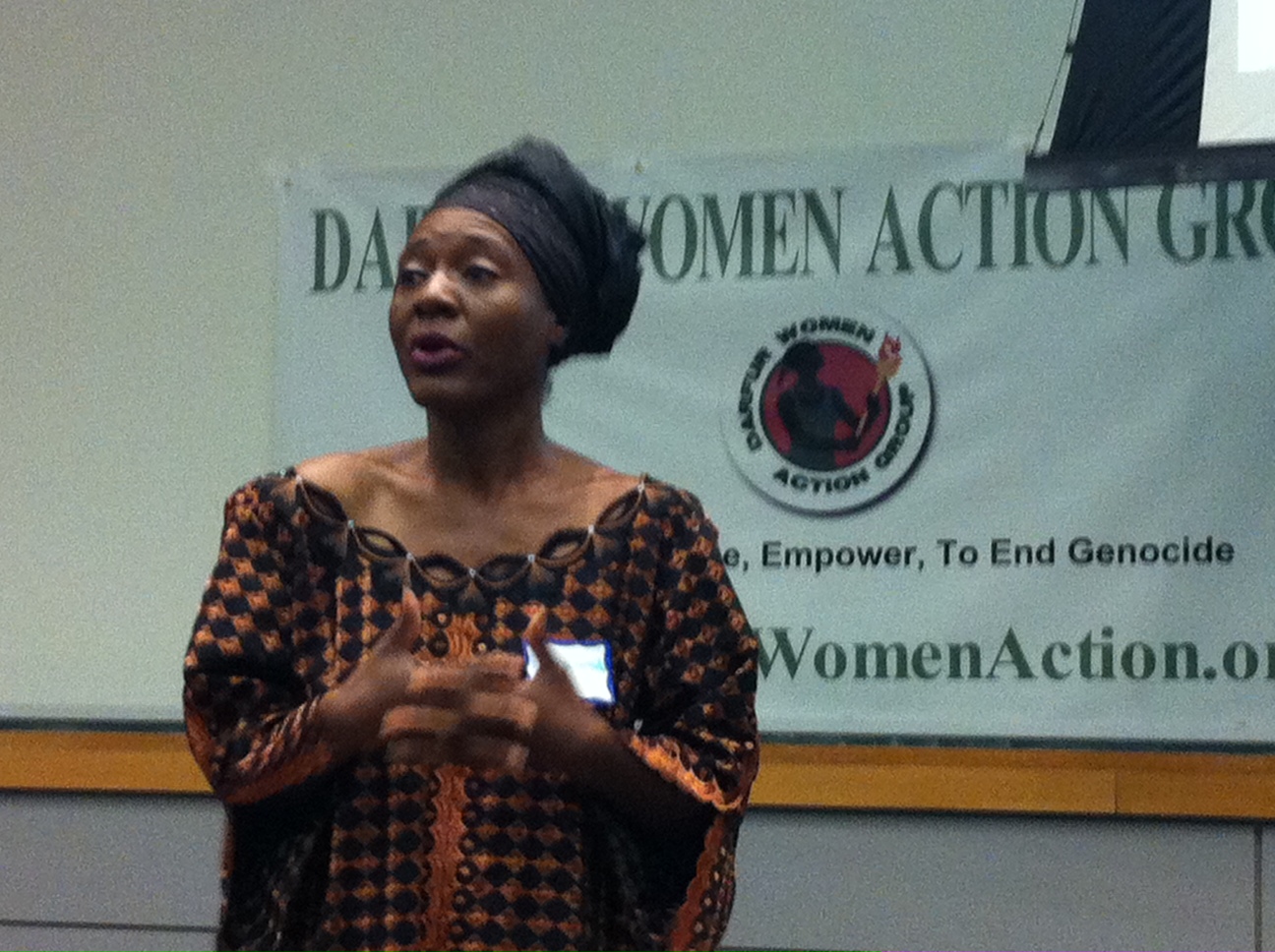
Darfur Women Action Symposium Promotes Women’s Dignity, Rights – “It’s Not Over” in Darfur

On Saturday, October 27, 2012, the Darfur Women Action Group (DWAG) began a two day Darfur Women Action Symposium at the George Washington University in Washington, D.C., with a goal to continue to empower women in Darfur and Sudan.  The event was led by Niemat Ahmadi, who created the DWAG organization to work with Darfur women, advance human rights, and continue public education on the human rights issues on Darfur. The symposium had panelists on women’s rights and Darfur issues, as well as individuals testifying on their personal accounts. The symposium also included films shown on Darfur, activism training, and a women’s empowerment concert performed by “Midnight Child.” It concluded on Sunday, October 28 with a round table discussion to discuss strategies for change.

As stated in their vision, DWAG “works with victims and survivors of the Darfur genocide in the Diaspora and back home in Sudan, providing them with more access to the tools that will enable them to lead the effort to combat violence, address massive human rights abuses in their society and work with others to prevent future atrocities and promote global peace. The core priority for Darfur Women Action Group lies in advancing human rights and supporting Darfuri to meet the challenges of the 21st Century.”

DWAG maintains a website and a Facebook page which provides ongoing information about its programs and activities.  DWAG founder and president Niemat Ahmadi has spoken on CNN, at numerous functions and rallies to educate the public on Darfur, and has also appeared in Human Rights Day events led by Responsible for Equality And Liberty (R.E.A.L.) to speak on Darfur issues, including comments in December 2010 and December 2011 (part 1, part 2) at the National Press Club.

Darfur Women Action Group

On Saturday morning, the symposium speakers included representatives from the Institute for Policy Studies (IPS), WE ADVANCE, Darfur Interfaith Network (DIN), Women Empowering Women,  and other activists.  Attendees included supporters and activists from George Washington University, American University, and activists from One Million Bones and other human rights organizations, including Responsible for Equality And Liberty (R.E.A.L.).  Some attendees traveled from Los Angeles, CA, Philadelphia, PA, and New York City, NY, including high school students who were working to promote awareness of Darfur women’s issues among their fellow students.  Attendees included members of the Public International Law and Policy Group (PILPG), which posted their own summary on the Saturday morning portion of the symposium.

Emira Woods of the Institute for Policy Studies (IPS) served as the moderator for discussions. Ms. Woods stated that the public needed to continue to become aware of the oppression of women in Darfur, and the ongoing problem of and that she urged everyone work towards helping internally displaced people (IDP) who have been forced to flee Sudan.  Ms. Woods spoke out against rape and violence against women, speaking about how women in society must continue to challenge such violence and hate.   Emira Woods stated “you strike a woman, and you strike a rock.”

Emira Woods, Director of Foreign Policy in focus, Institute of Policy studies, speaks at DWAG conference: "Strike a woman, and you strike a rock."

Emira Woods introduced a DWAG film describing the problems of continuing rape and abuse of women in Darfur.  The DWAG film urged the public to help the cause of Darfur women acting to rebuild their lives and to end the genocide and oppression against women.  In the film, DWAG founder Niemat Ahmadi spoke about the oppression of women and the fears for her own safety, but that “for me to die is no different than those people who are dying.”  Niemat Ahmadi remembered those oppressed and those “imprisoned in the IDP camps,”  urging the public “let us promise ourselves and hold ourselves back that there is still something we can do to save others, to give hope and to give life to others.” The DWAG video recounted details of the millions killed, the 25 million displaced, the 4 thousand villages burned, the use of the Janjaweed militia to kill children and others, and the use of rape as a weapon of war.

DWAG Film: Founder Niemat Ahmadi urges the public to give hope and life to others

Darfur Women Action Group leader Niemat Ahmadi spoke at the symposium. Niemat Ahmadi expressed her thanks to the many people working to support Darfuri women and promote change for human rights and dignity in Darfur and Sudan. She praised the resilience and courage of the Darfuri women in their efforts to reclaim their position of respect in society. She pointed out that we must not allow people to tell us that the genocide is over in Darfur and Sudan. “It is not over,” Niemat Ahmadi stated, and she pointed out that there continues to be violence, killings, and oppression of Darfuri women and Internally Displaced Persons (IDP).

Niemat Ahmadi explained how women were previously treated with more respect in the traditional Darfur and Sudanese society. She explained how rape was used as a weapon of war to attack Darfur society, where chastity was an important value among the predominantly Muslim women in Darfur, and was intended to divide families, villages, and society. Niemat Ahmadi had worked with women who were raped to provide counseling, support, and courage; she encouraged Darfuri women to take a stand against such violence against women. Niemat Ahmadi urged such Darfuri women to use their talents and their strengths, and reject being viewed as victims. In addition, she noted that the issues for Darfuri women were not unlike problems for women in Nuba region, South Kordofan, and Khartoum. She urged that women continue to be part of the peace process in Sudan and Darfur.

Her influence in organizing the Darfuri women was viewed as a threat by the Sudanese government. As a result, she explained how the Sudanese government sought to prevent meetings of groups of Darfuri women. Niemat Ahmadi then how she used the concept of “movable meetings,” with two women meeting at a time, to share information and to spread the word on ways to combat the violence and oppression that they faced. Niemat Ahmadi described her desire to stay and continue to help those women in the IDP camps, but she was urged to come to the United States to use her influence and voice here to help Darfuri women. She urged women to end the stigma and silence regarding the violence against Darfuri women, and urged people in the United States and the world to use their influence to help change the future for women and children of Darfur.     She thanked the various individuals who came to the symposium from various parts of the country, and the groups represented there.

Niemat Ahmadi, Founder and President of Darfur Women Action Group

Human rights activist Maria Bello, and co-founder of WE ADVANCE, addressed the issues of women’s rights around the world, including the efforts to help the women of Haiti. She discussed her efforts in helping women in Haiti was focused on what local people needed. Based on understanding the people, the WE ADVANCE group focused their efforts on promoting women’s clinics, educational classes,  and digital educational platforms. Maria Bello stated that WE ADVANCE developed an interactive university, promoted women’s centers, and supported the development of women’s radio stations to empower women. She stated that the women’s centers had a way to also alert women as to instances of rape, so that they could respond to such violence. She indicated that the digital educational platforms could be used in other countries as well. Maria Bello also described the importance of foreign aid goals to focus on deliverables that include stories of empowerment and strength. On a broader level, Maria Bello described what she called a “revelation revolution,” which seeks to end the idea of women as victims, but focuses instead on women empowering themselves around the world – economically, in human rights, and in their societies.

Mario Bello, Human Rights Activist for Haiti and co-founder of WE ADVANCE

Human rights student activist Charlotte Nguyen spoke of her family’s role as Cambodian refugees, whose family had been attacked by the Khmer Rouge, so she had personal experience in understanding the need to stop those committing genocide.  When she was a 16 year old student, she attempted to create an anti-genocide petition, but it was rejected, and she held a sit-in, which resulted her being suspended and failing calculus (since her suspension prevented her from taking high school examinations).   In promoting human rights, she became a part of a U.N. human rights organization traveling to Sudan, and she learned of the “profound disconnect” between activism here and on the need of the people in Sudan.  She came away with the realization that the Darfuri people were not voiceless, but had their own voice and wanted to fight their own battles.  But at the heart of the human rights efforts were strong Darfur women.  She urged the public to move from charity to engagement, recommended that the public listen more rather than offer our own solutions, and since women are at the center of the war zone in Sudan, she stated that they must also be at the center of any peace and resolution in Sudan.

Charlotte Nguyen, Human Rights Activist and Cambodian-American

Hawa Mohamed came forward to testify on her personal account of violence against women in Darfur, and how she sought to speak for those left behind. She told of how over 20 people had been raped in her village. She stated that even young children were being raped. She urged the world to continue to hold Omar Al Bashir responsible for his actions. She stated that now that she is in the United States, she is learning English so that she can gain employment and hoped that the next time she spoke it would be in English. Niemat Ahmadi joined with Hawa Mohamed to provide a translation of her story into English.

Hawa Mohamed (L) and Niemat Ahmadi (R)

A leader of the Darfur Interfaith Network (DIN) spoke about the efforts of that group, and their continuing efforts working with the Sudanese diaspora, which meets once a month at the Washington Hebrew Congregation. The group is also affiliated with Act for Sudan. She stated that she was inspired by a discussion of the Darfur genocide in 2000 at the U.S. Holocaust Memorial Museum, recognizing that it is a “modern day Holocaust,” and feeling that she had to get involved in some way to work to end these crimes against humanity.

She explained how the Darfur Interfaith Network (DIN) had a public rally every third Sunday of the month at the Sudan Embassy in Washington, D.C., from 1:30 to 2:30 PM.   She stated that the group’s activities were described at a Facebook page for “Hope for Darfur Justice in Sudan,” which was the basis for beginning such interfaith rallies. She urged the public to contact their government officials and their Congressional representative to call for change in Sudan.  [NOTE: In addition to the monthly DIN rallies at the Sudan embassy, the next “Hope for Dafur – Justice in Sudan” rally is scheduled for Spring 2013, according to the group’s Facebook site.]

Darfur Interfaith Network 's sponsored - Hope for Darfur - Justice in Sudan March and Rally

Several individuals involved with DWAG spoke to tell about their involvement and support:

— One Darfuri woman spoke about her appreciation for the organization and its activities, who “are like my family,” and who provide an opportunity to “share my stories.”

DWAG Activist

— Another activist spoke about how the group taught “people how to grow”

DWAG Activist

— Human rights activist Carol Nezzo spoke about her joy in being involved in any effort to empower women, and she spoke about the importance of people learning about African cultures and people. She blew a whistle and said that she sought to “call foul” on those individuals who sought to oppress Darfuri women and any women around the world.

Carol Nezzo, DWAG Activist

Mr. Khalid Geasis spoke about his appreciation of efforts to restore Sudan’s culture, which traditionally had great respect and honor for women. He stated that traditionally women were the center of the culture, and Sudan was ruled by queens, prior to invasion by outside patriachal influences in the Sudanese culture, which have since sought to marginalize women and women’s rights.

Khalid Gerais

Human rights activist Carol Bluer-Bate spoke about the Women Empowering Women movement, and focused on issues of channeling activism for positive goals and human dignity. She spoke about her efforts to help survivors of torture, and her efforts to bring women together for discussion and support. She spoke about the need not to allow oppression to gain power over human beings, and she urged her fellow human beings to “love your enemies” as their brothers and sisters in humanity.

Carol Bluer-Bate, Women Empowering Women model
Darfuri Photos - shown at the symposium
Photo of Darfuri People - displayed at symposium

Responsible for Equality and Liberty (R.E.A.L.) looks forward to the opportunity to host the Darfur Women Action Group to speak at our December 10 Human Rights Day event at the National Press Club in Washington, D.C. this year.