Germany: Human Rights Groups Call for EU to Suspend Preferential Trade to Communist China

FOR IMMEDIATE RELEASE: LAOGAI RESEARCH FOUNDATION CALLS ON EU TO SUSPEND PREFERENTIAL TRADE ACCESS FOR CHINA UNDER THE GSP

Bredenbeck, Germany, December 1, 2009-  The Laogai Research Foundation (LRF), in association with the International Society for Human Rights (Frankfurt), formally call on the European Commission to suspend the People’s Republic of China’s non-reciprocal preferential access to the EU market provided under the GSP scheme until China stops exporting products to the EU made in the Laogai, China’s vast system of forced labor prison camps.

The Laogai not only serves to suppress dissent; it also functions as a massive source of free labor.   Inmates within the Laogai system are forced to labor long hours in abusive conditions.  LRF has documented cases where inmates were working 16-18 hours a day in mines with no protective gear, handling battery acid with no gloves, and standing naked in vats of tanning chemicals. The Laogai Research Foundation has documented hundreds of businesses that advertise their products for export to the US and Europe, and Laogai-made goods find their way into these markets on a daily basis.  Unfortunately, due to intentional deception on the part of Laogai enterprises, and a patchwork of incomplete and ineffective international regulations, these Laogai enterprises not only continue to operate, but also to profit handsomely by exporting goods made by prisoners who are not compensated for their labor.   Although China officially banned the export of forced labor products, this law is not enforced, and international requests for inspections of suspected Laogai facilities are routinely denied.

For this reason, LRF calls on the European Commission to suspend China’s preferential GSP status until China enforces its own laws on the export of forced labor products.  Additionally, we call on the EU to consider legislation to ban the import of forced labor products from China.

Peter E. Mueller, European Representative of the LAOGAI Research Foundation (LRF), Washington DC, has already met with several Members of the European Parliament, among them Edward McMillan-Scott, Vice-President of the EU-Parliament, Crescenzio Rivellini, head of the EU/China Delegation, Mrs. Helga Trüpel of the Green Party and Mr. Michael Gahler of the Christian Democrats, but foremost with Mrs. Heidi Hautala, Chairwoman of the EU Human Rights Committee. In these meetings, Mr. Mueller urged them to support the suspension of China’s preferential GSP status and consider a ban on the importation of Laogai-made products, noting that the Laogai system of forced labor camps is the PRC’s foremost tool of political repression.
LRF Executive Director Harry Wu commented, “The EU is typically ahead of the US when it comes to human rights, but on this issue they lag behind.” (The US has banned the importation of forced labor products since the 1930s.) Mr. Wu added further, “Basic human rights should not be left behind in the drive to improve economic relations between China and the EU.”

The Laogai Research Foundation is a not-for-profit organization founded by former political prisoner Harry Wu in 1992.  Its mission is to gather information on and raise public awareness of the Laogai–China’s extensive system of forced labor prison camps.  For more information, please visit www.laogai.org, e-mail laogai@laogai.org, or call +1-202-408-8300.

free-china-now

World AIDS Day: Hizb ut-Tahrir Calls for Stonings, Whippings, Caliphate

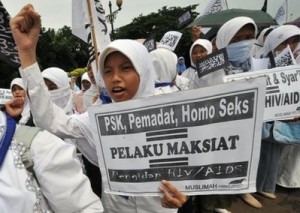
On December 1, 2009, as groups concerned about the AIDS disease sought public awareness and prevention, the anti-freedom, extremist group Hizb ut-Tahrir held its own protests in Indonesia rejecting condoms and AIDS prevention measures and demanding the creation of an extremist caliphate .  AFP reports that “700 members from the Muslim Women of Hizbut Tahrir” were involved in the Indonesia protests.  As AIDS continues to grow in Indonesia, Hizb ut-Tahrir is promoting an anti-condom campaign as part of its efforts to promote religious extremism in Indonesia and globally.

Hizb ut-Tahrir’s goals including ending democracy and freedom, and the promotion of an extremist caliphate, including calling for the “death penalty” for those “traitors” who leave Islam.  U.S. President Obama’s adviser on Muslim affairs Dalia Mogahed has joined Hizb ut-Tahrir in a public interview conducted by a supporter of the British Hizb ut-Tahrir organization.

World AIDS Day: Hizb ut-Tahrir Demonstrates Against Homosexuals, Calls for Global Extremist Caliphate (AFP/File/Bay Ismoyo)
World AIDS Day: Hizb ut-Tahrir Demonstrates Against Homosexuals, Calls for Global Supremacist Caliphate (AFP/File/Bay Ismoyo)

There have been repeated attempts to make homosexuality illegal in Indonesia, as prostitution and drug use are currently.  The Aceh province of Indonesia has made homosexuality a crime under Sharia law punished by public whipping and steep imprisonment, as well as stoning for other offenses against Sharia.

While AFP, MySinChew/AFP, and the Jakarta Globe have focused on Hizb ut-Tahrir’s (HT) rallies and comments regarding ending the use of condoms and enforcing Sharia law as a way to control AIDS risks, none of the mainstream media have noticed Hizb ut-Tahrir Indonesia’s web site report quoting Dr. Muhammad Usman and others at a Hizb ut-Tahrir event calling for “stoning to death” and “whip a hundred times” individuals as part of Hizb ut-Tahrir’s answers to the AIDS problems.  The  HT report also states condoms are ineffective because “whereas the pores of condoms was only able to hold the sperm, not the size of the HIV virus is much smaller.”

The Jakarta Globe reported that “Ahead of World AIDS Day on Tuesday, members of the group Hizbut Tahrir took to the streets in several major cities, including Jakarta, Solo, Yogyakarta and Makassar in South Sulawesi. ‘We urge everybody to support the application of Shariah in an Islamic caliphate so that, God willing, all of us will be free from the threat of HIV/AIDS,’ Hizbut Tahrir spokeswoman Febrianti Abassuni said in a statement.”  Calling “homosexuals the agents of immorality,” Hizb ut-Tahrir called for an end to programs providing condoms in Indonesia.

BBC reports that “AIDS activists say promoting condom use is a huge challenge in Indonesia as there is strong resistance from religious and conservative groups.”  While AIDS in Indonesia grew predominantly from drug use, increasing growth is reportedly sexual based.  BBC reports that “[r]ecent data shows over 18,000 people have the disease – and that number has jumped from last year.”

While Hizb ut-Tahrir and other groups seek to prevent condom distribution and use, AIDS has spread dramatically throughout Indonesia.  AFP reports that “around 270,000 Indonesians are estimated to be infected with HIV, and AIDS has claimed about 8,700 lives in the Muslim-majority nation of 228 million people, according to the UNAIDS agency.”

Reports have shown significant growth in AIDS among heterosexuals.

In a separate report, BBC reports that in the United Kingdom, 60 percent of new AIDS cases are appearing among Muslims.  In the BBC report, “According to Dr Shima Tariq, who has studied the transmission of HIV, more than half of newly diagnosed patients caught HIV through heterosexual sex, and two-thirds of them are of black African origin or descent.  But most of this group are not Christian: six out of 10 are Muslim.”

Resources – Hizb ut-Tahrir AIDS Day Reports:

AFP: “Indonesian militants call for sharia law to stop HIV”

AFP/MySinchew.com: “Indonesian Islamists protest condom use for preventing AIDS”

Jakarta Globe: “Hard-Line Indonesian Muslims Seek Shariah End to HIV”

Bernama: “Indonesia Intensifies Efforts To Fight AIDS”

BBC: “Indonesia HIV-Aids ‘spreading through sex'”

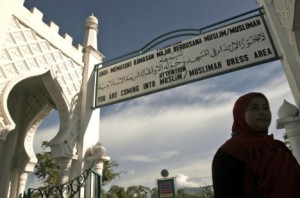
A woman walks past by a sign advising people to wear Muslim attire at Baiturrahman Grand Mosque in Banda Aceh. A local lawmaker says a controverisial bill allowing Shariah-style stoning and caning has gone into effect in the province. (Photo: Heri Juanda, AP)

Other Reports on Indonesia:

Indonesia: Sharia Bill Calling for Stoning, Now Officially Law in Aceh

Indonesia’s Aceh passes law on stoning to death — death for adulterers, steep prison for homosexuality

Indonesia: Students demand harsher sharia law implementation

Asia: Shariah Asia Spread Appeases Islamists, Risks Rights

Indonesia: Women Banned from Wearing Jeans and Pants — Sharia Police Plan Raids and Patrols

Indonesia: 1500 Sharia Police Harrass Men, Women in Aceh

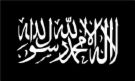
Black Flag of Extremist Caliphate
Black Flag of Caliphate

Other Reports on Hizb ut-Tahrir:

Bangladesh: Anti-Freedom Group Hizb ut-Tahrir Threatens to Murder University Official

UK: Hizb ut-Tahrir Anti-Democracy Group Schools Receive Government Funding

National Post Describes Anti-Jewish Hizb ut-Tahrir’s Growth on College Campuses

White House Adviser Joins UK Interview with Anti-Democratic Hizb ut-Tahrir Group

Extremist Hizb ut-Tahrir Event Promoted with Beheaded Statue of Liberty

UK: Press Reports of “Furious Residents” over Extremist Hizb ut-Tahrir Conference

Canada: Hizb ut-Tahrir (HT) Group to Meet in Govt-Managed Community Center

UK: Hizb ut-Tahrir Group Claims Thousands Attend London Conference, Plans August 2 Birmingham Conference

Chicago’s Moment of Freedom: Chicagoans Stand Up for Freedom Challenging Hizb ut-Tahrir

July 19 – Chicago: R.E.A.L. Pro-Freedom Protest to Challenge Hizb ut-Tahrir America Conference

Chicago: IPT News: “Pro-Terror Group to Meet in Chicago Suburb” – report on Hizb ut-Tahrir

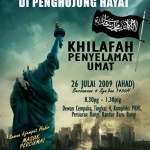
Hizb ut-Tahrir promotion for Extremist Caliphate conference shows "beheaded" Statue of Liberty and "burning" NYC
Hizb ut-Tahrir promotion for Caliphate conference shows "beheaded" Statue of Liberty and "burning" NYC

Sudan: 50 lashes for a minor Christian in Sudan to “wearing a skirt”

AP reports:
— “A 16-year-old Christian girl from southern Sudan said Friday she was lashed 50 times for wearing a skirt deemed indecent by the authorities in the north who enforce a strict version of Islamic law. The girl, Silva Kashif, said she was arrested by a plainclothes police officer in a Khartoum market last week for wearing a skirt that fell below her knees. She was convicted of offending public morality and received 50 lashes in the courtroom. Ms. Kashif’s ordeal follows the high-profile case of Lubna Hussein, a female journalist who was sentenced to 40 lashes for wearing trousers deemed indecent.”

Translated report from Al-Arabiya:
— “Lawyer said a girl from southern Sudan and her family, Friday, 27/11/2009, said the girl whipped with 50 lashes because they wore a skirt a judge ruled it obscene, and in the latest issue highlights the application of Islamic law in Sudan.”
— “…the girl’s mother detector Silva, aged 16 years, it intends to sue the police who arrested her daughter and the judge who issued the verdict, adding that her daughter, a minor and a Christian.”
— “The Douro, which her family hails from the town of Yambio, southern Sudan, said her daughter was arrested while on the way to the market near her home in the suburb of Kalakla in Khartoum last week.”
— “She added that her little girl but the policeman pulled in the market as if it were a criminal and that this is true, and pointed out that Silva was taken to court where Kalakla convicted and punished by the police before a judge.”

Soviet/Russian nuclear warheads with yield over 4.5 megatons


Soviet/Russian nuclear warheads with yield over 4.5 megatons

Data source: http://www.johnstonsarchive.net/nuclear/multimeg.html#S4

System/warhead: R-16 (SS-7 Mod 1/2/3)
type: ICBM
IOC: Nov 1961
weight (kg) 195
megaton yield: ~6
number built: 0-320

System/warhead: R-9A (SS-8)
type: ICBM
IOC: Dec 1964
weight (kg) 1800
megaton yield: ~5
number built: 23-46

System/warhead: R-36 8K67 Tsiklon (SS-9 Mod 1)
type: ICBM
IOC: Nov 1966
weight (kg) 7000
megaton yield: 18
number built: 140-290

System/warhead: R-36 8K67 Tsiklon (SS-9 Mod 2) [8F675]
type: ICBM
IOC: 1966
weight (kg) 7000
megaton yield: 25
number built: 140-290

System/warhead: R-36O 8K69 Tsiklon (SS-9 Mod 3)
type: FOBS
IOC: Aug 1969
weight (kg) 5000
megaton yield: ~20
number built: 0-20

System/warhead: MR UR-100N (SS-17 Mod 2)
type: ICBM
IOC: 1977
weight (kg) 3500
megaton yield: ~5
number built: 10-30

System/warhead: R-36M (SS-18 Mod 1) [15B86]
type: ICBM
IOC: Dec 1974
weight (kg) 7500
megaton yield: 24
number built: 20-60

System/warhead: R-36MUTTKh (SS-18 Mod 3)
type: ICBM
IOC: 1976
weight (kg) 7300
megaton yield: 20
number built: 20-60

System/warhead: R-36M2 Voevoda (SS-18 Mod 6)
type: ICBM
IOC: Aug 1990
weight (kg) 9000
megaton yield: 20
number built: 20

System/warhead: UR-100NU (SS-19 Mod 2))
type: ICBM
IOC: 1977
weight (kg) 3500
megaton yield: ~5
number built: 60

System/warhead: RDS-220 (“Tsar Bomba”)
type: NGB
IOC: 27000
weight (kg) 3500
megaton yield: ~150
number built: 0-5

The largest Soviet nuclear weapon

The largest nuclear weapon ever developed by any nuclear power was the Soviet RDS-220,[62] also nicknamed “Big Ivan”, “Vanya” or “Tsar Bomba” (King of Bombs). It was a three-stage weapon weighing 24.8 metric tons and was 8 meters long. Its 2-meter diameter required a specially modified version of the Tu-95 Bear bomber for delivery. The single such Tu-95V carried the RDS-220 partially protruding from the bomb bay.[63, 64] The U.S.S.R. tested this design in an airdrop over Novaya Zemlya on 30 October 1961 at a yield of about 58 megatons.[65, 89, 90] However, this was a reduced yield “clean” version: the uranium sleeve on the tertiary stage was replaced with lead, and the fission yield was only 3% of the total yield.[63] The full yield version had a yield variously reported as 100 mt [64] or 150 mt [62]. About 80% of the fallout from the “Tsar Bomba” test was deposited as global fallout.[67]

The yield of the 30 October 1961 test remains the subject of some debate. Best estimate here is that the actual yield was 57-58 mt, based on the following:

  • The U.S. estimate of 57-58 mt was based on bhangmeter (high-speed photometer) observations and other data from a USAF KC-135 flown near the blast–apparently to within 45 km–as analyzed by the Foreign Weapons Evaluation Panel (or Bethe Panel) to determine the yield.[63, 96, 97]
  • A yield of 58 mt has been affirmed in scientific publications by Russian experts on the Soviet testing program.[99]
  • Nikita Khrushchev in his memoirs claims that the device yield was estimated before the test as 50 mt, and that the actual yield proved greater at 57 mt.[91]
  • Following the collapse of the Soviet Union, official Russian sources (e.g. the Russian atomic energy ministry) have released information on Soviet nuclear tests, reporting a yield of 50 mt.[66, 92] In many cases, discrepancies between the new Russian data and older Western estimates represent the large uncertainties involved in Western intelligence efforts to estimate yields from remote observation. In this case the U.S. data was acquired from close at hand (sufficiently close that the U.S. KC-135 suffered scorching on the fuselage from the flash[96]). Discrepancies with Russian data may represent continued Russian secrecy (e.g. exact yields for several high yield Soviet tests are still unannounced by Russia [92]), combined with the desire to minimize the issue of fallout associated with the test. The current Russian figures for the Tsar Bomba test, 50 mt yield at 4000 m altitude, place it safely 9% above the Russian agency’s threshold defining “air explosions,” where “the expanding fireball does not touch the ground surface” [98], whereas the Western data of 57-58 mt yield at 3500 m altitude place it 9% below this threshold.

Thus the issue regarding the test yield is plausibly explained by the test exceeding its predicted yield by 15% (still close to design yield, given U.S. test experience) at an actual yield of 57-58 mt, with the current Russian government finding various reasons to prefer the 50 mt yield figure.

Another device tested the following year had a nominal yield of 50 mt. Tested at a reduced yield of 24.2 mt on 24 December 1962 at Novaya Zemlya, it was designed at Chelyabinsk-70 (as opposed to Arzamas-16 for the RDS-220)[66].

Whether either of these weapons was operational is unknown. The RDS-220 was probably never operational: only the single specially modified Tu-95V could carry it, and when doing so it would have been particularly vulnerable to anti-aircraft action. The 50-mt Chelyabinsk-70 device might have weighed 10-15 metric tons, based on comparison to other Soviet warheads of the time. Thus it was probably deliverable by unmodified Tu-95M Bear bombers, which could carry 15 metric tons of payload (albeit to a reduced range).[68] Any operational deployment was probably only for a short time since bomber forces were converting to cruise missiles, but the weapons could have remained in the stockpile as late as the 1980s, given the apparent slow pace of Soviet warhead disassembly.

The Soviets briefly considered developing an ICBM capable of carrying the 150-mt RDS-220 warhead or a similarly large warhead. Of several proposed missiles, only the UR-500 reached the flight stage, by which time any nuclear-armed version was abandoned in favor of using the UR-500 exclusively as a space launch vehicle.[69]


The first Soviet ICBMs

The first Soviet ICBM was the R-7/R-7A, known as the SS-6 Sapwood in the West. Six of these missiles were deployed from 1960 to 1967, with warheads of about 4 mt yield (yield variously reported as 3-5 mt).[93]

Deployment of the R-7 was limited, since the superior R-9A and R-16 ICBMs were deployed a short time later. The R-16, or SS-7 Saddler, was deployed in several versions and with two types of warhead, 3 mt yield or 6 mt yield. The first R-16s were operational 1 November 1961, and by the end of 1965 a total of 186 to 202 missiles were deployed. Retirement began in 1967, and the last R-16 was withdrawn in 1977.[94, 95]

The R-9A, or SS-8 Sasin in the West, carried a 5-mt warhead. It was deployed 14 December 1964 with full deployment of 23-26 by 1966; all were retired by 1976.[94, 95]


The R-36 heavy ICBM

The R-36 heavy ICBM, known in the West as the SS-9 Scarp, was deployed in four versions. Two versions of the R-36 carried single warheads: the SS-9 Mod 1 carried a warhead of 10 mt (some sources report 5 mt), and the SS-9 Mod 2 carried the 8F675 warhead with a yield of 25 mt (some sources report 18 mt). The R-36O version (Western designation SS-9 Mod 3) was a fractional-orbit bombardment system (FOBS). It would launch a single 5-mt warhead into low-Earth orbit, southbound from the USSR. Once orbiting over the United States, the warhead would deorbit and strike its target. The system was intended to bypass U.S. early-warning radars. The final version, the R-36P (Western designation SS-9 Mod 4) carried 3 warheads, not independently targetable. Each warhead had a yield between 2 and 5 mt.[70, 71]

The R-36 went on alert on 9 November 1966, and 268 of all four versions were deployed in underground silos. All were retired by 1978 except for some R-36O versions. The R-36O FOBS version, which went on alert 25 August 1969, was retained in small numbers until January 1983, when the SALT II treaty was completed and barred their deployment.[70, 71]


The R-36M, R-36MUTTKh, and R-36M2 heavy ICBMs

The heavy ICBM known in the West as the SS-18 Satan actually includes three related missiles–the R-36M, the R-36MUTTKh, and the R-36M2–with a variety of warhead loadings in each case. Deployed in both MIRVed and single-warhead versions, the single warhead variants carried the largest missile warheads ever deployed.[72, 73]

The R-36M was developed as a replacement for the R-36. Flight tests were conducted from October 1972 to October 1975 on three variants. The 15B86 single warhead version, with a 24-mt yield, was the first version deployed; this was known in the West as the SS-18 Mod 1. These became operational in December 1974 in converted R-36 silos at Dombarovksy. Most R-36Ms were deployed with 15F143 MIRV warheads–eight warheads each–although a ten-warhead 15F143U version also existed. The MIRVed version (Western designation SS-18 Mod 2) became operational in November 1975. A version carrying terminally-guided 15F678 warheads (MaRVs) was tested from July 1978 to August 1980 but never deployed.[72, 73]

The follow-on R-36MUTTKh was flight tested in a MIRVed variant from October 1977 to November 1979, known in the West as the SS-18 Mod 4.[72, 73] The 15F183 warhead section generally carried 10 warheads, although at least one flight test carried 14 warheads.[74] Some R-36MUTTHk ICBMs carried the 15B86 single warhead at 24 mt (Western designation SS-18 Mod 3), now with improved accuracy over the R-36M. In September 1979 the first three R-36MUTTKh regiments became operational; they had replaced all R-36 missiles by 1980, all R-36M missiles by 1982 or 1983, and reached full deployment in 308 silos by 1983.[72, 73]

Another follow-on, the R-36M2 Voyevoda (“commander” in English), was flight tested from March 1986 to September 1989. The MIRVed variant (SS-18 Mod 5), with ten 15F173 warheads, became operational in December 1988. A single-warhead version (SS-18 Mod 6), with the 15F175 warhead providing a 20-mt yield, was deployed in small numbers begining in August 1990.[72, 73] The single-warhead R-36M2 is the highest yield nuclear weapon currently deployed by any nation.

Pakistan Christian in Hiding from Extremist Death Threats for “Blasphemy”


CDN reports: “Pakistani Christian on Run from Taliban Death Threat”

— “extremist sermonizing leads to altercation at barbershop in South Waziristan”

— “A young Christian man is in hiding in Pakistan from Taliban militants who seek to kill him for ‘blasphemy’ because he defended his faith.”

— “In February Jehanzaib Asher, 22, was working in a barbershop his family jointly owns with his cousin in Wana, South Waziristan – a Taliban stronghold in the Federally Administered Tribal Areas in Pakistan’s northwest – when the Islamic militants showed up to try to convert him to Islam.”

— “It was not the first time the Taliban’s Noor Hassan had delivered strident sermons to him and his relatives, and this time Asher decided not to listen silently. He defended Christianity by citing verses from the Bible, and Hassan and another Islamic militant viciously beat him – breaking his left leg and some ribs and leaving his left hand non-functional.”

— “He told Compass that he only defended Christianity and did not comment on Islam.”

— “Nearby Muslims helped him and two cousins ward off the attack. Soon the Taliban militants began spreading the word to local residents that Asher and his cousin Christopher Masih had blasphemed Muhammad, the prophet of Islam.”

— “Before the Pakistani military’s recent offensive against the Taliban stronghold in South Waziristan, Asher said, his picture was posted at check-points in an attempt to help the Taliban and other Islamists identify and kill him.”

— “Asher’s cousin, Zaib Masih, managed to get Asher and Christopher Masih (Zaib Masih’s brother) into a vehicle, and they fled the market area where their two barbershops are located. As barbers they were targeted for the Islamic sermonizing and attack due to the Taliban’s opposition to shaving of beards, he said.”

repeal_blasphemy_laws