(Congo) A Broken U.N. Promise in Congo
— “Congo remains the worst place on the planet to be a woman. Over 12 years, in a regional economic war for resources, hundreds of thousands of women and girls have been raped and tortured, their bodies destroyed by unimaginable acts.”
Category: Stopping Misogyny
Challenging Misogyny and Violence Against Women
Sexual Violence Research Initiative Forum 2009: Coordinated Evidence-Based Responses to End Sexual Violence
Sexual Violence Research Initiative Forum 2009: Coordinated Evidence-Based Responses to End Sexual Violence
— “The Sexual Violence Research Initiative (SVRI) is hosting SVRI Forum 2009: Coordinated Evidence-Based Responses to End Sexual Violence in Johannesburg, South Africa, from 6-9 July 2009.”
— “Sponsored by: The Sexual Violence Research Initiative (SVRI)”
UNIFEM: “Preventing Wartime Rape from Becoming a Peacetime Reality”
UNIFEM: “Preventing Wartime Rape from Becoming a Peacetime Reality”
— June 24, 2009: “‘If sexual violence is not fully addressed in ceasefires and peace processes, there will be no peace for women,’ said former United Nations Under-Secretary-General for Humanitarian Affairs Jan Egeland at a United Nations high-level meeting on peace negotiations that convened this week in New York.”
NY: Conflict Related Sexual Violence in Peace Negotiations: Implementing Security Council Resolution 1820
NY: Conflict Related Sexual Violence in Peace Negotiations: Implementing Security Council Resolution 1820
— June 22, 2009 – NY Conference
— UNIFEM: “Sexual violence has become a method of fighting in modern war, with devastating impact on women and their communities. Failure to address sexual violence in the peace processes, to treat it as a war crime and prosecute it means that it spills over into peace time, with countries like Liberia and the Democratic Republic of Congo currently seeing an epidemic of rape. Addressing sexual violence in peace processes is a way of signaling that sexual violence is unacceptable in the post-conflict era.”
U.S. State Dept Trafficking in Persons Report 2009 and Gender Imbalance in Human Trafficking
U.S. State Dept Trafficking in Persons Report 2009
— See also “Sudan: Women and Other Slaves Freed”
Gender Imbalance in Human Trafficking
— Introduction, page 36 (hard copy), page 38 (electronic)
“The root causes of migration and trafficking greatly overlap. The lack of rights afforded to women serves as the primary causative factor at the root of both women’s migrations and trafficking in women…By failure to protect and promote women’s civil, political, economic and social rights, governments create situations in which trafficking flourishes.”
— Radhika Coomaraswamy, UN Special Rapporteur on Violence Against Women
———————————————————————
“According to the ILO, the majority of people trafficked for sexual exploitation or subjected to forced labor are female.”
“According to researchers, both the supply and demand sides of the trade in human beings are fed by ‘gendered’ vulnerabilities to trafficking. These vulnerabilities are the result of political, economic, and development processes that may leave some women socially and economically dependent on men. If that support from men becomes limited or withdrawn, women become dangerously susceptible to abuse. They often have no individual protection or recognition under the law, inadequate access to healthcare and education, poor employment prospects, little opportunity to own property, or high levels of social isolation. All this makes some women easy targets for harassment, violence, and human trafficking.”
“Research links the disproportionate demand for female trafficking victims to the growth of certain ‘feminized’ economic sectors (commercial sex, the ‘bride trade,’ domestic service) and other sectors characterized by low wages, hazardous conditions, and an absence of collective bargaining mechanisms. Exploitative employers prefer to use trafficked women — traditionally seen as submissive, cheap, and pliable — for simple and repetitive tasks in agriculture, food processing, labor-intensive manufacturing, and domestic servitude.”
“In countries where women’s economic status has improved, significantly fewer local women participate in commercial sex. Traffickers bring in more female victims to address the demand and also take advantage of women who migrate voluntarily to work in any industry. As commercial sex is illegal in most countries, traffickers use the resulting illegal status of migrant women that have been trafficked into commercial sex to threaten or coerce them against leaving. Gendered vulnerabilities fostered by social and institutional weaknesses in some societies — discriminatory laws and practices that tie a woman’s legal recognition, property rights, and economic opportunities to someone else — make women more likely than men to become trafficking victims. A woman who exists only through a male guardian who controls her income, identification, citizenship, and physical well-being is more susceptible to becoming a trafficking victim.”
Some Tier 3, 2 Watch, and 2 nations include (see Introduction, page 50 (hard copy), 52 (electronic copy) for complete list)
Tier 3 Nations include:
— Saudi Arabia
— Iran
— Syria
— Sudan
— Kuwait
— Malaysia
— Mauritania
— Communist North Korea
Tier 2 Watch List Nations include:
— Pakistan
— Iraq
— Lebanon
— Algeria
— Yemen
— United Arab Emirates
— Egypt
— India
— Russia
— Communist China
Tier 2 Nations include:
— Afghanistan
— Jordan
— Kosovo
— Turkey
— Communist Vietnam
————————————–
“The ninth annual Trafficking in Persons Report sheds light on the faces of modern-day slavery and on new facets of this global problem. The human trafficking phenomenon affects virtually every country, including the United States. In acknowledging America’s own struggle with modern-day slavery and slavery-related practices, we offer partnership. We call on every government to join us in working to build consensus and leverage resources to eliminate all forms of human trafficking.”
–Secretary Clinton, June 16, 2009
The Report
The report is available in PDF format as a single file [PDF: 22 MB ]. Due to its large size, the PDF has been separated into sections for easier download: Introduction; Country Narratives: A-C, D-K, L-P, Q-Z/Special Cases; Relevant International Conventions. To view the PDF file, you will need to download, at no cost, the Adobe Acrobat Reader.
–PDF Version: Trafficking in Persons Report, June 2009
–Introduction (PDF) [5071 Kb]
–Country Narratives: A-C (PDF) [4074 Kb]
–Country Narratives: D-K (PDF) [3889 Kb]
–Country Narratives: L-P (PDF) [4036 Kb]
–Country Narratives: Q-Z and Special Cases (PDF) [3868 Kb]
–Relevant International Conventions (PDF)
———————————-
Additional News Reports on Human Trafficking Watch List
— Expanded Human Trafficking Watchlist Puts Dozens of Countries on Notice
— Iran not doing enough to combat human trafficking, says US
— US adds Pakistan to human trafficking watchlist
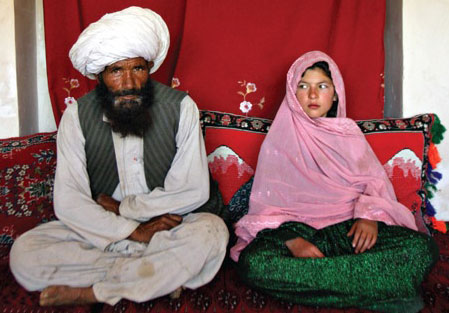
(U.S.) Legislation to Eliminate Child Marriage Passed in House of Representatives
(U.S.) Legislation to Eliminate Child Marriage Passed in House of Representatives
— “The International Protecting Girls by Preventing Child Marriage Act of 2009, an initiative to end child marriage in developing countries, passed in the House of Representatives on a 235-187 vote last week as part of the Foreign Relations Authorization Act.”
Latin America: UN-Habitat and UNIFEM Join Efforts to Make Cities Free from Violence against Women and Girls
Latin America: UN-Habitat and UNIFEM Join Efforts to Make Cities Free from Violence against Women and Girls
— June 3, 2009 – “The Executive Director of UN-HABITAT, Mrs. Anna Tibaijuka, and the Executive Director of UNIFEM, Mrs. Ines Alberdi, today signed a Memorandum of Understanding to join efforts to make cities and towns free from violence against women and girls. UN-HABITAT is joining UNIFEM’s new flagship initiative the ‘Global Programme on Safe Cities Free of Violence against Women and Girls’ as a lead global partner, building on an ongoing UNIFEM-UN-HABITAT collaboration in Latin America, as well as on broader issues of good governance, urban planning, women’s empowerment, political participation, gender equality, gender-responsive budgeting and access to basic services.”
Thailand: Youth Say NO to Violence against Women in Thailand
Thailand: Youth Say NO to Violence against Women in Thailand
— May 19, 2009 – “Following the collection of over three million signatures in Thailand for the Say NO to Violence Against Women campaign, UNIFEM Goodwill Ambassador HRH Princess Bajrakitiyabha on 18 May launched the school-based Youth Say NO to Violence Against Women programme, organized by UNIFEM in collaboration with the Office of the Basic Education Commission (OBEC), the Ministry of Education and the Ministry of Justice.”
Rwanda: UNIFEM to Boost Support to Rwanda Defense Forces in Fighting Violence against Women
Rwanda: UNIFEM to Boost Support to Rwanda Defence Forces in Fighting Violence against Women
— May 15, 2009 – “On a visit to Central Africa, UNIFEM’s Executive Director Ines Alberdi welcomed the grassroots interventions the Rwanda Defence Forces (RDF) has been undertaking to prevent sexual and gender-based violence in the communities”
NOW Report on Violence Against Women in America
NOW report on Violence Against Women in America
Violence Against Women in the United States: Statistics
Despite the fact that advocacy groups like NOW have worked for two decades to halt the epidemic of gender-based violence and sexual assault, the numbers are still shocking. It is time to renew our national pledge, from the President and Congress on down to City Councils all across the nation to END violence against women and men, girls and boys. This effort must also be carried on in workplaces, schools, churches, locker rooms, the military, and in courtrooms, law enforcement, entertainment and the media. NOW pledges to continue our work to end this violence and we hope you will join us in our work.
MURDER
In 2005, 1,181 women were murdered by an intimate partner.1 That’s an average of three women every day. Of all the women murdered in the U.S., about one-third were killed by an intimate partner.2
DOMESTIC VIOLENCE (Intimate Partner Violence or Battering)
Domestic violence can be defined as a pattern of abusive behavior in any relationship that is used by one partner to gain or maintain power and control over an intimate partner.3 According to the National Center for Injury Prevention and Control, women experience about 4.8 million intimate partner-related physical assaults and rapes every year.4 Less than 20 percent of battered women sought medical treatment following an injury.5
SEXUAL VIOLENCE
According to the National Crime Victimization Survey, which includes crimes that were not reported to the police, 232,960 women in the U.S. were raped or sexually assaulted in 2006. That’s more than 600 women every day.6 Other estimates, such as those generated by the FBI, are much lower because they rely on data from law enforcement agencies. A significant number of crimes are never even reported for reasons that include the victim’s feeling that nothing can/will be done and the personal nature of the incident.7
THE TARGETS
Young women, low-income women and some minorities are disproportionately victims of domestic violence and rape. Women ages 20-24 are at greatest risk of nonfatal domestic violence8, and women age 24 and under suffer from the highest rates of rape.9 The Justice Department estimates that one in five women will experience rape or attempted rape during their college years, and that less than five percent of these rapes will be reported.10 Income is also a factor: the poorer the household, the higher the rate of domestic violence — with women in the lowest income category experiencing more than six times the rate of nonfatal intimate partner violence as compared to women in the highest income category.11 When we consider race, we see that African-American women face higher rates of domestic violence than white women, and American-Indian women are victimized at a rate more than double that of women of other races.12
IMPACT ON CHILDREN
According to the Family Violence Prevention Fund, “growing up in a violent home may be a terrifying and traumatic experience that can affect every aspect of a child’s life, growth and development. . . . children who have been exposed to family violence suffer symptoms of post-traumatic stress disorder, such as bed-wetting or nightmares, and were at greater risk than their peers of having allergies, asthma, gastrointestinal problems, headaches and flu.” In addition, women who experience physcial abuse as children are at a greater risk of victimization as adults, and men have a far greater (more than double) likelihood of perpetrating abuse. 13
IMPACT ON HEALTH AND SOCIAL SERVICES
The Centers for Disease Control estimates that the cost of domestic violence in 2003 was more than over $8.3 billion. This cost includes medical care, mental health services, and lost productivity. 14
LEGISLATION
In 1994, the National Organization for Women, the NOW Legal Defense and Education Fund (now called Legal Momentum), the Feminist Majority and other organizations finally secured passage of the Violence Against Women Act, which provided a record-breaking $1.6 billion to address issues of violence against women.15 However it took nearly an additional year to force the Newt Gingrich-led Congress to release the funding. An analysis estimated that in the first six years after VAWA was passed, nearly $14.8 billion was saved in net averted social costs.16 VAWA was reauthorized in 2005, with nearly $4 billion in funding over five years.17
VIOLENCE BETWEEN SAME-SEX COUPLES
According to the National Coalition of Anti-Violence Programs, “domestic violence affecting LGBT individuals continues to be grossly underreported . . . there is a lack of awareness and denial about the existence of this type of violence and its impact, both by LGBT people and non-LGBT people alike.”18
Myths regarding gender roles perpetuate the silence surrounding these abusive relationships; for example, the belief that there aren’t abusive lesbian relationships because women don’t abuse each other. Shelters are often unequipped to handle the needs of lesbians (as a women-only shelter isn’t much defense against a female abuser), and transgendered individuals. Statistics regarding domestic violence against LGBT people are unavailable at the national level, but as regional studies demonstrate, domestic violence is as much as a problem within LGBT communities as it is among heterosexual ones.19
RESOURCES
1Bureau of Justice Statistics, Intimate Homicide Victims by Gender
2Bureau of Justice Statistics, There has been a decline in homicide of intimates, especially male victims
3Deptartment of Justice, About Domestic Violence
4Centers for Disease Control and Prevention (CDC), Understanding Intimate Partner Violence (PDF)
5National Coalition Against Domestic Violence (NCADV), Domestic Violence Facts (PDF)
6Bureau of Justice Statistics (table 2, page 15), Criminal Victimization in the United States, 2006 Statistical Tables
7US Census Bureau (page 12), National Crime Victimization Survey (PDF)
8Bureau of Justice Statistics, Victim Characteristics: Age
9Bureau of Justice Statistics (table 4, page 17) Criminal Victimization in the United States, 2006 Statistical Tables (PDF)
10National Institute of Justice (pages 6-7), Sexual Assault on Campus: What Colleges and Universities Are Doing About It (PDF)
11Bureau of Justice Statistics, Intimate Partner Violence in the U.S.: Victims
12Bureau of Justice Statistics, Victim Characteristics: Race
13Family Violence Prevention Fund, The Facts on Children and Domestic Violence
14CDC, Understanding Intimate Partner Violence (PDF)
15NOW, The Violence Against Women Act: Celebrating 10 Years of Prevention
16University of North Carolina, Analyses of Violence Against Women Act suggest legislation saved U.S. $14.8 billion
17NCADV, Comparison of VAWA 1994, VAWA 2000 and VAWA 2005 Reauthorization Bill (PDF)
18National Coalition of Anti-Violence Programs (NCAVP), Lesbian, Gay, Bisexual, and Transgender Domestic Violence In the United States in 2007 (PDF)
19NCAVP, Lesbian, Gay, Bisexual, and Transgender Domestic Violence In the United States in 2007 (PDF)