Our human rights, dignity, and security must be for ALL of our fellow human beings of all identity groups. Responsible for Equality And Liberty (R.E.A.L.) condemns the terrorist attack last night, Tuesday night, which led to the death of three young American Muslims.
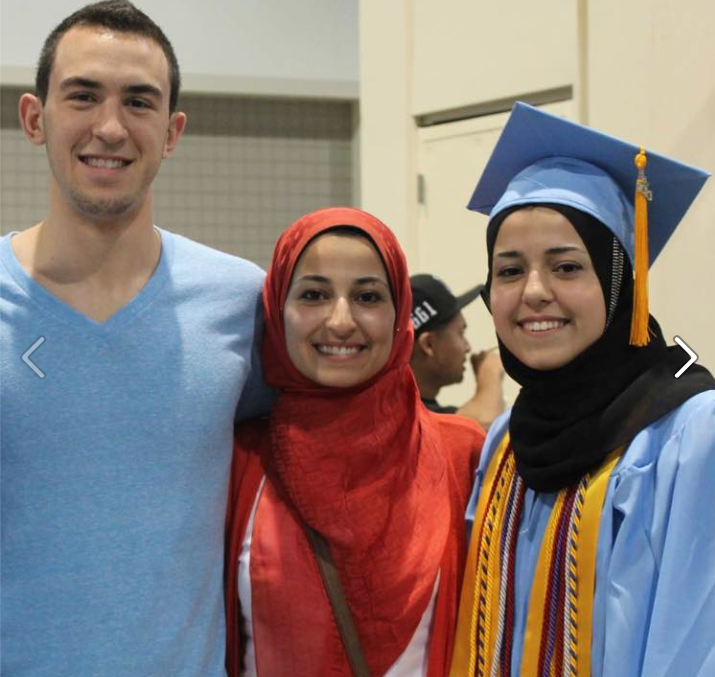
The family has created a Facebook website of three American Muslims in Chapel Hill, North Carolina: Deah Shaddy Barakat, 23, and his wife Yusor Abu-Salha, 21, and Abu-Salha’s sister, Razan Abu-Salha, 19, of Raleigh. My sympathies and prayers go out to their families and loved ones.
They were murdered in Chapel Hill, NC, with Craig Stephen Hicks arrested for the murders. Every such murder is a terrorist attack when people of an identity group are targeted.
The actions of the murderer of these young people must be rejected by all people of all identity groups, all religions, all ethnic groups, and all people of conscience. Their murder was an attack on all of us. When someone attacks the shared universal human rights, security, and dignity of one of us, it is an attack on all of us. There is never any rationale, religion, or ideology which justifies such attacks on and murders of our fellow human beings. We must reject any such extremist views as wrong – all the time.
As more information becomes available, R.E.A.L. will update this posting.
R.E.A.L. rejects and condemns violence against Muslim-Americans, and we urge our fellow Americans and our human beings to show respect for Muslim lives, as we respect all lives. #MuslimLivesMatter
R.E.A.L. rejects the anti-human rights view that any would have in targeting people for violence, murder, and abuse of their human rights due to their religion, their ethnic background, and their identity group. We urge all of our fellow human beings to continue working with us to improve our global culture to accept our universal human rights as a priority for all of our leaders, all of our governments, and in all of our lives.
23-year-old Deah Shaddy Barakat, his wife, Yusor Mohammad Abu-Salha, 21, and her sister, Razan Mohammad Abu-Salha, 19 (Source: Facebook)
On January 9, 2015, in Pakistan’s Punjab’s Rawalpindi area, a terrorist attack by a faction of the Tehreek-e-Taliban Pakistan (TTP) against Shia minority Muslims has left eight people killed and 17 injured. The attack was in the Chitian Hatian area at a Shia Imambargah mosque and worship hall. The attack happened when a Taliban suicide bomber was unable to enter the Shia house of worship at around 9:20 PM local time. The terrorist attack happened during a Shia religious service.
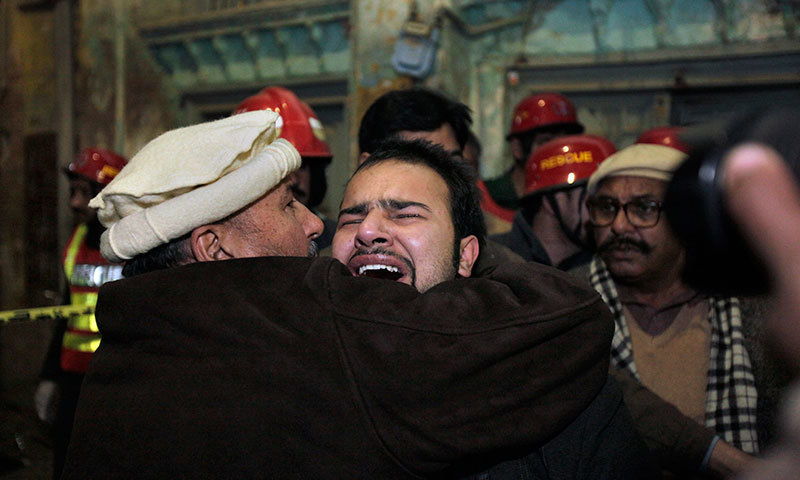
Pakistan: A Shia Muslim mourns over the death of his family member at the site of a blast in Rawalpindi on January 9, 2015 (Source: AP)
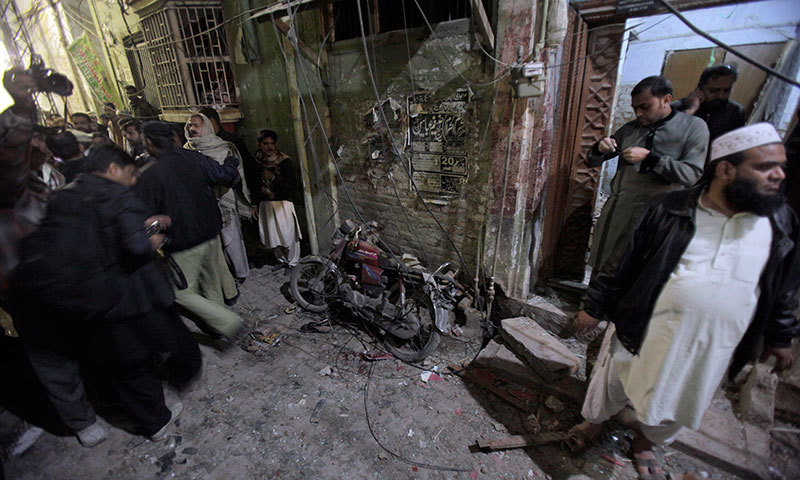
Pakistan’s Geo TV reports that “[e]yewitnesses said the explosion that took place outside the Imambargah was so intense that windowpanes of nearby buildings were shattered,” and that “[t]he injured were taken to the District Headquarters Hospital where some of them were in critical condition.” The Jamat-ul-Ahrar faction of Taliban took credit for the terrorist attack on the minority Shiite Muslims. The Pakistan News reported that Ehsanullah Ehsan, the spokesman of the Taliban’s Jamat-ul-Ahrar faction, stated in an email “We claim responsibility of the attack on the Imambargah and vow to continue such attacks against enemies of Islam.”
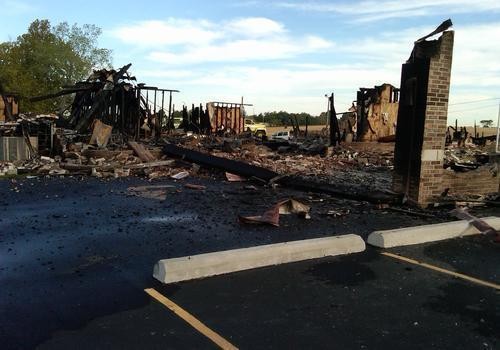
Pakistan: Police officer and local residents gather next to a damaged motorcycle at the site of a blast in Rawalpindi on January 9, 2015 (Source: AP)
Dawn also reported that “[a] bomb targeting Shias at a volleyball match killed at least five people and injured 10 in Pakistan’s restive northwest last Sunday.” The January 4 terrorist attack against Shiites by the Taliban was an attack on a child’s playground in Orakzai.
The Taliban has continued a war against religious minorities in Pakistan and other Muslim religions, as part of its rejection of our universal human rights for all people of all religions and all identity groups. Such terrorist hate and violence will target any individuals and deny their human rights of anyone in humanity.
This is continuing terrorist war by the Taliban against the people of the world and an attack on the universal human rights, including terrorist attacks and murders against other Muslims.
Responsible for Equality And Liberty (R.E.A.L.) calls for the support of our Universal Human Rights for all people around the world, and a rejection of this violence and hatred.
The terror campaign against Paris and throughout France has been widely condemned by Islamic groups and individuals. The terror campaign also included the murder of Parisian police officer, Ahmed Merabet, who was a Muslim. He was assassinated by the terrorists, while his hands were up in surrender. Those who reject our universal human rights do support any religious ideology other than their own efforts to use force to suppress, rather unite our fellow human beings.
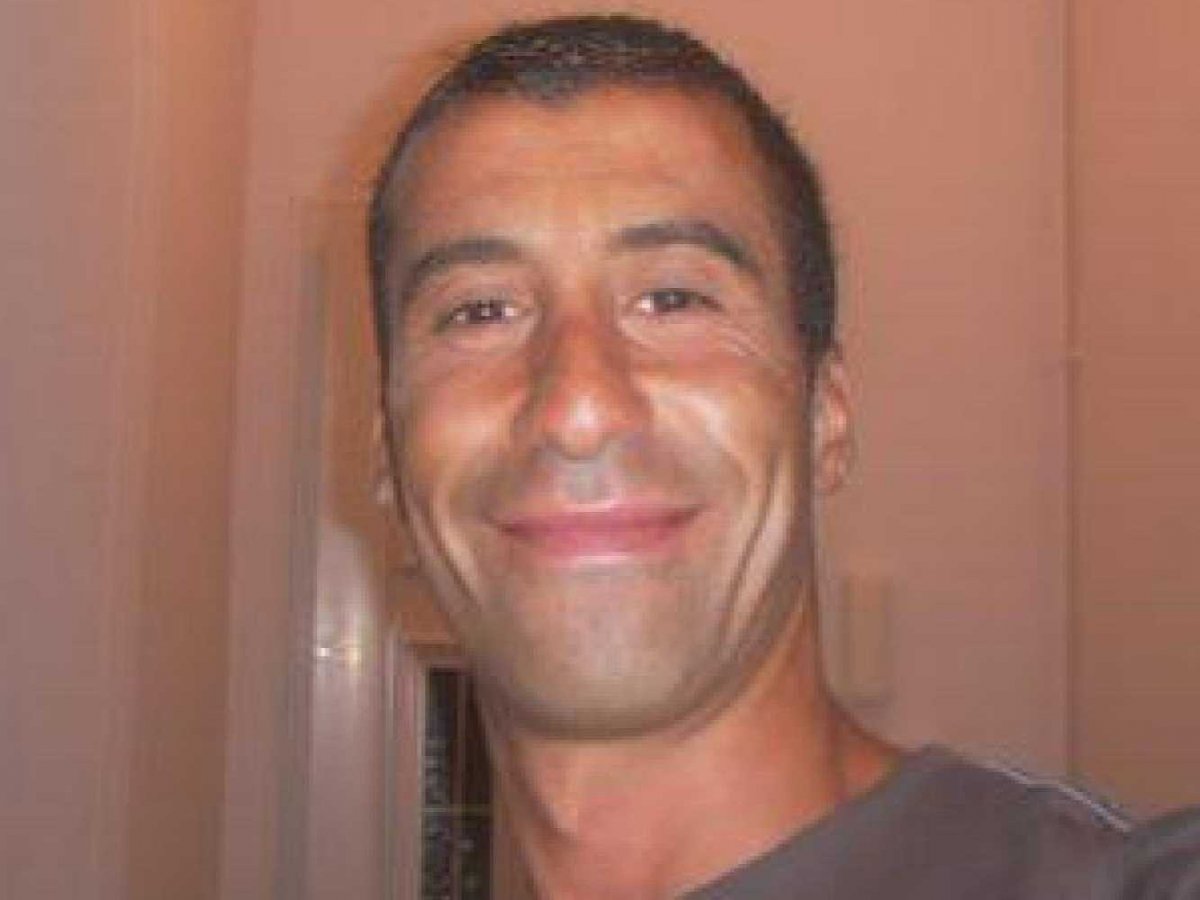
Ahmed Merabet, Parisian Police Officer Murdered by Terrorists on January 7, 2015 – Mr. Merabet was a Muslim. (Source: Facebook)
The French Muslim Council condemned the attack, calling it one of “exceptional violence.” It has also stated that “[t]he barbarous attack of extreme gravity is also an attack against democracy and freedom of the press. Our first thoughts are with the victims and their families for whom we have total solidarity.”
Mohammed Shafiq, chief executive of the Ramadhan Foundation, stated that “Terrorism has no religion and is an affront to Islam, therefore we must confront and expose the evil ideology of these terrorists.”
The Muslim Council of Britain, stated: “Whomever the attackers are, and whatever the cause may be, nothing justifies the taking of life.”
Tehmina Kazi, of the the British Muslims for Secular Democracy (BMSD) published an exceptional article providing more than condemnation, but also calling for action to challenge such extremists. Her article in Left Foot Forward, “Charlie Hebdo: Dismantling nine mistaken assumptions about the Paris atrocities,” also urged her fellow Muslims ” sort out the problems in their own back yard,” further stating “Given that the Qu’ran takes such a strong line on humans challenging injustice wherever we find it, this shouldn’t be too difficult.” Tehmina Kazi also called for change and urged Muslims to challenge such extremists and “work hard to create change within their own circles of influence (just like Inspire did with their ‘Making a Stand’ campaign, and Manwar Ali has done with his grassroots work in Ipswich and elsewhere). As I said in my piece yesterday, the Qu’ran tells us to fight against injustice wherever we may find it, even if it means testifying against our own. In my view, this is a crystal-clear example of the need to do just that.”
The Arab League made a statement by its chief Nabil al-Arabi that it “strongly condemns the terrorist attack on Charlie Hebdo newspaper in Paris.”
According to Al Arabiya News, “Al-Azhar, a thousand-year-old seat of religious learning respected by Muslims around the world, referred to the attack as a criminal act, saying that ‘Islam denounces any violence.'”
“We don’t need to blame murderers because they are terrorists whose plans and hostility against the world are clear. However, we do blame those who justify these terrorists’ crimes and who try to mislead Muslims with lies and excuses. Some people have even written in defense of the heinous crime of murdering French journalists which shocked the world. What sort of ignorant man can think that a government conspires to kill its own citizens in order to serve a foreign plot? What nonsense and ignorance can make some of us descend to this level of justifying the murder of fellow journalists?”
“Apologists of killers provide cover and legitimacy for terrorists at a time when we are all supposed to be at the forefront of those condemning these acts. Those defending terrorists must realize the severity of the crimes which they are committing. These actions and similar ones over the years have secured for terrorism a base in our region. Their sin is no less grave than the crimes of ISIS and al-Qaeda whom they have long praised. They have misled millions of people by presenting terrorist groups as defenders of the rights and existence of the Muslim diaspora.”
Responsible for Equality And Liberty (R.E.A.L.) has become aware of a new human rights report on the ongoing human rights crisis of Rohingya Muslims, which indicates that the Myanmar state security forces are “complicit in and profiting from” human trafficking of Rohingya Muslims refugees, seeking to flee from violence and persecution.
On November 7, 2014 the Fortify Rights group reported, “Myanmar state security forces are complicit in and profiting from the increasingly lucrative maritime human trafficking and smuggling of Rohingya Muslims from Myanmar’s Rakhine State, Fortify Rights revealed in a briefing released today. Since 2012, Myanmar state security forces in Rakhine State have collected payments from Rohingya asylum seekers fleeing Myanmar by ships operated by transnational criminal syndicates, according to information obtained by Fortify Rights. In some cases, the Myanmar Navy escorted boats operated by criminal gangs out to international waters.”
“Local Rohingya brokers mostly deliver payments to members of the Lon Thein riot police, Myanmar Police Department, Navy, and Army in amounts ranging from 500,000 kyat ($500 USD) to 600,000 kyat ($600 USD) per shipload of Rohingya asylum seekers in exchange for passage out to sea. In one case documented by Fortify Rights, the Myanmar Navy demanded 7-million kyat ($7,000 USD) from a criminal gang operating a ship filled with Rohingya fleeing to Malaysia. In other cases, members of the Myanmar Police Department took up to 15,000 kyat ($15 USD) per person directly from individual Rohingya passengers.”
“From September 2013 to October 2014, Fortify Rights interviewed more than 90 Rohingya men and women in Myanmar, Thailand, and Malaysia, many of whom fled the country between 2012 and 2014. Thousands more have fled in recent weeks.”
“Tens of thousands of Rohingya in Rakhine State are now preparing to board 50-to-100-person occupancy boats on the western coast of Myanmar. These boats transport Rohingya asylum seekers to larger ships in the Bay of Bengal that hold as many as 1,000 people. The vast majority of Rohingya who depart by sea soon find themselves in the custody of abusive human trafficking and smuggling gangs, who detain them in conditions of enslavement and exploitation.”
“Most Rohingya are fleeing persecution in Myanmar. Before boarding ships, they are generally not fully informed and, in many cases, are deceived about the treatment they will endure, additional costs, and other aspects of the journey to Malaysia. Many are sold multiple times and for a myriad of reasons, including for labor and sexual exploitation. Nearly all endure or witness torture, deprivation of food and water, confinement in extremely close quarters, and other abuses throughout their journey.”
“In 2012, civilians and state security forces razed Muslim villages in 13 of 17 townships in Rakhine State. More than 300,000 people — predominantly Rohingya Muslims — are now in need of humanitarian aid in the state, according to the United Nations Office for the Coordination of Humanitarian Aid. That includes 70,000 ‘food insecure’ people, 50,000 living in isolated villages, 50,000 in ‘host communities,’ and approximately 140,000 Rohingya and non-Rohingya Muslims living in more than 80 internally displaced person (IDP) camps. More than 100,000 Rohingya reportedly fled the country by sea in the last two years. Rakhine Buddhists also endured casualties and displacement in Rakhine State in 2012 on a lesser scale.”
“Scores of Rohingya who were displaced in Rakhine State told Fortify Rights that inadequate food, health care, and livelihood opportunities in the IDP camps as well as restrictions on movement and fear of future persecution contributed to their decision to flee Myanmar.”
“Moreover, more than 1 million Rohingya continue to be directly affected by persecutory state policies restricting their movement, marriage, childbirth, and other aspects of everyday life in Rakhine State. Rohingya who were not displaced by attacks in 2012 but still face persecution told Fortify Rights that they fled the country due to restrictions imposed by the state, including restrictions on freedom of movement, threats of violence, and ongoing pressure to abandon their ethnic identity.”
Fortify Rights’ report calls for action on Myanmar for the Trafficking in Persons (TIP) report by the U.S. Department of State.
“Trafficking in persons is prohibited under international law, and states have a duty to take action to combat trafficking. Human trafficking includes elements of deceit, exploitation, and abuse. Human smuggling, on the other hand, involves a ‘client’ consenting and paying to be transported across an international border.”
“In June 2014, Myanmar maintained its place on the United States Department of State’s tier-two watch list in the annual Trafficking in Persons (TIP) report. Myanmar has remained on the tier-two watch list through a system of waivers. Unless demonstrable changes take place in the next year, the country could be downgraded to tier-three status — the lowest designation reserved for countries failing to adequately combat human trafficking.”
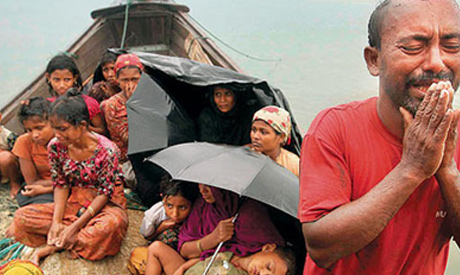
A Rohingya Muslim man who fled Myanmar to Bangladesh to escape religious violence, cries after he and others were intercepted in Taknaf, Bangladesh. (PHOTO AP)
Pakistan: once again Ahmadiyya Minority Muslims are being oppressed by religious extremists who reject their religious freedom rights. In this case, an elderly British Ahmadiyya Muslim man, Masud Ahmad, is being oppressed and was arrested using the broad and oppressive blasphemy laws, used by extremists to reject freedom and target individuals. Responsible for Equality And Liberty calls for the Pakistan courts to drop all charges against Masud Ahmad, and to end the oppressive use of blasphemy laws in Pakistan. See reports by the Daily Mail and by the Independent.
The Daily Mail reports: “An elderly British man faces up to three years in a Pakistani prison after he was tricked into reading the Koran in public. Masud Ahmad, 72, belongs to the minority Ahmadiyya sect, who under Pakistani law are banned from calling themselves Muslim, with Amnesty International saying he was deliberately tricked into reading the holy book in Lahore by figures linked to a right-wing religious group… it is believed Mr Ahmad was secretly filmed reading from the Koran in November last year by two men posing as patients at the homeopathy clinic he ran in Lahore. Amnesty International say he was maliciously targeted because of his religion. Every year dozens of Ahmadi Muslims are charged with breaching Pakistan’s strict blasphemy laws simply for practicing Islam, while they and other minority groups are also at risk of sectarian violence. Speaking to The Independent, Mr Ahmad’s son Abbas, 39, said: ‘We are concerned he will never see his nine grandchildren but we are concerned with his life. We know what happens [in] these sort of cases.’ Abbas Ahmad said his father had been released on bail ahead of a trial and is currently in secure accommodation.”
The United States of America has accepted 73,000 Burmese (Myanmar) refugees from Thailand as part of an agreement with the UNHCR, to provide resettlement for these stateless refugees. Based on our research, this is a combination of Burmese Karen (Christian) and Rohingya Muslim refugees, but we do not have an exact count.
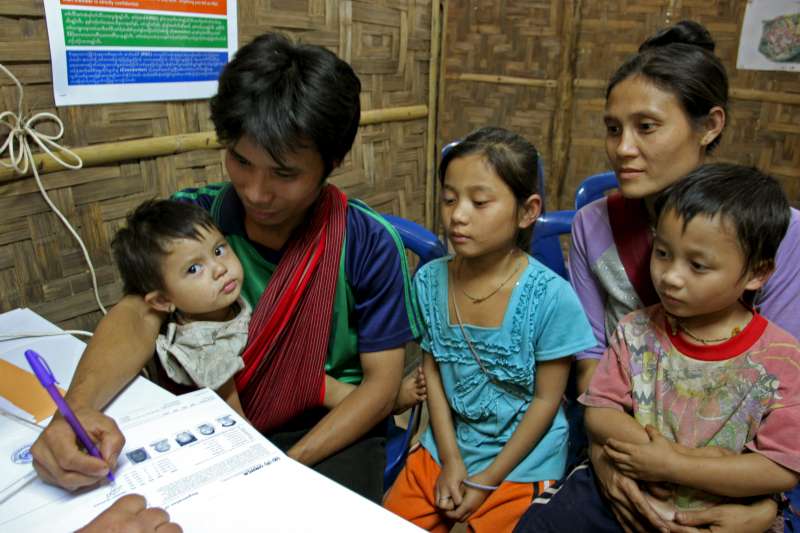
Tun Myin and his family confirming their interest in resettlement to the United States in Mae La Oon camp, north-western Thailand. (Source: UNHCR)
The UNHCR states: “One of the world’s largest resettlement programs recently came to an end in Thailand when UNHCR received the final expressions of interest from eligible Myanmar refugees who wish to start a new life in the United States. The group resettlement program was initiated in 2005, with the support of the Thai and US governments, to offer a durable solution to the tens of thousands of refugees from Myanmar who found themselves in a protracted refugee situation and dependent on international assistance in the nine camps along the Thai-Myanmar border.”
“Anne C. Richard, assistant secretary at the US State Department’s Bureau of Population, Refugees, and Migration, said that her country had welcomed and settled more than 73,000 refugees from Myanmar since 2005. ‘The United States is proud to have given a new start to these refugees. Resettled Burmese refugees have thrived in their new homes, and enriched their new communities. Many have become homeowners, small business owners and American citizens,’ she said.”
“‘We expect several more thousand to arrive in the coming year as the program winds down,” she added. ‘This successful resettlement program has reached its natural conclusion following the January 24, 2014 deadline for Burmese refugees to express their interest in resettlement to UNHCR.'”
“The program’s pending closure was first announced and implemented in January last year in Mae La camp. It was subsequently rolled out to the other camps in different stages. Eligible refugees in each camp were given three months to decide whether or not to apply for resettlement to the US under the simplified procedures.”
“The process ended last Friday as the deadline for applications passed in the last three camps in Mae Hong Son province, namely Mae La Oon, Mae Ra Ma Ruang and Ban Mae Surin.”
“Over the past year, nearly 6,500 Myanmar refugees on the Thai-Myanmar border have expressed interest in the US group resettlement program – 2,500 more individuals than in 2012, an indication that many refugees had been waiting for the last chance before making a final decision to resettle or not.”
“In addition to the US departures, some 19,000 Myanmar refugees in Thailand have gone to other resettlement countries, including Australia, Canada, Finland and Japan, in the last nine years.”
“‘The end of this chapter does not mean that resettlement is closed completely,’ said Mireille Girard, UNHCR’s representative in Thailand. ‘UNHCR will continue to identify and submit refugees with specific protection needs on an individual basis to various countries. We are also working with the Thai government and resettlement countries to reunite families and make sure family members can be resettled together.'”
“There are an estimated 120,000 Myanmar refugees remaining in the nine camps in Thailand, including more than 40,000 not registered by the Thai authorities.”
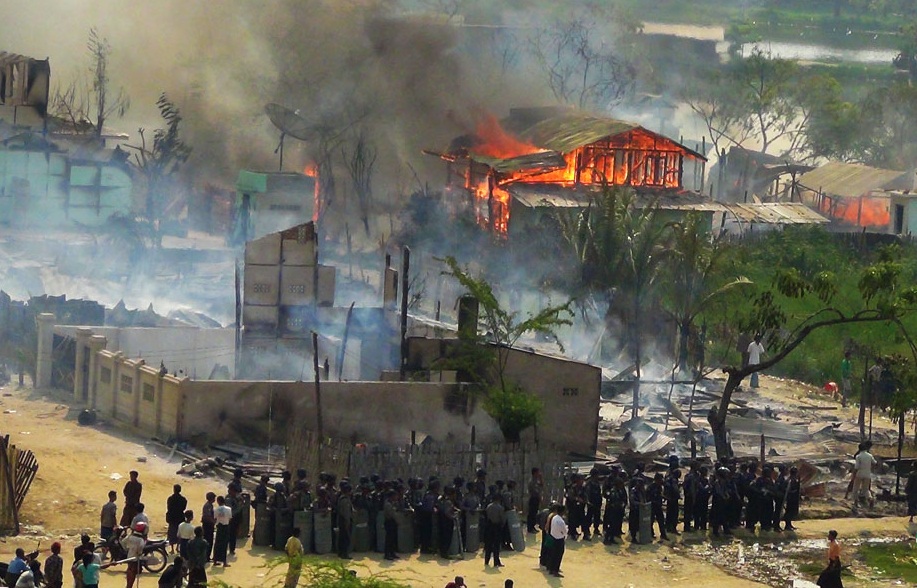
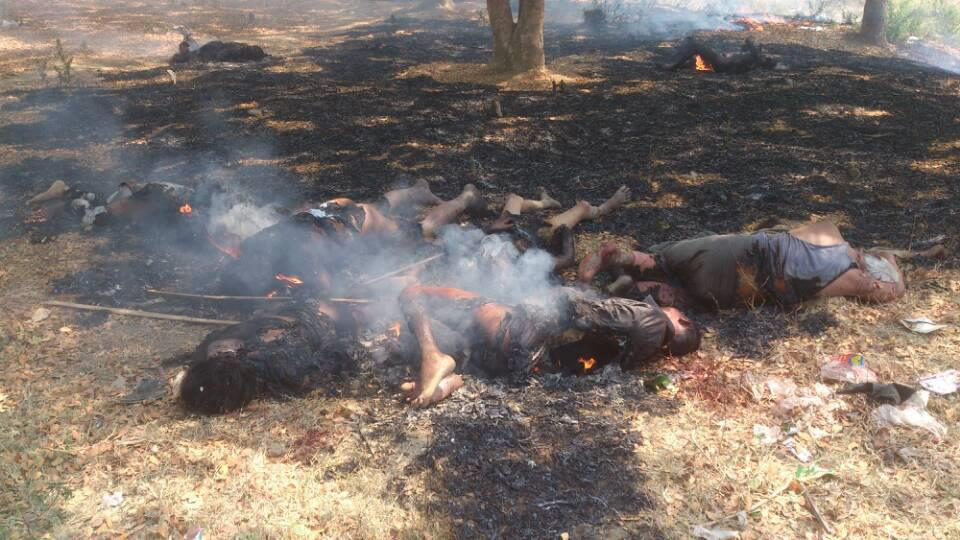
The Associated Press has reported on burning alive of Rohingya Muslims within Myanmar, including an atrocity at Meikhtila, where 36 Rohingya Muslims, mostly teenagers, who were slaughtered before the eyes of police and local officials who did almost nothing to stop it. The Associated Press reported on such atrocities of burning people alive, including burning 36 children: “Their bones are scattered in blackened patches of earth across a hillside overlooking the wrecked Islamic boarding school they once called home. Smashed fragments of skulls rest atop the dirt. A shattered jaw cradles half a set of teeth. And among the remains lie the sharpened bamboo staves attackers used to beat dozens of people to the ground before drowning their still-twitching bodies in gasoline and burning them alive.”
This atrocity is so extreme and horrific that R.E.A.L. is going to post this in its entirety so that not a single word is forgotten. We have an included an extreme image which shows the graphic nature of such violence, which we are linking to, but not embedding in this posting due to the disturbing image. We are quoting this AP report.
Attack on Muslim School in Meikhtila, Myanmar, Resulting in 36 Rohingya Muslim Dead
MEIKHTILA, Myanmar — Their bones are scattered in blackened patches of earth across a hillside overlooking the wrecked Islamic boarding school they once called home.
Smashed fragments of skulls rest atop the dirt. A shattered jaw cradles half a set of teeth. And among the remains lie the sharpened bamboo staves attackers used to beat dozens of people to the ground before drowning their still-twitching bodies in gasoline and burning them alive.
The mobs that March morning were Buddhists enraged by the killing of a monk. The victims were Muslims who had nothing to do with it – students and teachers from a prestigious Islamic school in central Myanmar who were so close to being saved.
In the last hours of their lives, police had been dispatched to rescue them from a burning compound surrounded by swarms of angry men. And when they emerged cowering, hands atop their heads, they only had to make it to four police trucks waiting on the road above.
It wasn’t far to go – just one hill.
What happened on the way is the story of one of Myanmar’s darkest days since this Southeast Asian country’s post-junta leaders promised the dawn of a new, democratic era two years ago – a day on which 36 Muslims, most teenagers, were slaughtered before the eyes of police and local officials who did almost nothing to stop it.
And what has happened since shows just how hollow the promise of change has been for a neglected religious minority that has received neither protection nor justice.
The president of this predominantly Buddhist nation never came to Meikhtila to mourn the dead or comfort the living. Police investigators never roped this place off or collected the evidence of carnage left behind on these slopes. And despite video clips online that show mobs clubbing students to death and cheering as flames leap from corpses, not a single suspect has been convicted.
International rights groups say the lack of justice fuels impunity among Buddhist mobs and paves the way for more violence. It also reflects the reality that despite Myanmar’s bid to reform, power remains concentrated in the hands of an ethnic Burman, Buddhist elite that dominates all branches of government.
“If the rule of law exists at all in Myanmar, it is something only Buddhists can enjoy,” says Thida, whose husband was slain in Meikhtila. Like other survivors, she asked not to be identified by her full name for fear of retribution. “We know there is no such thing as justice for Muslims.”
___
The Associated Press pieced together the story of the March 21 massacre from the accounts of 10 witnesses, including seven survivors who only agreed to meet outside their homes for security reasons. The AP cross-checked their testimony against video clips taken by private citizens, many with the date and time embedded; public media footage; dozens of photos; a site inspection, and information from local officials.
The day before the massacre began like every other at the Mingalar Zayone Islamic Boarding School – with a call to prayer echoing through the darkness before dawn.
It was Wednesday, March 20, and 120 drowsy students blinked their eyes, rising from a sea of mats spread across the floors of a vast two-story dormitory.
Set behind the walls of a modest compound in a Muslim neighborhood of Meikhtila, the all-male madrassa attracted students from across the region whose parents hoped they would one day become Islamic scholars or clerics.
The school had a soccer pitch, a mosque and 10 teachers. It also had a reputation for discipline and insularity – the headmaster, a strict yet kind man with a wispy beard, only allowed students outside once a week. Muslims made up about a third of Meikhtila’s 100,000 inhabitants, compared with just 5 percent of Myanmar’s population, and they lived peacefully with Buddhists.
The Muslims, though, were nervous after sectarian clashes in western Rakhine state in June and October last year killed hundreds and drove more than 140,000 from their homes. Both times, the madrassa shut down temporarily as a precaution.
The unrest was aimed at ethnic Rohingya Muslims, who have lived in Myanmar for generations but are still viewed by many Buddhists as foreign interlopers from Bangladesh. The hatred has since morphed into a monk-led campaign against all Muslims, seen as “enemies” of Buddhist culture.
When classes began on March 20, student gossip quickly turned to an argument on the other side of town between a Muslim gold merchant and a Buddhist client, which had prompted a crowd of hundreds to overrun the shop and set it ablaze.
That afternoon, several Muslim men yanked a monk off a motorcycle and burned him to death. Buddhist mobs in turn torched Muslim businesses and 12 of the city’s 13 mosques.
In Mingalar Zayone, some teachers skipped courses. Then classes were canceled altogether.
Students rushed to the dormitory’s second floor and gazed out of the windows, in shock. Black and gray columns of smoke were rising in the air.
At dinner a couple of hours later, the sound of a teacher weeping filled the hall. His family home had been burned with his parents inside it. Some students pushed their food away.
As the sun slunk in a hazy sky, a Buddhist government administrator came to the gate of the madrassa and took the headmaster aside.
“You need to get your students out of here,” he warned. “You need to hide. The mobs are coming – tonight.”
At sunset prayers, the headmaster told everyone to collect their valuables, their money, their ID cards – and prepare to leave. He asked them to remove their head caps, Islamic dress and anything that might identify them as Muslim.
He never explained why. He didn’t have to.
“If they try to destroy this place, we’ll do our best to stop them,” he said. “But whatever happens, we will not let you die.”
___
After dark, they crept deep into a swampy jungle of tall grass a block away called the Wat Hlan Taw, and the tall reeds swallowed the school’s refugees whole.
Most were students and teachers. But at least 10 women and their children were also among them, relatives or residents too terrified to stay in their own homes.
They sat down in the mud. Nobody said a word.
Soon, they heard the mob approaching – dozens, maybe hundreds of voices, a cacophony of menace and anger that grew louder by the second.
The voices were at the gate of their madrassa. And then they were inside, kicking in doors and smashing windows.
In the darkness of the Wat Hlan Taw, a teacher named Shafee with a stomach ailment reached for his wife’s palm and squeezed it hard.
“If they find us,” he whispered nervously, “you know I won’t be able to run.”
“Don’t worry,” his wife, Thida, replied, cradling their 3-year-old son in her arms. “We’ll be together, every step. I’ll never leave you.”
As the long night wore on, the madrassa burned down.
At 4 a.m., Buddhist prayer gongs rang out, and the mobs began shining flashlights into the Wat Hlan Taw. Some Buddhists fired rocks into the bush with homemade slingshots.
“Come out, Kalars!” they shouted, using a derogatory word for Muslims.
The Muslims ran to a neighboring compound, owned by a wealthy Muslim businessman. Some tore down a bamboo fence to get inside.
The mobs were not far behind.
Thida heard a boy screaming behind her, a student who had been trying to call his mother on his cell phone.
He had waited just a few seconds too long to run.
___
As the first rays of dawn touched Mingalar Zayone, Koko, a quiet, heavy-set 21-year-old student, peered over the compound’s thin fence and felt numb. Men clutching machetes and sticks were girding for a fight outside.
Hundreds more were gathering on a road running across a huge embankment that shadowed the neighborhood’s western edge. The embankment had always been there, but now it seemed to seal them inside the bottom of a huge, oppressive bowl from which they could not escape.
Koko could almost feel the blood draining from his cheeks. He felt weak, no longer human.
“We’re trapped,” he thought, “like animals.”
Some students were frantically making calls for help – to parents, to police. Some were chanting loudly. Others were scouring the property for anything they could use to defend themselves – wooden boards, rocks the gangs outside had thrown at them.
By the time an opposition lawmaker, Win Htein, arrived around 7:30 a.m., dozens of helmeted riot police were on the scene. The security forces, equipped with rifles and gray shields, had formed lines to keep the Buddhist hordes away from the Muslims.
Win Htein saw the head of police and the district commissioner standing nearby, and the bodies of two dead Muslims on the edge of the Wat Hlan Taw. Over the next 45 minutes, he watched in horror as mobs of men chased five more students out of the bush, one by one, and hacked or bludgeoned them to death in broad daylight.
As stone-faced police officers stood idle just steps away, crowds cheered like spectators in a Roman gladiator show.
“They must be wiped out!” one woman shouted.
“Kill them all!” shouted another. “We must show Burmese courage!”
Win Htein felt nauseous. He wanted to vomit. In two decades of prison and torture under brutal military rule, he had never seen anything like this.
When he tried to convince people in the crowds to spare the Muslims, the mobs began threatening him. One Buddhist man demanded bitterly: “Why are you trying to protect them? Are you a Muslim lover?”
An officer advised Win Htein to leave.
Shortly after, a monk and four policemen offered to escort the trapped Muslims on foot to several police vehicles on top of the embankment.
“We’ll protect you,” one officer said. “But the students must stop chanting. They must put down their weapons” – their sticks and stones.
As the teachers debated what to do, they realized their time had run out. The crowds were flinging long bamboo staves wrapped with burning fabric over the fence like giant matchsticks. The compound was on fire, belching orange flame and black smoke into the air.
___
The group emerged slowly with their hands behind their heads, like prisoners of war.
Police led them down a narrow dirt track – a long line of desperate people, crouching in terror. Almost immediately, they were stoned by livid residents of a tiny Buddhist neighborhood who attempted to block their way.
What followed was a gantlet from hell, an obstacle course that came with its own set of macabre rules: Do not run, or they will chase you. Do not fall, or you may never get back up. Do not stop, or you may die.
Police fired several rounds into the air, but the crowds attacked anyway. A teacher was knocked to the ground, and panicked students stepped over his body, sprawled face down in the dirt.
Koko saw a friend hit across the forehead with a hoe. When he tried to stand again, five men with knives dragged him off.
The mobs then attacked Koko with machetes from behind, slicing six palm-sized gashes into the flesh of his back. Blood stained his yellow shirt. He fell and blacked out.
One officer, struck in the face by a rock, apparently by accident, shot a Buddhist man in the leg. The crack of gunfire woke Koko, who realized he had been left for dead and leapt to his feet to catch up with the group.
As they moved inside the Buddhist neighborhood on the path to the trucks, police ordered the Muslims to squat down.
Crowds taunted and slapped them. Several women forced them to bow their heads and press their hands together in prayer like Buddhists. And according to testimony gathered by Physicians for Human Rights, they also shoved pork, which is prohibited in Islam, into the mouths of the Muslims.
One man swung a motorcycle exhaust pipe into a student’s head. Another hit him with a motorcycle chain. A third stabbed him in the chest.
“Don’t kill them here,” yelled one monk. “Their ghosts will haunt this place. Kill them up on the road.”
The monks said the police should round up the women and children and let them go first. When Thida refused to let go of her husband, a Buddhist man shoved a palm in his face and forced them apart. Another man she recognized tried to grab her 3-year-old.
“He’s still breast-feeding. Leave him alone!” she shouted, pulling away.
The man then grabbed her 9-year-old, but pushed him back in disgust when he wailed.
Amid the confusion, one Buddhist woman hurriedly waved two of Thida’s teenage daughters into her home to protect them, in an act of kindness. Both would be reunited with Thida several days later, unharmed.
As Thida and about 10 women and children climbed the hill, several riot police pushed back the stick-wielding crowds around them with open palms. A video reviewed by the AP records a man trying to dissuade the mobs, saying: “Don’t do this. There are kids there as well.”
But the violence continued.
Buddhists still clearing the Wat Hlan Taw forced a thin 17-year-old student named Ayut Kahn out into an open patch of low grass. In a scene captured on video by at least two different unidentified people, the boy – a Meikhtila native with a stutter who loved soccer – was struck 24 times by nine people with long sticks and bloody machetes. Five blows were from a monk.
“Look! Look!” one Buddhist bystander shouted from the top of the embankment as the student was murdered. “The police are heading down there, but they aren’t doing anything.”
___
The last time Thida saw her husband, he was struggling to climb the hilltop road where she waited anxiously beside police. Two teachers were by his side, their arms locked in his. Mobs swarmed the steep embankment between them.
Shafee’s face was pale. He had never looked this way – so exhausted, so drained, so helpless.
Across the hillside, Thida could hear the cries of hate.
“Kill the Kalar! Don’t leave any of them behind!”
“Clean them up! They are just dirty things!”
Somewhere below, several students tried to make a run for it. Crowds chased them.
Somebody pummeled 14-year-old Abu Bakar across the cheek with a bamboo stick. Somebody else sliced the back of 20-year-old Naeem’s legs with daggers. Yet another clubbed Arif – the teacher who had wept at dinner the night before – to the ground.
Police stood on both sides of the hill watching, unmoved. When a boy sitting with them at the bottom of the slope looked up, an officer slapped his head and shouted: “Keep your eyes down!”
A frantic monk waved a multicolored Buddhist flag screaming for the killing to stop. “This is not the Buddhist way!”
The crowd backed away briefly, but police left the wounded behind.
One video clip of the moments that followed shows seven Muslim men curled on the ground beneath a grove of rain trees. The faces of at least three are heavily covered in blood. A man in a green jacket swings a bamboo stave down on the wounded with all his might.
The camera pans to another group of three other crumpled men. One is Shafee, who is lying face down, pulling his legs in toward his stomach.
“Oh, you want to fight back?” a voice says, laughing.
A grainy video filmed shortly after shows flames leaping from a pile of 12 charred corpses in the same spot, and onlookers backing away from a smoky body rolling down the hill. Another video shows crowds cheering.
Thida could only smell the burning flesh. She hugged the leg of a police officer standing beside her and asked: “Hey, brother. Please. Please. What is happening to us?”
“Shut up, woman,” the officer replied. “Keep your head down. Don’t you know you can die here, too?”
___
In all the mayhem, several dozen police reinforcements arrived to escort the remaining Muslims to the hilltop and load them onto trucks.
As they pulled away, Koko knew he would never return to Meikhtila.
“There is nothing left of our lives here,” he said to himself. “There is only Allah.”
The trucks took the traumatized survivors to a police station, where they were offered water, and, by at least one officer, an apology.
In all, about 120 Muslims survived – among them, 90 students and four teachers. They stayed several days at a police station before being bused to another town to join their families.
The dead totaled 32 students and four teachers, according to the headmaster, who cross-checked their deaths with families and witnesses.
The head of state security in the region, Col. Aung Kyaw Moe, who ordered the rescue operation, said “10 or 15” died on the way. But video obtained by the AP, shot by unidentified witnesses touring the area after the killings, contradicts that claim. Two videos alone indicate at least 28 people died, most of them blackened corpses with fists and arms reaching into the air; one is decapitated.
When the people filming pass one body, a voice can be heard saying: “Hey, is that a child?”
“No, he’s just short,” another replies, chuckling.
___
The police present that day were the only ones with rifles and guns, which would have been no match for the crude weapons carried by the mobs. But while they rescued more than 100 Muslims, they did not stop the massacre of dozens of others.
“They were of two minds. We could see that,” the headmaster said. “Some of them tried to help us … but in the end, they all watched us die.”
Win Htein, the lawmaker, said there were two explanations: Either the “police didn’t get any order from above (to shoot), or they got the order from above not to do anything.”
Aung Kyaw Moe, the regional security chief, insisted he had given authorization to fire. But he said police didn’t shoot because “doing so could have angered the crowds and made the situation even worse.”
He said even though 200 police were deployed to the area, the crowds outnumbered them, and Muslims died because “some of them tried to run.”
“They scattered and our forces could not follow every one of them,” he said. “They had to take care of the rest of the people they were guarding. … On the front lines, some things cannot be clearly explained.”
During a tense 50-minute interview, Aung Kyaw Moe said he was “satisfied” with the job police had done.
But he grew increasingly agitated, saying five times that it was “inappropriate” to ask for details because “you’re not writing a novel, you’re not making a movie … you don’t need to know.”
___
The first people prosecuted for the violence in Meikhtila were not the Buddhist mobs. The first were Muslims.
On April 11, a court sentenced the gold shop owner and two employees to 14-year jail terms for theft and causing grievous bodily harm. On May 21, the same court sentenced seven Muslims to terms ranging from two years to life for their roles in the killing of the monk the day the unrest began.
On June 28, a Buddhist man was convicted of the murder of a Muslim elsewhere in Meikhtila and sentenced to seven years in jail, according to state prosecutor Nyan Myint. He said 14 Buddhists have been charged and are on trial for the Mingalar Zayone killings, some for murder, but none has yet been convicted.
Justice “is a matter of time,” he said. “The courts are proceeding with the trials and have no prejudice or bias against any group.”
Aung Kyaw Moe, the security chief, said all those arrested were residents of Meikhtila, but he gave no other details.
No police have been reprimanded.
Similar patterns of justice have played out in other towns.
After Buddhist mobs burned several villages in the central town of Okkan in April, the first convicted was a Muslim woman accused of starting it by “insulting religion.” She had knocked over the bowl of a novice monk. Muslims say it was an accident.
And after more Buddhist mobs rampaged through the eastern city of Lashio in May, setting Muslim shops alight, the first convicted was the Muslim man authorities say triggered the unrest by dousing a Buddhist woman with diesel fuel and severely burning her.
One Muslim man was killed in each incident, but no one has been prosecuted.
___
After the massacre in Meikhtila, the corpses rotted for at least two and a half days before the government sent workers to haul them away, some on garbage trucks. The remains were taken to Meikhtila’s main cemetery, where they were simply burned again in an open patch of red dirt with used car tires and gasoline and left for stray dogs to pick through.
Authorities say they did not hand the bodies back to the relatives of the dead because they were too badly burned to be identified. But families of those slain say they were never even asked, and never given the chance to bury their loved ones according to Islamic rites.
No Muslim families have dared visit the cemetery or return to the massacre site.
The mood in the neighborhood is still hostile to outsiders. When AP journalists visited the area, residents stared silently.
One barefoot woman washing clothes beside a well where a pile of charred corpses were dumped claimed she had no idea what happened that day, because she wasn’t there.
Her friend looked up and said: “Tell him what started it. Tell him about the gold shop, the monk who was killed.”
Ma Myint shook her head, squinting up briefly in the direction of the hilltop.
Those bones “mean nothing to me,” she said.
___
The school’s headmaster pulls out a single sheet of blue-lined paper from his pocket. On it, handwritten, are the names and ages and hometowns of the dead.
What bothers him the most isn’t the decision he made to take his students into the Wat Hlan Taw, or the nightmares he has had since. It’s that those who were slaughtered could have been saved.
Most of those beaten to the ground did not die immediately, he says.
“Had anybody stepped in to help them even then, to push back the mobs, to pick them up and take them to the hospital – they could have lived,” he says.
He has told many of the 90 students who survived to lie low and not testify for fear of reprisal. He dreams of gathering them together again and rebuilding his school elsewhere, but he is too afraid of sectarian violence flaring anew to say where or when.
“Where is safe in this Myanmar?” he says. “Who will protect us?”
On March 21, the headmaster urged his students not to fight back.
“Next time, we will defend ourselves,” he says quietly, “because we know that nobody else will.”
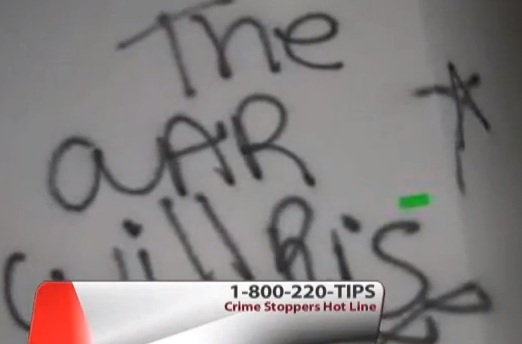
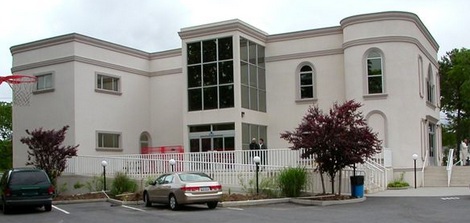
We have received reports of hate crimes against the American Masjid Darul Quran Mosque in Long Island, New York. We call upon a rejection of such vandalism and hatred against mosques or any houses of worship anywhere in the world. Apparently a group of vandals spray painted statements on the mosque, and then draped toilet paper over the imam’s house. The vandalism stated “The War Will Rise,” “RIP US Ambassador,” among other statements.
What is even more troubling are the comments made by readers on the NYC CBS local news web site by twisted individuals calling for the mosque to be “burned down,” calling Muslims “venom,” and other hateful comments. This demonstrates the depth of the HATE that we must continue to challenge every day. We challenge and reject such views of hate as Christians, Jews, Buddhists, Hindus, Muslims, and all faiths, all races, all nationalities, and all identity groups.
We must urge all to Choose Love, Not Hate. Love Wins.
NYC Long Beach Mosque: Hate Crime Graffiti at Mosque Stating "War Will Rise"
NYC CBS news has reported:
“A message of hate was spray-painted on a Suffolk County mosque and now police are searching for the vandals. The angry words on the Bay Shore mosque threatened a rising war. It’s believed that someone came over the fence and vandalized the building, police said. The imam at Masjid Darul Quran Mosque showed CBS 2′s Lou Young the now white-washed spots where the messages were found. A pair of spray-painted statements that were written apparently referred to the overseas violence against U.S. embassies and consulates by Muslim extremists. They appeared along with an ominous reference to rising war, but the messages were directed against neighbors worshiping peacefully. Police called it a hate crime. “This is an attack on the community here in Suffolk County. It tears at the fabric of our community,’ said Suffolk County Police Lt. Stephen Hernandez, The overseas violence was condemned repeatedly from the pulpit at the Long Island mosque and the U.S. Libyan ambassador was mourned the very day he died. So the words especially hurt and the worshipers said they are worried it might not be an isolated incident. ‘There are things happening all over the country. It is troubling to see this happening in America. The America that I love so much,’ said worshiper Mohammed Zainul. The hurtful graffiti was painted last week. Friday morning someone came in the other side of the property to drape toilet paper over the imam’s house. Members of the mosque said they believe the actions are part of a pattern. “I feel scared they might hurt my brothers and all that,” worshiper Mohammed Laiqat said. ‘I’m definitely worried about this.’ In 20 years of worship in the community, the worshipers said they have never before felt unsafe or targeted.”
In addition, note that Suffolk County Crime Stoppers offers a cash reward of up to $5,000 for information that leads to an arrest. Anyone with information about this crime is asked to call anonymously to Crime Stoppers at 1-800-220-TIPS. All calls will be kept confidential.
“The Masjid Darul Quran, Bay shore, NY has very strongly condemned the killing of U.S. Ambassador to Libya Christopher Stevens, and his staff, and unequivocally condemned the attack on the US Embassies in Cairo and Yemen which came in the aftermath of bigoted video film in which the beloved Prophet Muhammad (peace be upon him) was depicted in a profane manner. Although we condemn production of such hateful video and yet believe that this video could never be an excuse to commit any acts of violence whatsoever. The Prophet (peace be upon him) is loved and respected by millions of people across the world, and no one can dilute or erase his love from our hearts. No one should fall into the trap of those who wish to promote terror and violence. The Prophet (peace be upon him) should be our example in everything we do, and even though he was attacked and insulted many times throughout his life, he always reacted with compassion and forgiveness, never with revenge or violence. To engage in such violence and senseless killing is to truly defile his legacy. We extend our deepest condolences to the families of U.S. Ambassador Christopher Stevens and the other three American personnel at this tragic time. We also condemn graffiti on the outer walls of the MDQ by some unknown people and ask the authorities to take serious action against such elements.”
Reports continue to describe the ongoing persecution of Rohingya Muslims in Myanmar (aka Burma). We urge the public to call for an end to this persecution, violence, and oppression.
Responsible for Equality And Liberty (R.E.A.L.) urges world leaders and people around the world stand in solidarity with the Rohingya Muslims in Myanmar (Burma) as our brothers and sisters in humanity in defense of their Universal Human Rights for human rights, human dignity, freedom of conscience, safety, and security.
— R.E.A.L. has issued an on-line petition calling for an end to violence in Myanmar, respect for the Universal Human Rights of all people living in Myanmar, and an end to the persecution and targeted violence against Rohingya Muslims in Myanmar.
— 1. We call for an end to the violence in Myanmar by ANY group – of any religion or ethnicity. There is no “justified” violence which targets any religion or ethnic group – Muslim or Buddhist.
— 2. Our brothers and sisters in humanity of any group, any religion, any ethnicity, all deserve consistent Universal Human Rights, including their human rights of dignity, safety, and freedom – without exception.
— 3.We call for an end to oppression against Rohingya Muslims by government security forces and ethnic majority groups against Rohingya Muslims, who have faced a series of targeted attacks against their identity group.
— 4. R.E.A.L. urges the world governments, the media, and the public to become aware of the persecution and violence against Rohingya Muslims in the northern Rakhine State (NRS) in Myanmar (Burma). The Rohingya Muslims live in desperate refugee camp type of conditions and they represent one of the largest groups of stateless people in Asia. We urge the world governments, the media, and the public, to call for an end to the persecution and violence against Rohingya Muslims by government security forces and ethnic majority groups.
The United Nations indicates that there are 800,000 Rohingya Muslims without citizenship in Myanmar. Reports state that Rohingya Muslims represent a large percentage of the displaced individuals in Myanmar. Amnesty International states that between 50,000 and 90,000 Muslim Rakhine, and Muslim Rohingya have been displaced.
On July 20, 2012, the Associated Press reported that “communal violence is grinding on in western Myanmar six weeks after the government declared a state of emergency there, and Muslim Rohingyas are increasingly being hit with targeted attacks that have included killings, rape and physical abuse,” according to Amnesty International. AP also reported that “Amnesty International accused both security forces and ethnic Rakhine Buddhists of carrying out new attacks against Rohingyas, who are seen as foreigners by the ethnic majority and denied citizenship by the government because it considers them illegal settlers from neighboring Bangladesh.”
Amnesty International Myanmar researcher Benjamin Zawacki states that a series of unlawful arrests have been made after a state of emergency was declared on June 10. Amnesty International states: “Many Rohingyas and other Rakhine Muslims reported cases of physical abuse, rape, destruction of property and unlawful killings carried out by both Rakhine Buddhists and security forces. Authorities in Myanmar must take action to stop these acts and prevent future abuses from occurring.”
Australia’s Kourosh Ziabari reports on the history of the oppression of Rohingya Muslims persecution dating back to 1942, and the efforts of Rohingya Muslims to seek to flee to Bangladesh and Malyasia, which have not “warmly” received such refugees. Kourosh Ziabari writes that “It’s said that as a result of dire living conditions and discriminatory treatment by the government, some 300,000 Rohingyas have so far immigrated to Bangladesh and 24,000 of them have also escaped to Malaysia in search of a better life. Many of them have also fled to Thailand, but neither Bangladesh nor Thailand has received them warmly. Bangladesh is negotiating with the Burmese government to return the Rohingyas and Thailand has sporadically rejected them. There have been instances where boats of Rohingyas reaching Thailand have been towed out to sea and allowed to sink, sparking international anger among Muslims and non-Muslims.”
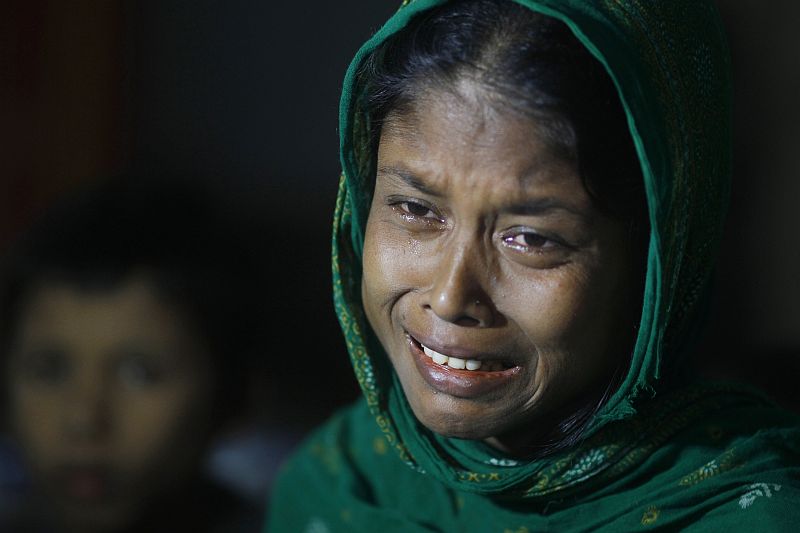
Rohingya Muslim woman whose husband was allegedly killed in Myanmar (AP Photo/Saurabh Das)
The July 27, 2012 briefing by the Office of the United Nations High Commissioner for Refugees (UNHCR) states that it has delivered aid to over 30,000 displaced people in Myanmar’s Rakhine state. The UNHCR report states that “An estimated 80,000 people are displaced in and around the towns of Sittwe and Maungdaw, according to UN and NGO assessments…. Some displaced Muslims tell UNHCR staff they would also like to go home to resume work, but fear for their safety. Movements are restricted in Sittwe, preventing IDPs and host families from earning a living as labourers, trishaw drivers and market sellers. Fishermen cannot reach the lagoon and the nearby waters are too rough for fishing. Some say they are running out of money and food. The sick now have to travel longer distances to access health care in the IDP camps. Pregnant women are also facing problems reaching hospitals.”
The Times of India reports that “the Rohingyas (Myanmar Muslims who mostly live in Arakarn region)… are considered by the UN as one of the most persecuted communities in the world.”
Human Rights Watch has also previously reported of Myanmar government efforts to require Rohingya Muslims to perform forced labor, and those who refuse are physically threatened and young children have been seen on forced labor teams.
The July 31, 2012 Times of India states that Rohingya Muslims are fleeing to Hyderabad. The Times of India reports “M Mandakini, field officer of United Nations High Commission for Refugees that is working in collaboration with the Cova in the city, said that many of them have taken shelter in Hafiz Babanagar and Kishanbagh where already a considerable number of Myanmar citizens reside.”
R.E.A.L. urges the the public to share the story of the Rohingya Muslims’ persecution with your fellow human beings, your government, and world organizations, to continue to pressure the government of Myanmar (Burma) and its people to urge them to share our Universal Human Rights of dignity, safety, and human freedom with Rohingya Muslims, and end their persecution.