UNHRC: Egypt-U.S. Resolution Concerns Rights Activists Supporting Freedom to Challenge Religious Views

On Friday, October 2, 2009, the UN Human Rights Council (UNHRC) adopted resolution A/HRC/12/L.14/Rev.1 that was co-sponsored by Egypt and the United States.  This freedom of expression resolution condemned any expression considered to promote “racial and religious stereotyping.”

A. Summary of New Resolution and Concerns Regarding Freedom of Expression Raised by Human Rights Groups

Resolution A/HRC/12/L.14/Rev.1 states:
— “its concern that incidents of racial and religious intolerance, discrimination and related violence, as well as of negative racial and religious stereotyping continue to rise around the world, and condemns, in this context, any advocacy of national, racial or religious hatred that constitutes incitement to discrimination, hostility or violence, and urges States to take effective measures, consistent with their obligations under international human rights law to address and combat such incidents..”

— “Recognizes the positive contribution that the exercise of the right to freedom of expression, particularly by the media, including through information and communication
technologies such as the Internet, and full respect for the freedom to seek, receive and impart information can make to the fight against racism, racial discrimination, xenophobia and related intolerance and to preventing human rights abuses, but expresses regret at the promotion by certain media of false images and negative stereotypes of vulnerable individuals or groups of individuals, and at the use of information and communication technologies such as the Internet for purposes contrary to respect for human rights, in particular the perpetration of violence against and exploitation and abuse of women and children, and disseminating racist and xenophobic discourse or content…”

The Associated Press reported that while the resolution was “passed” (UNHRC reports it was “adopted without a vote”), that “European and developing countries made it clear that they remain at odds on the issue of protecting religions from criticism.”

Rights group Article 19 challenged the resolution stating that “the language of ‘negative racial and religious stereotyping’ does not resolve the problems inherent in the earlier draft resolution: it is ambiguous as to what ‘stereotyping’ refers to and it may be easily interpreted to encompass religions, religious ideas and religious symbols, none of which are not protected by international law.”  Article 19’s Agnes Callamard stated that “The equality of all ideas and convictions before the law and the right to debate them freely is the keystone of democracy.”

During the UN Human Rights Council discussions (see webcast), Egyptian representative Mr. Hisham Badr decries that freedom of expression has been used to promote “racial and religious stereotyping” and “incitement to racial and religious hatred.”   U.S. representative Mr. Douglas M. Griffiths (see webcast) stated that U.S. partnership with Egypt on this resolution was to “bridge an unhelpful divide over the issue of freedom of expression in this Human Rights Council.”

The UNHRC chose to pass a Resolution A/HRC/10/L.2/Rev.1 in March 2009 condemning “defamation of religion;” the March 2009 resolution was promoted by the Organization of the Islamic Conference (OIC).

In December 2007, however, OIC nations, including Egypt, abstained from voting on UNHRC resolution A/HRC/6/L.15/Rev.1 because it also defended the right of individuals to freedom of religion and conscience, urging States:
— “To ensure that their constitutional and legislative systems provide adequate and effective guarantees of freedom of thought, conscience, religion and belief to all without distinction, inter alia, by the provision of effective remedies in cases where the right to freedom of thought, conscience, religion or belief, or the right to practice freely one’s religion, including the right to change one’s religion or belief, is violated.”

Despite the boycotting of A/HRC/6/L.15/Rev.1 by OIC nations, that UNHRC resolution passed in December 2007.   The UNHRC has not sought to support the rights called for under December 2007 Resolution A/HRC/6/L.15/Rev.1, or seek the remedies for freedoms called for therein.

Increasingly, religious minorities have been oppressed by nations supporting a form of extremism that denies freedom of religion and that oppresses religious minorities through various laws, including laws that punish individuals for “blasphemy” and “apostasy.”

B. Associated Press Report on October 2009  UNHRC Resolution A/HRC/12/L.14/Rev.1

Associated Press reported on Friday, October 2, that: “UN rights council approves joint US-Egyptian free speech resolution, campaigners wary”

— “The U.N. Human Rights Council approved a U.S.-backed resolution Friday deploring attacks on religions while insisting that freedom of expression remains a basic right.
The inaugural resolution sponsored by the U.S. since it joined the council in June broke a long-running deadlock between Western and Islamic countries in the wake of the publication of cartoons depicting the Muslim Prophet Muhammad. The resolution has no effect in law but provides Muslim countries with moral ammunition the next time they feel central tenets of Islam are being ridiculed by Western politicians or media through ‘negative racial and religious stereotyping.'”
— AP also reported that human rights groups “said Egypt was in no position to lecture other countries about free speech as it has a poor record on the matter”
— AP report continues: “‘Egypt’s cosponsorship of the resolution on freedom of expression is not the result of a real commitment to upholding freedom of expression,’ said Jeremie Smith, Geneva director of the Cairo Institute for Human Rights Studies. ‘If this were the case, freedom of expression would not be systematically violated on a daily basis in Egypt,’ he said.”
— “Others warned that the resolution appears to protect religions rather than believers and encourages journalists to abide by ill-defined codes of conduct. ‘Unfortunately, the text talks about negative racial and religious stereotyping, something which most free expression and human rights organizations will oppose,’ said Agnes Callamard, executive director of London-based group Article 19. ‘The equality of all ideas and convictions before the law and the right to debate them freely is the keystone of democracy,’ she said.”
— “Although the resolution was passed unanimously, European and developing countries made it clear that they remain at odds on the issue of protecting religions from criticism.”

— “Some Asian and African countries had called for stronger condemnation of articles, cartoons and videos they believe defames Islam.”

C. October 2009 – UNHRC Resolution A/HRC/12/L.14/Rev.1 Debate

United Nations Human Rights Council (UNHRC) states:
— that “resolution on Freedom of opinion and expression (A/HRC/12/L.14/Rev.1)” was “adopted without a vote.”

— (associated ReliefWeb report)

— “In a resolution on Freedom of opinion and expression (A/HRC/12/L.14/Rev.1), adopted without a vote, the Human Rights Council reaffirms the rights contained in the International Covenant on Civil and Political Rights; expresses its concern that incidents of racial and religious intolerance, discrimination and related violence, as well as of negative racial and religious stereotyping continue to rise around the world; calls on all parties to armed conflict to respect international humanitarian law; recognizes the moral and social responsibilities of the media and the importance that the media’s own elaboration of voluntary codes of conduct can play; invites the Special Rapporteur on the protection and promotion of the right to freedom of opinion and expression, to carry out his activities in accordance with its resolution 7/36 and all relevant Council resolutions and decisions; requests the Secretary-General to provide the assistance necessary to the Special Rapporteur to fulfill his mandate effectively; requests the Special Rapporteur to submit an annual report to the Council and the General Assembly on the activities relating to his mandate; and decides to continue its consideration of the issue of the right to freedom of opinion and expression in accordance with its programme of work.”

“The resolution was introduced by Egypt and the United States on Thursday afternoon and a summary of the introduction can be found in press release HRC/09/124 of 1 October 2009.”

The European Union’s representative, Jean-Baptiste Mattei (France), “speaking on behalf of the European Union” stated that:
— ” The freedom of opinion and expression was a fundamental human right that every member of the Council had to uphold, promote and protect. The cornerstones of the European Union’s value systems were their beliefs in tolerance, non-discrimination, freedom of expression, freedom of thought, and freedom of religion or belief. They demanded that all people of the world were able to enjoy their right to hold opinions without interference. Restrictions on the right to freedom of expression should be no more extensive than permitted by human rights law. Respect for the freedom of expression and opinion was vital for strengthening democracy, combating racism, racial discrimination and related intolerance.”
— “Optional Paragraph four of the current resolution constituted a final compromise for the European Union since they firmly believed that debate on how to deal with these issues had to be grounded in international human rights law, which protected individuals in the exercise of their freedom of religion or belief. Human rights laws did not and should not protect belief systems. Hence, the language on stereotyping only applied to stereotyping of individuals and not of ideologies, religions or abstract values. The European Union rejected and would continue to reject the concept of defamation of religions and also rejected the misuse of religions or belief themselves for incitement of hatred. Further, the notion of a moral and social responsibility of the media as expressed in the resolution went well behind the ‘special duties and responsibilities’. The European Union could not subscribe to this concept in such general terms. States should not seek to interfere with the work of journalists and had to enable editorial independence of the media.”

The OIC’s representative, Zamir Akram (Pakistan), “speaking on behalf of the Organization of the Islamic Conference” stated that:

“ZAMIR AKRAM (Pakistan) speaking on behalf of the Organization of the Islamic Conference (OIC), in an explanation of the vote before the vote, said the Organization of the Islamic Conference attached great importance to the exercise of freedom of belief and expression, but the exercise of this right carried with it duties and responsibilities, including the need to fight against hate speech. The joint Egyptian/United States initiative sought to address contemporary issues in the exercise of this right. Building on the 2005 text, the current text included issues of incitement to racial or religious hatred, negative stereotyping, and the need to combat and address the abuse of the right under international human rights law. Negative stereotyping or defamation of religions was a modern expression of religious hatred and xenophobia. This spread not only to individuals but to religions and belief systems, leading to violence, discrimination and hatred, negatively affecting human rights. The Organization of the Islamic Conference wished to put on record, that as per its understanding, the references to obligations under international human rights law came under the Committee on the Elimination of Racial Discrimination and other particular bodies. The resolution should be adopted by consensus, now and in the future.”


D. United Nations Links on Resolution A/HRC/12/L.14/Rev.1

Listed on UNHRC Web site in French, Spanish, Arabic, and Chinese — NOT English

English version of A/HRC/12/L.14/Rev.1 (with markup from previous version)

Webcast on A/HRC/12/L.14/Rev.1
Egypt – Mr. Hisham Badr – English (4 minutes)

United States of America – Mr. Douglas M. Griffiths – English (2 minutes)

E. March 2009 UNHRC Resolution on “Defamation of Religion” A/HRC/10/L.2/Rev.1

In March 26, 2009, the UNHRC passed a resolution A/HRC/10/L.2/Rev.1 on “defamation of religion” that focused on “stressing the need to effectively combat defamation of all religions and incitement to religious hatred in general and against Islam and Muslims in particular,” and that urged “all States to provide, within their respective legal and constitutional systems, adequate protection against acts of hatred, discrimination, intimidation and coercion resulting from defamation of religions and incitement to religious hatred in general, and to take all possible measures to promote tolerance and respect for all religions and beliefs.”

The March 2009 Resolution A/HRC/10/L.2/Rev.1 was sponsored by the Organization of Islamic Conference (OIC) which created its own version of a human rights declaration based on Islamic Sharia law, the Cairo Declaration of Human Rights, in response to its rejection of the Universal Declaration of Human Rights (UDHR).

Reuters reported on objections to this March 2009 Resolution A/HRC/10/L.2/Rev.1 by Europe, Canada, and India.

F. Impact of UNHRC Resolution A/HRC/6/L.15/Rev.1 Challenging Intolerance But Allowing Freedom of Religion

The December 2007 UNHRC resolution  A/HRC/6/L.15/Rev.1 has been widely ignored by the UNHRC and OIC members on this topic.  Notably 15 of the OIC members abstained from supporting that December 2007 resolution on “intolerance,” because resolution A/HRC/6/L.15/Rev.1 also sought to promote freedom of religion and conscience.

On December 14, 2007, the UNHRC passed resolution A/HRC/6/L.15/Rev.1 “Elimination of all forms of intolerance and of discrimination based on religion or belief.”  In that December 2007 UNHRC resolution, the resolution condemns “Islamophobia, anti-Semitism and Christianophobia” (paragraph 2), urges states to allow “the right to practice freely one’s religion, including the right to change one’s religion or belief” (paragraph 9.a), and urges states to make it illegal for “advocacy of religious hatred that constitutes incitement to… violence” (paragraph 9.d).

In seeking to protect the religious rights of the individual (rather than the protection of religious rights based on organizations), as demonstrated by resolution A/HRC/6/L.15/Rev.1’s defense of the right to “change one’s religion”, this resolution provides a clear distinction from the goals of political Islamist organizations and Sharia law. Under Sharia law, the changing of religion (from Islam to another religion) is illegal, and a number of Islamist states have apostasy laws forbidding such an individual choice of religious freedom.

Notably, 15 Organization of the Islamic Conference (OIC) nations in the UNHRC abstained from voting on this resolution, as they felt this resolution conflicted with the OIC’s support for Sharia, which is fundamental to their extremist view of “human rights”, as described in the 1990 Cairo Declaration on Human Rights in Islam. Pakistan (representing the OIC) urged for an Amendment to this resolution via A/HRC/6/L.49 to eliminate verbiage about the right to change one’s religion. Saudi Arabia felt that the resolution “went against Sharia law”, and Egypt felt that resolution needed to be applied “within the context of the tenets of Islam.”

December 2007 UNHRC Vote on Resolution A/HRC/6/L.15/Rev.1 - Where OIC Nations Abstained from Voting for a Resolution Supporting Religious Freedom

In fact, Egypt was one of the OIC nations that abstained from voting on the December 2007 resolution A/HRC/6/L.49 stating that:
“SAMEH SHOUKRY (Egypt), in an explanation of the vote before the vote, said Egypt attached great importance to the freedom of religion, and had been a traditional supporter of the resolution, while maintaining that it should be applied within the context of the tenets of Islam. Egypt had frequently during the negotiations expressed concern with regards to the text – of particular concern was the way in which it approached the mandate of the Special Rapporteur, in total disregard of the agreements reached during the institution-building process. It was not possible to continue consultations, as the European Union had circumvented the discussion with the Third Committee. Egypt had however continued to remain engaged in the process. The efforts made by some delegations to bridge gaps were acknowledged. However, it had become apparent during the later stages that some of the more important suggestions by the OIC would not be accommodated. Egypt regretted that the Council seemed to have missed a historic opportunity to comprehensively address the issue of religious intolerance, and hoped the issue would be considered in the future. Egypt would abstain from a vote on the text.”

G. Associated Articles and Reference Sources:

October 2, 2009 – AP: “UN rights council approves joint US-Egyptian free speech resolution, campaigners wary”

— another web link

October 1, 2009 – ARTICLE 19: “UN Human Rights Council: Latest Version of Draft Resolution Still Compromises Freedom of Expression”
— Note Article 19 of the Universal Declaration of Human Rights states: “Everyone has the right to freedom of opinion and expression; this right includes freedom to hold opinions without interference and to seek, receive and impart information and ideas through any media and regardless of frontiers.”

September 26, 2009 – IHEU: “Freedom of Expression on trial again at the UN”

April 2, 2009 – The Economist: “The meaning of freedom”

March 26, 2009 – IHEU: “Human Rights Council Resolution ‘Combating Defamation of Religion'”

March 26, 2009 – Reuters: U.N. body adopts resolution on religious defamation
— European Union: “The European Union does not see the concept of defamation of religion as a valid one in a human rights discourse”
— “Condemnation of defamation of religion had been included in a draft declaration being prepared for an April U.N. conference on racism, known as “Durban II,” but was removed earlier this month after Western countries said it was unacceptable.”
— “India and Canada also took to the floor of the Geneva-based Council to raise objections to the OIC text. Both said the text looked too narrowly at the discrimination issue.”
— “‘It is individuals who have rights, not religions,’ Ottawa’s representative told the body. “Canada believes that to extend (the notion of) defamation beyond its proper scope would jeopardize the fundamental right to freedom of expression, which includes freedom of expression on religious subjects.”
— “A separate, EU-sponsored resolution about religious discrimination is due to be discussed by the Council on Friday.
— “Earlier this week, 180 secular, religious and media groups from around the world urged diplomats to reject the resolution which they said ‘may be used in certain countries to silence and intimidate human rights activists, religious dissenters and other independent voices’ and ultimately restrict freedoms.”

March 26, 2009 – JTA: U.N. rights council passes religious defamation resolution

March 26, 2009 – UNHRC Resolution A/HRC/10/L.2/Rev.1 — 26 March 2009
— entitled “Racism, Racial discrimination, Xenophobia, and Related Forms of Intolerance, Follow-up to and Implementation of the Durban Declaration and Programme of Action”
— “stressing the need to effectively combat defamation of all religions and incitement to religious hatred in general and against Islam and Muslims in particular”
— “Urges all States to provide, within their respective legal and constitutional systems, adequate protection against acts of hatred, discrimination, intimidation and coercion resulting from defamation of religions and incitement to religious hatred in general, and to take all possible measures to promote tolerance and respect for all religions and beliefs”

February 13, 2009 – Freedom House: “UN Sets Dangerous Precedent with Defamation of Religions Resolutions”

Blasphemy and the United Nations

February 2008 – Violent Extemism, Islamism, and the United Nations

December 2007 – UNHRC Resolution A/HRC/6/L.15/Rev.1 – stated that:
— Paragraph 4: “legal procedures pertaining to religious or belief-based groups and places of worship are not a prerequisite for the exercise of the right to manifest one’s religion or belief;”
— Paragraph 5: “Emphasizes that such procedures as described in paragraph 4 above, at the national or local levels, as and when legally required, should be non-discriminatory in order to contribute to the effective protection of the right of all persons to practise their religion or belief either individually or in community with others and in public or private;”
— Paragraph 8: “Emphasizes that promoting tolerance and acceptance by the public of and its respect for diversity and combating all forms of intolerance and of discrimination based on religion and belief are substantial elements in creating an environment conducive to the full enjoyment by all of the right to freedom of thought, conscience and religion, as enshrined in article 18 of the International Covenant on Civil and Political Rights;”
— Paragraph 9a urges States “To ensure that their constitutional and legislative systems provide adequate and effective guarantees of freedom of thought, conscience, religion and belief to all without distinction, inter alia, by the provision of effective remedies in cases where the right to freedom of thought, conscience, religion or belief, or the right to practice freely one’s religion, including the right to change one’s religion or belief, is violated”
— Paragraph 9b urges States “To design and implement policies whereby education systems promote principles of tolerance and respect for others and cultural diversity and the freedom of religion or belief;
— Paragraph 9c urges States “To ensure that appropriate measures are taken in order to adequately and effectively guarantee the freedom of religion or belief of women as well as individuals from other vulnerable groups, including persons deprived of their liberty, refugees, children, persons belonging to minorities and migrants;”

Why Women’s Human Rights Issues Require Serious Responses

As Responsible for Equality And Liberty (R.E.A.L.) has been stating since our first public event on International Women’s Day, the continuing threats of misogyny, oppression, violence, and murder against women in the world is a serious human right’s issue.  Any issue that impacts and threatens women, who represent half of humanity, must require our urgent attention.

We promote the defense of women’s human rights from all of the attacks against them:  the misogynist hate crimes against women in America and around the world with atrocities such as in the Congo, the need for full Constitutional rights of women in America, and the atrocities of oppression, violence, and murder of women rationalized by some in the world based what we have called “extremism.”

On the last of these, we have seen a continuing inconsistency and lack of seriousness about addressing the ideological basis that is used to rationalize such misogynist hate, violence, and murder.  We have seen groups that oppose the idea of “stoning” in Iran and Saudi Arabia, but not the ideology that rationalizes such misogynist hate.  We have seen groups that oppose so-called “honor killings” of Muslim women, but won’t challenge the ideology that rationalizes such murders.  We have seen groups that claim they are for human rights, but carefully ignore abuses where non-Muslim and other minority Muslim women are oppressed, abused and murdered by those who rationalize their actions based on ideology of extremism in its various sects and permutations.

This lack of seriousness in addressing this life and death women’s human rights issues remains an ethical challenge for our generation.  We cannot let this continue.  Yet we see this lack of seriousness on such mortal women’s human rights issues bandied about recklessly by academia, human rights groups, and politicians.  Surely it time we challenge those who do not take the daily ideological threat to women’s lives and freedom seriously.

At a recent conference on peace issues, where an academic scholar was discussing the idea of improving the role of women to further peace in “fundamentalist Islamic” nations, I asked how we could improve this role without any challenge to the ideology behind the oppression of such women.  The answer that came back was that this would all take time, perhaps 100 years or more.   Of course, none of us will be around to argue whether the scholar is correct in such a protracted approach…  nor will all of the women whose lives were lost over the time period because we were unwilling to challenge the misogyny of an extremist ideology.  But what was truly disturbing was how it appeared that I was the only one in an audience of hundreds who seemed to view this scholar’s apparent willingness to accept such femicide over the next century (at least) as an outrageous abandonment of women’s rights.  Accepting an endless femicide of Muslim and non-Muslim women because we fear challenging an ideology of supremacism is not a serious nor an acceptable human rights solution.

Moreover, such inconsistency is not limited to academia, but extends to well-known, international human rights groups themselves.   At the end of July, I attended a seminar on Capitol Hill on “How Empowering Saudi Women Can Undermine Extremism.”  At the seminar, Human Rights Watch provided us with copies of their analysis of the Saudi Male Guardianship program.   This report disturbingly included references and quotes from ISNA President Ingrid Mattson, who has defended the idea of an extremist caliphate, and who has unquestioningly claimed that “legal rights of women were enshrined in Islamic law,” when we can see around the world on a daily basis that extremists use Sharia law as a justification to deny Muslim women such rights.

I asked conference speaker Human Rights Watch’s Sarah Leah Whitson (Executive Director for the Middle East and North Africa Division of Human Rights Watch) if there were measures that the United States government could take to help protect Saudi women by offering asylum measures similar to what the United Kingdom started doing.   Ms. Whitson’s reply was that essentially it is none of America’s business, and that what Americans should really be concerned about is pressuring Israel.  I looked around wondering, if somehow I had wandered into the wrong conference.  No, this was indeed the “How Empowering Saudi Women Can Undermine Extremism” conference.  But when I questioned the HRW speaker again on how we could actually help Saudi women through American influence, I was told that we should focus on Israel, and be more concerned about other asylum cases.  Moreover, I was told that the U.S. had no influence with Saudi Arabia (when did we stop subsidizing Saudi Arabia’s oil industry?).  It was no surprise to learn that HRW has been seeking funding from Saudis.

Finally, we see such inconsistency from politicians which is predictable, since their business is focused on whatever combination of popularity stunts, political outrage, and compromise will continue to keep them in office.  However, since these politicians end up as our government representatives and leaders, we also need to hold them accountable for a more serious handling of such women’s human rights issues.

As I have previously written, there has been a consistent and conscious denial of the extremist threat to women from U.S. government officials in virtually every branch of government.  Such utter abandonment of such a vital and serious human rights issue threatening half of the world’s population, and increasingly American women, is ethically unacceptable.  Yet such abandonment will continue as long as those who seek to challenge this extremist threat to women choose a political, rather than a human rights approach to addressing this issue.  Those who seek a political approach of division and partisanship on such topics will inevitably prevent us from reaching the consensus of Americans that do believe in such women’s human rights issues.  Reaching such a consensus on these human rights issues is a core mission goal of the Responsible for Equality And Liberty (R.E.A.L.) group.  We see how American government leaders today continue to ignore such vital women’s rights issues.  Regarding the nations of Afghanistan and Pakistan, the American government’s recent list of objectives and metrics fails to make such human rights our top priority.  But we will have no effective security policy and no effective counterterrorism policy without prioritizing human rights first.  Not only does our Afghanistan and Pakistan policy not prioritize women’s human rights, it does not prioritize human rights period.  We cannot afford to continue such government actions that are unwilling to be serious about these issues.

Denial is not the only form of such political neglect of women’s human rights. Not being serious about such women’s rights issues can also be seen in the nonsensical political outrage demonstrated in the Netherlands this week.  If you are concerned about the global challenge of extremists’ threats to women, but you are not embarrassed by the outrageous call by Geert Wilders to tax Muslim women’s headscarves in the Netherlands, you should be asking yourself why.

Radio Netherlands reported on Mr.Wilder’s proposal:  “Any Muslim woman who wants to wear a headscarf – which he described as a ‘head-rag’ – would have to apply for a license, and pay one thousand euros for the privilege… He would not tax the Christian form of the headscarf, but he did not say how policy would make that distinction.”  Mr. Wilders has also called for banning the Qur’an and stopping the building of new mosques.  Political outrage may be good for Mr. Wilder’s political campaigns, but such outrage, anti-freedom platforms, and such recent nonsensical suggestions — all detract from the public understanding of the very serious mortal threat against the world’s women today.

If we seek to improve the condition of Muslim and non-Muslim women threatened by extremist misogyny, oppression, violence, and murder, we need human rights representatives that are dependent on facts, not theatrics, and that are focused on inclusion, not division.  Accepting academic tolerance of the ongoing suffering of women, accepting human rights groups’ refusal to acknowledge an ideological threat behind such misogyny, and accepting political polarities of total denial and absurd division — are all unacceptable options for our generation.

The world’s women deserve better than this.

September 12: Why Homeland Security Begins with Equality And Liberty

Every year, as we remember the tragedy and loss of the 9/11 attacks, we see more and more people who seek to push this grim chapter in America’s history from our minds. They seek to focus our attention on anything else other than the vicious act of war that brutalized our nation, and that has terrorized our nation these many years. But the greatest tragedy is the failure of America’s governmental representatives and we as a people to effectively respond to this act of war. While we take comfort in the brief moment of unity that our brave police and firefighters had on 9/11, that unity was quickly lost on September 12, when we had to decide how we would respond.

Our failure to have unity in our response to the 9/11 act of war has continued to embolden those whose ideology of hate inspired the 9/11 attackers. Our failure to acknowledge, define, and challenge this ideology of hate continues to be the greatest tragedy of the 9/11 attacks as many thousands more continue to die, while our leaders, our media, and yes most of our people, refuse to acknowledge the ideology of hate behind both the 9/11 attacks and so many terrorist attacks against women, against religious minorities, against gays, and against those supporting free thought and human rights today.

Our group, Responsible for Equality And Liberty (R.E.A.L.), has identified this ideology of institutionalized hate.  As Dr. Martin Luther King, Jr. once had to challenge an identity group to change by pointing to an ideology of “supremacy,” so today we too must do the same.  Dr. Martin Luther King, Jr. challenged such “white supremacy” because America needed an honest dialogue on the ideology of identity-based supremacy that was rampant throughout our nation, and that was indefensible as a “culture” among a people responsible for our universal human rights of equality and liberty.  His choice to defy such “white supremacy” was not based on hatred of white Americans, but was based on his commitment to our consistency in universal human rights for all people – truths that we hold self-evident.  Such commitment to universal human rights is always a mission of love and mercy.  We recognize that those impacted by the hate of supremacy even includes those of that identity group, as white supremacists still continue to attack and murder other white Americans even today.

Today we also challenge those who would support an ideology of “extremism” — in all of its forms, sects, and permutations.  While we recognize that this very term challenges many, we also point out that – like the term “white supremacism” – that is the point.  The challenge is to recognize the hate of supremacism as demonstrating the need for such people to change.  As we did not defend the “culture” of white supremacism to deny our universal human rights, so we must also not defend the “culture” of extremists to deny our universal human rights – even to other Muslims.  Our respect for other cultures does not extend to a culture of hate or to a culture of supremacism.  As we have defied Nazism, as we have defied racial supremacism, and as we have defied Communist totalitarianism, as “cultures” that reject our universal human rights of equality and liberty – so we too have an obligation to reject a “culture” of extremism, if we are to be responsible for equality and liberty.  Our universal human rights are the most “omnicultural” and fundamental basis to grow as a human society.  They are not negotiable, and they are not for sale.  They are the basis for shared respect, dignity, and peace between all cultures of humanity.

This is the primary lesson that we needed to learn from the 9/11 attacks and that needed to be a fundamental part of America’s governmental response since September 12, 2001.  Yet we continue to wait for an acknowledgment, a definition, and a challenge to extremism from America’s government that remains focuses only the tactics of who, what, where, and when — and still today is devastatingly silent about the issue of “why.” As American leaders have consistently refused to address this ideological challenge, and as growing numbers of American children no longer even remember the 9/11 attacks, let alone understand “why,” the global threat of Islamic supremacism in all of its tactics, including terrorism, continues to grow.

extremist terrorism did not end with the 9/11 attacks. Nor did our military and homeland security tactics end such attacks. By focusing only on tactics, and refusing to acknowledge the ideology behind the 9/11 attacks and recognizing the need to create a strategy to confront that ideology, the only change was to move such terrorism to other, more vulnerable individuals around the world.

“Better them than us” is not a strategy for any type of meaningful security. As we have learned since 9/11, a continuing approach to denial and appeasement on the ideology of extremism has only meant that such extremists have already terrorized us enough to keep us from consistently defending universal human rights – the strongest argument we have against such an anti-freedom ideology.

Our national surrender by refusing to acknowledge and challenge the extremist ideology with our universal human rights — has not made America’s homeland “safe,” but has only convinced extremists that we don’t really have the courage of our convictions. With such surrender, the tactics of infiltration have been a much more practical tactic for extremists, since many Americans have already been terrorized into silence.

But America and Americans are better than this.  We are a nation whose very identity embodies the universal human rights of equality and liberty as truths that we hold self-evident. We can reach beyond fear and we can rise above hate. Americans can choose to honestly answer the question “why” the 9/11 attacks happened, and Americans can choose to overcome the lethargic policies of “more of the same” denial and appeasement on Islamic supremacism.

We can choose a different path to set an example to the world as consistent defenders of our universal human rights. American can choose to set a course for real security by being responsible for equality and liberty.

1. Why September 12 Matters

Across America on September 11, many will remember and mourn for those lost in the terrorist attacks on America on September 11, 2001. That day is a day for national remembrance and mourning. It is a day for national solidarity with the families of those who died. But we must also be aware of and debate our response to the September 11 attacks on September 12. It is what American governmental leaders have done and not done in response to the 9/11 attacks that continues to define our position on this issue still today.

Almost all of the discussion of American governmental leaders’ response on September 12 has been on tactical issues – tactics for improving homeland security, tactics for addressing military issues, tactics on funding for such operations, and tactics for relations with other nations.

But what continues to get lost in these discussions on tactics is an honest and serious assessment of where America stands on the ideas that were and that continue to be attacked. The September 11 attacks were not only on four airplanes, the World Trade Center towers, and the Pentagon, killing over 3,000. The September 11 attacks were not only the acts of terrorists.

The September 11 attacks were also acts of war by those whose institutionalized hate ideology of extremism demanded rejection of America’s ideas of human equality, its ideas of human liberty, and its conviction that these are universal truths that we hold self-evident not just for Americans, but for all people around the world. The September 11 attacks were by a group whose ideology of institutionalized hate defies the very idea of such universal human rights. That is the starting point of understanding the September 11 attacks, and it should have been the starting point for American governmental leaders’ response on September 12.

But for all of these eight years, this most basic starting point in a response to the September 11 attacks has been ignored by our governmental leaders, and continues to be ignored today.

2. The Most Important Question to America on 9/11 – Why

The most important question on the 9/11 attacks continues to get the least attention. Instead, our preoccupation has been solely with concrete barriers, with military operations, with terrorist trials, and with who, what, where, and when.

But the most important question – “Why” – continues to be swept away as not relevant to a “practical” march for “homeland security” tactics, for “war on terror” tactics, and even for foreign policy “reconciliation” talks. “Why” remains an inconvenient question for politicians whose business is based on compromise and for relativist policy wonks and tactical professionals who simply want “something done,” without raising questions that require tough choices.

“Why” is too onerous a question for the craven who willingly sacrifice our brave young men and women in the armed forces without identifying the enemy, let alone developing a strategy to address the enemy’s ideology. “Why” is too tough for much of the mainstream media to cope with, so they have allowed an endless stream of reporting on “isolated incidents” that a sea of volunteer bloggers have had to track and link over the years for any type of meaningful analysis.

“Why” is considered an “ideological” distraction by those who are deliberately blind to the extremist ideology of institutionalized hate that the September 11 attackers, and so many more after them around the world, have clearly and unequivocally communicated.

“Why” is a question that many believe is bad for business, it aggravates “foreign relations,” it worries those solely concerned about international trade, and it infuriates those who seek “reconciliation” talks with the Taliban and those with similar extremist ideologies.

Those who seek to silence the necessary discussion on why — do not understand that America is based on asking the question “why.” It is the most fundamental question inherent to America’s existence. Our identity, our choices, our very creation as a nation is more than simply a rebellion over unfair taxation – it is more than a concern about capitalist trading – it is more than our concerns in dealing with other nations – and it is certainly more than simply being “safe.” From the beginning America is a nation that DARED to ask the most basic question of “why” human beings did not deserve the inalienable rights of equality, liberty, and freedom. We are the land of the free and the home of the brave – because we dared to ask WHY.

The most un-American response possible to the 9/11 attacks would be to fear to ask “why.” But thus far, the “September 12” response has been to hide behind a concrete barrier, send our children to fight wars for enemies we fear to identify, and stubbornly refuse to ask the question “why.” We have been repeatedly told by our governmental leaders that we need to adopt a “September 12 mentality” about such things and recognize that we need to support their tactics without question or debate.

But what we have seen over the past eight years is that a “September 12 Mentality” that fails to identify the threat of institutionalized hate and extremism is a mentality of self-delusion and self-deception. We have allowed our government to do “whatever it takes” to fight terrorist threats except to actually define and address the ideological threat that is the answer to the September 12 question of “why.”

Too many in our nation have refused to recognize that the most important part of a “September 12 Mentality” should have been and should still be today to be responsible for equality and liberty as a priority in our national and international decisions. It is this failure that has led to the continuing dysfunctional “September 12” tactics that address an enemy we fear to define.

3. More of the Same Short-Sightedness and the War on Extremism

I keep an article posted by my desk to look at every day by Steven Emerson of the Investigative Project on Terrorism. In the article, Mr. Emerson condemns how “the president aligns with those who think the West is responsible for Islamic terrorism.” In the sub-heading of the article, it states that that the president “coddles American apologists for radical Islam.”

The June 28, 2007 National Review article is about President Bush (not President Obama), and his decision to appoint an envoy to the extremist international organization, the Organization of Islamic Conference (OIC). Over two years ago, President Bush appointed a U.S. envoy to the same OIC that explained away the 9/11 attacks as the expression of “the frustration, disappointment, and disillusion that are festering deep in the Muslims’ soul towards the aggressions and discrimination committed by the West.”

I keep the article up on my wall to remember that our challenge in 2009 is not with “change,” but really with “more of the same.”

The failure to ask the question “why” has done more than move America towards an endless “war on extremism” (W.O.E.) against undefined “extremists;” it has created a bi-partisan, multi-administration position regarding extremism of “more of the same short-sightedness” (M.O.S.S.). Is this the craven legacy we intend to leave to the next generation?

Imagine us challenging white supremacism in the 1960s by sending a federal government emissary to the “American White People’s Party” that explained the white supremacist terrorist bombing of black churches in the American South as due to “frustration, disappointment, and disillusion by whites regarding aggressions committed by blacks.”   But that was the American government’s position with extremist groups — over two years ago.

It would be evident to anyone who understands “why” such terrorism happens that such an appeasement of those who would rationalize terrorist hate is nothing less than ideological surrender. But such ideological surrender has become a bi-partisan, multi-administration “more of the same” policy towards extremism.

In January 2008, the Civil Rights and Liberties division of the U.S. Department of Homeland Security (DHS) created a memorandum to address the need to create a new, non-offensive lexicon about terrorism. In that memorandum, the Bush administration DHS stated that “[t]he struggle is for progress… The experts we consulted debated the word ‘liberty,’ but rejected it because many around the world would discount the term as a buzzword for American hegemony” (p. 7, paragraph 5).

Nearly two years ago, our government was willing to surrender the defense of the very idea of liberty for some type of “peace” with those who found that keystone of humanity’s universal human rights to be offensive. There was no “March on Washington” about that, no buses, no convoys, and no demonstrations in Washington DC. There were the condemnations of a few in Internet blogs, and my challenge to America’s governmental leaders at a June 2008 university meeting.

To my conservative friends, let me point out that January 2008 was a YEAR before Barack Obama was inaugurated as president. There are those whose partisan positions are that America started really going downhill on this issue when Barack Obama was elected president. While such arguments might comfort some partisan individuals, the facts are more important.

Today’s U.S. Defense Secretary Gates that has accepted the idea of possible negotiations with Taliban is also the same U.S. Defense Secretary Gates that accepted this idea under the Bush administration in October 2008. The blind tactics ignoring the ideological challenge that “the enemy of my enemy is my friend” did not begin with the Obama administration. The relativists in the foreign policy, military, counterterrorism, and other policy communities in Washington did not suddenly appear with the election of Barack Obama. They have been here imbedded in these communities for years. The legislators that supported a major think-tank’s calls for negotiation with the extremist Muslim Brotherhood were from both the Republican and Democratic aisles. Apologist think-tank reports on the Muslim Brotherhood were not exclusively “left,” but also included the American Enterprise Institute’s Reuel Marc Gerecht. American taxpayer dollars being used to fund AIG’s sharia finance business started with the Bush administration. I could go on for pages, but you get the point.

“More of the same short-sightedness” is a bigger problem than merely challenging one political group, one administration, or one set of supporters. If “more of the same” doesn’t demonstrate anything else, it certainly points out that what those of us opposed to Islamic supremacism in the past have done has not been working, and that we need much more than an “anti-jihad” community and more than a political-centric approach to challenging this anti-freedom ideology.

The painful fact is on the challenge of extremism the one thing we haven’t seen in 2009 from American governmental leaders – is CHANGE.

This bi-partisan problem demonstrates that we need a new and different approach to “more of the same.”

4. The Consequences of “More of the Same”

“More of the Same” has resulted in American governmental leaders, most of our news media, many human rights groups, and too many in the American public ignoring the price of refusing to acknowledge the institutionalized hate ideology of extremism. The price of surrendering in the war of ideas against those who promote such hate has been paid by those who need our courage on this issue the most.

Those who believe that a policy of denial and appeasement on Islamic supremacism has stopped “terrorism” fail to realize that “more of the same” has really only sent a signal to extremists that “terrorism” will be tolerated against the weakest, most vulnerable parts of human society.

This price is paid by helpless women around the world who are routinely oppressed, mutilated, and killed by those who justify their actions through extremism. They rationalize so-called “honor killings” of women, which the Responsible for Equality And Liberty (R.E.A.L.) human rights group and other groups have protested against. Such terrorism against women has become a standard feature of the “cultures” of some nations, such as the prison-states of Saudi Arabia and Iran. But such terrorism against women is not limited to just one or two countries, it is nothing less than international terrorism against women around the world, including Pakistan, Afghanistan, Iraq, Jordan, Syria, Saudi Arabia, Iran, Egypt, Somalia, Africa, Asia, Russia, Europe, Canada, and even the United States. Our surrender on the universal human rights of equality and liberty by “more of the same” has sent a signal that terrorism against women around the world by extremists is something that we will not challenge. In Turkey, where President Obama spoke in April 2009, a quarter of the population supports extremist    “honor killings” against women. This anti-human rights ideology was never challenged. Our governmental leaderships’ response to the ideology that rationalizes terrorism and hate against women has been a deafening silence.

This price is also paid by the oppression and murder of religious minorities around the world by extremists – against fellow Muslims for not meeting extremist standards, in sectarian violence against fellow Muslims who have different beliefs, and against Christians, Hindus, Buddhists, Jews, and others who are victimized for having different religious beliefs. In Iraq, where Americans have invested so many lives and so much funding, we hear of the continuing extremist violence on a regular basis between Muslim groups of different sects and a regular targeting of Christians. In Afghanistan, we have seen the Afghanistan parliament itself call for the death of an individual who chose freedom of conscience. In the prison-state nations of Saudi Arabia and Iran, religious minorities are not tolerated, and those who dare choose freedom of conscience are imprisoned or worse. In the Philippines, 120 thousand have died in a civil war by extremists who seek a separatist nation. In Thailand, extremists  have been campaigning in their own separatist war targeting Buddhists, Muslims who won’t accept supremacism, elderly, women, school teachers, and children’s schools – with a death toll since 2004 that is over 3,300 – exceeding America’s 9/11 death toll.

In Pakistan, a nation where Al-Qaeda itself has found safe haven these past eight years, we see the oppression and massacre of Christians and other religious minorities by extremists. While churches are being burned to the ground by extremist mobs of thousands in Pakistan, White House advisors are listening to counsel from Pakistani leaders to negotiate with the Taliban. There is no outcry as Americans continue to provide funds and support to a Pakistani government who has sought an international death penalty for “blasphemy,” and whose own “blasphemy” laws continue to be used to terrorize and oppress Christians, other religious minorities, and even other Muslims. In a nation were religious minorities are often told by extremists to “convert to Islam or die,” there is no coherent national strategy on how to deal with a largely extremist nation with an estimated 60 nuclear weapons. There was no national outrage as the Pakistan government released the leader of a black-market nuclear weapons network who was deemed by the CIA to be as great a threat as Osama Bin Laden. There is no American governmental human rights denouncement of a nation where 78 percent of its people support the death penalty for leaving Islam, 83 percent support stoning of adulterers, and 75 percent seek the Pakistani government to implement “strict Sharia law.” Instead of challenging Pakistani extremists, American governmental leaders meet with them as a way to promote “democracy.” When a reported 20,000 extremists in Pakistan march with hate to kill and destroy Christians and burn down churches, American governmental leaders are silent, our taxpayer dollars continue to go to Pakistan, and only a brave handful of individuals protest in Washington DC and New York. We are told that we should be impressed when the Pakistani police arrest 4 individuals from the mob of thousands. There are no 20,000 Americans marching on Washington DC to say “enough.” Too many think this is “someone else’s problem,” as our nation writes another check to Pakistan’s leaders and looks the other way.

In Egypt where President Obama spoke in June 2009, those Muslims who speak out for freedom of conscience are “excommunicated” and threatened by extremists, and in Egypt, Christian Copts are oppressed, raped, kidnapped, and murdered. As we have seen in so many other instances, our governmental leaderships’ response to the ideology that rationalizes terrorism and hate against those who seek freedom of conscience has been muted at best. Around the world, people fear to be be free, as extremist terrorists have been unchallenged ideologically by those governmental leaders responsible for equality and liberty.

Among the other vulnerable groups that extremists also attack are gay human beings. They are a target throughout many countries, especially Iraq, where they are the victims of a campaign of “sexual cleansing” through kidnapping, gruesome torture, and murder. Such extremist campaigns of violence and oppression against gays continue throughout the world including Europe, and are now spreading to the United States in areas like Minneapolis. Even on July 4, in our nation’s capital, the unindicted co-conspirator group ISNA has held conferences promoting hate speech against such gays and minorities — the same ISNA organization whose leader is invited to the White House. Once again, a deaf ear is turned to victims of such extremist thinking by our governmental leaders and the patterns are lost in the reporting by a press that refuses to see such terrorism against humanity as nothing more than “isolated incidents.”

When Americans rightfully mourn our losses of 3,000 on 9/11, we must also ask ourselves how many thousands have died around the world, because of a national silence on extremism? How many losses of lives equivalent to the 9/11 attacks could we have prevented with a response based on real courage on September 12?

How many marches on Washington DC have we seen for the thousands of women murdered, and many more oppressed by extremists? How many marches on Washington DC have we seen for the attacks and murders on Christians, Jews, Hindus, and Buddhists and destruction of their houses of worship? How many marches on Washington DC have we seen about the kidnapping, warping of minds, and murder of Muslim children by extremists? How many marches on Washington DC have we seen about the sectarian murder and oppression of other Muslims by extremists? How many marches on Washington DC have we seen in support of those oppressed and murdered by extremists because they dared to speak out in support of universal human rights?

In fact, there has been some activism – by the Egyptian Copt groups, by the Responsible for Equality And Liberty human rights group, and by others genuinely concerned about human rights. But as encouraging as those small and selected rallies and public awareness events have been, they have been limited exceptions in eight years of deliberate failure of activism in our nation’s capital on extremism.

When thousands are willing to march on Washington DC on taxes and health care issues, we must ask ourselves what our priorities are when thousands do not turn out to defy an extremist ideology that is willing to challenge our very universal human rights around the world and that seeks to destroy our identity as free human beings.

We must all realize that ending “more of the same” begins with our personal responsibility to change. We are not powerless, we are not helpless. We can all make a difference. Our real courage in defying those who would justify and appease extremism is what the American people need to hear today.

On the anniversary of 9/11, we must recognize that the true consequences of allowing “more of same” has been to send a clear message to extremists that they can terrorize women around the world, they can terrorize religious minorities around the world, they can terrorize those who seek their universal human rights around the world — as long as they leave us alone.

The result is much worse than “more of the same short-sightedness,” but is nothing less than “more of the same SURRENDER.” “Better them than us” is more than cowardice, it is ignorance of who and what we are struggling against. An ideology of institutionalized hate that denies universal human rights for some – will seek to deny universal human rights for all.

5. The Change We Need – Being Responsible for Equality And Liberty

To challenge extremist terrorism, we must challenge the ideology of extremists. It is not enough to have a “war on terror,” without defining the ideology we are struggling against. Nor is it enough to merely be angry because we are afraid or we are outraged.

Anger is never enough. Anger alone does not require much courage. We need to be resolute and defiant against anti-freedom ideologies, but people will never care to know what we have to say, until they know how much we care. Being responsible for equality and liberty requires our compassion towards our fellow human beings to defend their human rights around the world. We will not obtain such human rights by just bringing angry people together. We need to offer not a fist, but an outstretched hand of mercy, equality, and liberty to our fellow human beings.

We need to have the courage of our convictions and honor the courage of those who have fought to defend our freedoms. It is not acceptable to tolerate those who would blindly hate, as being on “our side.” Every time we allow hate to grow it becomes a crutch that prevents us from having the real courage that we need to have as people who are responsible for equality and liberty.

The real change that we need is to be true to our identity and our responsibilities as Americans and as free people. Instead of just anger at outrages of what we are against, we need to be proactive towards what we believe. Instead of defending any tactic with the argument that it is justifiable as a short-term security measure, we need to hold our government to be consistent on the truths that we hold self-evident.

The change that we need is to be responsible for equality and liberty. That is where our homeland security begins – with these truths that are inherent in the very identity of America itself. We cannot sell out, we cannot bargain away, and we cannot trade equality and liberty to the hucksters that want us to sell equality and liberty for “progress,” “safety,” or “peace for our times.”

We must make it clear to all those who come knocking – that equality and liberty – is NOT FOR SALE – at any price, at any time.

We also cannot sell out our commitment to equality and liberty under the table to get more popularity and more supporters among those who promote hate or are linked to hate groups as an “ally” to challenge Islamic supremacism. Our conscience must never be blind. Our accountability must never be situational. Our responsibility needs to be made of steel.

When those of us who challenge extremism adopt the amoral view that “the enemy of my enemy is my friend,” we are no different than the relativist policy wonks who argue in support of “reconciliation” with the Taliban against Al-Qaeda, or appeasement of extremist nations to “manage” extremist terrorists. In the “war of ideas” challenging extremism with equality and liberty, selling out our cause by siding with or looking the other way about racial supremacists and hate-mongering “allies” is always wrong. Our “war of ideas” challenging extremism is not an amoral cause; its basis is our consistent support of inalienable human rights truths.

The change that we need begins with being responsible for equality and liberty once again. The way we can truly challenge extremism is by consistently prioritizing the equality and liberty that it defies – as universal human rights.

We need to convince Americans to stop shopping at the “more of the same” store, and show them the value of our universal human rights as the strongest defense we have against terrorism and against the ideology of extremism.

6. Why the Change We Need – Begins with Human Rights

If we are seeking to promote equality and liberty, we are seeking to promote human rights. Moreover, our promotion of human rights should not just be for any individual identity group (Muslims or non-Muslims), but must be for all identity groups. Finally, in promoting such human rights of equality and liberty – we must promote these as universal human rights for every part of the world – including Saudi Arabia, Pakistan, Afghanistan, Iraq, Iran, and so many other nations where such universal human rights are denied.

Promotion of such universal human rights to counter extremism should have been our top priority on September 12. But eight years after 9/11, it remains one of the last priorities of American government leaders who continue to promote “more of the same,” when it come to refusing to acknowledge (let alone challenge) extremism.

But when I address the idea of a human rights-based challenge to Islamic supremacism to some, their response is to twist their mouth in disgust and spit out the question “human rights – are you kidding me?” – or words to that effect. Some have patronizingly chuckled and patted me on the back, as if to say “you poor sap.” I have even seen this done by some attendees at meetings specifically to address human rights issues.

This is how disillusioned many Americans have become about something that is a fundamental part of their very identity. This American identity-crisis on the issue of human rights has been the result of groups that have had a long history of being inconsistent on human rights. Such groups have leapt to condemn any drop of human rights violations by the United States or Israel, but have studiously ignored the sea of human rights violations that are routine business every day in extremist nations. This does not, by any means, justify any human rights violations by the United States or Israel (or any other nation). Two wrongs don’t make a right. But what Americans have seen is an endless litany of media reports by human rights groups that studiously refuse to acknowledge the most egregiously violators of human rights when the violators are extremist nations, groups, or individuals. Such deliberate ignorance of extremist human rights violations has been standard operating procedure for much of the news media. Media outlets view extremist segregation and oppression of women, for example, as “strict cultural norms.” As Americans and as human beings responsible for equality and liberty, we must reject the idea that institutionalized hate can ever be justified as “strict” aspects of someone’s “culture.”

This identity-crisis on human rights must end, and we must begin that change. Universal human rights are each of our own human rights, and those of your family, your children, your neighbors, and people around the world. We are not dependent on the mainstream media or a few human rights groups to tell us what our universal human rights are. We know what our universal human rights of equality and liberty are. We accept these inalienable human rights as truths that we hold self-evident. Addressing such human rights for each one of us is not only the media’s responsibility, not only our government’s responsibility, not just human rights groups’ responsibility, it is OUR RESPONSIBILITY.

Our universal human rights are a fundamental part of who and what we are as human beings. Defending these universal human rights is our responsibility. This is why we cannot afford to be disillusioned with this defense or leave it to others to be our sole defenders on human rights. We have a consensus today on the truths that we hold self-evident; now we need to activate this consensus to start doing something about our shared responsibility for our universal human rights.

To challenge extremism, our strongest argument will continue to be the one thing that extremists and supremacists cannot tolerate – our universal human rights of equality and liberty.

I recognize that there will still be those who believe that hate is the answer. To those who believe that the answer to the extremist ideology we are struggling with – is to hate all Muslims, deport all Muslims, and bomb all Muslims, honestly ask yourself – how is that argument working for you and America? Is that argument getting anywhere? Has anything changed except that your voice continues to get increasingly marginalized? And how is such open hatred of Muslims much different than the extremist ideology that you claim to be challenging? Do you really believe that hate is ever going to be the answer?

We all know the answer to these questions. We also know that those who argue with blind hate is one of the reasons the public is so afraid to address this issue. We need an argument that is not based on hate or anger. We need a solution that will be supported by a consensus of Americans.

We need a solution based on the universal human rights that are the truths that we hold self-evident. We need a solution that is urges others to choose love, not hate.

7. Love Wins

What does love have to do with it? We must recognize that the ideologies against universal human rights are based on various forms of institutionalized hate, whether they are racial or religious supremacism, communist totalitarianism, or other oppressive ideologies. You can’t love your fellow human being and deny their universal human rights – such denial requires a rejection of their value and dignity as a fellow human being.

If you are reading this today, you are living evidence of the idea that “Love Wins.” By our very existence as free people on Earth today, we demonstrate the power of love over hate. The sickness of hate that seeks destruction of our fellow human beings and their human rights is the root issue we challenge in defending equality and liberty. This does not ignore the horrific destruction that hate has caused: the millions murdered in the Holocaust, the millions murdered by Communist totalitarians, and the many killed by those who use ideologies based on institutionalized hate such as racial or religious extremism. Moreover, we acknowledge the havens of institutionalized hate such as the 1 billion oppressed by Communist totalitarianism, and the countless others who are oppressed by ideologies such as extremism. But despite such undeniable horrors and tragedies, as humanity, we still stand here on Earth today. While there are many who hate and who seek the enslavement or destruction of humanity, there are also many that love their fellow human beings and are willing to live together in peace and in support of each other’s universal human rights. Despite those who have repeatedly sought to conquer Earth and to crush the human spirit completely, those who would defy them have continued to prevent this from completely happening.

We have seen how people can choose love over hate. We have seen in the darkest corners of the world – by those brave human beings resisting extremism and seeking women’s freedom in extremist nations, by those brave human beings resisting totalitarian hate in Communist China, and throughout history – there have always been someone somewhere who said “no” to hate. Even in the most abandoned corners of Earth and human history – at some point – we have seen that love can win.

But to have confidence in our future, we must believe more than the idea that love can win. We must believe in humanity enough to have the confidence that ultimately, LOVE WILL WIN.

To defend our universal human rights, we must believe in the power of love. Our universal human rights are dependent on our willingness to love and respect our fellow human beings enough to recognize their inalienable equality and liberty as truths. We hold such truths to be self-evident. Now that is the power of love. It is the sickness of institutionalized hate that seeks to deny such truths of our universal human rights.

We must have confidence that our love for our fellow human beings will demand that we will be responsible for defending such universal human rights of equality and liberty. We must repeatedly reach out to our fellow human beings and urge them to Choose Love, Not Hate. It is a choice, and if our generation is to ever be responsible in our lives, our focus on choosing love over hate must be our most central priority for our future and for our children’s future.

The insidious sickness of hate is nothing less than a human evil. Combined with human fear, this is a toxic combination that can undermine the courage of free people. But we can find the courage of our convictions to reach beyond fear and to rise above hate.

8. Fearing No Evil

We know the root cause behind our governmental leaders’ failure to confront extremism, and its commitment to the “more of the same” tactics of September 12. It would be convenient to blame only such governmental leaders, only such relativist policy wonks, only special interest groups, and only human rights groups that don’t have the courage to honestly address human rights. Just blaming them may make us feel better. But if we only blame them, we are being dishonest with ourselves as a nation. All of them do what we tell them and what we fund them to do. They are merely a part of us.

We know who is to blame and we know why. Every American must ask themselves if we have really done enough to fight such a mortal foe as extremism that seeks the destruction of our universal human rights around the world. We all know the answer to this question. Now we need to admit it and do something to change. That is why we have created groups such as Responsible for Equality And Liberty (R.E.A.L.) to help organize our efforts to defend our universal human rights.

Since 9/11, as a nation, we have been terrorized. The tactics of terrorism, to spread fear and hatred, have worked. The tactics of terrorism to keep us from making the tough decisions – the ones where we have to be truly responsible for our commitments to universal human rights – have worked there too. Let’s not kid ourselves that sending our brave young men and women to foreign wars where our governmental leaders not only refuse to define the enemy and its ideology, but also use the Pakistani double-play tactics in negotiating with the same enemy we are supposed to fight, has convinced extremists that we won’t tolerate their institutionalized hate.

We have been terrorized, and we have decided for too long to tolerate the amoral attitude “better them than us.” We are one humanity; we are all part of one Earth. They are part of us. They are our brothers and sisters in humanity. Each one is a special and unique individual. Each one’s life is the result of the miracle of human birth. There is not a free world and a slave world. There is not a “Muslim world,” and a “non-Muslim world.” There is just one world, one Earth, our shared home. An attack on oppressed peoples to deny their equality and liberty is an attack on us as well. That is what it means to be part of humanity. That is what it means to believe in universal human rights – the truths that we find self-evident in America — and around the world.

Since 9/11, the policies of denial and appeasement on Islamic supremacism have sent a clear signal that we are willing to be terrorized, and that we are willing to surrender as defenders of universal human rights.

It is time to tear the down the white flag of surrender.

It is time to honor the many sacrifices by so many to protect our freedoms.

It is time to Fear No Evil.

9. What You Can Do About It

For a long time and by many people, I have been told that Americans are just not going to understand the need to defy extremism and to defend our universal human rights. I have been told that Americans are unwilling, perhaps afraid, and certainly not sufficiently motivated to participate in any organized events to challenge extremism and defend our universal human rights. I have been told this by a number of scholars and those who have traveled around this country. Many such “experts” have secretly decided that most Americans are unreachable on this issue.

Those who promote anti-freedom ideologies also don’t believe in you. They too have written you off, and they are convinced that you won’t stand up for human rights. They are convinced of your surrender.

You need to know that I have proven that “experts” and those who are convinced of your surrender are wrong. In Chicago and Washington DC, I have proven that you and your fellow Americans will show up, will participate, and will come out into the streets to defend our universal human rights and to defy extremism.

I believe in the American people. I believe in you.

So in March 2009, I created our human rights group, Responsible for Equality And Liberty (R.E.A.L.). We are determined to reclaim the issue of defending our human rights to be consistent on supporting equality and liberty against anti-freedom ideologies, including Islamic supremacism. We have supporters in Washington DC, in New York, in Chicago, in California, in New Jersey, in Missouri, in Louisiana, and in Georgia. We also have supporters in Europe and in Canada. We have shown the courage of our convictions publicly and repeatedly. We plan to continue to do so. We have just begun to fight to defend our universal human rights.

Whether you are interested in our group or another group, make yourself a promise this anniversary on 9/11 – that you won’t just sit behind your computer and expect that things are going to change without you reaching out to others publicly.

We can’t change the minds and the policies of our representatives until we change the minds and reach the consciences of our families, our friends, and our neighbors. We can’t urge others to have the courage to publicly rally for such human rights defied by extremism, until we demonstrate that we have the courage to do that ourselves. We can’t get others to listen to us until we take the time and effort to listen to others.

We have spent so much time debating who, what, where, and when. Surely it is time that we refocus our energies publicly on discussing why.

You may think that talking to your friends, family, or neighbors won’t make a difference. You may think that holding a meeting in a public library won’t make a difference. You may think that holding a public awareness event outdoors won’t make a difference. You would be wrong. It does make a difference. Every time I have spoken there is always at least one person I have inspired, at least one person who stops to think, and often at least one person who gives me a hug. Every time we have shown the courage to do so, we have encouraged others as well.

If we could only get more Americans to reach out to their fellow Americans, imagine what we could do.

Our message in support of universal human rights is based on courage and love. Just like fear, courage is contagious. Just like hate, love is contagious. When you spread courage and when you spread love, you are sharing the best and brightest of what you are as a human being. We don’t have to allow fear and hate to imprison our minds and conscience.

We can decide to Fear No Evil. We can decide that Love Will Win.

And as Americans, we can decide to be Responsible for Equality And Liberty.


We Have A Responsibility

We Have A Responsibility
August 28, 2009
Robert E. Lee Memorial, Arlington, Virginia
(Video Link)

We are here today at the Robert E. Lee Memorial to remember a historic day, August 28, 1963. On that historic day, 46 years ago, Dr. Martin Luther King, Jr. and thousands of black Americans gathered together down the hill at the Lincoln Memorial calling for the equal rights and liberty that were guaranteed to them in our founding Declaration of Independence that defines who and what we are as a nation.

While Dr. Martin Luther King, Jr. said on August 28, 1963 – “I Have A Dream,” on this August 28 – we must say “We Have A Responsibility”… to ensure equality, liberty, universal human rights, and a commitment of love to one another. We have a responsibility to rebuild our society with a commitment to making the human rights of equality and liberty our first priority, never our last.

We have a responsibility to allow our nation to heal from the divisions that we once had, and put an end to the unhealthy practices of those who seek to reopen old wounds that should have healed decades ago. We have a responsibility to challenge those who seek to parade about and wax nostalgic over our past differences and our hate towards one another. We must heal as one nation, undivided, and indivisible – with common bonds of human rights and human dignity. The pride we must seek is in our future together in shared equality and liberty.

We are not North and South, free states and slave states, abolitionists and slave masters, Union and Confederacy – that war has been over since August 20, 1866. We are only one nation, one people, one flag, and one United States of America. While our history of the past is important, what truly matters is the future that we will make together.

We have a responsibility to our children and to our children’s children – to offer them something new to be nostalgic about – not over our past differences – but about how we were willing to grow and mature as a people and nation, so that we could release our past differences, and promote symbols of unity, of equality, and of liberty together.

We have a responsibility to challenge those who would use symbols of division to continue to spread hate and to challenge our shared values of equality and liberty. Reverend Timothy James of the Disciples of Christ recently stated that “for African Americans the confederate flag is a system of terror, oppression, separation, and racism.” We shouldn’t need to be reminded of this. We have seen the use of the Confederate symbol of division used over and over again in our nation. We have seen the Confederate symbol of division used by the Ku Klux Klan. We have seen the Confederate symbol of division used by white supremacist organizations. Most recently, we have seen the Confederate symbol of division in the tragic terrorist attack in June on the Holocaust Memorial Museum. In Virginia and throughout our nation today, there are over 90 Neo-Confederate hate groups that use that symbol of our past divisions to spread hate and to attack our shared values of equality and liberty.

We have a responsibility to reach out for our future together. We have a responsibility to urge those who cling to our divisions of the past to heal and join us as a united and free people, with equality, liberty, and justice for all.

We have a responsibility to make such unity on equality and liberty a priority in our lives and in our children’s lives.

We have seen the need for such a renewed priority to challenge the racial hate that continues to be unashamedly promoted in public platforms in Virginia.

We have seen the need for such a renewed priority for equality to challenge the spreading of racial hate to children here in Virginia.

We have seen the need for a renewed priority of building our common bonds to challenge the growth of groups that promote the values of the Confederacy here in Virginia today.

Our children deserve better than this. Our nation must be responsible for better than this.

We need to decide – right now – that we will not let the disease of our past divisions and of racial hate to spread to another generation.

We need to decide – this day – that will once and for all bring an end to this disease and to this war among ourselves, and embrace the peace, the harmony, the justice, and the equality – that must be the legacy that we hand down to the next generation.

Forty-six years ago, Dr. Martin Luther King, Jr. stood down the hill and spoke of his dream. Now it is time for us to make that dream our responsibility and our legacy as a nation.

To do so, we need a new commitment to symbols that will unite, rather than divide us. We need a new symbol of human rights that all those who come to our nation’s capital will see up on the hill when they stand where Dr. Martin Luther King, Jr. stood forty-six years ago today. We need a symbol that does more than remind us of our past, but points to our future together.

So we propose, on this historic day, that right here where are standing now at the Robert E. Lee Memorial – we create a new monument.

We propose that we create a new monument not to any man or to any woman – but a monument to every man and every woman. We propose that we create a new monument that doesn’t recognize just one race or ethnicity, but a monument to every race and every ethnicity. We propose the creation of a new monument not to any human being, but a monument to all human beings. We propose the creation of a new monument that truly represents the very idea of America itself – a commitment to equality, liberty, and universal human rights for all people.

We have a responsibility.

We have a responsibility to all those who need hope and inspiration.

We have a responsibility to all those who seek justice.

We have a responsibility to set an example for our children, their children, and the world.

We have a responsibility to make certain that all those who come to our nation’s capital never fail to understand the idea of America that is greater than all of our leaders and history combined.

We have a responsibility and a historic opportunity to challenge our government to create a new monument on this hill overlooking Washington DC – so that all those who visit can look up towards the sky and say – THAT is what America is really about – our universal human rights of equality and liberty.

We have a responsibility to Equality And Liberty.

Women’s Equality – The Global Challenge for Our Generation

There is no challenge or priority greater for our generation larger than the continuing global oppression of women, who represent half of humanity. This challenge for women’s equality and women’s freedom must be a concerted effort by men and women together for the futures of our daughters, our sisters, our nieces, and the billions of women who are counting on our courage to defend their universal human rights. We see the oppression of women on a daily basis around the world, including the pandemic rape and sexual violence in the Congo, so-called “honor killings,” and the religious extremist and misogynist oppression of women.  We must stand united on all fronts challenging the human trafficking, oppression, sexual violence, and femicide against women around the world.

The key in this struggle for women’s equality remains consistency.

We cannot decide that women’s equality matters in some parts of the world, but not in others. Human equality is a universal human right – it applies everywhere and to everyone. We also cannot decide that we oppose women’s equality because we may not like some of the decisions some women may make if they have equality. Human equality is a universal human right – whether we like the decisions some people make as equal human beings is never an argument against equality itself.

Our hope for women’s equality lies in building communities that are willing to share our love for our fellow human beings, as well as share a consistent commitment to equality and liberty for women — in America and around the world.

Equality for Women Must Be Constitutionally Guaranteed in America

On August 26, 2009, Responsible for Equality And Liberty (R.E.A.L.) will be remembering “Women’s Equality Day” with a public awareness event on women’s equality at Washington DC’s Freedom Plaza. Women’s Equality Day commemorates the passage of the 19th Amendment, the Women’s Suffrage Amendment to the U.S. Constitution, which gave U.S. women full voting rights in 1920. But nearly 90 years later, it remains a disgrace that women have not yet been given full Constitutional equality, and that must change. In the United States, we must declare unequivocally and without reservation in our Constitution that all men AND women are equal under our national law.

Such fundamental issues of women’s equality must be not the choice of “interpretations” by state governments and changing legislatures, but must be a unequivocal, Constitutional right for all American women. Such human equality is fundamental to America’s very identity as a nation, and it is a universal human right.

Therefore, it is past time for the United States government to pass and endorse the Equal Rights Amendment (E.R.A.) to guarantee such Constitutional equality for women. Every day, women in our armed forces (over 200,000) and other branches of our government work to defend a Constitution of the United States, where their inherent equality is not guaranteed. The women of America deserve better and it is our responsibility to ensure their full Constitutional equality.

To those of you unfamiliar with the Equal Rights Amendment, I urge you to read what it actually states. It states that: “Equality of rights under the law shall not be denied or abridged by the United States or by any State on account of sex. The Congress shall have the power to enforce, by appropriate legislation, the provisions of this article. This amendment shall take effect two years after the date of ratification.”

The Equal Rights Amendment’s wording reflects the Constitutional language of the 19th Amendment which states: “The right of citizens of the United States to vote shall not be denied or abridged by the United States or by any State on account of sex. Congress shall have power to enforce this article by appropriate legislation.”

Some will continue to make arguments that such U.S. Constitutional equality for women should not be supported through the Equal Rights Amendment because they are concerned about the impacts of such an amendment on American society. We have heard this before. Arguments against a Constitutional amendment on women’s rights as a threat to American “civilization” have been made many times – as they were against the 19th Amendment to the Constitution – giving American women the right to vote.

Those who sought to deny women the right to vote claimed that the 19th Amendment would lead to war, would undermine America’s national security, would create “mental disorder” in women, would lead to voter fraud by women, and would undoubtedly threaten women’s health as they were too “fragile” to vote. Those who sought to deny women the right to vote claimed that the 19th Amendment “would produce a nation of transvestites,” and would result in the “resignation of manhood.” Despite the claims of those who opposed the 19th Amendment, America commemorates Women’s Equality Day on August 26, remembering those American legislators and states that had the courage of their convictions to act and ensure women the right to vote through the 19th Amendment, which was finally ratified on August 18, 1920.

It is past time to complete the unfinished business on women’s Constitutional equality in America. The 19th Amendment was first ratified by Illinois, yet the Equal Rights Amendment has still not been ratified by Illinois and 14 other states today, including Alabama, Arizona, Arkansas, Florida, Georgia, Louisiana, Mississippi, Missouri, Nevada, North Carolina, Oklahoma, South Carolina, Utah, and Virginia. Women’s equality is a universal human right, under the Universal Declaration of Human Rights, which the United States joined in adopting as part of the United Nations.  The Universal Declaration of Human Rights specifically recognizes “equal rights of men and women.”  In recognition of these universal human rights, we urge our fellow Americans to support the Equal Rights Amendment. We ask President Obama to ask his fellow citizens in Illinois and around the country, when will they ratify the Equal Rights Amendment? In the interim, we urge President Obama to show historic initiative by declaring an Executive Order recognizing the equality of women in America.

In our generational defiance of the misogynist hate against women around the world, America cannot afford to allow any exceptions, starting at home.  We cannot allow the continuing failure to have Constitutional equality of women in America as a rationalization to justify oppression of women in America or anywhere in the world.

A Global Defiance Against Misogyny – No Exceptions, No Excuses, No Rationalizations

Of all the forms of institutionalized hate that our society faces today, none is more self-destructive to the continuing survival of the fabric of humanity than the hatred of women, or misogyny.

Yet we see increasing misogynist murders, violence, hate, oppression, and intolerance growing around the world.  It is our responsibility to consistently and unceasingly defy such hate and violence against women.  We cannot leave such a world of misogyny as the legacy of our generation to our daughters, sisters, and women of the world.

If we continue to expect the least from others regarding hate and violence against women, that is precisely what we will get.  It is time to stop expecting the least from others in America and around the world regarding misogyny, and start demanding the most in terms of consistent equality, freedom, and respect for women.

How do we change public attitudes on misogyny?  We start with ourselves, our families, our neighbors, our cities, our nation, and then reach out towards the rest of the world.  We start by expecting equality for women in the workplace, in our Constitution, in our government, and in society.  We start by rejecting the idea that women are second-class citizens or second-class human beings in America or anywhere in the world.   We consciously choose a global defiance against misogynist hate – no exceptions, no excuses, and no rationalizations.  We recognize misogynist activities as precisely what they are – hate crimes.

We need to set a new standard of public rejection of misogyny as something that is always unacceptable, just as racism and any other form of institutionalized hate is always unacceptable.  In the United States, our national priorities, funding, and programs must be geared to promote equality for women and to consistently defy misogyny.

In our foreign relations, we must show a zero tolerance for misogyny, especially institutionalized misogyny.  Those nations whose leaders and governments tolerate or support hate and violence against women are rogue nations that are not, will not, and must not ever be viewed as “allies” of the United States of America.   Terrorism against women is nothing less than a declaration of war against half of humanity itself.

The New York Times recently reported that the “global statistics on the abuse of girls are numbing. It appears that more girls and women are now missing from the planet, precisely because they are female, than men were killed on the battlefield in all the wars of the 20th century. The number of victims of this routine ‘gendercide’ far exceeds the number of people who were slaughtered in all the genocides of the 20th century.”

U.S. taxpayer dollars and U.S. corporate investment must not reward nations with institutionalized hate against women.  But it does today and that must change.  While some may view such a change as “radical,” our generation must develop a culture that holds equality, freedom, and respect towards women as a basic standard of civilized human behavior.  We cannot continue to look the other way as women are murdered, mutilated, raped, and oppressed around the world.  We must develop a culture where such equality and liberty is a priority in who and what we are, not just as individuals, not just as a nation, but also in the way we relate politically and economically with the rest of the world.

Our tolerance of the oppression of girls and women in Communist China, in Saudi Arabia, and in too many nations around the world is a legacy that we must change.  In our international relations, too often we have allowed continued support of those nations that practice institutionalized hate against women, with the rationalization that we have had to make the best of bad choices.  But those bad choices set an example of how much misogyny we will tolerate, we will accept, and we will appease.   It sends a very clear message that human rights are not our top priority, and may even be our last priority.  Human rights are never our last priority; they are always are the first priority for humanity.  The dark chapter in our history that has consciously ignored such oppression of the world’s women, while doing business and funding some of the world’s worst oppressors of women’s rights must come to an end, so that we can forward together to bring equality and liberty to women around the world.

Men and women together must recognize that our “standard of living” is only as great as our “standard of human rights.”  It is our standard of human rights that defines whether we are or are not a civilized people.

We can’t buy back the human rights violations of women around the world.  No material creature comforts, momentary pleasure, or economic prosperity will ever justify one moment of inequality, degradation, oppression, or violence against women.  We need to come to the societal realization that we can’t put a price on hate and violence against women.  We need to come to the realization that no productive foreign policy, no productive national security tactic, and no political objectives of free people are ever advanced by ignoring hate and violence against women.

Our Responsibility for Women’s Equality and Liberty

Let us not deny who and what we are collectively.  Collectively, we are the ones that create the governments of the world.  Collectively, we are ones that form the corporations of the world.  Collectively, we are the races, religions, conscience, and nations of the world.  This is not someone else’s responsibility.  This is our responsibility for women’s equality and liberty.  It is our personal responsibility to challenge those who would justify or rationalize hate, violence, and oppression against women.

But if we are not consistent in our defiance against misogyny, then we will simply tell those who hate women that we just don’t tolerate hate against women in SOME instances.  That is the societal change we must affect in our generation.  A zero tolerance policy against misogyny must challenge hate against women consistently and globally.

Without a culture of zero tolerance against misogyny where will our society end up?  Reports from around the world give us a preview of the inhumanity that continues to grow on a daily basis against women.  Misogynist hate seeks to dehumanize women either through acts of war or acts of oppression.

According to V-Day reports on the Congo war, “[a]n estimated 5 million people have died here since 1996, with over 250,000 victims of rape.”  U.S. Department of State Secretary Hillary Clinton recently reported from a trip to the Congo: “Women and girls in particular have been victimized on an unimaginable scale, as sexual and gender-based violence has become a tactic of war and has reached epidemic proportions. Some 1,100 rapes are reported each month, with an average of 36 women and girls raped every day.”  This misogyny against women in Africa includes the use of rape as acts of war by military and terrorist organizations.  Regarding the ongoing war in the Democratic Republic of Congo (DRC), the United Nations reports that “the Congolese army, security sector personnel, and several armed groups still use sexual violence as a weapon of war in the DRC. Further, international actors, including UN personnel, have been implicated in perpetrating sexual violence in the DRC.”  While the United States is providing funding for medical care and support for rape victims in the Congo, it must also set expectations for President Kabila to prosecute Congo military involved in such sexual violence, and U.N. Secretary Ban to ensure action against any UN personnel involved in such sexual violence.  The violence in the Congo is linked to violence in Sudan (where a human genocide continues to rage) and Uganda on its borders.  In addition, these rapes are also performed by the Uganda rebel terrorist organization, the “Lords Resistance Army” (LRA).  The LRA terrorist organization claims to seek to create theocratic state based on the Ten Commandments, while murdering and raping other Christians and destroying their churches.  In addition to setting expectations for the Congo and U.N. leaders, we must have a continued commitment against the LRA Ugandan terrorist organization, and Christian organizations must publicly and aggressively reject the actions of the LRA.  The continuing conflicts in the Congo, Uganda, and Sudan must be a priority for Africans, Christians, Muslims and human beings around the world.

The Kingdom of Saudi Arabia has been described by one Muslim woman as the “world’s largest prison for women,” but the endless reports of misogynist abuses by government officials and Saudi clerics has not impacted our continuing trade or support for the misogynist government of Saudi Arabia.  Some human rights organizations even continue to seek funding from within Saudi Arabia, while Saudi Arabia continues to refuse to end its segregation and oppression of women and it refuses to end child marriages. Women who have managed to escape outside of Saudi Arabia file for asylum from Saudi Arabia’s misogynist laws, including their fear of being stoned to death.  The Saudi prison state is hardly unique in the Middle East and Asia in terms of oppression of women.  Iran continues to hold women in prison for their religious beliefs, allows raping of women prisoners, and has a long history of oppression and violence against women, including stoning, with women such as Sakine Mohammadi Ashtiani awaiting death by stoning.  Across the Middle East, so-called “honor killings” of women are rampant with limited punishment of those who commit such violence, with Syria recently deciding to increase the penalty for murdering of “honor killing” of a woman from 1 year to merely 2 years in prison.  In Iraq, women are not protected as rape victims, and the “honor killing” of an Iraqi woman is punishable by 3-6 months in prison, resulting in the creation of an “underground railroad” for Iraqi women to try to escape. In Afghanistan, the government recently adopted a law permitting starvation of a Shiite Muslim woman if she doesn’t provide sex to her husband, while one cleric in Afghanistan defends marital rape as a “democratic right.” We are told by the news media that women have been prevented from voting due to the absence of segregated voting booths, rationalized by one newspaper as merely “strict cultural norms.” Women continue to live in terror in Afghanistan and Pakistan, where women are routinely murdered, mutilated, sprayed with acid, and raped based on the rationalization that they deserved to die for committing some “offense” against Islam.  Generations of women have gotten so used to being beaten, abused, and killed, some don’t even know there is anything wrong with it.  The cancer of this misogynist hate has spread from Africa’s Somalia (where a 13 year old girl was stoned to death for the “crime” of being raped, while 1,000 watched) to Europe’s Turkey (where 25 percent of the population approves of “honor killings”).  Furthermore, such “honor killings” and violence against women has spread throughout all of Europe, the United Kingdom, and into the United States of America (Indianapolis, Atlanta, Dallas, Cleveland, Buffalo).   Nor is this violence restricted only to Muslim women, as Christian women in the Middle East and Asia are frequent targets of such hate.  Egyptian Christian women are kidnapped, raped, and forced to convert to Islam.  Pakistani Christian women are tortured, stripped, raped, and burned alive by Muslims in Pakistan.  This global violence against women must be a priority for Muslims, Christians, and human beings around the world.

The consistent denial by world governments on such misogynist threats against women can be seen this week in Russia, where on Monday, August 24, 2009, Reuters reported on Russian Prime Minister Vladimir Putin’s visit to support Chechen President Ramzan Kadyrov.  Kadyrov has been denounced by human rights organizations for Chechnya’s history of killings and kidnapping of human rights activists.  Responsible for Equality And Liberty has criticized Kadyrov since our March 2009 protest at the U.S. Capitol on International Women’s Day for his support for “honor killings” of women in Chechnya.   On February 28, 2009, AP reported that “the bullnecked president of Chechnya emerged from afternoon prayers at the mosque and with chilling composure explained why seven young women who had been shot in the head deserved to die. Ramzan Kadyrov said the women, whose bodies were found dumped by the roadside, had ‘loose morals’ and were rightfully shot by male relatives in honor killings.”  On April 7, 2009, Interfax reported that Kadyrov justified murdering women who were “promiscuous.”  Yet Russian Prime Minister Putin openly and publicly supports Ramzan Kadyrov, with no visible outcry from international women’s groups, no denunciations by the U.S. government, and no protests (yet) at the Russian Embassy.  Some view supporting Kadyrov as the best of bad choices.  But if we believe in women’s equality and liberty as a priority, we must always and consistently object to institutionalized and government support of misogyny. Turning a blind eye to hate and violence against women will never ensure security for Russia or any nation.

The magnitude of this problem cannot be effectively communicated in this brief article.  At Responsible for Equality And Liberty’s website on such violence, I was recently asked for the web link on the initial report on Buffalo’s Aasiya Zubair Hassan in mid-February and I discovered that we have 12 pages of headlines on such attacks in the past 6 months alone.  These are more than merely tragic statistics of a continuing horror story of institutionalized misogynist violence against women. Each attack was against a unique and individual girl or woman who was someone’s mother, daughter, sister, and they were loved, special human beings.  But this consistent, global war against women has yet to be prioritized by the national news media.  Such hate crimes against women are not yet a consistent priority of much of the mainstream news media.  This is precisely what we must change in being responsible for women’s equality and liberty.

Empowering Each Other to Stand United for Women’s Equality and Liberty

The problem we face in challenging misogynist hate demands accountability from the governments we elect, and the nations, races, and religious organizations we belong to.  We can bring change to our culture in support of women’s equality and liberty, but we must expect a “standard of human rights” that respects women’s equality, liberty, and dignity from all of the organizations that we are part of as individuals.

Women deserve better than this.  On this Women’s Equality Day, we must resolve to make such hate and violence against women a consistent priority for human rights groups, for women’s groups, and for each other as individuals.

We must remember that our struggle against misogynist hate and violence is based on our love for one another as fellow human beings, and not become desensitized and demoralized to believe that misogynist terrorism is nothing but statistics that we feel hopeless to change.  We must remember who and what we are working for – equality and liberty of women and each other as individual human beings.  But most of all we must work to build communities of love, building relationships with others to share our commitment for equality and liberty for women and each other.  People empower us – people inspire us – and people move us to action.  This is why we must work first in building communities of those who share our love for humanity to organize our efforts and keep working towards defending the human rights of women and all people.

Together, we can be Responsible for Equality And Liberty.

Why It is “Right” to Reject Racism

Racial supremacism is based on one idea: institutionalized hate. Hate has no boundaries of color, no boundaries of ethnicity, no regional boundaries, no religious boundaries, and no political boundaries.

In our political spectrum of ideas, laws, and policies there is nothing inherently oriented with a political spectrum that allows it to accept and promote racial supremacism. There is nothing inherently “right-wing” or “left-wing” about racial supremacism, which is based on institutionalized hate.

But there are some who seem determined to define the “right” as legitimizing, tolerating, and even supporting racial supremacism, and it is past time that others who view themselves as “right-wing” or “conservative” challenge this.

I will point out two such groups that I previously referenced in my May 2009 article on the need to have a human rights priority in defending equality and liberty. Unfortunately, these groups are not the only ones. But for those who are responsible for equality and liberty, it is our responsibility to be consistent in challenging those groups that seek to paint “the right-wing” (or any part of political spectrum) as inherently accepting of racism. We must deny those who seek a political disguise for racial supremacism.

On June 20, 2009, in McLean, Virginia, a group called “The American Cause” held a conference at the Ritz-Carlton. I was there – outside – protesting an individual with an organization called the “VDARE Foundation” who was scheduled to speak at this conference – Peter Brimelow. The VDARE Foundation has been listed as a “white nationalist” hate group by the Southern Poverty Law Center (SPLC), a designation that Peter Brimelow states that he is “proud” to have.

On the VDARE web site, President Obama has most recently been described as the “Half-Blood Prince” by VDARE author Steven Sailer; Peter Brimelow praises this as part of “Steve’s scholarly interest in racial differences.” VDARE’s Sailer has used the website for a litany of articles regarding race, including articles focusing on issues such as the IQ of black Americans, “white guilt,” “race denial,” endless articles on “minority mortgage meltdown,” “Anti-White Discrimination,” “Anti-White Populism,” and “On What The Census Bureau’s Projected White Minority Will Mean For America.” VDARE’s Sailer has called Barack Obama a “wigger,” and VDARE’s Peter Brimelow calls Sailer a “genius.” VDARE defends “white separatist” Jared Taylor as someone who once would have been “called an American patriot.”

On June 11, 2009, the day after the Holocaust Memorial Museum shooting in Washington DC by accused gunman Von Brunn, VDARE’s Peter Brimelow posted an articlenot condemning the racial and religious hatred documented in Von Brunn’s writings and actions — but condemning those who seek to prevent hate crimes. In Peter Brimelow’s view, “drunk-driving immigrants, especially Mexicans,” are no different than those committing hate crimes based on their institutionalized hate. On June 11, 2009, while many, including Responsible for Equality And Liberty (R.E.A.L.), were mourning the death of brave black security guard Stephen Tyrone Johns, who died preventing Von Brunn from committing even a greater loss of life at the Holocaust Memorial Museum, VDARE’s Peter Brimelow was only focused on condemning those who seek to prevent future hate crimes.

VDARE’s Peter Brimelow concluded his article by asking: “The real question about the Holocaust Memorial Museum shootings: what drove James von Brunn, by all accounts an intelligent man who served his country honorably in World War II, to this terrible end?”

What type of organization views an individual accused of terrorist murder, with a history of racial supremacism, linked to neo-Nazis, and a history of Holocaust denial — as “an intelligent man” — the very day after his attack on innocent people?

But none of this was enough to discourage “The American Cause” from having VDARE’s Peter Brimelow as a featured speaker at their McLean, Virginia conference.  Not VDARE’s listing as a “white nationalist” “hate group,” not VDARE’s “pride” in that designation, not VDARE’s articles on “white nationalism,” not VDARE’s racial slurs against Barack Obama, not VDARE’s defense of a “white separatist,” and not even when VDARE’s Peter Brimelow states that accused Holocaust Memorial Museum shooter Von Brunn is “an intelligent man.”  “The American Cause” featured Peter Brimelow as a speaker in McLean, Virginia, just 13 miles away from Von Brunn’s terrorist attack on the U.S. Holocaust Memorial Museum ten days earlier.

Moreover, what are elected public officials, such as Hazleton, Pennsylvania’s mayor Louis Barletta doing on the same stage with VDARE’s Peter Brimelow?

To those who want to defend Mr. Brimelow’s agenda as merely challenging illegal immigration, I invite you to see the type of writing and hate on VDARE’s web site. Those of us responsible for equality and liberty must challenge those whose institutionalized hate is the very basis for hate crimes such as the Holocaust Memorial Museum attack on June 10. It is, in fact, the failure to consistently do so and to to implore those who support hate to drop this burden from their hearts and share our love for humanity – that is the real basis for hate crimes. It is all of our responsibility to ask those who would support hate to change their ways, and respect their fellow human beings.

Most of all, for those who view themselves as “right-wing” or “conservative,” there is a responsibility to address this issue from those who seek to define institutionalized hate as “right-wing” when really it is only just hate. We must never allow those who promote institutionalized hate to gain legitimacy as political advocates.

A similar case can be seen in Lawrence Auster’s “View From the Right” (VFR) blog. As I mentioned in my article in May, “nativist” Lawrence Auster is also greatly concerned about the racial dimensions to crime, focusing on “interracial rape,” On his blog postings, Mr. Auster has listed his supporters to include one individual who praises his work along with the American Renaissance and VDARE web sites for its support of “critical thinking.”  (This was posted by Auster himself, not merely a “comments” section.)  Like VDARE, the American Renaissance organization is listed as a hate group by the Southern Poverty Law Center.  In February 2009, Mr. Auster attended a conference in Baltimore, Maryland called “Preserving Western Civilization,” reportedly modeled after similar conferences by the American Renaissance organization with some speakers that have also reportedly attended American Renaissance conferences.

One of Lawrence Auster’s preoccupations is regarding “Black and other nonwhite violence against whites,” where he has an entire category of articles on topics such as “Black savagery, white acceptance,” and where Lawrence Auster seeks to educate us that “Whites’ mistake is that they think blacks are rational, and so they admit them as equal participants in discussion” (also see article). Lawrence Auster who calls himself a “racialist,” condemns the 1964 Civil Rights Act, stating that “in passing the Act, white America in effect admitted that it was responsible and guilty for black inferiority.”

“Racialist” Lawrence Auster states that he represents a “View From the Right” This week, Mr. Auster’s “View From the Right” condemns that “In Britain, the strong are as cowardly about race as the weak.” It also addresses the recent tragic subway accident in Washington DC.

As many of you know on Monday, June 22, there was tragic subway accident in Washington DC where nine people died, including one of the operators of one of the subway cars. What you probably don’t know (and couldn’t have possibly thought it mattered) was the race of one of the subway car operators in that accident.

But to “racialist” Lawrence Auster it does matter. So the next day (June 23) while the investigation into the tragic accident was just beginning, “racialist” Lawrence Auster already had the answer – a photograph on his VFR blog of the subway operator who died, Jeanice McMillan, showing that she was black with Auster’s comment under her photograph: “Jeanice McMillan – Were standards lowered to hire her?”

As many of you also know, the initial investigation of the accident has shown that the subway operator used the emergency brake, and the train cars were outdated; the investigation is still ongoing. But to the “racialist” crowd, there is always a ready answer to the problems of the world to be found in the institutionalized hatred of racial supremacism.  The bodies of the DC subway crash weren’t even buried, and “racialist” Lawrence Auster already had the answer by blaming a black woman.

Have you read any criticism about either Peter Brimelow’s or Lawrence Auster’s recent comments?   I didn’t think so.

The real question is will conservative and right-wing groups be silent about racial supremacist organizations that seek to portray themselves as the voice of “the right” – or will they reject such groups’ institutionalized hate as something that does not deserve political legitimacy of any kind?

In America today, we need a view from the right that is responsible for equality and liberty and challenges institutionalized hate. We need those who identify themselves as “conservative” and “right-wing” to challenge those who seek to redefine the “right” as promoting “racialism.” It is past time to stop ignoring and starting challenging those who seek to gain political legitimacy for institutionalized hate.

We need a lot more people to actively recognize that it is “right” to reject racism.

Love Wins.


Choose Universal Human Rights Over Hate

As I wrote in April about my experience at the U.S. Holocaust Memorial Museum on Holocaust Remembrance Day, I pointed out the compassion of so many diverse people who came to read the names of those who died during the Holocaust.  On the wall of the U.S. Holocaust Memorial Museum’s Hall of Remembrance, there was an inspirational passage in large letters on the wall from Deuteronomy 30:19, concluding “Choose Life – that you and your offspring shall live.”

On June 10, 2009, one man did not get this message, one man did not understand this fundamental imperative for all human beings to choose life and to choose life for our fellow human beings.  One man did not grasp the truths that we hold self-evident that all men are created equal and deserve the inalienable rights of liberty and equality.  Such truths can be hidden from the eyes of some who are blinded by institutionalized hate, which takes many different forms.  Because of such hate, on June 10, one man, James Wenneker von Brunn allegedly took the life of an innocent security guard, Stephen T. Johns, at the U.S. Holocaust Museum and killed him in Washington DC.  Mr. Johns “died heroically in the line of duty.”

The person who killed the guard at the U.S. Holocaust Museum did not “choose life.”  He chose hate, and following hate’s ultimate conclusion, he chose death.

As I asked the crowd at the Lincoln Memorial on April 4, I ask again for those of you who reject hate to pray for and work towards the lifting of hate and death from the hearts of those burdened by its disease.  We must daily work to continue to “choose life” and all that truly entails in our shared home with our fellow human beings.

Pray for and Reach Out to Those Hearts Burdened by Hate - Ask Them to Rejoin the Family of Humanity
Pray For and Reach Out to Those Hearts Burdened by Hate - Ask Them to Rejoin the Family of Humanity

In “choosing life,” we must reject institutionalized hate and all of its forms of supremacism and totalitarianism against our fellow human beings.  In “choosing life,” we embrace our inalienable human rights of liberty and equality for all of our fellow human beings.  In “choosing life,” we must offer an outstretched hand, not a fist, to those who we agree with and to those who we don’t agree with — equally.  In “choosing life,” we must choose to remember our responsibilities to the family of humanity in love, dignity, and decency.

There have been various news reports linking James Wenneker von Brunn with white supremacism, stating that Mr. von Brunn didn’t believe the Holocaust “existed,” and linking him with neo-Nazis. As I stated in our group’s public rally challenging racial supremacism at the Lincoln Memorial two months ago, the threat of racial supremacism, the threat of Nazism – is alive and active in American and in the world.  We don’t need to slur others we disagree with as “Nazis;” the fact remains that there are very real Nazis here and active in America and around the world, as I have been reporting on our blogs and news tracking web sites.  Moreover, as I pointed out in our April rally at the Lincoln Memorial, the SPLC hate group map lists at least 540 white supremacist groups and 203 Nazi groups just in America – and let’s not forget, these are just the ones that they know about.  Nor are these the only type of hate group.  Imagine the pain and sickness from the disease of hatred that those individuals who hate must suffer and how it must warp their view of humanity and the world.

Faced with a continuing mountain of institutionalized hate, we must choose an answer that will challenge such persistent hate.  And there is only one such answer.  The answer remains, and always will be, the answer of love.

The answer of love is a serious solution to a serious problem, and it is not without serious responsibilities.  The answer of love demands a lot of us as individuals and as organizations.  It requires that we abandon neglecting our fellow human beings. It requires that we abandon viewing our fellow human beings as just labels and view them as individuals.  It requires that we challenge institutionalized hatred by supremacist and totalitarian ideologies, ESPECIALLY when it is inconvenient, when we don’t have the time, and when we don’t have the resources.  The answer of love rejects indifference, the answer of love rejects limitations, and the answer of love rejects situational and political ethics.  The answer of love demands much of us. It will not let us “pick our battles;” moreover it demands that our approach to those who challenge human rights and human dignity be done in the spirit of love itself.  The answer of love is indeed a very demanding, involving, and all-consuming answer.  In fact, the answer of love in endless… and that, after all, is the point.

Despite its demands, it is the answer of love that will call us back to what is the best and brightest in our human experience and our ultimate destiny.  It is the answer of love that will bring us around to recognize that there is only way to view our fellow human beings, as we would want ourselves to be viewed.  It is the answer of love that demands for all humanity — universal human rights of equality and liberty — not as some special gift, but as a recognition of the inalienable rights inherent in all of humanity… the truths that we hold self-evident.

We define our life on Earth as the life we live together as fellow human beings on our shared home of Earth.  The choices we make about defending our human rights and human dignity don’t just affect us individually, they affect us collectively.  Both our actions and our inactions ripple across the sea of the human experience.

Choose your fellow human being’s universal human rights and reject hate.

“Choose Life – that you and your offspring shall live.”


Chinese People Are Human Beings

Twenty years ago, the world saw the people in China rise up in the cause of freedom against a Communist totalitarian government. The brutal response on June 3 and June 4, 1989 by the Communist Chinese government was to massacre those courageous Chinese human beings in Tiananmen Square and elsewhere who dared to stand for the universal, inalienable human rights of freedom. Beginning this weekend, people around the world – in Washington DC, in London, and in Hong Kong – will remember and honor those who sacrificed their lives from freedom and will demand that their lives were not lost in vain. We will continue to stand for the universal human rights of the Chinese people. We will demand that both the Communist Chinese government and world recognizes that the Chinese people are human beings and they deserve the universal human rights and dignity of all human beings. We ask you to join us in some way, either by raising public awareness with those you know, by wearing a button or a shirt that calls for freedom for the Chinese people, by joining one of the public events in solidarity with the Chinese people, or by lighting a candle in remembrance of those who dared to call for the human rights of freedom for the 1 billion Chinese people.

We will not be silent while there are an estimated 1,045 forced labor camps holding an estimated 6.8 million prisoners, and while Communist China continues its inhuman practices of organ harvesting of prisoners, the forced abortions, and the affront to the dignity of human bodies by selling and displaying human corpses. We will not be silent as bipartisan politicians and political pundits/groups continue to make Chinese human rights our last priority in a “foreign policy” regarding China. We will not accept the idea that our only relationship to the Chinese people is economic, but we do and will continue to accept the Chinese people as brothers and sisters in our human family. We ask you to pause and consider how you could live your life as a better brother or sister to the Chinese people in our human family, and demand that our political leaders recognize that without prioritizing universal human rights for all people, we have no “foreign policy” with another nation. Finally, we remind you that with the universality of our human rights, the struggle of the Chinese people for freedom is intertwined “in an inescapable network of mutuality” with everyone’s struggle for freedom. There are not “free people” and “slave people” – there is only one human race, one human family, one humanity – where the struggle for universal human rights for one group of us is a struggle for all of us.

We must not let the assault on the universal human rights and human dignities of the Chinese people continue. Their struggle is our struggle. We must not forsake our human family.

And we must never forget Tiananmen Square.

1. An Assault on the Human Dignity of Chinese Human Beings – And All Women

Over the Memorial Day weekend, I was in New York City making preparations for Responsibility for Equality And Liberty’s (R.E.A.L.) planned NYC human rights demonstrations on July 24 and July 25, and also obtaining a copy of a book on women’s rights issues. While walking through the streets of New York City, I was visually assaulted by endless street advertisements on many blocks of Manhattan showing the denuded dead body of a woman from Communist China, who had been stripped of her skin and hair, showing only her muscle and bone, and fat where flesh once held her human breasts. Such advertisements are all over New York City promoting the “Bodies – The Exhibition” exhibit, which has been around for several years touring Washington DC, Atlanta, and Las Vegas, with a “permanent” exhibit in NYC’s South Street Seaport Exhibition Center.

The New York City exhibit of dead human beings from Communist China is less than a mile away from where we respectfully remember those who died in the World Trade Center terrorist attack on 9/11.

But the dead human beings from Communist China get a different type of remembrance altogether. Their dead bodies, allegedly obtained from Communist China’s Dalian Medical School, are stripped of their skin, “plastinated” (essentially the denuded taxidermy of dead human bodies treated with silicone), and posed in different figures to show the “art” of the dead human body.   (The Dalian factory, is run by “Von Hagens Plastination (Dalian) Co., Ltd., and is managed by a German scientist Dr. Gunther Von Hagens who runs the Body Worlds company to provide such dead bodies.)  A year ago, ABC News reported on this exhibit promoted by a company called Premier Enterprises. ABC News reported on how such “unclaimed” Chinese bodies may be coming from executions by Communist Chinese authorities, something that Premier has disputed. ABC News’ “20/20” also reported “that the bodies did not come from the university but instead from a private, for-profit lab about 30 miles away” and according to ABC News were sold to the laboratory on the black market. Premier Enterprises has disputed this. Subsequently, the state of New York reached a settlement with Premier Enterprises; according to New York State Attorney General Cuomo, Premier “had no way of knowing the true source of their human exhibits,” and agreed to obtain such documentation in the future on the origin of such bodies.

In the meantime, Premier Enterprises merely has to provide a disclaimer statement that states:
— “This exhibit displays human remains of Chinese citizens or residents which were originally received by the Chinese Bureau of Police. The Chinese Bureau of Police may receive bodies from Chinese prisons. Premier cannot independently verify that the human remains you are viewing are not those of persons who were incarcerated in Chinese prisons.”
— “This exhibit displays full body cadavers as well as human body parts, organs, fetuses and embryos that come from cadavers of Chinese citizens or residents. With respect to the human parts, organs, fetuses and embryos you are viewing, Premier relies solely on the representations of its Chinese partners and cannot independently verify that they do not belong to persons executed while incarcerated in Chinese prisons.”

While many of us around America and the world are working to challenge violence against women, the image of a Chinese woman’s denuded dead body is on virtually every street corner of New York City today. But this assault on a dead woman’s human dignity goes without comment, without remark, and without objection. The endless public display of a denuded Chinese woman’s body does not merit a human rights protest in New York City. It does not merit condemnation of such images trivializing the human body of someone who was once someone’s daughter, perhaps even a sister or a mother — on nearly every street corner in Manhattan. People do not gasp, do not react horrified, do not seem nauseated, as they rush to their next business appointment, their next shopping spree, their next luncheon or dinner. Apparently they don’t give the advertisements of the denuded Chinese woman’s body a second thought, unless it is how interesting it would be to see the exhibit demeaning the dignity of other dead Chinese human beings (men, women, and fetuses).

This is not the first time advertisements for these “plastinated” Chinese corpses have appeared, and I know that others have written about and protested these in other cities. This is, however, the first time that I have heard of or saw advertisements of denuded Chinese women. While such indignities against all human beings are equal, the latest set of mass advertisements in New York City of a Chinese woman’s corpse is especially troubling given the global war against women by misogynists and misogynist ideologies around the world. The New York City advertisements result in a message that the dignity and humanity of women is expendable.

I contacted the New York City offices of an international human rights organization concerned about violence against women and other human rights issues about the advertisements. The woman that I spoke to at that NYC human rights office shared the concerns stated above about the source of the human bodies for such “plastinated” human body exhibits. Regarding the current mass advertising of the denuded Chinese woman who appears in street advertisements throughout New York City, there was confusion as to my concern. As the human rights organization representative stated to me, “well it’s not pornographic…”.

How much more obscene does it get than to take a woman’s upper body and head, remove it of all skin and hair, denude it of its identity, and flout the woman’s denuded upper body and denuded breasts openly on the street corners of the largest city in America, and one of the largest cities in the world? Yet, the response to such depravity against humanity is silence.

This shows how far we have to go in our struggle for human rights and human dignity.

2. Those Who Ask “Are Chinese People Human Beings?”

The offensive question “are Chinese people human beings?” seems to be a valid question to some people — effectively asked by their actions, their inactions, and their willingness to abandon the cause of human rights for Chinese people. Both in life and in death, too many are ready willing to view Chinese people as expendable for their security, for their business, and even for their entertainment.

Would there have been no protest to the advertisements for the “Bodies – The Exhibition” exhibit disgracing the human dignity of dead Chinese human beings – if they had been another race, ethnicity, or any of the popular religions in America? Would there have been little to no reaction to mass advertisements for an exhibit posing corpses from Nazi Germany as “art”? Would just a “disclaimer” satisfy the outrage against such a disgrace against human beings – if they were anyone other than Chinese human beings?

But once again, we see too many turning a blind eye to those Chinese people who are oppressed by Communist totalitarianism and ignoring those whose universal human rights are denied — even in death. We even see major New York news media organizations holding contests to give away the “prize” of tickets to such an exhibit.

As we begin to remember the 20th year since the Communist crackdown on Chinese people fighting for freedom in Tiananmen Square, Eric C. Anderson writes for the Huffington Post that we should “welcome the pragmatism” by American politicians who choose to ignore the urgency of human rights issues of the Chinese people, and Mr. Anderson states that such positions to de-prioritize human rights “reflect a real maturation in our China policy.” Should we have welcomed the “pragmatism” of policies that ignored racial supremacism in America, that ignored apartheid in South Africa, that argued the fight against Nazism was not our problem? But when it comes to Communist oppression of human rights in China, such “pragmatism” in ignoring Chinese people’s human rights is too widely accepted.

We also see American political leaders who suggest that our negotiations with the Communist Chinese government on other issues are a more urgent priority than defending the Chinese people’s inalienable human rights and dignity. But the truths that we hold self-evident are not geo-political tactics, they are the very universal human rights that some political leaders view as our last priority in China today. This remains a bipartisan political problem.

Too many have come to accept that the 1 billion people oppressed in Communist China are somehow separate from the rest of the human family. Too many have chosen to ignore the estimated 1,045 forced labor Laogai concentration camps in Communist China. Too many have chosen to accept the working of Chinese people in sweat shops as virtual slaves to generate goods and products. Too many have ignored the 20 years now since the Chinese people called for democracy and freedom in the Tiananmen Square protests. Too many have chosen to accept the lie that the Chinese people somehow deserve their fate, and too many have gotten used to the idea that the Chinese people are second-class human beings. As I have previously written, we must reject such negligence and disrespect towards the universal human rights of Chinese people as human beings.

This negligence towards the Chinese people is a disgrace and an offense against humanity. The Chinese people are not second-class human beings; there are no second-class human beings. We are all first-class members of the human family, and we all deserve the same universal human rights and dignity.

3. The Mutuality of Universal Human Rights and Human Dignity

There are several stumbling blocks for some people in understanding the mutuality of human rights and human dignity. The difficulties lie in a failure of some to understand human beings, to understand human rights, to understand the meaning of universal human rights, and to understand the universal right to human dignity. Most of all, some struggle to grasp that the human rights and dignity of all people are intertwined, mutual rights for all human beings.

Humanity is more than just the technical components of its physical bodies. Human beings are more than their limbs, their muscles, their organs, their bones, and their blood. Human beings each have unique personalities, minds, and spirits. Religious individuals believe that human beings have souls. But whether you believe that human beings have souls or not, all of us must recognize that all human beings have unique identities as members of a family of humanity. Every human being is someone.

We also accept that all human beings have human rights of equality and liberty. In America, our Declaration of Independence recognizes these human rights for human beings as “unalienable” (as we state in modern English “inalienable”). The definition of the term inalienable is something “incapable of being alienated, surrendered, or transferred <inalienable rights>.” We hold these truths to be self-evident.

We accept such rights for all people. We view such human rights of equality and liberty as universal, as agreed to by the world’s nations as part of the Universal Declaration of Human Rights. People readily state that they understand the idea of universal human rights, but it is clear from practice that many don’t quite grasp what “universal” actually means. That means that all of the people in Communist China or anywhere else in the world have the same human rights as the people in America. They have the inalienable right to liberty. They have the inalienable right to equality.

Moreover, as part of the Universal Declaration of Human Rights, they have the right to dignity. The Universal Declaration of Human Rights declares “the inherent dignity” for “all members of the human family.” Such universal human rights apply to individuals of every race, ethnicity, religion, and gender.

When we accept that all of humanity has universal human rights, we reject the concept that there are any second-class human beings. We reject the concept that there are any second-class human rights for any people.

A popular excuse for this attitude of negligence towards the Chinese people is the same argument that we have heard from racists over time. In the 1960s, those from the north in America who challenged racial supremacism in the south were told to “clean up their own act” first, before challenging the most outrageous institutions of racial supremacism in the South. Then in the 1980s, we heard the same thing when South Africa’s apartheid was challenged, and Americans were told to solve all of their own civil rights problems first before criticizing the outrageous institution of racial apartheid in South Africa. Today, we hear a similar argument by the apologists for Communist totalitarians in China. The same old argument is used – that America must solve all of its own human rights problems before challenging the outrageous anti-freedom institutions in Communist China. The argument goes further that the Communist totalitarian leaders in China have a “right” to reject the universal human rights of equality, liberty, and dignity for the Chinese people.

We have heard this type of argument over and over by those who want to deny our challenge to anti-freedom institutions in: 1960s Mississippi, 1980s South Africa, Saudi Arabia, Communist China, etc. Certainly it is true that every nation, every society, every human being can and must do more to improve in its respect for the human rights of others. Certainly it is true that we must not be hypocrites about the human rights that we demand others to respect. But the argument that we can only challenge those anti-freedom institutions once our nation, our city, our society, etc. is totally “perfect” in its record on human rights, fails to understand the very idea of what universal human rights are. Every struggle for universal human rights is connected.

Some who want to deny such universality cling to the idea that anti-freedom institutions have the “right” to deny universal human rights for people in certain parts of the world. Those who make this argument simply don’t grasp the truths that we hold self-evident that all human beings have the same inalienable, universal human rights.

Moreover, they don’t grasp that the very universality of this issue – makes every one of these struggles for human rights – the SAME struggle. They are not segmented struggles by geography, race, ethnicity, gender, etc. They are all the same struggle, because they are all the same universal human rights. Those who believe in such universal human rights cannot simply decide that such universal human rights only applies to one geographical area, race, ethnicity, religion, gender, etc. In our family of humanity, we cannot accept the idea that the universal human rights of our fellow human beings can be selectively forsaken and abandoned at our convenience.

As Dr. Martin Luther King, Jr. wrote, “We are caught in an inescapable network of mutuality, tied in a single garment of destiny. Whatever affects one directly, affects all indirectly.”

An assault on human dignity and human rights anywhere – is an assault everywhere. An attack on one race is an attack on your race. An attack on women in one place is an attack on women everywhere. Those anti-freedom ideologies that attack human rights in one place – are attacking human rights everywhere, including your human rights. That is what UNIVERSAL human rights are all about.

Yes, the Chinese people are human beings, just as we are all human beings. There must never be any question on this. We must never allow ourselves, our societies, our leaders, or our governments to take actions or assume policies that suggest that we can question the inalienable universal human rights and dignity of such fellow human beings.

We cannot afford to forsake the human rights of our human family – not of women, not of men, not of individual races, ethnicities, or religions. When we forsake others’ universal human rights, we forsake our own human rights.

We must not allow the Chinese people to be forsaken. We must not allow their human rights to be abandoned by racism, convenience, or ignorance. Our global family must be nothing less than the unforsaken human beings who are our brothers and sisters in humanity and in our shared universal human rights.

But we need more than words. We need action and we need change.

4. Actions We Must Take for Chinese Human Rights and Dignity

First, the American people must act on this continuing indignity towards the bodies of Chinese human beings displayed on America’s soil. We must demand more than “disclaimer” statements from those who would abuse the dignity of our fellow human beings. We must continue to demand that our local, state, and federal governments prohibit such continuing indignities against the bodies of Chinese human beings by such obscene exhibits and the mass advertising of these exhibits. Our continued acceptance of this disgrace is representative of our continued tolerance of the denial of human rights and dignity for the Chinese people. You can also let the person in charge of the NYC exhibit, Kenneth Talberth, and others know about your concerns on this issue.

Secondly, the American people must contact its political leaders and demand that human rights issues are the top priority of our foreign policy activities and negotiations with Communist China. If our government and political leaders can not understand that such inalienable human rights are their top priority, then they do not understand the truths that we hold self-evident, and it is time for them to be replaced by the American people. Without a commitment to such universal human rights, we have no security strategy, we have no economic strategy, we have no energy strategy, and we have no climactic strategy. Without such a commitment to universal human rights in China and around the world, the message to the rest of the human beings around the world is that “we don’t care about you as human beings.” That is a policy for endless failure, both in China and the rest of the world, in every avenue of human endeavors and experience. The world does not care how much you know until it knows how much you care about them as human beings, who by definition have universal human rights. The most vital and critical transnational issue for international relations will always be universal human rights. We cannot ignore the 1,045 Communist Chinese forced labor camps, we cannot ignore the endless human rights abuses against those Chinese people who seek freedom, we cannot ignore the abortions forced on Chinese women, we cannot ignore the reports of organ harvesting and body parts trafficking in Communist China, we cannot ignore the efforts to deny freedom of speech, expression, and conviction in Communist China — and still believe that we have any type of foreign policy “strategy” for China. We cannot forget the Tiananmen Square massacre of freedom fighters in China and claim that we believe in spreading freedom and democracy around the world.

Third, the American public needs to start letting those pundits and politicians who think that we don’t need to make human rights in China a priority aware of what we think about their actions. Contact them and share your concerns with them. When you see such articles appearing in widely read Internet blogs like the Huffington Post, make certain that you take the time to register and comment your opposition to those who view the universal human rights of the Chinese people as our last priority. Contact the Huffington Post and let them know what you think about their publication of such articles, as Eric C. Anderson’s “Finally, a Pragmatic Approach to China,” published on the eve of the 20th anniversary of the Tiananmen Square massacre. Ask America’s federal government “United States-China Economic and Security Review Commission” why a person like Eric C. Anderson who views the human rights of the Chinese people as Americans’ last priority – is listed as an honored speaker on a U.S. government website that is funded by American tax dollars. The American public also needs to contact political organizations such as the American Enterprise Institute (AEI) and ask them why Norman Ornstein was scheduled to have cocktails at the Communist China embassy, and why the AEI is not willing to address such issues. Ask why the best that the AEI can come up with on the 20th anniversary of the Tiananmen Square massacre is that “Though the demonstrators’ hopes for a democratic society have not yet been realized, China has undergone significant changes since 1989.” Really, AEI? What has “significantly” changed? Has the Communist Chinese government closed the Laogai forced labor camps? Has it ended its silence about the June 4 Tiananmen Square massacre? Has it secured basic human rights of equality and liberty for the Chinese people? But when AEI members are listed as having cocktails with the Communist Chinese government, one must wonder what AEI views as such “significant changes.” Maybe some political groups and pundits believe that our fellow human beings can settle for just “significant changes” without universal human rights. But you can let them know that you expect more for your fellow human beings.

Let’s make certain that those pundits, political groups, and politicians that do not view universal human rights for 1 billion Chinese people as our top priority in dealing with China – understand who and what we declare as free human beings. Send them a copy of the American Declaration of Independence that describes humanity’s “unalienable” human rights of equality and liberty. Send them a copy of the Universal Declaration of Human Rights that describes the shared commitment of nations of the world to such universal human rights. Maybe it is time that such pundits and political groups start to understand we believe in the declarations that we make as Americans and as human beings. (A link to these documents is also on R.E.A.L.’s website under “Rights Documents” at RealCourage.org.)

5. Light a Candle of Remembrance of Those Who Died in Tiananmen Square

Finally, right now is the time for each of us as individuals to personally demonstrate our solidarity with those Chinese people in America and around the world who are continuing to fight for freedom in Communist China. We need to make or renew such a personal commitment today. We must never forget what happened on June 4, 1989 in Tiananmen Square.

I have seen so many times people do not feel empowered to do anything about those denying universal human rights to people around the world. Then something dramatic will happen in the world, and people will believe for a moment that there is a chance for change. In fact, we don’t need anything more dramatic than our commitment and love for our fellow human beings. But I remember a dramatic day when the imagination of free people was suddenly drawn to the plight of the Chinese people oppressed by Communist totalitarianism. I remember May 30, 1989 when the courageous Chinese people created a “goddess of democracy” and called for freedom in China. I also remember June 4, 1989 when the Communist government killed those Chinese human beings who protested for freedom in Tiananmen Square in China’s Beijing. To those of you who are too young to remember, the summer of 1989 was a brief moment of history when the Chinese people decided that they had had “enough,” and defied the Communist government in calling for governmental reform and democracy. Many of them rallied a central square in China’s Beijing known as Tiananmen Square. I urge you to read about this, learn about this, watch films about this, and never forget those brave Chinese people who dared to defy Communist totalitarianism. Never forget those brave Chinese people who defied their army and tanks. They will always be an image of courage personified for those who love freedom around the world.  Let the world know that YOU REMEMBER.

I remember June 4, 1989. I will remember it all of my life. Like many others, I was compelled to do something about this horrific tragedy in China. The Chinese protestors for freedom in Tiananmen Square were killed just because they dared to call for the very freedoms inherent in the universal human rights that every one of us has as human beings. I had to leave my job and go to the Communist Chinese embassy in Washington DC. Such a martyring of those struggling for freedom was unacceptable. Many others shared this human outrage. No one had to tell us what to do. We didn’t need a web site and directions. We didn’t need an email listing of who to contact. We just needed to be responsible as human beings and do something ourselves.

We protested, we shouted, we prayed, and we rallied in front of the Communist Chinese embassy. People came from diverse professions, various political parties, and many identity groups. Our shared organization was the family of humanity. We huddled together on the Washington DC street corner by the embassy, listening for news from those who had radios. We stood there until it was dark and we stood there – defiant – responsible for equality and liberty – not because the people killed in Tiananmen Square were Chinese – but simply because they were fellow human beings.

Of all the things to remember about June 4, 1989 – one other thing that we must never forget is that, at least for a moment, Americans and others around the world who love freedom came together and cared. But the painful, protracted lesson that followed was that a political approach to defending human rights is riddled with compromise. President George H.W. Bush’s muted response to the June 4 massacre was followed by renewing Communist China’s Most Favored Nation status, and the political approach to looking at Communist China exclusively through an economic lens has been continued by subsequent political leaders up to today. When the Chinese people reached out their hands for freedom, where were our political leaders? Where was the courage of our convictions? Where are our political leaders on this today? And where is the courage of our convictions on universal human rights for the Chinese people now?

We must LEARN from this. Universal human rights are not our political leaders’ responsibility; they will only do what we demand they do and what we hold them accountable for doing. Universal human rights are our personal, individual responsibility. We are the ones that must take the leadership to be responsible for our inalienable, universal human rights of equality and liberty.

For too long, too many have looked the other way, week after week, month after month, and year after year. The struggle for universal human rights for the Chinese people was forgotten by too many, and certainly by too many Americans. We should be ashamed of ourselves as a people and as a nation. What would our founding fathers, our leaders of human rights, who gave their lives for our freedoms think of us today, as so many of our public and our leaders ignore the oppression of 1 billion people by Communism in China? We should be ashamed that people around the world can walk the streets of New York City, and see the current obscene display of a denuded Chinese woman’s dead body on many street corners. It is a disgrace. We need to do something about it. We need to demand more from our leaders, but first we demand more from ourselves. We owe those Chinese people who can hear us and who will listen to us – an apology. We must apologize to those who believed in the universal human rights that we declared, when we have failed to show the courage of our convictions on this to the 1 billion in China. As an American citizen and as a fellow human being, I extend my apology to the Chinese people on our failure to consistently act in defending their universal human rights.

Now we must show up and do something about it – not just with our letters and our protests to our politicians and to political organizations. Not just with our demand to use economic measures to demand human rights and human dignity for the Chinese people, and not just with educational efforts to inform our fellow human beings on this issue.

We must show up in person and publicly in solidarity with those courageous Chinese fellow human beings who are willing to speak out today in defense of freedom, equality, and liberty for the people of China. We have this opportunity now. We can express our solidarity with Chinese Americans and Chinese refugees in America over the next week in remembering the June 4 massacre in Tiananmen Square. I urge you to wear a shirt or a button that highlights the cause of Chinese universal human rights over this next week. Raise the awareness of this issue with your fellow human beings and make them aware of the suffering of their fellow human beings in China that continues today.

Furthermore, we have an opportunity now to demonstrate our solidarity at events remembering those who gave their lives calling for freedom and human rights for the Chinese people. There are several public events. One such event is for Saturday night May 30 at the Washington Monument. I know that such public events are inconvenient for many of you that live away from Washington DC, and for others I am aware that we are all busy and some cannot afford to travel to public events. I would respectfully ask you to reflect for a moment, however, what would have happened to us, if we did not have those who stood publicly for our freedom and universal human rights? For those who can, we truly need you to be part of a public event with the Chinese people remembering Tiananmen Square.

To those who cannot attend a public event, I urge you at least on Saturday night, May 30, along with those who will be lighting candles at the Washington Monument at 8 PM – to take a moment, stop and light a candle for freedom. As those who had the courage on May 30, 1989 to lift up a “goddess of democracy” in defiance to Communist totalitarians in China, lift up a candle and remember their courage for freedom. Remember for a moment that our universal human rights of equality and liberty are all of our responsibility. On Thursday, June 4, also take a moment and remember those who died in China knowing that as human beings they had such inalienable human rights for freedom, and also remember those that stopped their lives around the world remembering those martyrs for freedom — then and now. We can change the world, if we choose to.

Love does win.

For details of what you can do in our common cause, see RealCourage.org.

——————————–

Public activities events the week of May 30 through June 4, 2009:
Condolence Book for Victims of Tiananmen Square protests of 1989 June 4th
List of Washington DC events with directions and logistical details

Washington DC, USA:
Saturday night, May 30, 7-9 PM: a candlelight vigil at the Washington Monument in Washington DC sponsored by the Remember64.org group (see also event program). Nearby subway stop: Smithsonian.
Tuesday, June 2 (9 AM-2 PM), the Laogai Foundation has a panel discussion at the National Endowment for Democracy, Suite 800, 1025 F Street NW, Washington DC 20004 (also see press kit). Nearby subway stop: Metro Center.
Thursday, June 4 (10:30 AM), Laogai Foundation has a press conference on Capitol Hill at the Rayburn House Office Building Foyer, 50 Independence Avenue SW, Washington DC 20004.  (also see press kit). Nearby subway stop: Federal Center SW.

Wednesday night, June 3 – there is a candlelight vigil at the Victims of Communism memorial starting at 7 PM. The Victims of Communism memorial is in Washington DC – at the intersection of Massachusetts Ave., NW, and New Jersey Ave., NW. Nearby subway stop: Union Station.
Thursday, June 4th, 2009, 10 AM – 2 PM, Initiatives for China, 20th Tiananmen Commemoration on the Capitol Hill West Lawn – Information and Media Contact: Jim Geheran, Initiatives for China Director, Washington Office, 202-290-1423. Nearby subway stop: Federal Center SW.
Thursday afternoon, June 4 – Responsible for Equality And Liberty (R.E.A.L.) rally from 1-5 PM at the China Embassy at 3505 International Place, NW, Washington, DC 20008. The rally will take place in a ‘park’ walkway across the street for the embassy. Nearby subway stop: Van Ness-UDC.  (Our original rally was scheduled from 1-3, and we are extending it two hours until 5 PM, in the event other human rights groups can join us).

Thursday evening, June 4, 2009 – 7-9 PMTiananmen Leaders Invite International Community to Join in a Solemn Assembly
— “The solemn assembly will be held in Washington, DC on June 4, 2009 at the National Presbyterian Church from 7-9 p.m.”
— “Media Contact: Katherine Cason (267) 210-8278 or Katherine@ChinaAid.org, Washington, D.C. Contact: Jenny McCloy (202) 213-0506 or Jenny@ChinaAid.org, Website: www.ChinaAid.org and www.MonitorChina.org, Fax: (432) 686-8355″

London, UK:
Thursday, June 4 – 10 AM – 12 PM – Amnesty International UK – Outside the Chinese Embassy, 49-51 Portland Place, London W1B 1JL – Contact Kristyan Benedict

Hong Kong:
Sunday, May 31 – 3 PM – Demonstration to Commemorate the 20th Anniversary of June 4 —
Starting from the football fields in Victoria Park to the HKSAR Government Headquarters

Thursday, June 4 – 8 PM – Candlelight Vigil for the 20th Anniversary of June 4 — The football fields in Victoria Park

——————————–

A Human Rights or Political Priority in Defending Equality and Liberty

At every point in any major struggle, there needs to be time to stop, reflect, and evaluate the effectiveness of our strategy.  Today, we see a consistent indifference of public opinion on anti-freedom ideologies, while at the same time America is in the midst of political change.  We also see the growing influence of anti-freedom ideologies in their global attack on the human rights of equality and liberty.  These factors should lead us to stop, reflect, and evaluate the effectiveness of our current approach to challenging anti-freedom ideologies.

The challenge to anti-freedom ideologies has been dramatically impacted over the past seven years by the development of a political-based model in challenging extremism.  In recent times, this political approach has been a reaction to the nature of how the extremist threat was presented to the American people (the 9/11 attacks) as well as a failure to achieve commitment from bipartisan political leaders and traditional human rights groups in challenging the anti-freedom ideology of extremism. We must ask ourselves if recent history demonstrates that a political approach to challenging anti-freedom ideologies lacks the effectiveness and consistent credibility necessary for a sustained effort.

The limitations of a political approach to challenging anti-freedom ideologies are not just limited to challenging extremism, but are also limited in challenging Communist totalitarianism and many other anti-freedom ideologies.  Such limitations are inherent in the nature of political organizations’ priorities of popularity and compromise over credibility and consistency.  This does not “blame” political approaches for their limitations, but recognizes what they are and are not. We cannot simply wish that political movements were human rights movements; they are and will continue to be different. Therefore, we must revisit the need for a consistent human rights infrastructure that challenges all anti-freedom ideologies based on our commitment to the universal, inalienable human rights of equality and liberty.

We must recognize that human rights and political approaches to such issues have very different priorities, focus, and goals.

In a human rights-centric defiance of anti-freedom ideologies, we believe that all men and women are entitled to equality and liberty as part of their universal human rights. Uncompromising human rights-based thinking on equality and liberty justifies challenging both extremist Iran’s position on equality and liberty as well as Communist China’s position on equality and liberty.  A human rights-centric position must not allow the flexibility to “tolerate” extremism, but to defy Communist totalitarianism, or vice versa. Consistency and credibility matters.

Politics is based on something altogether different. Politics is based on compromise to develop effective consensus on finite issues, on situational coalitions, and on situational responses to perceived problems. In politics, there is no consistent “right” or “wrong” on issues of equality and liberty over time, there is only what is necessary for that tactical activity, that campaign, that initiative.  Popularity and tactical achievements matter.

While we certainly will need to continue to have political groups challenging anti-freedom ideologies, we must more clearly decide whether our priorities should be with a political-centric approach or a human rights-based approach.   This requires that we step back and examine both approaches and goals.  Certainly, there is a role and function of political groups in challenging anti-freedom ideologies, including lobbying our representatives.  But we need to determine which approach should be our priority moving forward as most effective in challenging anti-freedom ideologies.  Moreover, we must ask ourselves: are those championing human rights influencing political groups or are political groups influencing how we promote human rights issues?

Those who defy anti-freedom ideologies derived from institutionalized hate must ask ourselves if a political-centric approach is being productive in such struggles, or whether we need to refocus our strategy to employ a human rights-centric approach.  We must ask ourselves why we struggle against anti-freedom ideologies in the first place. Is our struggle against anti-freedom ideologies primarily based on our love and compassion for our fellow human beings? Does our struggle recognize the truth of  universal human rights of equality and liberty? If so, will political organizations and coalitions with situational agendas consistently understand a human rights effort based on compassion? Or will political-centric approaches to defying anti-freedom ideologies ultimately fall victim to the endless compromise, situational ethics, and situational credibility so prevalent in partisan political movements?   And will political-centric approaches invariably alienate a large segment of the already indifferent population from even listening to the legitimate human rights challenges posed by such anti-freedom ideologies?

To address this subject, I have prepared this white paper as a starting point to begin this vital discussion, which addresses the following topics:

1. Political Reaction to Anti-Freedom Outrages Does Not Constitute a Human Rights Movement

2. Human Rights Movements Can Credibly Define Anti-Freedom Movements

3. The Political Abandonment of Human Rights by “Mainstreaming” Communist Totalitarian China

4. The Limitations of a Political-Centric Approach to Challenging Extremism
4.1. The Ideological Trap of Political Partisanship on Extremism
4.2. The Credibility Gap of Political Groups on the Human Rights Challenge of Extremism
4.3. How Political Approaches to Defying Islamic Supremacism Readily Undermine the Human Rights Challenge
4.4. Tearing Down the Partisan Wall for a Bipartisan Human Rights Challenge to Extremism
4.5. The Arguments of Those Disagreeing with the Need for a Human Rights-Centric Focus on Extremism
4.6. Are You A Human Rights Activist?

5. An Initiative of Action, Not Reaction, to be Responsible for Equality and Liberty

This white paper will be followed by an “executive summary” format that summarizes these issues. This white paper serves as both an analysis and a “lessons learned” on where political-centric challenges to anti-freedom ideologies have not consistently worked.  It shows the distinctions between political and human rights movements, and it addresses the priorities of each.  It also points out the failures of some traditional human rights groups in not challenging Islamic supremacism; these failures do not force us to reject creating our own human rights movement to take on this and other anti-freedom ideologies as well to provide a credible outreach on such topics to a wider audience.

In addition, this “lessons learned” white paper will also be critical of the credibility challenges that a continued political-centric approach poses in challenging anti-freedom ideologies based on a human rights commitment to equality and liberty.   Political-centric groups may accommodate political diversity to increase popularity – as long as it remains within that political end of the spectrum.  This popularity problem is not what we need to solve for consistent credibility.  The problem we need to address is how those leading a human rights movement in challenging anti-freedom ideologies will be consistent on the human rights of equality and liberty, when impacted by strong political movements that may or may not have consistent views on human rights.

To make this to be a meaningful argument, I have provided some concrete examples of such credibility challenges, which I found painful to do.  But I believe we need to think about these challenges, and I don’t believe that just addressing these challenges from a theoretical perspective will be enough.  A political approach is free-wheeling in how it can and will address freedoms and other individuals; political approaches may even believe they have the freedom to demonize some identity groups.  Political activities are focused on building popularity, not credibility.    In providing such concrete examples, my point is not to challenge political groups’ freedom of expression, but to graphically demonstrate how different such political expressions can be from a human rights mission of mercy.

A human rights approach is a mission of mercy.  A mission of mercy to reach out to those suffering, oppressed, and murdered by the advocates of anti-freedom ideologies is something altogether different than the typical objectives of political activism.  A human rights mission of mercy must have different standards, priorities, and ways of communication from a political approach to challenging such ideologies.  Invariably, I will address the issue of a human rights challenge to anti-freedom ideologies and someone will ask what we “get out of” such an effort.   Someone will eventually ask what’s in it for me?  That provides the starkest comparison of the difference between a political and a human rights perspective.  A human rights mission of mercy is not to gain benefits for ourselves.  From the perspective of a political mission, that may not make any sense.  That is how dramatically different the two approaches can be.  Certainly, our defense of the universal human rights of equality and liberty is an existential defense of humanity’s most fundamental rights.  As part of humanity, that defense is ultimately a self-defense of all of our rights as well.   But that isn’t the only reason why a human rights challenge of anti-freedom ideologies continues.  We pursue a human rights challenge against anti-freedom ideologies not because it is in our political interests or our self interests, but simply because it is the right thing to do.   Our Declaration of Independence does not declare the truths of our human rights to be self-evident – only when it is in our political interests.  Our commitment as a nation to the Universal Declaration of Human Rights is not just when it is in our geo-political interests.  As human beings, we must defy anti-freedom ideologies – simply – because anti-freedom ideologies defy our human rights as human beings.  A human rights mission of mercy for freedom is unconditional; we do not have to gain political power, political popularity, and political influence.  A human rights mission is not a political mission.

They have different priorities, which this “lessons learned” document attempts to illustrate.  The real question to each of us is – what are our individual priorities?  Perhaps you are a human rights activist now – and you don’t yet realize it.

“Lessons learned” documents are written to help us learn and grow; that is my hope with this effort.  Such a learning process, including comments that eventually must provide examples of what isn’t working and why, will invariably upset some individuals.  The predictable response to most “lessons learned” documents that challenge us to change is to reject such challenges as unnecessary.  Most people don’t like change, and most don’t like challenging existing processes and practices.  Calls for change can be uncomfortable and can be viewed as arrogant or offensive.   But our larger commitment to the universal human rights of equality and liberty is more important than our discomfort towards and rejection of change.  Our courage in defending freedom is greater than our typical stubbornness in rejecting the recognition that some efforts are not being effective for the long-term.

Most importantly, what we have learned over the past seven plus years since the 9/11 attacks is that there are an incredible number of brave, fearless, and determined individuals who will selflessly dedicate their lives to defending the freedom and liberty of others.  The question before us today is how to use this courage and determination to effectively be responsible for equality and liberty going forward.  It is that coalition of the brave and the determined that we must draw upon to reach out to our fellow citizens in a coalition of love for our fellow human beings — to develop a new, human rights-based approach to consistently defy anti-freedom ideologies.

Click here – for printable version of this report…

1.  Political Reaction to Anti-Freedom Outrages Does Not Constitute a Human Rights Movement

Political organizations and politicians primarily exist to further the cause of their candidates, not to promote human rights issues. You may wonder what the predominant political views are today of major political parties on such as anti-freedom ideologies opposed to equality and liberty such as: Communist totalitarianism, racial supremacism, Aryan Nazi supremacism.   That’s an easy answer  – “indifference.”  This is not a malicious “indifference;” it is simply that political parties have many other immediate issues that are the concerns of their constituents and political leaders.   What functions do such political parties serve?   Typically, their primary role is to provide platforms on broad and diverse agenda of many subjects to appeal to a vast public audience, based on popular concerns.  So you will see political platforms concerned about issues like the economy, health care, business, and issues that voters believe affect them now in direct and tangible ways. Politicians are also typically focused on such “local” or “constituent” issues, because these are the primary daily interests of the majority of their constituents.  If they don’t focus on such issues, politicians will not get re-elected and will lose their position as representatives.  Partisan political organizations are not human rights organizations.

In fact, it is only after there has been a well publicized and significant act of outrage by such anti-freedom ideologies that some political representatives then react.  It took many such acts of outrage in the United States by racial supremacists in the 1960s to finally get politicians to take some action; these acts of outrage included white supremacist terrorists blowing up black churches, and police beating black protestors.  It wasn’t until such offenses against human rights were then captured on national television and broadcast around the country that political leaders finally chose to recognize and react to the grim situation that existed for black American human rights.  But don’t think for a minute that white supremacist actions against black Americans in the 1960s were challenged merely because of such political reaction.  In fact, the complete opposite was true.  It was primarily because of the tireless devotion of the grassroots human rights movements and average citizens that white supremacism became fully understood as a national issue that we needed to act on.  The political actions in engaging federal law enforcement, and developing new Civil Rights laws were a reaction to both the anti-freedom outrages of white supremacism, but they were primarily based on the leadership of the human rights movements that continued to make this a popular concern, and thus, a national priority to our politicians.

Long before (and long after) there was the need for political reaction (due to national security concerns) about Nazism and Communist totalitarianism, there were tireless human rights individuals striving against such ideologies and their appeasers.  This is true even today when most of the political world no longer recognizes either as a threat.  Most political concerns regarding Communist totalitarianism in North Korea are about its nuclear weapon goals, not about its concentration camps, the 3 million North Koreans that have died, or the way it treats human beings like animals.  Most political concerns regarding Communist totalitarianism in China are about its impact on the world economy, not about its 1,000 forced labor concentration camps, the 1 billion under its totalitarian grip, and its forced abortions.   Even regarding the resurgence of Nazism, the political concerns are mostly focused on whether Nazis could pose a lone-wolf terrorist threat, not about Nazism’s degrading hate toward humanity and impact on our children’s values.   Certainly there are some individual politicians who do care about these non-national security type issues of human rights, and there are brave lawmakers seeking to do something about them.  But political reaction – by definition – is not designed for long term, sustained commitment to defending human rights issues against anti-freedom ideologies; it is only to react to such issues, among many others, when they become popular concerns.

After 9/11, once again, we had a political reaction to another anti-freedom ideology, but in this case the national security concern was a direct attack on the United States homeland.   This was a new challenge for many Americans to consider, and it was exacerbated by the lack of a human rights movement that had already clearly identified the ideology of extremism.  There were journalists that had investigated extremist terrorist networks, there were foreign policy and counterterror professionals, and there were various scholars who had diverse opinions on the subject.  But what we didn’t have was a human rights movement challenging the ideology of extremism itself.  Moreover, in the tactical rush to “do something,” the political reaction failed to identify the threatening ideology.  Outside of the (largely ignored) notes in the 9/11 Commission Report defining an “anti-democratic” ideology of “Islamism,” this failure by political governmental leaders to officially identify the threatening ideology as other than the meaningless term “extremism” remains today – many years later.

As a result, two things happened. First, the reactions taken by the U.S. government became strictly driven by a diverse set of tactical and geopolitical measures that were disconnected from any holistic or shared view of an ideology of extremism.  This political reaction always gave the popular appearance of “doing something,” without the potentially unpopular consequences of actually defining a threatening ideology.  Second, as soon as the perceived level of threat to the U.S. homeland lowered, the forces of political polarization took over the debate on such tactical measures and made the “war on terrorism” into an ongoing, partisan political shouting match that drowned out any potentially useful human rights-based national dialogue on extremism.   At the same time, there was a failure of some traditional human rights groups to recognize Islamic supremacism as a true challenge for human rights organizations to champion.  This failure was accentuated by the inability and lack of interest in effectively challenging traditional human rights groups to take a position on extremism consistent with their opposition to other anti-freedom movements.

The result was a political-centric coalition of individuals, political groups, and some politicians who had a shared concern about Violent Extemism, but not necessarily an agreed upon definition of Islamic supremacism.  Without a non-partisan, human rights-centric group challenging extremism, those politicians engaged in dialogue on this issue were perceived to be fighting a partisan political cause, and the public was repeatedly taught by the media (and years of seeing this partisan split) that your view on whether or not a threat of Islamic supremacism even existed was largely a political partisan issue.  This perception became a reality for many.  As a result, we ended up with (perceived or real) political-centric groups and movements against Violent Extemism, but without a consistent, non-partisan, human-rights centric movement on extremism.   However, the challenge is that political groups and political reaction to anti-freedom ideologies such as extremism do not constitute a human rights movement.

We must revisit the decision to ignore a human rights perspective on challenging extremism, simply because some traditional human rights groups have not taken a stand on extremism as an anti-freedom ideology.   Instead, I believe that we must blaze a new human rights trail in the defense of equality and liberty on this issue, consistent with challenging other anti-freedom ideologies.

Unlike human rights movements challenging other anti-freedom ideologies such as Communism totalitarianism, Nazism, and racial supremacism, a consistent, credible, and national human rights movement infrastructure to challenge extremism does not yet exist.  We must decide how to move towards creating a more credible and inclusive human rights approach to extremism that will be sustainable as the influence and credibility of political-centric coalitions inevitably wane.  We must assume the responsibility to develop a sustainable human rights movement challenging anti-freedom ideologies, including, but not limited to extremism, so that we have a consistent and credible basis to defy those who would deny our universal human rights of equality and liberty.
2.  Human Rights Movements Can Credibly Define Anti-Freedom Movements

Just because some traditional human rights groups have failed to be responsible for challenging extremism as an anti-freedom movement, we must not abandon pursuing a human rights approach of our own to challenge this and other anti-freedom ideologies.  Human rights movements can provide a means for consistent and credible definition of anti-freedom movements in a way that political movements cannot.

Can you imagine being unable to even define Communist totalitarianism or Nazism in public as a threat to freedom?

In fact, we had precisely such a problem right here in America, because it was unpopular to talk about an anti-freedom ideology that we needed to confront together as a nation.  There were a lot of different names used to talk about supporters of this anti-freedom ideology; many of these names were designed to avoid stigma or unpopularity to this ideology’s supporters.   They focused on names about the events or the actions that were being taken.   There was plenty of dancing around naming this unpopular anti-freedom movement.  But eventually, the influence of a sustained human rights movement resulted in defining this anti-freedom ideology as it exists today.

While many sought to talk about “segregationists,” “Jim Crow” supporters, and southern “neo-confederates,” Dr. Martin Luther King, Jr. and others in the human rights movement brought the American public’s imagination to focus on the term “white supremacy” as a challenge that it needed to confront in its commitment to human rights.   Human rights groups had the credibility to define an ideology that challenged its adherents to accept human rights, while not attacking every single member of an identity group.

Human rights movements provide this invaluable ability both to credibly define and to consistently challenge anti-freedom ideologies when it is unpopular to do so, and when political organizations lack the credibility and consistency to do so.   Imagine what type of effectiveness this would have if the challenge to “white supremacy” came not from a human rights movement dedicated to universal human rights of equality and liberty, but rather from groups linked or perceived to be linked to partisan political movements.   Further imagine the damage to the effectiveness if some political coalitions were linked to groups that had credibility problems on human rights of their own.

In fact, challenging “white supremacy” in a sea of political indifference was not a very popular cause in many cases.  Daring to challenge white supremacism was literally a death sentence for some black Americans, and many black Americans suffered (and continue to do so in today in some areas) for daring to defy this anti-freedom ideology.  Black Americans viewed as sympathetic to those challenging white supremacism faced even further discrimination in their jobs and even by some governments.  Black American protestors faced the most brutal treatment at the hands by some of those who were responsible for upholding the law.  Many white Americans who challenged white supremacism were (and continue to be in dark spots of our country) viewed as traitors to their race.  Some white Americans were killed (and continue to be killed today) for their willingness to defy white supremacists.   Furthermore, others challenging white supremacism were (and continue to be) libeled as supporters of other supremacist groups because of their willingness to challenge white supremacism, with claims like “you must be a supporter of the Black Panthers then.”   On top of all of these challenges and hurdles, then imagine too what it would be like to further burden such supporters of unpopular human rights causes with the view that they were driven by political partisan goals.

I was always a supporter of the human rights movement against white and racial supremacism, and I still am today.  While I know that there were places where some viewed challenging racial supremacism as a partisan issue, I never for one moment considered the battle against white and racial supremacism as something that belonged exclusively to either Republicans or Democrats.   It is like trying to associate those who would challenge racial supremacism with what color shirt they wore or what brand of automobile they drove.  It simply doesn’t make sense.   When as a very young man, I publicly challenged South African political officials over the white supremacist ideology of apartheid, I never once thought of it really as a “political” issue – I always viewed it as human rights issue. When someone put a brick through my automobile window when I had a bumper sticker on my car for a black candidate for high office, I never thought for a second – oh a partisan of this or that party did this.  When I recently spoke to the public on the steps of the Lincoln Memorial on April 4, 2009, and people I never met before prayed with me in public to help ease the burden of hate from those who still accept racial supremacism, not a single one asked or cared about what political party I was a member of, nor did I ask any of them.

After all, who cares?  What difference should it make?

Political groups and organizations will sometimes provide a valuable accessory role to the engine of human rights that drives the cause of equality and liberty.  We can and we must be grateful for such support to aid human rights causes for freedom.  But for long term sustainability of any human rights movement, we must recognize the difference between being aided and being defined by such political movements.  We can’t play politics with equality and liberty.

Some issues are and must be larger than any near-term political coalitions and partners.  Some issues are so important to the fundamental cause of human freedom, equality, and liberty that without a consistent, credible, and growing human rights movement to sustain these issues, we have not even begun to fight.

3. The Political Abandonment of Human Rights by “Mainstreaming” Communist Totalitarian China

A dramatic lesson on the ineffectiveness of political approaches to challenging anti-freedom ideologies can be seen by looking at the failures to address the human rights catastrophe of Communist China.  The failure of political organizations to effectively address the anti-freedom issues in Communist China should serve as a warning to those who are pursuing a political-centric approach to challenging extremism today.  Where we have seen the political abandonment of human rights by the “mainstreaming” of Communist totalitarian China, so we will also see the political abandonment of human rights by the “mainstreaming” of extremism.  The difference is that at least the opponents of Communist totalitarianism in China have had a human rights movement and infrastructure to fall back upon to ensure the sustainability of a movement to challenge such anti-freedom ideologies, whereas today the opponents of extremism do not.

The continuing threat of Communist totalitarianism is an issue that is larger than any political party or any political initiative.  It has been and continues to be one of the greatest human rights crises of our time.  Yet we find most political organizations and most of the public largely indifferent to Communism’s continuing crimes against humanity, whether it is the 3 million dead in North Korea or its brutal concentration camps, or the 1 billion under Communist China’s totalitarian grip and the untold suffering in the over 1,000 Communist Chinese forced labor camps.   How will future generations look back in abject horror at the political abandonment of those suffering under Communist totalitarianism?   How will future generations judge those whose political objectives for their constituents allowed them to believe that they could abandon the human rights of 1 BILLION human beings?

If not for the heroic efforts of a handful of human rights groups challenging Communist totalitarian China, such as the Laogai Research Foundation, China Aid, and Amnesty International, organized human rights defiance to Communist China’s totalitarianism would barely exist.   The bedrock infrastructure of challenging anti-freedom ideologies such as Communist totalitarianism is not a politically-centric approach – it is a consistent, credible, and compassionate commitment to human rights.

To those who believe that we can challenge anti-freedom ideologies primarily with political coalitions, I ask you – how is this working with the billion suffering under Communist totalitarianism?    Is the freedom of a billion human beings a Democratic or a Republican issue?  Which political party challenges 1,000 forced labor concentration camps in Communist China?   Which political organization makes its priority to end forced abortions and the abuses of Communist totalitarianism against life itself?   The answer is a painful and shameful examination of the failure of our political organizations.  Political denial, inconsistency, and expediency have allowed the human rights threat to a billion fellow human beings  to vanish into a political black hole, with many Congressional representatives only concerned about what business opportunities that Communist China could bring to their districts.

In the continuing Communist totalitarian threat to universal human rights, the political approach to human rights in Communist China has been inconsistent at best, resulting in political “mainstreaming” of Communist totalitarian China by media and political figures. There are some on the “left” who have great trouble being critical of Communist totalitarian China and have had that problem for years. Certainly any reasonable definition of “liberal” politics should include an uncompromising moral position against totalitarianism. But addressing the Communist China totalitarian abuses has not been popular with many in the left-leaning press over the past 20 years since the Tiananmen Square massacres of freedom fighters on June 3 and 4, 1989.

A while back, I received a copy of the Washington Post with a large color glossy insert promoting travel and business in the so-called “People’s Republic of China.” The so-called “liberal” Washington Post has not been a strong challenger of Communist China’s totalitarianism; this history has included former Washington Post editor Philip Bennett asking the Communist People’s Daily a rhetorical question “How do you define democracy?” – as if there was a relativistic answer that would legitimize Communist China’s totalitarian government. In August 2008, the New York Times’ Tom Friedman leveled criticism at America for challenging (albeit ineffectively) Islamic supremacism over the past 7 years, while defending Communist China’s building of its “infrastructure” over the past 7 years, stating “I never want to tell my girls… that they have to go to China to see the future.” Only if the future, Mr. Friedman, represents building over 1,000 totalitarian labor concentration camps in every nation, like Communist China has; this is a part of China’s Communist “infrastructure” that Mr. Friedman doesn’t feel is important enough to write about.

Both the New York Times’ Tom Friedman and representatives from the Washington Post were scheduled to appear at a May 5, 2009 cocktail reception at the Communist Chinese embassy in Washington DC as “opinion leaders.” Mr. Friedman was a big fan of the Communist China-hosted 2008 Summer Olympics as was the NBC television network. From what I can see on NBC’s website on this (no I didn’t watch it), there does not seem to have been much information shared by NBC with the public about what Communist totalitarianism means in China today. NBC does mention Tiananmen Square once: “At 1,000 acres, Tiananmen Square in Beijing is the world’s largest public square – the size as 75 football fields.”

The inconsistencies over Communist totalitarian China is not an issue limited to a left-leaning political approach. In the past, the “conservative” American Enterprise Institute (AEI) think tank has had articles referencing a “memorial to the victims of Communism,” and sells a book called “The Poverty of Communism,” but when it comes to Communist totalitarian China, AEI writer Arthur Waldron has sought to describe “China after Communism.” How many in Communist totalitarian China’s labor camps are aware of “China’s transition from communism” as AEI’s Arthur Waldron has described it?   This is the same AEI whose Norman Ornstein was also scheduled to appear at the May 5, 2009 cocktail reception at the Communist Chinese embassy in Washington DC.

Please note that I wrote Mr. Ornstein, Mr. Friedman, and other “opinion leaders” scheduled for the May 5, 2009 Communist Chinese Embassy cocktail reception to give them an opportunity to defend or deny this.  I did not receive a single reply.  I also directly called the Washington DC offices of Congressman Rick Larsen (D) and Congressman Mark Kirk (R) to get a confirmation on their status as scheduled “opinion leaders” at the May 5 Communist Chinese embassy cocktail party.  I also did not get a single reply.

The strange bedfellows of the left, the right, the media, think tanks, etc., that are all willing to perpetuate the “big lie” about a “mainstream” China that remains a Communist totalitarian state represents how sadly a political approach to human rights can fail.  The failure of any consistent or coherent political approach regarding Communist China’s totalitarianism graphically demonstrates what happens when we forget to show how much we care about our fellow human beings whose human rights are being violated.

This is the future of political-centric approaches to anti-freedom ideologies, and this travesty of history should be a stark warning to those who believe that political-centric approaches can succeed without credible human rights institutions leading the way.    How do we give hope to those oppressed by Communist totalitarian ideologies with political foreign policy directions that focus on weapons or economic issues?  What credibility does such stunning human callousness demonstrate when such political representatives are indicative of a people that believe in the human rights of equality and liberty?

At the end of the day, human rights institutions of compassion may be all that survive the endless waves of appeasement, resignation, and indifference that assault movements against such anti-freedom ideologies.  When the political world has abandoned China’s 1 billion people, those human rights institutions continue to challenge Communist totalitarianism in China.  Those human rights institutions continue to serve as the threads of credibility not just in our commitment to the human rights of equality and liberty, but also in our very decency as fellow human beings.  If anyone ever needed a reason why to reject prioritizing a political-centric approach over a human rights-centric approach to anti-freedom ideologies – it could be summed up in one word: “China.”

4. The Limitations of a Political-Centric Approach to Challenging Extremism

The lessons of the failed political approach to challenging Communist totalitarianism in China are of vital importance in looking ahead to the political approach to challenging extremism today.  Replace the appeasement of Communist Chinese totalitarian institutions with appeasement of extremist institutions and you can see the political path that is ahead of us.  However, in the case of the challenge to Islamic supremacism, we don’t yet have a human rights centered infrastructure to keep the campaign for equality and liberty going, when a political approach no longer has sufficient adherents or political interest.  To truly affect change, we need to reflect inwards, determine what is and isn’t working, and plan on how to organize for the future.

We are losing in the ideological struggle against Islamic supremacism.  We have been losing for years.  This isn’t a revelation to even the most casual follower of national and world news.   Losing isn’t always a bad thing.  Losing helps you stop and assess your strategies, and losing helps you identify and evaluate your own weaknesses.   Losing helps you understand yourself and your beliefs.  (How many “lessons learned” meetings have you been to after winning a challenge?)   Most importantly, losing helps you remember that no single loss or losses are infinite, and that all of us have choices as to the paths that we take in our lives. Any of us can lose any given challenge, but it is always our choice to decide whether or not we are beaten.

Some struggles are too important to ever give up.  Some issues are too important to ever allow ourselves the luxury of accepting that we are beaten.   But if we choose that we will not be beaten by the proponents of extremism and the massive indifference and appeasement towards that anti-freedom ideology today, then we must decide how we will change to more effectively challenge it.   We can’t close our eyes to reality around us and expect that the same political-centric strategies that too many became too comfortable with will somehow turn things around.   We can’t ignore the limitations to a political-centric approach to challenging Islamic supremacism.

4.1.  The Ideological Trap of Political Partisanship on Extremism

After the 9/11 attacks that provided the wake up call to Americans on extremism, the resultant tactical focus without a well-defined enemy led to the debate over identifying an ideology such as Islamic supremacism becoming a contentious topic of polarized partisanship (where it remains today).   The very idea that such an ideology as extremism even exists was labeled as a “right-wing” viewpoint.  Those who viewed that there was a threat from extremist tactics of Violent Extemism were also labeled as “right-wing.”   Imagine that someone who viewed that any other anti-freedom ideology today (racial supremacism, Nazism, Communist totalitarianism) was automatically a “right-wing” individual.  But this has been the reality in America on extremism for years.

During all of this time, there has not been a credible and consistent human rights infrastructure challenging extremism to provide evidence that recognizing extremism is not a partisan political issue.   Unlike those challenging anti-freedom ideologies of racial supremacism, Nazism, and Communism, there has been no human rights infrastructure to provide leadership and consistency.  Unlike other unpopular struggles against anti-freedom ideologies like white supremacism, there has been no human rights organization to consistently keep the issue above partisan political interests.   At the same time, there was a failure of some traditional human rights groups to recognize extremism as a true challenge for human rights organizations to champion.  This failure was accentuated by the inability and lack of interest in effectively challenging traditional human rights groups to take a position on Islamic supremacism consistent with their opposition to other anti-freedom movements.  As a result, we have had what has turned out to be an unpopular struggle against extremism further burdened by the perception that it is rooted in a partisan political-centric agenda.

Without a human rights organization to ground the argument against extremism, the debate over such an ideological threat has fallen into the trap of political partisanship, ensuring that a polarized political public would never gain a sufficient majority on this human rights issue.  Without such a majority of public opinion, there has been no majority for political reaction to develop a strategy that recognizes this ideology and seeks to counter it effectively.  The result has been an endless series of geopolitical tactics totally unrelated to any coherent definition of an ideological threat that are designed as political reactions by diverse political leaders to appear that they are “doing something” regarding American national security.

It must not be overlooked that this could not have happened without the decision by too many partisan Democratic leaders on the left to choose to ignore extremism.   This was and continues to be a mistake of historic proportions, on a par with those who chose to ignore Nazism in 1939 or Communism in the 1960s.   This stunning error remains the obligation of a generation of Democratic leaders to overcome.  But the problem is that once America fell into the partisan political quicksand on the issue of Islamic supremacism, there has been no getting out, because we have not had a non-partisan human rights group to end the partisan shouting match and extend a hand to both sides to pull us out of the quicksand.   Instead, the partisan shouting match of “bigot” versus “appeaser” has gone on and on for years, focusing our resources on dragging each other down, and frightening away any of the uncommitted public that might stop its indifference for a moment on the subject to listen to the “debate.”  Another factor that must be understood is that this political polarization on extremism has become self-reinforcing.  In my own research on Congressional bills on Violent Extemism and impact on elections, I discovered that the few Democrats who challenged their party’s position on such issues and joined the Republicans on such bills, ended up not getting re-elected.  For too many Democrats, it has not been politically healthy for them to challenge Islamic supremacism.

It also must not be overlooked that this trap also depended on the choice by too many partisan Republican leaders to demonize their political opponents on this subject, while not effectively policing their own camps.  Moreover, the uncritical willingness to tie incomplete and ever-changing variations on what essentially is the extremism ideology to every tactical decision, to every battlefield choice, to every national security issue was and continues to be a mistake of historic proportions as well.  Giving political opponents endless ultimatums on either complete agreement or total disagreement on such linkages merely dug us into this partisan trap deeper and deeper, building walls of political partisanship on the issue of extremism that will take years to tear down.  The same Republican political leaders represented by an executive branch for eight years and a majority of the legislative branch for many years — that never ended up (in all those years) officially defining the ideology of extremism as a threat (and a strategy to counter that threat) — are in no position to be self-righteous today.   America has spent six years of fractious debate over tactics in the Iraq theater of war – while not focusing on clearly and officially defining an enemy, without an official recognition of the anti-freedom ideology of extremism, and without a strategy to address that anti-freedom ideology – while the multi-dimensional, global threat of extremism has continued to grow.  We have seen nearly endless political resources and debate over tactics, but minimal political resources on actually defining an anti-freedom ideology and a strategy to challenge it.

Unfortunately, the partisan political trap and resultant miscues were entirely predictable.  Partisan political organizations are not human rights organizations.  They do not offer an unbiased view of such threats to equality and liberty.  They are not designed to foster bipartisan action and agreement.  They are not designed to make the other political side look good and win them votes.   They are not intended to be uncompromising leaders on human rights issues of equality and liberty challenged by anti-freedom ideologies.  Their focus is and continues to be predominantly on addressing day-to-day routine constituent issues, while occasionally dealing with such global issues mostly on a short-term, tactical perspective – and most important of all – getting re-elected.   That is what political life is all about.

However, it is this political-centric view of the world that has ended up defining the majority of the groups challenging Islamic supremacism over time.  The inaccurate perception that defying extremism is a de-facto “right-wing” or “conservative” perspective has been reinforced by political leaders shouting matches, by the polarized mainstream media, and by some politically linked groups themselves.   Moreover, this has also resulted in those registered Democrats who have been involved groups challenging Islamic supremacism failing to publicize their identity as Democrats for two reasons: (1) fellow Democrats would deny that they are “real Democrats,” and (2) “conservatives” might then question their loyalty.  There are registered Democrats that are nationally known figures in the “anti-Violent Extemism” movement that is perceived to be “right-wing” and “conservative.”

But even within the “conservative” political segments that recognize the threat of Violent Extemism, there are splits in defining what is essentially extremism.   There have also been the inevitable splits in this political community resulting in some segments that accept isolationism, some segments that will tolerate political “Islamism,” and some segments that are willing to engage “Islamists” for perceived national security tactics.  As a result, even factions within the “conservative” political community challenging extremism are not in agreement, and some legislators have been abandoning an uncompromising position on challenging extremism.

As we have seen over the past several years, there has been a consistent push within official American federal government to position extremism as nothing more than the meaningless term of “extremism.”   As a result, we have had a series of bipartisan government lexicons of denial in both the Bush and Obama administrations that focus on a series of euphemisms intended to do anything but recognize an ideology of extremism.  And the future shows nothing but more of the same.

We cannot underestimate the damage that this partisan political trap has done to undermine a concerted ability to effectively challenge extremism.  In addition to the political partisan walls on this subject, what little infrastructure and organization the “anti-Violent Extemism” community has contains large components, resources, and funding linked to “conservative” or political partisan groups.  As a nation, much of the donor investment has gone into such a political-centric approach, staff, and websites to challenge extremism.   At the same time, an increasing number of the public has been supporting the Democratic Party.

In relative comparison, we currently have limited individuals and groups seriously committed to building a human rights-based, non-partisan approach to challenging extremism.   But as history has shown, it is such a human rights-centric approach to challenging anti-freedom ideologies that is the foundation for any such movement.  Instead, we have doors, walls, and windows of political groups with no uncompromising human rights foundation to rely on.
4.2.  The Credibility Gap of Political Groups on the Human Rights Challenge of Extremism

We must not expect human rights behavior from non-human rights organizations.  It is a totally unrealistic and illogical expectation.  Human rights groups and political groups are simply not the same, and they won’t have the same credibility on human rights issues.

Political think tanks, partisan political blogs, political organizations, and other political groups make absolutely no pretension that they are “human rights groups” or even that their focus is on “human rights.”  Political groups have completely different priorities, goals, agenda, tactics, and approaches to addressing issues than human rights groups.  Political groups predominantly are seeking to advance a political argument on an issue or issues to promote their political objectives, partisan political party, political candidates, etc.  Political groups’ objectives are situational to meet those political needs; they don’t intend necessarily to be “fair” or even “balanced;” they are fighting a competitive political battle to advance the power of that political group or agenda.  Political groups may use “political outrage” comments to garner attention that many might reject or find objectionable.  Political groups have diverse, competitive, sometimes controversial agendas that are designed often to be combative against a political opponent(s), or to promote a specific political agenda.  Political groups are not human rights groups.

You wouldn’t hire a carpenter to do a plumber’s job.  But in the effort to challenge extremism, this is essentially where we have ended up today.  It’s not working in any consistent way.  There may be successes from time to time, but a political-centric challenge to extremism is losing much more than it is winning, and it is losing the most on the credibility of the idea of challenging extremism itself.

The remaining “conservative” political movement against Islamic supremacism has several key stumbling blocks in political alliances that serve to frequently undermine the credibility of the argument challenging extremism.  Like any political movements, these “conservative” political movements seek to draw from the widest possible membership to advance their political goals.  The top priority of these (and other) political movements is to promote popularity; the top priority of human rights movements is to promote credibility.  These very different priorities will cause a political-centric movement to eventually undermine the credibility of a human rights based argument.

Supporters of extremism clearly recognize this and they repeatedly seize on these disconnected priorities to undermine the argument of political-centric efforts to challenge them.  It’s not hard. They identify political-centric opponents of extremism, find some comment or association that they have made, and they hold such political-centric groups and individuals responsible for not having a consistency on human rights issues.   Some may say such tactics and comparisons aren’t fair.  But these tactics work and they are going to continue to work, no matter who or what is leading a political-centric challenge to extremism.  As long as we accept a political-centric focus on challenging extremism, such endless attacks on the credibility of political players will continue, because political groups have and will continue to have different priorities than human rights groups.  Furthermore, as long as supporters of extremism can continue to leverage this endless credibility gap of political groups challenging Islamic supremacism, they will continue to undermine the credibility that there even is a human rights issue of equality and liberty in challenging extremism.

Such a credibility gap created by using political groups in a human rights challenge is not just a problem today; it is a vortex that will ultimately consume all of our energies, all of our resources, and all of our arguments.   Every time any political group (even distantly) associated with the challenge on extremism offers some new outrageous comment on topics related or (as in most instances) totally unrelated to extremism, the supporters of Islamic supremacism will pounce on such comments to further undermine the credibility of those who see the human rights threat of Islamic supremacism.

Some believe that we should ignore this problem, and merely dismiss the national public relations machine of extremist supporters as not “credible.”  They believe that even writing about this problem further aids the supporters of extremism.  But this is inconsistent.  We argue that the world must not be in denial on the human rights threat of extremism.   We believe such denial on extremism to be an existential threat to equality and liberty.  But challenging others on denial means that we also must also be responsible for challenging denial among ourselves.  Continuing to be in denial about the ineffectiveness of using a political-centric approach to meet a human-rights based problem on extremism will not further our cause and does not do service to the importance of the human rights challenge.

We need to seriously look at this problem and determine what we can do to change our approach.
4.3.  How Political Approaches to Defying Extremism Readily Undermine the Human Rights Challenge

In this section, I have provided some concrete examples of how political approaches to challenging extremism, by their different priorities and ways of communication, can undermine a human rights challenge to extremism.  Political movements with political views on freedom and political forms of expressions are not human right movements.   Certainly, they will be different.  The problem is that, without a human rights movement to challenge extremism, the use of political approaches and groups only to fight this battle will ultimately lead to inconsistent credibility on the topic in general.  To provide such examples, I am forced to have to address only “conservative” political groups, because they are the only ones that have had the courage to address this unpopular challenge to extremism.  Such examples are not intended to be a “slam” on “conservative” political groups.  For the most part, “conservative” political groups simply are the few that have had the courage to be relevant to be included in such discussions.  The sickening silence of “liberal” political groups on extremism is a disgrace to human rights and to politics.  Over time, our society must change this.  But that means we have to bring the issue of extremism away from being viewed as a partisan political issue at all, and recognize it for the human rights issue that it really is.

Such credibility gaps are not the fault of political groups; political groups are performing their mission for their causes.  They are not to blame for this credibility issue.  The fault lies in the vacuum of a human rights movement to consistently challenge extremism as well as other anti-freedom ideologies to provide a consistent basis for credibility.  Instead, we keep using just those political groups that happen to have the courage to speak out such issues, whether that is the right approach or not.  We have allowed ourselves to believe that is the only choice we have.  We need to use more imagination and vision to see that a human rights mission of mercy can and must be created as the primary source for challenging extremism in a credible and consistent way.

Thus far we have continued to expect political groups to do the work of human rights groups.  This is unfair, unrealistic, and unproductive.   Moreover, in using such political groups, we have failed to recognize that their political priorities, tone, and expressions will sometimes conflict with a human rights mission of mercy challenging extremism.   The anti-illegal immigration movements and the “social conservative” movements are examples of two political areas with diverse membership, some of which may not be viewed as having political goals that would resonate with human rights goals.   This is not to say that conservative political movements do not deserve the right and freedom to pursue their political goals; it is simply that the logic and the activists in some areas of some political movements may not be consistent with a human rights movements for freedom.  Furthermore, it is imperative to always remember that in human rights struggles for equality and liberty, our support of freedom is for all, whether we agree or not with their positions.

The problem is that political movements seeking restrictions are invariably going to be inconsistent with human rights movements where one is challenging an anti-freedom ideology. This is especially the case when political movements have a focus on restricting some type of behavior, whether it is focused on illegal immigration, homosexual behavior, or any other political movements that are predominantly focused on restricting some type of activity.  Frequently, we will find that there is a built-in conflict between the activists and focus of political movements seeking restrictions and human rights movements seeking freedom.

But our strongest argument, and least used argument (thus far), in challenging the ideology of extremism is that it is inherently against the universal human rights of equality and liberty.  When political allies regarding a specific military campaign fall away, when political allies leveraging Americans’ natural fears about Islamic supremacist terrorism lose influence, and when other political arguments are undermined because they are made by non-human rights organizations and individuals — this human rights argument that extremism is inherently against the universal human rights of equality and liberty is the one argument that will continue to resonate with a diverse, bipartisan population.  The human rights argument appeals to a wider, even international consensus of those individuals responsible for equality and liberty.  This fundamental human rights argument against extremism is the same argument against other anti-freedom ideologies such as racial supremacism, Nazism, and Communist totalitarianism.  Being responsible for equality and liberty requires challenging those totalitarian and supremacist ideologies that deny the universal human rights of equality and liberty to all of humanity.

We cannot continue to ignore the challenge of political groups in undermining this human rights argument necessary to effectively continue our struggle for freedom against extremism.  It is not enough to try to stop losing; we have to also try to stop beating ourselves.  This is not merely a theoretical problem, but a very real and immediate problem undermining the human rights argument against Islamic supremacism today.  Can we afford these type of political distractions and undermining of our message in a human rights challenge against global extremism?

The “nativist” political movement challenging illegal immigration is broad and diverse.  It has many types of members, with varying levels of knowledge, credibility, and backgrounds.  Like all political movements, its priority is popularity.  Like all political movements, it will have members, organizations, and think tanks that sometimes or often make outrageous comments that would conflict with the priorities of a human rights movement.  After all, it is not a human rights movement.  In the case of challenging extremism, however, those making comments that some would view as “outrageous” are going to provide ammunition to those who want the challenge to Islamic supremacism to go away.   The result of some political groups undermining the credibility of a human rights challenge to Islamic supremacism is a continuing and real problem. Political movements are not concerned about human rights sensitivities – they do not and will not have the same priorities.   This very real problem is a challenge for those concerned with challenging extremism today, as shown in the examples below.

“Nativist” Lawrence Auster maintains a web site called “View from the Right” or “VFR.”  In February 2009, Mr. Auster attended a conference in Baltimore, Maryland called “Preserving Western Civilization,” reportedly modeled after similar conferences by the American Renaissance organization with some speakers that have also reportedly attended American Renaissance conferences.  At the Baltimore conference, Mr. Auster gave a speech, “A Real Islam Policy for a Real America,” that called for “a Constitutional amendment that prohibits the practice of Islam in the United States.”  “Nativist” Lawrence Auster is also greatly concerned about the racial dimensions to crime, focusing on “interracial rape,” On his blog postings, Mr. Auster has listed his supporters to include one individual who praises his work along with the American Renaissance and VDARE web sites for its support of “critical thinking.”  The American Renaissance organization and VDARE are listed as hate groups by the Southern Poverty Law Center.  While Mr. Auster reportedly spoke at American Renaissance conference in 1994, he has also since reportedly been critical of the American Renaissance’s acceptance of David Duke and a representative of the StormFront neo-Nazi organization at its conferences.   This same Mr. Auster seeks to influence NYC-based groups challenging extremism.  This is a free country; Mr. Auster has a right to his political views.  But what will the influence of a political “nativist” such as Lawrence Auster do to a human rights-based argument against extremism?   Such “nativists” as Mr. Auster provide an endless series of propaganda arguments to Islamic supremacist supporters, and undermine human rights arguments in challenging extremism.  Mr. Auster’s political goals are not to further human rights, but to protect “western civilization” as he defines it.

The “nativist” political reaction to seek to protect “western civilization” does not recognize that it actually undermines the strongest argument against extremism we have — that all men and women deserve the inalienable human rights of equality and liberty as part of their universal human rights.   Such inalienable human rights are not “western” human rights, but inalienable, universal human rights of equality and liberty that all people deserve.  We hold these truths to be self-evident.   In addition to providing a never-ending supply of propaganda ammunition to supporters of extremism, some “nativist” political groups are not making this human rights argument.  If anything, too many “nativist” political groups are seeking to actively undermine such a universal human rights argument against extremism, by implying that such liberties only apply to “western civilization.”  They fail to grasp that this is the same argument that many Islamic supremacists are also making.

Moreover, some such political groups with an emphasis on “nativism” will prioritize popularity versus credibility (like most political groups).  So when the Youth for Western Civilization was promoted by the American Renaissance organization, I contacted a leader of the Youth for Western Civilization (YWC) on this subject; the YWC has provided a detailed statement stating that it is a “multiracial” organization, and considers any links between itself and “white nationalists” to be “smears.”   I have also been told that the YWC had no control over the American Renaissance’s promotion of its organization.  But I have yet to see YWC denouncing the American Renaissance other than stating it is “irrelevant.”  This would have been a very simple thing for any human rights group to do.  In the case of the YWC, its focus is not on human rights, however, but only on “western civilization.”  It is not a human rights organization.  Unfortunately, the use of a political-centric approach to challenging what is actually a human rights threat of extremism allows supporters of extremism to hold political groups like YWC to human rights level standards on credibility.  We can’t keep using carpenters to do a plumber’s work.  It simply doesn’t make sense.

Another political group which has what I believe is a “nativist” focus is a conservative think tank called the “Society of Americans for National Existence” or SANE. Its blog, SANEWorks, addresses a wide variety of issues on topics including immigration, “national existence,” “affairs of war,” “science and certainty,” “the judiciary,” “journalism,” “white papers,” “Judeo-Christian,” and “Islam & Terrorism.”    SANE does not and has not positioned itself to be anything other than a political think tank on a wide range of such topics, some of which include analysis of relatively obscure topics.  The political think tank SANE does not position itself to be a human rights organization.   The SANE political think tank has been a target of extremist supporters in the past because of one area of its focus on Sharia law, which has been researched by legal analyst David Yerushalmi.  Some, including myself, had the misunderstanding that Mr. Yerushalmi’s focus was on such issues of Sharia law, and in the past I have quoted some of his analysis.  I recently discovered that SANE and Mr. Yerushalmi also have other political writings challenging the use of the United Nations’ Universal Declaration of Human Rights (UDHR) to defend universal human rights and political writings on racial issues; this is certainly the prerogative of free speech and press of the SANE political think tank.  I will state for the record that David Yerushalmi has affirmatively stated to me that his writings on racial issues do not connote racial supremacism and that he rejects racial supremacism.  But in a human rights challenge to extremism, we simply can’t afford to use our limited resources defending the views of political think tanks on such issues.  This is not a theoretical argument.  Not only could this happen, this is happening now.  Furthermore, I want to take accountability and publicly apologize for my failure to thoroughly research Mr. Yerushalmi’s political writings prior to quoting him on Sharia issues regarding the human rights challenge of extremism.  The challenge remains that such political positions can and will undermine a human rights argument, and because of that, such quotes have since been removed from my articles.  I don’t blame Mr. Yerushalmi for this; I take responsibility for my own oversights.  A human rights argument, however, must be consistent, and cannot afford to be undermined by such political arguments.

I have also failed to thoroughly research another individual who I have defended in the past as an individual challenging extremism, European politician Geert Wilders.  This is not Mr. Wilders’ problem, who is acting as a politician for the Netherlands.  It is a problem because of the lack of a human rights infrastructure to challenge extremism – a human rights infrastructure that will keep our arguments consistent with universal human rights.  We can’t expect politicians or political groups to view this issue from a human rights perspective.  In the past, I have defended Geert Wilders in his defiance of Islamic supremacism, but his recent speech in Florida a few weeks ago made me realize that I cannot agree with his European political positions on freedom when I am making an argument from a human rights perspective.  A European politician such as Geert Wilders may believe that he can state that “the right to religious freedom should not apply to Islam” and call for Europe to “stop the building of new mosques;” a European politician may also believe that he can call for banning books.   A human rights argument challenging extremism based on our universal human rights can not accept this.   A human rights movement can’t defend such views in any way.   Geert Wilders and other politicians have a right to their point of view, whether I agree with it or not; that is part of the freedoms that we are fighting to defend.  Moreover, European politicians may have a different historical perspective and tactical priorities than American politicians.  Regardless, if our effort to challenge Islamic supremacism is based on our commitment to universal human rights, then we must not view the issue based on the recommendations and leadership of political leaders or tacticians, but must view the issue in a way that is consistent with a human rights perspective.  Geert Wilders does not claim to be a human rights activist, to the best of my knowledge.  He is and will continue to be a political leader.  These simply are not and will not be the same thing, nor will they have the same type of priorities and objectives.  Therefore, because of this I have deleted my previous article on Geert Wilders and I am publicly apologizing for not being aware of his political positions on these issues that would conflict with a human rights movement challenging extremism that is committed to defending freedom.  Once again, this demonstrates this disconnect between using political movements and groups as part of a human rights movement.  The human rights movement challenging Islamic supremacism must be greater than any one individual or any one political movement.   Most of all, a human rights movement challenging extremism must be consistent in its support for equality and liberty, no matter how painful, how frustrating, and how alienating that support may be.  A human rights movement must keep its focus on the true consensus of those responsible for equality and liberty.

Last month, I recognized yet another challenge in a political coalition defying extremism with “social conservative” political movements.  I was writing on another subject regarding the growth of racial supremacist groups in America, and how a consistent message of love and support for equality and liberty was necessary to combat this growth.   As a result, I received an email from a “social conservative” who was offended by my use of the list of hate groups provided by the Southern Poverty Law Center (SPLC) in my article challenging racial supremacism.  (Whether you agree with the SPLC listing or not, the fact remains that it is widely used in the media, the U.S. government, and American society.  At a minimum, it warrants research and consideration.)    This “social conservative” went on to defend several groups on that listing as being unfairly listed as “anti-gay hate groups.” The “anti-gay hate groups” represent 12 out of 926 groups on the list.  To have an unbiased opinion, I did my own independent research on some of these groups.  I found that groups being defended by this “social conservative” were promoting a Holocaust Revisionist document called “The Pink Swastika,” which essentially blames Nazism on homosexuals, ignoring that homosexuals were victims in the Holocaust.  When I explained this to the “social conservative” who wrote me (who said she otherwise supported my writing on extremism), I was urged to make certain that I read “The Pink Swastika.”   I also discovered that the political group Traditional Values Coalition (TVC) is also on the SPLC list of anti-gay hate groups; I also then did my own independent research and discovered that the TVC has publications linking homosexuality to Communism and publications titled “Homosexual Propaganda Campaign Based on Hitler’s ‘Big Lie’ Technique.” The TVC has been involved in political activism challenging Islamic supremacism in Northern Virginia.  Prior to this additional research, I had mentioned the TVC in an article which I have since revised to remove such references and I apologize for not doing sufficient background research on the political views of this group.  Once again, political groups provide this challenge of credibility when addressing human rights issues.

This human rights conflict with some political “social conservative” movements goes to the very heart of the issue of a political approach versus a human rights approach to challenging extremism.

A human rights approach to challenging extremism is a mission of mercy and compassion.  Political groups have different priorities and different methods of expression.   This provides evidence again of why we cannot use political groups to effectively challenge what is actually a human rights issue.  Clearly, human rights groups can’t use such political groups to do so – not if they want to have any credibility.  I don’t deny that political groups have the right to their freedom of expression and their right to have their political points of view; that is part of the freedoms that we are fighting to defend.   But a mission of mercy has no place with Holocaust revisionism.  A mission of mercy has no place in demonizing homosexuals as Communists and linking them to Hitler’s techniques.  Political groups can and will do what they need to further their mission.  But we cannot confuse the mission of political groups with the mission of mercy of human right groups.   They are not the same.

How can we make a human rights argument that our mission of mercy defies an extremist ideology that believes that extremists have the right to murder homosexuals around the world, when our human rights message in challenging such supremacism is then undermined by such political coalition “social conservatives” that have a different mission?    While political movements have the right to their freedom of expression, using such political groups to perform a human rights function will ultimately lead to credibility challenges in our human rights argument against extremism.  This is not the fault or the blame of such political groups.  This is the problem that happens when we use the wrong resource for the wrong job.

Political movements can afford situational alliances to promote popularity; human rights movements have responsibilities for defending human rights whose credibility cannot be compromised.

There are many other examples of the credibility issues created by a political centric movement challenging extremism.  Almost all of them involve the same basic problem of individuals challenging extremism ending up linked with political groups with questionable and inconsistent views on human rights, including both political groups in the United States as well as in Europe.  In a political coalition, the priority is to expand popularity.  In a human rights movement, the priority is to defend credibility.  These priorities are not and will not be the same.  This is why we must fundamentally reconsider our approach.

In the preceding paragraphs, I have cited a few examples of this issue simply to provide a sense that there is a real credibility problem, not just a theoretical idea of a credibility problem, with a political-centric approach to challenging extremism.   It is impossible to calculate the exact burden that such political groups impose on a human rights based argument on extremism, but it is not difficult to imagine how the supporters of extremism will continue to leverage this credibility gap to undermine our arguments.   The use of political groups to fight a human rights challenge will continue to have us going around in circles on these types of issues.

It is certainly not pleasant to reflect on these credibility challenges, and I take no joy in pointing these out.  But if we want to change, we must be willing to do serious introspection.  If we want to build a lasting base in a human rights infrastructure to challenge extremism, we must be committed to consistency on universal human rights.  This generational battle will require an infrastructure that can sustain this struggle over time.  If we want to build a concrete foundation, we must have an unfettered argument and we must have a consistent firmness in our resolve on universal human rights.

One strength that a human rights movement has that many political movements do not have is that those in a human rights movement can and must admit to making mistakes. Political movements tend not to make any admissions of error; frequently they will rephrase, avoid, or ignore such errors.  That is not a strength, but it is a weakness for any organization that seeks to have sustained efforts with credibility.  I have spent a lot of time studying human right movements, and I have tried to learn from its leaders.  One leader’s actions have taught me how to deal with my mistakes.  In Memphis, Dr. Martin Luther King, Jr. went to a march for civil rights.  It was to be a non-violent march.  However, after he got there and was involved in the march, it turned violent and protestors started smashing windows and causing havoc.  Dr. King decided to leave that march, and he subsequently denounced the actions of the group.  Dr. King apologized for being associated with the violent march, even though he left it.   Dr. King returned to the civil rights issue involved in Memphis, but he did it on his terms after thoroughly reviewing the participants.  Dr. King had the freedom to recognize his mistakes, publicly admit them, apologize for them, and to disassociate himself from those who did not share his commitment to human rights.  The ability to admit when we are wrong, as we will often be as human beings, is a fundamental strength of human rights organizations.

Speaking for myself, I will try to make fewer mistakes, but I am a fallible human being and I will no doubt make mistakes again.  In working for human rights, the larger responsibility is to be accountable for them.  We must consistently demonstrate that how much we care for our fellow human beings is more important than our own pride.  It is this bond of humanity that is the basis for our struggles in defending human rights.

For all of the mistakes by myself and others who have challenged Islamic supremacism, there has been tremendous courage and self-sacrifice by many to take on an unpopular defiance against this anti-freedom ideology.  Those who have had the courage to challenge Islamic supremacism deserve the thanks and the appreciation of this and future generations.  Now we have to figure out a way to be more effective in challenging extremism.  We must recognize that the first place to start is to end the partisan wall that defines a political approach to challenging extremism.
4.4.  Tearing Down the Partisan Wall for a Bipartisan Human Rights Challenge to Extremism

The very existence of a partisan political wall in challenging extremism prevents our ability to be effective.  In earlier paragraphs, I have summarized what I believe to be the overall history as to how such a partisan political wall came into existence.  But we need to focus more on tearing this wall down than on constantly rehashing the history of how it was built.

On September 11, 2001, I stopped looking at the world as a political partisan.  There are millions of others in America who also did the same thing.  That is what we really must “never forget.”  The division of America’s willingness to challenge extremism based on political partisan identification is something that we need to rise above, and something that we need to grow beyond.

Some conservatives and Republicans will respond to such a call to tear down the political partisan wall on the issue of challenging extremism by asking, “how are you going to get Democrats to do that?”  It is a fair question.  Building a political partisan wall over all these years on this subject is going to take time to dismantle.   Some believe that another extremist terrorist attack is all that it will take to bring Americans “together” again.  I don’t accept such a fatalistic view of our fellow Americans’ consciences, nor do I share their confidence that fear will work to unite Americans on human rights issues.  Instead, I believe that we need to tear down the political partisan wall on the issue of challenging extremism – brick by brick, individual by individual.  We need to do the protracted work to unite Americans on their shared commitment to the universal human rights of equality and liberty as a basis for challenging extremism as well as other anti-freedom ideologies.

So I will remove the first brick in this partisan wall today.  In fact, I know that there are Democrats who share our human rights commitment to challenging extremism, because I am a registered Democrat, as I have been all of my adult life.   For years, as I saw this partisan wall being built, I told fellow Democrats that they were taking the wrong course in history.  My pleadings to be concerned about extremism were typically met with the scornful reply that my concerns proved that I was “not a real Democrat.”    But despite such rejection and despite the years of ineffective leadership on this human rights issue, I have remained a Democrat.  And I am not the only one.

So when you think there are not Democrats willing to challenge extremism, I can prove to you that is simply not true.  Moreover, I was a Democratic Party activist, a precinct captain, a worker in numerous national Democratic political campaigns, and directly involved with several Democratic presidential campaigns, including one where I traveled throughout the northeast campaigning.  Certainly, some members of the modern day leadership of the Democratic Party may not have taken the responsibility to effectively challenge Islamic supremacism, and that is a huge problem for America.  But this does not translate into the false perception held by many that individual members of the Democratic Party are not concerned about and passionate about the human rights challenge to defy extremism.

Moreover, this willingness of individual Democrats to challenge extremism is not just confined to me.  I know of other nationally known figures opposed to extremism who are Democrats.  Furthermore, my efforts in challenging the Islamic supremacist war on women has also shown the interest of others that have included Democrats.  A few months ago, as we protested outside of the Capitol to challenge the Islamic supremacist war on women, I urged the public to sign an Internet petition to American and world leaders expressing our concern on this issue.  I heard back later that some were reluctant to sign the Internet petition because the Internet company that hosted the online petition ended up putting on banner ads attacking Barack Obama; there were Democrats who did not want to agree to what would appear to be a partisan basis for challenging extremism.  I was unaware of the Internet company having political banner ads, and I immediately agreed to pay the Internet petition website company to host the petition without any banner ads.   Other Democrats were and continue to be concerned about the extremist war on women and other aspects of the extremist threat to human rights.  The problem is that the political coalition challenging Islamic supremacism has gotten so used to only reaching out to conservatives, it has forgotten that such individuals are out there.  But the fact is such bipartisan support among individuals for a human rights campaign against extremism has been there all along.

My point is not to suggest that we should create another political partisan group challenging extremism focused on outreach to Democrats.  We have already have seen why political-centric groups cannot and should not be leading human rights issues.  My only point is to clarify that the fundamental argument used to defend continuing a political-centric challenge to extremism, that only “conservatives” or “Republicans” will support such a cause, is simply not correct.   We need to outgrow this perspective, and we need to offer a truly non-partisan human rights centric approach to challenging extremism – for Democrats, Republicans, Independents, and the many others who have no interest in political partisan affiliation at all.

We need to take the problem of extremism seriously as a human rights challenge.

Our partisan political affiliations are not and will not be the basis for our larger commitment to equality and liberty.  Our responsibility to equality and liberty is and continues to based on our responsibilities as human beings to support such inalienable, universal human rights.   When we declared these truths to be self-evident in 1776, we did not do so as political partisans.  When the United States of America and nations around the world joined as signatories to the Universal Declaration of Human Rights (UDHR), they did not do so as political partisans.   Such a commitment to human rights for all of humanity is larger than our divisions, larger than our political affiliations, and larger than any one nationality or “civilization.”  Such a commitment to the human rights of equality and liberty is a universal cause, and it is these universal human rights that define our greatest challenge to anti-freedom ideologies, such as extremism.
4.5. The Arguments of Those Disagreeing with the Need for a Human Rights-Centric Focus on Extremism

Some are going to completely disagree with my assessment that we need move away from a political-centric approach to extremism and refocus on a human rights-centric approach.  They are going to state that, unlike Communist totalitarian China, extremism has remained as an immediate and proven terrorist threat to the United States homeland.  They are going to state that this key distinction will allow the American people to rally against extremism as an ideology when they are sufficiently educated to appreciate the threat it represents.  Moreover, some will state that once another Islamic supremacist terrorist attack on America happens, this will serve as the final motivator for a majority of the American public to call for meaningful political reaction to extremism.   These arguments believe that further details, sufficient fear, and perhaps even more anger are necessary to get meaningful action to challenge extremism.  Let’s look at each of the basic arguments.

One argument is that there are many who are uneducated on the issue of extremism.  But recognizing this without asking why they are not would be a key mistake.   There are hundreds of books and thousands of magazine articles.  There have been national speakers for years on the subject.  There are grass-roots organizations.  There are thousands of web sites.  Moreover, even with the uneven nature of the media coverage, there have been tens of thousands of news stories and reports on this.  We can choose to believe that a key reason that many are uneducated on the challenge of extremism is because, despite all this effort, it has not been enough to reach public.  We can choose to believe that the media bias has been so significant that despite the thousands of news reports, the public still does not grasp the problem at all.   Certainly there is some truth in these beliefs.  But are these really the reasons why many are uneducated on the issue of extremism?  Or is the larger reason that many are indifferent to the issue altogether, an indifference that has been increased due to the perception that challenging extremism is a political partisan issue?  Certainly, we can and should do more to educate the public.  But the old adage that “while you can lead a horse to water, you can’t make it drink,” certainly applies here.  It is not just what information we provide, it is how we provide it.  As long as the information that we provide challenging extremism appears to be partisan, inconsistent with human rights, and based on fear and anger, we can expect that a large segment of our potential audience will always remain tuned out to the problem.

Another argument is that many in the public do not sufficiently fear extremism and recognize the threat that it poses.  This argument counts on fear as a motivator.  Fear may very well be a motivator for short-term decision making, but how does that work in the long run?  Let’s revisit how long the effort to challenge Islamic supremacism really is.  Do we really believe that this is an issue that will be effectively and consistently addressed in 2 years, 3 years, 5 years?  Or is this a generational challenge?  Even if we took the fatalistic view that it requires another extremist terrorist attack on American to get the American public’s attention on extremism, how long will such motivation based on fear last in a generational challenge?  A year or two?  Maybe three years?  Moreover, many assume that the response to such an attack would be defiance to extremism.  How can we be so sure of how people will react to fear?  How do we know that the reaction would not be further appeasement to extremists instead?  One thing that we must learn from the past seven years – fear is only a short-term and unpredictable motivator for political reaction.  Even after the 9/11 attacks, over seven years later, we still don’t have an official recognition by the U.S. government that extremism even exists as an ideology; that demonstrates how little fear accomplishes.  On September 12, 2001, could we have possibly predicted that all of these years would go by and we still would never have an official definition of an extremist ideological threat? This is not a problem that started with the Barack Obama administration.  This is a problem that we have had and we will continue to have as long as tactics of using fear to motivate are employed.  We have to decide what type of freedoms we are truly fighting to defend.  Such freedoms must include our freedom from fear.  We will not get there by primarily using fear as a motivator to defy an anti-freedom ideology such as Islamic supremacism.  Indeed, the only thing we must fear is fear itself.  It is our courage on human rights that is the greatest motivator to our fellow human beings.

Finally, there is the argument that indifference can simply be replaced with anger as a motivator to challenge extremism.  Certainly there are endless outrages by extremists around the world to be angry about.  Moreover, the political fatalist argument that another attack on America would motivate individuals to no longer be indifferent to extremism would also argue that some would be driven to anger against extremism.  There is certainly plenty of anger to go around, no matter what the future brings.  The question is not whether anger will be there over Islamic supremacism.  The question is whether we will use our anger, or whether we will let our anger use us.  For much of the past seven years, our anger and outrage has used us.  Our anger has used us to accept a political approach to challenging extremism, which will ultimately be unsustainable.  Our anger has used us to accept inconsistent allies in a political movement that do not all have a shared agreement on the priority of human rights and human freedoms.  Our anger has used us to justify racing down one blind alley after another focusing on tactical measures, while larger strategic issues have been ignored in defining extremism and developing a sustainable human rights challenge to extremism.  Our anger has used us to draw other angry people to us, who aren’t really listening to what we say and who don’t particularly care what we say, they are just looking to be in the company of other angry people.  Yes our anger has used us plenty, while the supporters of extremism have sat back and watched us go around in circles.  Isn’t it time that we stop being used by our anger, and instead channel our outrage at Islamic supremacist abuses as a motivator to extend our hand in friendship and love to our fellow human beings oppressed by extremists and try to lift them up?  Isn’t it time that we show what free people can offer in fellowship with other human beings in terms of hope and love for the universal human rights of equality and liberty?

I don’t expect those who have been pursuing a political-centric approach to challenging extremism are going to readily accept such arguments, or that if they did, they would do so overnight.  I have spent considerable time digesting and internalizing these arguments myself.  Furthermore, I have some diverse life experiences that provide personal insights on certain aspects of this problem.  I have seen the need to move towards a human rights direction since last summer, and came to a firm conclusion on this last fall.  But realizing the need for change and developing arguments and a strategy to justify a new direction are two different things.  One handicap that many of us in the “Anti-Violent Extemism” community have had has been our focus on details, and our stubborn belief that if only the public knew about one more fact, one more book, one more seminar, that many more would finally grasp the magnitude of the extremist threat.  This has kept us constantly focused on such educational tasks, while not allowing ourselves the time to step back and look at the larger picture.   We need to stop and think.   We need reflection and self-examination.    We need to ask ourselves where has the political-centric approach to challenging extremism been getting us?

Most of all, we need to recognize that more details, more fear, and more anger are not the answer.  These will not win the hearts and minds of our fellow human beings in a sustained challenge to Islamic supremacism.  We must look elsewhere for a sustained challenge to anti-freedom ideologies such as extremism.  In looking for an effective approach to consensus building, we must look for something that will continue over protracted periods to diverse people, and that is where must come back to what we share with all other human beings – our universal human rights of freedom, equality, and liberty.   These human rights are based on our shared respect and love for our fellow human beings.

The political-centric movement challenging extremism has clung to the component parts of such a challenge, such as scholars, white papers, conferences, books, etc., with the belief that this was real progress.  Such components certainly have raised public awareness, but at the same time, a political-centric movement has also alienated many as well.   Components of any movement challenging anti-freedom ideologies are not sufficient without a sustainable, credible human rights vehicle that will appeal to the general public committed to equality and liberty.  From a perspective of lacking resources, it is natural to object to any change in direction that might threaten the few resources that presently exist.  But more than seven years after 9/11, it is time that we recognize that those of us committed to challenging anti-freedom ideologies are in this for the long haul, in a generational conflict that will define who we truly are as individuals responsible for equality and liberty.  We need to do more than simply react and cling to our political-centric movement.  We need to look ahead to the need for an initiative of action for the future.

4.6.  Are You A Human Rights Activist?

This brings us back to the fundamental question asked by the white paper – is a political approach or a human rights approach to challenging anti-freedom ideologies more productive?   To those challenging extremism right now, what do you think?  Do you think we are winning?  Do you think that we are significantly changing the influence of extremism in America and the world right now?  If you do think we are winning, I hope you are correct and I hope you have a plan.  Because everything I have seen shows we are losing battle after battle in the war of ideas against extremism.

If you agree that we are not winning this war of ideas, maybe you might want to revisit your perception on what it is you think that you are really doing.  Perhaps you are already a human rights activist today, and simply have not looked at your efforts from that perspective.

I imagine that the majority of the individuals reading this are not getting incredibly wealthy, incredibly powerful, incredibly influential, or incredibly popular over their commitment to challenging anti-freedom ideologies such as extremism.  If that is true, then how is a political approach to challenging extremism working for you?  Because political movements are traditionally about increasing political power, about increasing political popularity, and in some cases, about looking out for your own self-interests.  If you are not successfully achieving any of these objectives, why would you want to continue a political approach to challenging Islamic supremacism?

In my own experience, the majority of the people challenging Islamic supremacism are selfless individuals that are not looking out for themselves or to gain political power, but work to do something to promote something larger themselves – like human freedom – like human rights.  Many thousands of them are unpaid, unappreciated, unpopular individuals who devote their free time because they are trying to work to defend the freedom of others – simply because they CARE.  As the political approach to challenging extremism continues to crumble, those selfless individuals who are responsible for equality and liberty have a home.  They may think that they don’t fit into a “human rights” role, because they have long ago come to believe that human rights groups are associated with individuals who they believe don’t care about extremism.  But our human commitment to human rights extends beyond just some traditional human rights organizations.  We can have the imagination, the courage, and the vision to build an expanded human rights community that challenges all anti-freedom ideologies.  Many may not realize it, but they are human rights activists today.

But we can’t have it both ways.  We can’t be human rights activists and not have human rights organizations, priorities, and standards.  We can’t say we have human rights hearts, while we have political mouths.  We are eventually going to have to make a decision as individuals, and decide which direction we are going to take.   For many people, when they come to this crossroads, they are going to stick to a political approach, because it is more comfortable, and it is what they find familiar in an uncertain world.

For me, I have made my decision.  My commitment is to challenging extremism and other anti-freedom ideologies as my priority, regardless of my political science background.  I may recognize that humanity is losing this challenge against Islamic supremacism, but I won’t accept humanity being beaten by Islamic supremacism.  I won’t accept a no-win scenario in defying anti-freedom ideologies.  Perhaps you also feel this way too.  If so, then you have to think about whether you can live with what it takes to pursue a human rights direction.

1. Which is more important – your political partisanship or your commitment to equality and liberty?
2. Which is more important – your anger at outrages or your love for your fellow human beings?
3. Which is more important – your pride or the people suffering at the hands of anti-freedom ideologies?
4. Which is more important – defending security tactics or defending the universal human rights for all people?
5. Which is more important – demonizing individual Muslims or challenging extremism as an ideology?

You get the idea.  You can come up with a hundred more questions like that yourself.  If you choose to pursue a human rights approach, believe me you will.  The questions get more difficult too.  The problem is once you decide, you can’t have a foot in both the political camp and in the human rights camp.  You end up that you have to decide.   You can’t decide that you are going to focus on Democratic or Republican rallies, and then say that you are non-partisan.  You can’t decide that you will invite political speakers to your events that don’t share your commitment to human rights, and then say you are objectively working for human rights.  You can’t focus on your identity as a “conservative” or as a “liberal,” when it conflicts with your obligations in defending human rights.

If you accept pursuing a human rights path, popularity will not be your priority.  That will include sometimes not being popular with other “conservatives” or “liberals” as well, as I am sure that I am not overly popular with many of either today.  That is my choice.  You will have to make your choice – which is more important – political popularity or human rights credibility?

A human rights mission of mercy cannot be a mission of hate.  If you choose the path of pursuing human rights, you will have to think about what you promote, think about who you defend, and think about what you say and write.  If you choose the path of pursuing human rights, you will have to be prepared to publicly admit when you make mistakes.   If you don’t have the courage to apologize when you make a mistake, you don’t have the courage to fight for freedom. To a human rights mission of mercy, credibility on human rights and on human dignity is everything.  To a human rights mission of mercy, we must acknowledge they don’t care how much you know, until they know how much you care.

I believe that the challenge of extremism has also given rise to a new generation of human rights activists that are untapped and have yet to be effectively organized and led.   This could be the opportunity for our generation to revisit our approach and accept a larger, more important destiny ahead – not only in challenging Islamic supremacism, but also in being responsible for equality and liberty – and defying all anti-freedom ideologies.

5.  An Initiative of Action, Not Reaction, to be Responsible for Equality and Liberty

A losing team that is constantly reacting defensively ultimately gets worn out, no matter how passionate or how committed it is.  This is where the remaining political-centric movements challenging anti-freedom ideologies stand today.  We need to try something different.  To effectively defy the forces against freedom, we must have a concerted and consistent offensive on the universal human rights of equality and liberty.  Instead of the knee-jerk political reaction of rejecting human rights initiatives because some traditional human rights groups have failed to challenge extremism, we must develop our own initiative of human rights that consistently challenges all anti-freedom ideologies.

We need a new initiative of action on human rights that is focused on a consistent message of equality and liberty in challenging anti-freedom ideologies, including, but not limited to, extremism.   This initiative must begin the long, protracted effort of outreach to other human rights organizations, it must focus on building a diverse and bipartisan membership of human rights activists committed to equality and liberty, and it must hold frequent public rallies to introduce this new initiative for freedom to others.

Such an initiative of action must start the long work of building the human rights movement infrastructure necessary to consistently challenge anti-freedom  ideologies.  It must build a human rights coalition that is consistent on the universal human rights of equality and liberty against all forms of totalitarianism and supremacism.   It must provide an avenue for bipartisan healing and cooperation of individuals who have care about their fellow human beings oppression by anti-freedom ideologies.  This is a larger challenge than just one group or one set of individuals, and it will not happen overnight.  It will take the time and the effort of many over years.

Some will ultimately conclude that such a human rights initiative may be the hardest thing they have done in their lives.  They will no doubt be correct; we must not underestimate the difficulty in pursuing such an initiative.   But some will also ultimately conclude that such a human rights initiative may also be the most important thing they have done in their lives.  They will also no doubt be correct there as well; the generations of the future are counting on us to have the courage of our convictions today.

The Responsible for Equality And Liberty (R.E.A.L.) organization is designed to be a beachhead on this front in consistently challenging the institutionalized hate of anti-freedom ideologies and in joining with other human rights groups that respect humanity’s equality and liberty.  There are other components of such a movement today, some of which have very real limitations in their public outreach.  In challenging Communist totalitarianism, such outreach groups largely rely on ethnic communities with individuals who have had families impacted by such repression or who are refugees from such nations.  In challenging racial supremacism, such outreach groups largely rely on religious institutions and decades-old civil rights movements, but much of this outreach has yet to effectively reach many communities or racial groups.  We need to look beyond only identifying former “victims,” and ethnic and religious groups concerned about such anti-freedom challenges, as coalition partners in human rights.  In addition to these groups, we need to reach out to all of those who do have compassion for other human beings, but have yet to find a human rights vehicle consistent and relevant enough for today’s challenges to channel their energies.

The most challenging aspect of such a human rights initiative to action on equality and liberty will be on the issue of Islamic supremacism.  While traditional human rights groups have respected challenges to totalitarian and racial supremacist issues, they have been largely unwilling to address the “taboo” topic of extremism.  Just as we must realize that a political-centric coalition cannot effectively lead a human rights issue, we must also challenge traditional human rights groups to realize that every anti-freedom ideology remains a threat to our universal human rights of equality and liberty, including extremism.

Therefore, the idea that such an initiative of action can merely be constrained to a human rights initiative challenging extremism will not be sufficient, because it will offer no avenue of outreach to other traditional human rights organizations and its argument will be perceived as too narrow by many concerned about the larger issues of universal human rights.  An initiative of action on equality and liberty cannot only address extremism and ignore other anti-freedom threats to equality and liberty.  Its consistent credibility on human rights must address all those ideologies that defy the inalienable and universal human rights of equality and liberty.  Moreover, after seven years of what has been perceived to be a political partisan challenge to extremism, the human rights challenge to extremism must clearly demonstrate that its commitment to equality and liberty is anything but narrow and parochial.

We can’t “choose our battles” when defying anti-freedom ideologies that stand against our universal human rights of equality and liberty.  When we believe that we can only care about the human rights of those like us, or only those whose cause we find appealing, then we miss the point. It is our consistent responsibility for equality and liberty and our consistent commitment to love our fellow human beings that is the foundation for challenging anti-freedom ideologies, whether such ideologies are Communist totalitarianism, racial supremacism, Nazism, Islamic supremacism, or other attacks on freedom.  Our love for humanity, like our human rights of equality and liberty, must be universal.  Our initiative of action must be a committed mission of mercy to defy all those who would deny such universal human rights.

There is only one answer to hate and indifference towards the universal rights of humanity – the answer is love.

Ultimately, Love Wins.

For details of what you can do in our common cause, see RealCourage.org.
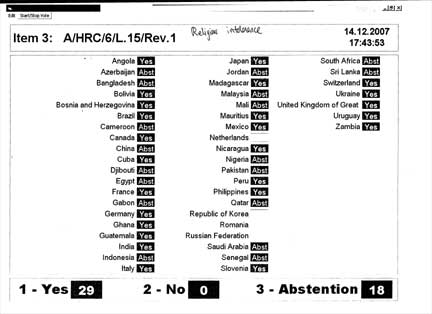
To Defy Hate All You Need is Love

In the struggle for human freedom, people will never care how much you know, until they know how much you care.

On Tuesday April 21, as I sat in the U.S. Holocaust Memorial Museum in Washington DC listening to the names being read of those murdered in the Holocaust – those whose lives were taken just because of who they were, I saw how much the readers truly cared. The reading of the names of the Holocaust victims was done by diverse people each with a list. The readers were young and old, Caucasian and black, Asian and other ethnic backgrounds, women and men. But they had one thing in common – they all cared. The Holocaust was over 60 years ago, certainly some may have still known some victims, but many did not. And still they cared – they stopped their day to remember. Some cried. One young Asian girl could barely make it through the list of names through her tears.

We don’t cry enough, and that is so sad for the human race. We need to cry a lot more often. We have gotten so tough; I fear sometimes that our hearts are becoming stones. We see the endless cacophony of horror stories against humanity around the world, and our hearts get so tough. The losses just become nameless numbers, another news story, and we forget how horrible it truly is. Many of us just can’t face it. We avert our eyes, change the subject, change the channel, and turn off our hearts. We choose to forget what those numbers mean as a “coping” mechanism. But denial of human suffering is an unhealthy and inhuman “coping” mechanism that we need to leave behind as a mature society. We need to grow up and face the real “monster in the closet” that is the suffering of humanity and the shared human threat of institutionalized hate.

We need to spend more time with our hearts and remember that our fellow beings aren’t just numbers. So as they read the names, I saw them in front of my eyes. The brothers and the sisters, the mothers and the fathers, the loners, the brave, the desperate, and most of all the helpless children – as I listened to each name – I saw their lives extinguished one by one like the flames of candles.

Over 6 million… human beings. And every one – was somebody. They weren’t a number, they weren’t a statistic, they weren’t a “fiction,” and they weren’t just “victims.” Each one was a HUMAN BEING. Each one was a person whose life was stolen by institutionalized hate.

In the U.S. Holocaust Memorial Museum’s Hall of Remembrance, where the names of those murdered were read on April 21, phrases from the Torah have been placed on the walls. One was from Deuteronomy 30:19, concluding “Choose Life – that you and your offspring shall live.” Until we accept the value of our fellow human beings and show love to each other, we will continue to fail to grasp this fundamental message in choosing life over institutionalized hate, choosing life over denial of human suffering, and choosing life over craven indifference to our fellow human beings. In choosing life, we also recognize that our lives do not begin and end with just our own personal happiness, but extend to our responsibilities to love our fellow human beings as our neighbors, brothers, and sisters in humanity. We have a choice – we must choose life in humanity loving our fellow human beings. Choose life and choose love.

When humanity is threatened by institutionalized hate of its universal human rights, it is our responsibility to speak out. It is our responsibility to act in defending the human rights of our fellow human beings. If we choose life as part of the human race, then we must share the obligations and responsibilities in protecting the human rights of our brotherhood and sisterhood of humanity.

“Silence is death” is the message of the North Korea Freedom Coalition that is also remembering an estimated 3 million North Koreans that have died under North Korea’s brutal dictatorial regime since the mid-1990s, and who continue to die today. Again – every one… was somebody – they were a human being.

The North Korea Freedom Coalition is holding a rally at the West front of the U.S. Capitol in Washington DC on Tuesday April 28 at 12 noon; it will have a North Korea genocide exhibit on display. The North Korea Freedom Coalition is trying to remind us that the genocide of humanity continues to happen today. This rally is part of “North Korea Freedom Week,” which is a series of events planned in the Washington DC metropolitan area to raise awareness about the North Korean totalitarian government’s attack on humanity.

Many in America’s governmental leadership are deeply concerned about the efforts of the North Korean government and its leader Kim Jong Il in developing nuclear weapons. Our diplomats have sought to negotiate with North Korea on these tactical security issues of grave importance. But we will never have any type of security that isn’t built on a foundation of respecting the universal human rights of equality and liberty. We will never successfully negotiate a “security” position with a Communist nation like North Korea while it starves its people, denies them human rights, and holds its citizens in concentration camps. We will never successfully achieve “peace for our times” with North Korea while it holds humanity’s fundamental rights in contempt.

While many of us say “Never Again” to the Holocaust, in fact genocide is happening again – in North Korea, in Sudan, and in many parts of the world. This is why we must accept the lesson that “Never Again” means promoting love for our fellow members of humanity and their universal human rights.

On Sunday April 26, I was privileged to join supporters of the North Korea Freedom Foundation at a candlelight vigil at the International Calvary Church in Springfield, Virginia – a suburb of Washington DC in Northern Virginia. If you ever want to meet a group of people who truly “fear no evil,” this is where to find them. They held a candlelight vigil to remember and pray for North Koreans who have been beaten to death and publicly executed, and the policies of North Korea and Communist China that have resulted in the murder of these individuals. Like the names read out at the U.S. Holocaust Memorial Museum, each one murdered was also somebody – each one was a human being whose life was also stolen by institutionalized hate – Lol Kil Sung, Ms. Ko Mae Hwa’s daughter, Lee Ock, Kim Jin Ock, Sohn In Kuk, and many others, including countless others we don’t know if they are alive or dead.

At the vigil and prayer service, I was privileged to see defectors who stood fearlessly to show their commitment to human rights, and I was privileged to meet a true champion of human rights, Suzanne Scholte, who has led the efforts of the North Korea Freedom Foundation coalition in campaigning for human rights in North Korea. At a banner in the International Calvary Church, its members are told to “Love Neighbor,” even as thousands of their neighbors are indifferent to the suffering of the millions of North Koreans. As many testified on April 26 during the vigil and service, the answer to the institutionalized hate of the suffering North Korean people – is love. Love is the universal language of humanity.

Many believe that Communist totalitarianism in North Korea, Communist China, and other nations is about statist “control,” not hate. This confusion shows how much we still have to learn as human beings about our shared responsibility for the universal human rights of equality and liberty. Just like Hitler’s Nazi Germany, Communist totalitarianism also hates humanity. Communist totalitarianism hates humanity because it completely rejects the truth of humanity’s universal human right to liberty. Communist totalitarianism doesn’t hate because it controls — it controls because of its hate and contempt for humanity’s most fundamental right of liberty.

Institutionalized hate seeks to control human beings and deny their universal human rights of equality and liberty, because love is really a dangerous thing for them. If you love your fellow human being, how can you deny their equality, their liberty, their freedom? Institutionalized hate can’t tolerate such love, because when people start loving each other then they will start calling for each other’s human rights, and institutionalized hate just can’t have that.

Now as someone with a degree in political science, I will tell you that we political science types have fancy names for the different shades of institutionalized hate. We like to call such institutionalized hate names such as totalitarianism, supremacism, and whatever-you-want-to-call-it “ism.” I know that I do it, and that’s what happens when you get a political science degree. We do that because the study of political science is to understand diverse political systems, behavior, and philosophies – and that is how we catalog variations of institutionalized hate. What we don’t do is universally recognize such anti-humanity ideologies of repression as institutionalized hate.

But as a human being, I will also state that there really is no meaningful difference between the shades of institutionalized hate, no matter what we want to call it. As human beings, we must not get caught up only in the detailed political science argument or the right-left argument, and miss this fundamental point. There is no real difference between “right wing” hate and “left wing” hate; there is no difference between “racial” or “religious” hate. There is no difference between the atrocities of the Nazis or the atrocities of the Communists. Murder is murder. Hate is hate. Institutionalized hate is the same – no matter what political, racial, social, or religious label that it chooses to wear. Institutionalized hate is the common enemy of all of humanity.

This is why we can’t “choose our battles” when defying institutionalized hate. An attack on our human rights anywhere is an attack on our human rights everywhere. When we believe that we can only care about the human rights of those like us, or only those whose cause we find appealing, then we miss the point. It is our consistent responsibility for equality and liberty and our consistent commitment to love our fellow human beings that is the foundation for challenging institutionalized hate. We cannot love one another, and be indifferent to institutionalized hate in areas that are “not our cause.” Our love for humanity, like our human rights of equality and liberty, must be universal. So must be our action in defying those who would deny such universal human rights.

For example, many people would rather ignore that Communist China practices such institutionalized hate of humanity through its denial of universal human rights. It is terribly inconvenient for many people, and certainly inconvenient for many business interests. Communist China’s history of Communist totalitarianism, repression, concentration camps, and brutal treatment of its citizens is an inconvenient truth for many Americans who depend on products and goods developed by a repressed Chinese people who are denied such universal human rights. Turning a blind eye to Communist China’s atrocities is a good “business” practice for many.

Too many ignore the Communist Chinese government’s history of murdering 20 to 80 million of its own citizens through Mao Zedong’s policies of repression, the Communist Chinese government democide, and Mao’s intimidation of dissent leading to murderous famines resulting from the “Great Leap Forward.” In Mao: The Unknown Story, Jung Chang and Jon Halliday estimate that perhaps 27 million people died in prisons and labor camps during Mao Zedong’s rule. Once again, every one… was somebody – they were a human being.

Too many ignore the Communist Chinese government’s Laogai forced labor concentration camps that continue to exist today, which the Laogai Research Foundation states there are 1,045 such concentration camps holding an estimated 6.8 million prisoners. I challenge those who believe in human freedom to look at the map of these Communist Chinese concentration camps and say that we believe in “Never Again.” I challenge those who believe that such concentration camps exist only in history to visit the Laogai Museum, located at 1109 M St. NW, Washington DC, and see the reality for themselves.

Too many ignore the endless series of atrocities from Communist China – the organ harvesting of prisoners, the forced abortions, and the affront to the dignity of human bodies by selling and displaying human corpses. Too many believe that human rights in Communist China are not a priority for America’s foreign policy objectives.

I ask you – would you buy a product labeled “Made in Nazi Germany”? If not, then why is it any DIFFERENT for a product “Made in Communist China”? We need to recall our ambassadors of denial, ignorance, and amorality from representing America in globalism. We need to restore conscience to capitalism. “Never Again” does begin with love for humanity and our consistent responsibility for its universal human rights.

Twenty years ago, in 1989, something important happened in Communist China. Something happened that we must never ever forget. In the capital city of Beijing and in other parts of Communist China, its citizens began to call for freedom on April 14, 1989. For a time, the power of human freedom was rekindled in the hearts of the Chinese people. From April 14 through June 4, 1989, protests were held for freedom around China and in a place known as Tiananmen Square. To those of you who are old enough remember, I hope that the very words “Tiananmen Square” make your heart ache and make your eyes water. We must remember the Tiananmen Square where students of freedom stood up to Communist soldiers, where students of freedom chose to go on a hunger strike, and where students erected a brief statue to liberty that looked so achingly like our own. We must remember the Tiananmen Square where those who stood for the love of humanity’s universal rights of freedom paid the ultimate price for defying hate, and many died on June 3 and 4, 1989. Finally, we must remember the Tiananmen Square where, on June 5, 1989, a solitary man stood against a row of tanks. One fearless hero of freedom loved his fellow man and his country that much. One unarmed man stood with nothing but his defense of freedom.

Some things you never forget.

So it saddens my heart, during this time of remembrance of those who stood against institutionalized hate in Communist China, to see so many who seem to be so readily willing to forget.

On May 5, at the Washington DC embassy of the ironically named “People’s Republic of China,” an organization named the Institute for Education (IFE) is holding a “Civility Award” cocktail reception and dinner at this Communist Chinese embassy. The IFE seeks to “foster civility” and “intercultural understanding.” Tickets to the dinner at the Communist Chinese embassy cost between $1,000 and $50,000. According to the IFE, a series of notable individuals are listed as confirmed “opinion leaders” who will be attending this exercise in “civility” with the Communist Chinese ambassador at the embassy. You will no doubt recognize many of the names listed by the IFE: Tom Friedman (The New York Times), Bob Woodward, David Broder (The Washington Post), Eleanor Clift (Newsweek), Ed Henry (CNN), Judy Woodruff (PBS), John Harwood (CNBC), Jerry Seib and Gerard Baker (The Wall Street Journal), Morton Kondracke (Roll Call), Hugo Gurdon (The Hill), Juan Williams, Jim Angle, and Jennifer Griffin (FOX News), Norm Ornstein (American Enterprise Institute), and Congressman Mark Kirk.

If this doesn’t give you an idea of the depth of our bipartisan, national problem in consistently being responsible for equality and liberty, I don’t what will.

The adults going to the May 5 cocktail reception and dinner at the Communist Chinese embassy aren’t some young teenagers who never heard about the Tiananmen Square massacre of 20 years ago. Most of them remember – all of them know. More importantly, they know better.

The IFE will argue that this cocktail reception and dinner is to spread “civility.” I disagree. It sends yet another signal of legitimizing and appeasement to the leaders of oppression. It sends yet another message that we will ignore the institutionalized hate that Chinese Communist leaders have for the universal human rights of humanity.

I argue that there is nothing civil about having cocktails with representatives of a Communist totalitarian nation that has over 1,000 concentration camps today. There is nothing civil about legitimizing those who support oppression and those who have contempt for humanity’s fundamental human right of liberty. The civil answer to offers to socialize with totalitarians is “no, thank you, not until you recognize human rights.” I would hope that the “opinion leaders” listed by the IFE come to this conclusion, and I urge you to contact them and ask them to publicly boycott this event on May 5. Perhaps they could truly serve as opinion leaders on issues that really matter.

I can still be civil and speak for human equality, liberty, and justice. You will see me doing so on June 4 at the Communist Chinese embassy. But I will be outside, on the street, where I belong – with free people, not inside legitimizing totalitarianism. I will be outside remembering those millions who have lost their lives to Communist China and remembering those who lost their lives in the 1989 Tiananmen Square massacre. I will be outside the Communist Chinese embassy as I was on June 4, 1989 in support of the Chinese martyrs for freedom then. I hope you will join me. We are all responsible for equality and liberty.

Civility truly does matter – but it starts with love for your fellow human being. If you love your fellow human being, then you have no choice but to defy those who would hate them, and you have no choice but to defy institutionalized hate of the universal human rights of equality and liberty.

If we must defy hate with love, we must not even hate the oppressors in their civil war against humanity itself.

The cancer of hate attacks all who are touched by hate, even those who advocate it. In the disease of hate against humanity, the practitioners of hate are also victims themselves. That is why we must pray for and we must plead with them to see the error of their ways. We must seek them to end their institutionalized hate against humanity and rejoin the family of human beings. In challenging institutionalized hate, we must acknowledge the humanity of even the oppressors and the hatemongers, and it is with our love of humanity that we plead for them to change.

We must also acknowledge that those who are indifferent to such human suffering are also in our family of humanity. While we may be hurt by their indifference, we must consistently show our love to remind them that they are our brothers and sisters in humanity.

Love is the foundation of all human rights. None of us should claim to have all of the answers to humanity’s problems. But we know that the answer to most problems starts with love.

You intuitively know what’s right. Your children know what’s right. You know what is right begins with love. Your heart knows that our love for each other is the foundation of our natural human rights. We need to start listening to our own hearts.  By loving our fellow human beings, we find no choice but to defend their human rights. We need to find the courage to make ourselves consistently responsible for such human rights in our lives.

We are all part of something bigger than ourselves – the human race. No matter our religion (or lack thereof), no matter our race, no matter our gender, national origin, etc., we are all human beings. We are all part of one family of humanity. You don’t choose your family of humanity. It includes those who are brave and those who are afraid. It includes those who seek freedom and those who oppress. Regardless of all of their differences, they remain your family of humanity. We are all a part of each other. When you hate members of your family, you hate a part of yourself. Hate is never an answer to hate. Indifference is never an answer to indifference.

There is only one answer to hate and indifference towards the universal rights of your family of humanity – the answer is love.

Ultimately, Love Wins.

For details of what you can do in our common cause, see RealCourage.org.