R.E.A.L. urges the Druze community to consider flexibility in its relationships, and to use the dangerous times the world faces as an opportunity to open their community who come to them in love and compassion. We have been approached by such a person, Anna, whose love relationship has been lost due to her loved one not accepting her within the Druze community. You might wonder what this has to do with human rights.
Mercy.
No activists for human rights have a center to their ethical compass without mercy, and it is center of our organized faiths, as well.
Sometimes the needs of the one outweigh the needs of the many.
Whatever our faith, culture, nationality, or identity group, at some point life will teach us that lesson… of conscience.
Life will teach us that integrity is more than just defending our group, our interests, our needs, but also having the courage to open our arms to others and the needs of others in the family of humanity. We have no outsiders in our shared human race. We cannot be supporters of our shared human rights without that basic moral concept. Every religion of peace must honor love and mercy in its teachings.
R.E.A.L. respects the complex need to try to preserve the integrity of Druze religion and culture, especially considering the history of persecution that the Druze community has faced. R.E.A.L. respects the struggle of centuries and the history of the Druze closing of its faith during the Fatimid Caliphate. But certainly, if humanity has learned one thing over the past 10 years, with the global violence of ISIS and terrorism, including violence in Syria, Lebanon, Jordan, we do not survive the enemies of our shared human rights, those who reject freedom of conscience, those who have abandoned compassion and mercy, by choosing to stand alone and in isolation.
The world has become more violent and dangerous, not less. Our identity groups deserve protection, but that protection starts with cohesion with our larger world and allowing new hearts to share the love that a community has for one another. What we have been taught, certainly, is what NOT TO DO. We have seen the price of isolation. We have seen the consequences of those who feel compassion and mercy is no longer necessary.
R.E.A.L. writes this in this message to the Druze community, but of course, this applies to the world community. There is no island that will protect our identity groups, our cultures, and our civilizations from harm. Certainly, the Druze community has seen this as much as any, with the suffering it has faced at the hands of ISIS, as have the Yazidis, Christians, and others. We understand the fear of disruption from allowing outsiders to join and intermarry into the Druze community, but certainly those that publicly seek their destruction remains the graver and more serious threat.
In the past five years, we have seen some of the greatest public threats to Druze community in modern history – from the ISIS terrorist movement. This moment in history provides an opportunity to consider welcoming others into your community and among those who love your people. That includes a woman named Ana, who has lost the love of her life. She matters, just as much as the millions of others in our world.
Sometimes the needs of the one outweigh the needs of the many.
Take it to heart, and no matter what comes your way, you will sleep with a clear conscience.
In the dangerous times we live in, R.E.A.L. urges the Druze community to consider a statement that is posted after The Holocaust in the U.S. Holocaust Memorial Museum in Washington, D.C.. We remember it this week at the U.S. Holocaust Memorial Museum, as we read the names of the victims, but even after facing Adolf Hitler and The Holocaust, their religion, their culture is still alive. Decades of intermarriage have not damaged it, but such openness has simply allowed more hearts to gain more compassion for their religion and their culture, to protect and defend them.
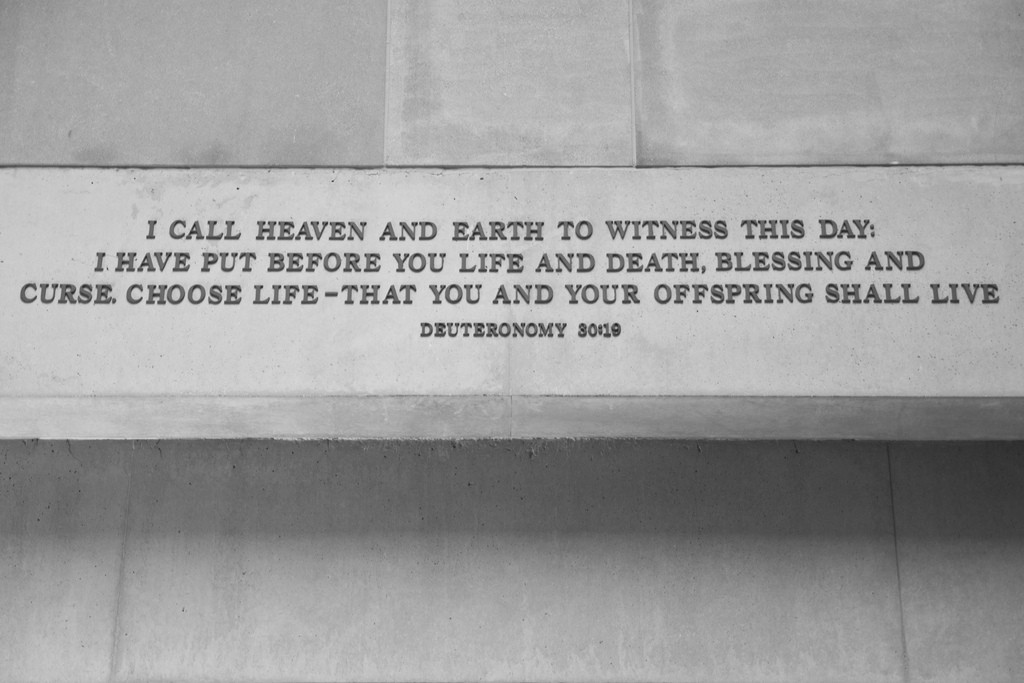
In the museum, not far from earth from Hitler’s concentration camps, on the wall there is a verse from the Bible, Deuteronomy 30:19: “I call Heaven and Earth to witness this day; I have put before you life and death, blessing and curse. Choose Life – that you and your offspring shall live.”
It is not just our physical life, but also our moral life, our compassionate life, and our life together as people of God. We must not close the doors to love and compassion, in the belief it will keep us safe and our culture intact. We must open the door to love and compassion, allow those who seek to love our beliefs and values to join with us in common cause and faith.
R.E.A.L. urges, with great respect and understanding of the history of Druze suffering — “Choose Life – that you and your offspring shall live.”
As the nature of blogging and the volume and complexity of world Human Rights issues have increased, the overwhelming majority of R.E.A.L.’s postings are on social media, working to educate, to inform, to inspire, and mostly to CHANGE. R.E.A.L. continues to also use this blog occasionally for long, unusual, and complex stories that we cannot address on social media, but on a daily basis the majority of what we are writing about is on Twitter. You can find R.E.A.L. on Twitter at: @realhumanrights
Justice begins with compassionate leadership. Compassion is more than our self-focused passion for what we want and need, but empathy, mercy, and respect for what others need. Compassion allows us to suffer together, and it is a fundamental keystone of a representative democracy and the concept of universal human rights. Compassion allows us to listen to one another, even when we are different, and feel the pain of another’s needs. Compassion respects diversity and differences among us, but it never loses sight of the fundamental bond that we share as fellow human beings.
This bond of our human brothers and sisters is essential in our causes for human rights, and our efforts to work for justice of every kind in our representative democracies.
Our fellow human beings don’t care how much you know, until they know how much you care.
If we believe in compassion as an essential element in our societal cohesion, we must recognize that we cannot only have compassion for those like us or those we like. We cannot just believe that compassion is worthy for a select few, who we believe “deserve it,” while we turn our back on the rest of our brothers and sisters in humanity. We can and we must be more compassionate human beings than that.
The long, long struggle for racial justice in America has been based on the victory of compassion over hate. It is, has been, and will be the way forward for any real social progress. Compassion and Love Wins.
This is what we must remember. We must find leaders who understand this and who are willing to defend compassion with the same vigor that challenge racial injustice.
For years, I have worked to share compassion in the struggle for racial justice and human rights in America and the world. The learning that one achieves from experience versus history books is stark. In life experience, we have moments of crystal clarity in our conscience and our mind, when we experience things that we know are wrong and must be changed.
On racial justice, my first moment of crystal clarity was in July 1966 in Virginia, while walking on the sidewalk, when I came across a public sign in front of a hotel that read “White Clientele Only.” For the first few moments, I genuinely couldn’t understand it. But as I stood there in shock, I came to realize the entrenched tenacity and determination of White Supremacy to divide and destroy the moral fabric of America.
America was once like that. And worse. In the same Virginia, and in too much of America, African-Americans were once enslaved. There has been a dark history of wrong that leaders of human rights and dignity have struggled for over 150 years to make right. It will always be a legacy of disgrace to overcome and to continue to work for change. Let us wear this national badge of shame publicly, not with pride of what was, but in determination of how far we have come, and how committed we are to a more just future.
The path to change has been a continuing victory of compassion over hate. In the United States, that unequivocal struggle for compassion has required an organized, ideologically consistent and responsible force to struggle against hate and injustice. Our history shows that these partners in compassion for racial justice have come from every group, race, nationality, background, religion, profession, and walk of life. It has and must continue to be a national struggle for racial justice.
The growing violence in America over racial justice issues brings another moment of crystal clarity to our nation, as something unshakably wrong that must change. We cannot simply ignore it, avoid it, and wish it away. The dead bodies of our fellow Americans, of every race, are there, and their blood has been in the street. Yet we have those praising killers and calling for more violence. We have those who seek to harden lines of hatred towards other Americans. We have those in denial of justice issues. We have those who openly praise those who would terrorize, injure, and murder the public representatives of our law enforcement. Those consumed by rage and anger no longer remember, and no longer care, that these victims are their fellow Americans and fellow human beings.
America has faced similar moments before.
In August 1964, Reverend Dr. Martin Luther King, Jr. went to the Watts neighborhood of Los Angeles after riots resulted in the death of 34 Americans and the destruction of $40 million in property damage. As Dr. King recounts, one of those supporting the riots told him “We Won!” Dr. King asked him “what do you mean, ‘we won’? Thirty-some people dead, all but two are Negroes. You’ve destroyed your own. What do you mean ‘we won’? And he said, ‘We made them pay attention to us.'” Dr. King pointed out: “When people are voiceless, they will have temper tantrums like a little child who has not been paid attention to. And riots are massive temper tantrums from a neglected and voiceless people.”
This responsible leader of compassion did not simply ignore those who supported violent riots as a method of social change, but instead provided the leadership and guidance to promote nonviolence as a solution. As Dr. King wrote when he visited Watts, “[t]he people of Watts were hostile to nonviolence, but when we actually went to them and emphasized the dangers of hatred and violence, the same people cheered. Only minutes before the air had been thick with tension, but when they were reminded of the Rev. James Reeb and Viola Liuzzo, the martyrs of the Selma campaign, they cheered the thought that white people can and do cooperate with us in our search for jobs and dignity.” [White Americans Reverend James Reeb and Viola Liuzzo were murdered by white supremacist terrorists in March 1965, while working to assist Dr. King in Alabama on the Selma march.]
America needs such leaders of compassion and nonviolence today, in our important national issues of racial justice. Every movement needs a leader. The idea of “leaderless” movements are fine for short, brief events, but every long-term committed cause requires someone who can define an agenda, identify both problems and solutions, and guide the movement to work together responsibly for social change.
I was blessed to live through the years of seeing Dr. Martin Luther King, Jr., and then other Civil Rights leaders. I saw the level of leadership that they provided to the nation. The leadership that Dr. King provided was not just activism, but also a responsible leadership as a conscience for the nation, so that those working for Racial Justice could work together and responsibly. Such community and national commitment to nonviolent progress in racial justice has been a foundation of America’s human rights for the past 50 years.
His leadership addressed grievances and issues, but also provided an ideology of compassion and nonviolence, with an organized structure and consistent ethical commitment by his supporters. America is a secular nation, and we achieve many areas of progress from our secular leaders, including progress in areas of morality, justice, human rights, and dignity. America’s history shows, however, that to effectively organize responsible, nonviolent demonstrations and social justice work for racial equality, we need the structure and value consistency of a faith-based organization within the leadership of such movements.
So as America continues to struggle with injustice, violence, and division, we must call upon leaders of faith-based groups in America for leadership in compassion and racial justice. We must urge faith leaders in every house of worship to share with their worshipers the message of our shared responsibility to support nonviolence and compassion for all of our fellow human beings, including those who face violence, persecution, and fear.
As Reverend Dr. Martin Luther King, Jr. stated: “In spite of the darkness of this hour, we must not despair. We must not become bitter; nor must we harbor the desire to retaliate with violence.” “Nonviolence is power, but it is the right and good use of power.” “Hate is just as injurious to the hater as it is to the hated.” “I cannot make myself believe that God wanted me to hate.” America needs such an organized commitment to compassion and nonviolence, as part of our racial justice campaigns.
Our responsible commitment to nonviolence is not in ignorance of injustice and violence, but rather it is because of our knowledge of the damage that injustice and violence creates. If we have the courage to promote nonviolence to challenge injustice, then we must also have the courage to challenge the violence against people of color, as well as the social violence of poverty, humiliation, despair, and attacks on human dignity and equality.
Dr. King wrote: “a mere condemnation of violence is empty without understanding the daily violence that our society inflicts upon many of its members. The violence of poverty and humiliation hurts as intensely as the violence of the club. This is a situation that calls for statesmanship and creative leadership.” Calls for nonviolence must not only be to dissuade those who praise, support, or act in riots and terrorism, but also to call for accountability and change by those with the authority and responsibility to provide governmental and political leadership.
Most of all, national campaigns for nonviolence and compassion in racial justice must be built on a structure and organization, which is committed to nonviolence and compassion as basic aspects of its mission.
We cannot expect such long-term, nationwide movements for racial justice, compassion, and nonviolence to be guided without the commitment of an existing structure founded on such principles. We cannot be led to progress without responsible leadership that has an ideological basis in compassion and nonviolence.
While we all play a role, expecting just social media, protest activists, law enforcement, and the press to solve or even effectively address these issues is unrealistic. We must have reasonable expectations of those who seek to make changes in our society. Expecting such small groups to become something they are not and judging them based on standards they cannot meet is counterproductive.
Over the past three years, the current Black Lives Matter leaders have provided a social media-based awareness campaign of injustices and racial justice issues, which need the attention of a structured group of compassion and nonviolence leaders. The handful of activist leaders within the structure of that organization are dwarfed by the vast volume of the public that recognizes and is concerned about the need for social change; it is unreasonable to expect them to have the structure, organization, and ideological nonviolence leadership that a sustained racial justice movement requires.
Dallas Police Chief David Brown rightly points out “we’re asking cops to do too much in this country.” Our police are there to enforce the law. There are areas where they are continuing to look to make changes. But they are not our national campaigners for social welfare justice, nor are they the enemies of our nation. Like the rest of us, they are trying to do the best that they can, often under difficult circumstance, including regular threats to their lives.
Our press and media will cover events from the perspective and bias of individual reporters. Such media are human rights campaigners, nor do they necessarily come from a position of balance and fairness. They are there to provide news information which covers some segments of our community and national events. They will move on, when the next story comes around.
Social actors in our communities will focus on what they know and understand. We cannot expect those with a limited mission to do everything.
So it is with our faith-based organizations as well. Many of them too will also express that their primary mission is to organize worship services, to hold religious schooling, and to preach their religious views. However, in America, we must expect the most from such faith-based organization, especially when it comes to their vital leadership role in racial justice, using compassion and nonviolence. Our history has shown that such faith-based organizations and their value systems for compassion and nonviolence are essential to achieving social justice.
America today needs faith-based leaders with a commitment to nonviolence that can provide responsible leadership on work towards solving America’s problems, racial injustice, violence, and the need for shared respect for our shared law in a democracy.
America needs faith-based leaders with a commitment to nonviolence to show the courage to speak to all members of the community, and de-escalate the growing violence and hatred we see in our street. We need faith-based leaders as leaders of demonstrations that can show America and the world – we care about justice and violence issues, while not resorting to injustice and violence ourselves.
Dr. King stated “I cannot make myself believe that God wanted me to hate.” This is the type of leadership of compassion and nonviolence that we need today. If we want better tactics from those protesting injustice, then we need leaders who understand and are committed to nonviolence and compassion, not just for a single social justice campaign, but as an integral aspect of their identity and their mission.
We must call upon faith leaders to stand up and be counted in their community and nation at this hour of America’s need. It is not enough to expect activists, police, and others to provide the moral leadership of nonviolence and compassion in working for racial justice.
What type of religious values are we teaching to the faithful and our children if we stand by and watch while those without responsible guidance are being led to believe that violence is the answer?
Will our faith leaders be silent when those in their community are facing racial injustice and abuse?
Will they remain silent over too many instances of official abuse of authority and unnecessary deaths?
Will our faith leaders simply shake their head, as our police are now shot, attacked, and crippled?
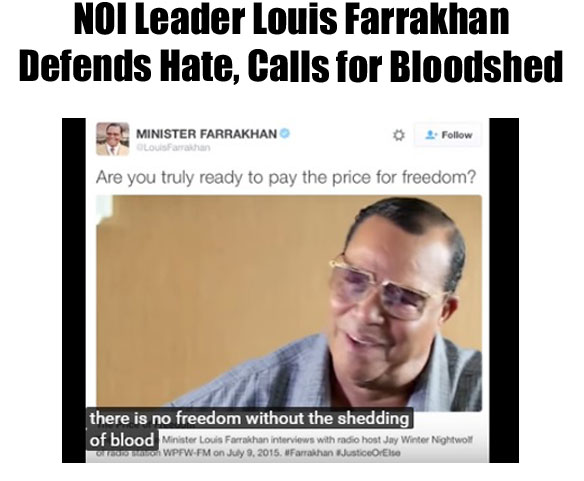
Will they stay silent when extremists like the Nation of Islam’s Louis Farrakhan calls for violence and hate? Louis Farrakhan is telling our public: “there is no freedom without the shedding of blood,” “don’t let this White man tell you that violence is wrong,” and “God hates…I don’t why man thinks he is better than God.” Will our faith leaders just ignore such teachings, or will they offer a real alternative to our public?
Will our faith leaders remain silent as those without responsible guidance praise terrorists and vicious individuals as heroes and martyrs?
Defiance to injustice is not an invitation to violence and terrorism, nor can it be praise and support of criminal behavior. We cannot work to counter injustice by becoming and supporting violent criminals. We must do better. Our nation must do better. We need leaders who are unyielding in their commitment to compassion and nonviolence.
Our faith leaders must see that their organized leadership in compassion and nonviolence is necessary in America today. It is not enough to expect other groups to sort these issues out, without the responsible leadership, guidance, and commitment by faith-based organizations. If we seek to change the law or change aspects of our society, we must also be willing to respect the law and show consistent compassion for our society.
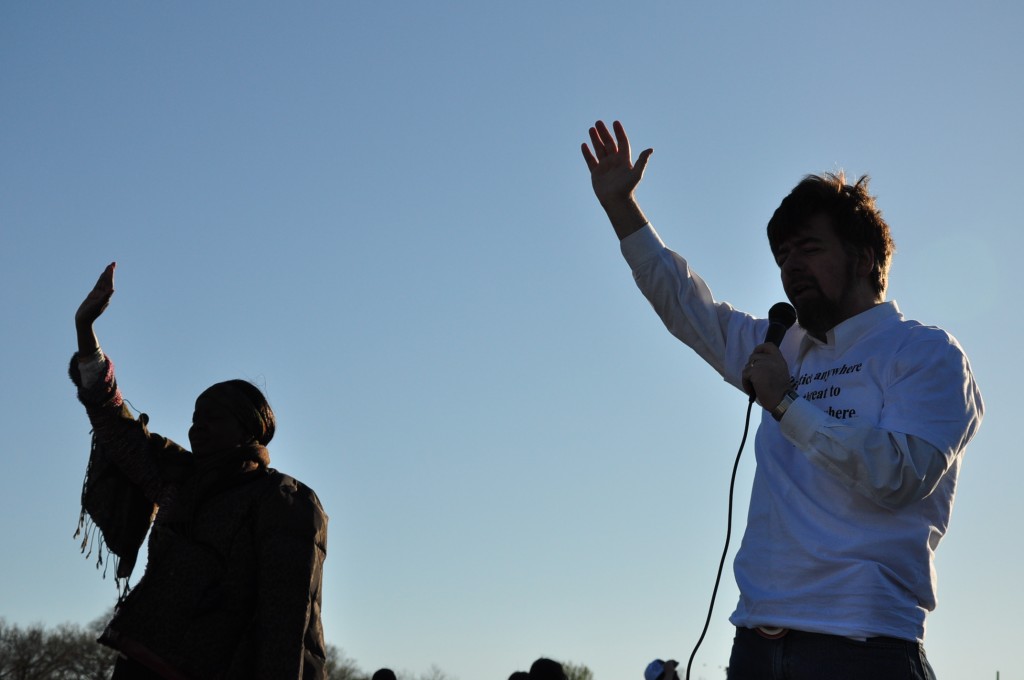
Prayer for Peace – Washington, D.C. – Lincoln Memorial
America desperately needs our faith leaders today to provide leadership in compassion and nonviolence for racial justice. America should welcome such responsible leadership from every faith.
The struggle for racial justice and peace in America is the unique responsibility of the American Christian community. Let there be no doubt to my American Christian brothers and sisters, this is first and foremost — OUR fight. The forces of racism, white supremacy, and violence have attacked our nation, and the soul of our nation since our inception. When we have sung the Battle Hymn of the Republic for our nation over the past 150 years, it is with a recognition of the unique and specific American Christian responsibility in seeking change for racial justice in America.
Over 100,000 American Christians have died for this cause. Our Christian churches were bombed by white supremacists and they murdered Christian children in houses of worship. Even as late as a year ago, we saw a wave of burning of African-American Christian churches, after the white supremacist terrorist Dylann Roof went in and murdered a Christian congregation in Charleston, South Carolina during a Bible study. The white supremacist forces of evil have even defamed the symbol of the cross in city after city across this great nation, lighting it on fire, and spreading their anti-Christian white supremacist hate. Our great Christian pastor Dr. Martin Luther King, Jr. gave his life and was killed for this cause. First and foremost, American Christians – this leadership for nonviolent compassion in working for racial justice is OUR responsibility. Of course, black lives matter, just as all lives matter in this nation. But it is not enough to know what is right – we must continue to work to build an America that is just and compassionate. The American Christian community has had, and continues to have a unique and unshakable responsibility to work to right the wrongs of a legacy of injustice in America.
Do not forget – Christian pastor Dr. King was not only concerned about the lives of those touched by such racial injustice; he was also deeply concerned about their souls. As much as Dr. King was concerned about freedom for black Americans, he was just as “concerned about our moral uprightness and the health of our souls. Therefore, I must oppose any attempt to gain our freedom by the methods of malice, hate, and violence that have characterized our oppressors. Hate is just as injurious to the hater as it is to the hated. Like an unchecked cancer, hate corrodes the personality and eats away its vital unity.” Our faith leaders cannot protect the souls of their fellow Americans, and look the other way when there are those promoting violence and hate. If such soul salvation is not seen as the mission of some our faith leaders, then truly what do they view as their role in society? This is priority number one.
There are faith leaders, including many Christians speaking out today and involved in the struggle for racial justice. But clearly, there are not often. Furthermore, there are certainly not enough leaders to provide the responsible guidance that any activist movement needs, as a guard rail, to help us from going off the road of nonviolence and compassion, into the ditch of rage and violence. There are not enough to tell activists to put down bricks, concrete, bottles, and even guns and rifles. There are not enough to tell those who praise actions of violence and even murder that the answer must be found in nonviolence and compassion towards our fellow Americans, who are brothers and sisters in humanity, no matter how much we agree or disagree with them. We need more faith leaders to actively stand up and lead change for racial justice, nonviolence, and compassion in America today.
Some may be fearful to take an inflexible stand on compassion and nonviolence, because they may fear of being a minority among an angry crowd. The history of Dr. King in Watts may not be much comfort, because they may say, after all he was Martin Luther King, Jr. But pastor King has told us: “Take a stand for that which is right, and the world may misunderstand you, and criticize you. But you never go alone, for somewhere I read that one with God is a majority. And God has a way of transforming a minority into a majority.”
There is a majority that believes not only in racial justice, but also in the power of compassion and nonviolence. There is a majority that believes in seeking change through our democratic processes and the law. We must not fail our nation in its hour of need to reach that majority. If you find a group that rejects the values of this majority, remember that power is within YOU as a faith-based leader to change this group. As Dr. King stated, “a genuine leader is not searcher for consensus, but a molder of consensus.”
We have seen such responsible leaders of compassion and nonviolence change America again and again. Our history shows that this does make a difference.
Dr. King provided a recognizable leader, as a man not only of compassion and nonviolence, but also as a man of faith, to help bridge the gap between different Americans – both black and white. Dr. King not only stood up to racial injustice, but also he stood up and challenged those who sought violence as the answer. When Dr. King led a protest march, he made it clear to those who stood with him that, no matter what, the principles of nonviolence and compassion would be defended by those who witnessed their campaign.
Dr. King stated in Alabama: “I say to you this afternoon that I would rather die on the highways of Alabama than make a butchery of my conscience. I say to you, when we march, don’t panic and remember that we must remain true to nonviolence. I’m asking everybody in the line, if you can’t be nonviolent, don’t get in here. If you can’t accept blows without retaliating, don’t get in the line. If you can accept it out of your commitment to nonviolence, you will somehow do something for this nation that may well save it. If you can accept it, you will leave those state troopers bloodied with their own barbarities. If you can accept it, you do something to transform conditions here in Alabama.”
As he led nonviolent campaigns for compassion and justice, so our leaders today can do again today. Dr. King stated:”Let us rise up tonight with a greater readiness. Let us stand with a greater determination. And let us move on in these powerful days, these days of challenge, to make America what it ought to be. We have an opportunity to make America a better nation.”
We have gone from Slave states to Free states.
We have gone from segregation to integration.
We have gone from widespread unjust persecution of black Americans to black Americans serving in the highest courts of our land and leading in our law enforcement.
We have gone from black Americans struggling to get the vote to serving as the president of the United States.
Most of this, I have seen in my own lifetime and with my own eyes. Can we continue to make change for racial justice? There is no doubt that America can and America will. America needs the leaders of compassion and nonviolence to guide them in the difficult days of this nation.
We must continue to choose to face the future with a courageous commitment to compassion and nonviolence, because it is the right thing to do. For the future of justice in our nation, it must also continue to be the American thing to do. That is the nation that we have always sought to be.
For Pakistan Christian refugees seeking asylum in Thailand, R.E.A.L. recommend they become familiar with the following processes, rules, and guidelines:
R.E.A.L. views persecution of Pakistan Christian refugees to be consistent with the guidelines set by the UNHCR to consider refugee persecution, as described in the United Nations Handbook and Guidelines on Procedures and Criteria for Determining Refugee Status (HCR/1P/4/ENG/REV. 3). It is R.E.A.L.’s contention that, in accordance with Part One, Section B. Interpretation of terms, Subsection (2)(b) Persecution, paragraph 51, such cases fit the definition of “persecution,” which clearly applies to this case as defined by the facts of the case and the circumstances of his country of origin, as very clearly seen by past events and highlighted by recent events in the persecution of Pakistan Christians. Paragraph 51 clearly states that “From Article 33 of the 1951 Convention, it may be inferred that a threat to life or freedom on account of race, religion, nationality, political opinion or membership of a particular social group is always persecution. Other serious violations of human rights – for the same reasons – would also constitute persecution.” We have seen from the case of Pakistan Christian refugees based on religious persecution as a Christian by extremists, and the ongoing threats to this Pakistan Christian refugee, that such persecution is a threat to life and freedom based on his Christian religious minority status.
R.E.A.L. further notes the applicability of the May 14, 2012 UNHCR Eligibility Guidelines for assessing the international protection needs of members of religious minorities from Pakistan (HCR/EG/PAK/12/02), Section C.1, and the known threat documented in the UNHCR Eligibility Guidelines regarding threats to religious minorities from blasphemy laws. This includes the UNHCR statement that Blasphemy accusations sometimes spark assaults, assassinations and mob attacks.” It remains our concern that this will be the case in this specific Pakistan Christian refugee’s case.
I also want to point out that the UNHCR Eligibility Guideline in Section IV. “Eligibility for International Protection, A. Potential Risk Profiles, (2). Christians,” recognizes that “Criminal provisions, particularly the blasphemy laws, are reportedly used by militant organizations and members of some Pakistan Muslim communities to intimidate and harass Christians, as well as to exact revenge or settle personal or business disputes.” This section also recognizes that “In many instances, the authorities are reportedly unable or unwilling to protect the lives and properties of Christians, or to bring the perpetrators of such violence to justice.” It further recognizes that “There are allegations of collusion between law enforcement authorities and Muslim clerics” in regards to such persecution of Pakistan Christians.” The UNHCR has previously concluded in such UNHCR Eligibility Guidelines that “In light of the foregoing, UNHCR considers that members of the Christian community, including those targeted by Islamic extremist elements or charged with criminal offences under the blasphemy provisions, victims of bonded labour, severe discrimination, forced conversion and forced marriage, as well as Christians perceived as contravening social mores, may, depending on the individual circumstances of the case, be in need of international refugee protection on account of their religion or membership of a particular social group.”
— UNHCR Guidelines, Paragraph 51 – Religious Persecution of Pakistan Christians Must Constitute Persecution for UNHCR. Paragraph 51 clearly states that “From Article 33 of the 1951 Convention, it may be inferred that a threat to life or freedom on account of race, religion, nationality, political opinion or membership of a particular social group is always persecution. Other serious violations of human rights – for the same reasons – would also constitute persecution.”
— UNHCR Guidelines, Paragraphs 42 and 43 – Assessment of Country of Origin as Factor for Pakistan Christian Refugees. R.E.A.L. has communicated to UNHCR evaluators on the need to effectively assess the dangerous conditions for Pakistan Christian refugees in their country of origin. This is also defined in the UNHCR Resettlement Handbook. The UNHCR Handbook Paragraph 42 specifically states that: “The competent authorities that are called upon to determine refugee status are not required to pass judgement on conditions in the applicant’s country of origin. The applicant’s statements cannot, however, be considered in the abstract, and must be viewed in the context of the relevant background situation. A knowledge of conditions in the applicant’s country of origin –while not a primary objective – is an important element in assessing the applicant’s credibility. In general, the applicant’s fear should be considered well-founded if he can establish, to a reasonable degree, that his continued stay in his country of origin has become intolerable to him for the reasons stated in the definition, or would for the same reasons be intolerable if he returned there.” The UNHCR Handbook Paragraph 43 also specifically states: “These considerations need not necessarily be based on the applicant’s own personal experience. What, for example, happened to his friends and relatives and other members of the same racial or social group may well show that his fear that sooner or later he also will become a victim of persecution is well-founded. The laws of the country of origin, and particularly the manner in which they are applied, will be relevant.”
— UNHCR Guidelines, Paragraph 196: Level of Proof for Refugees – UNHCR Resettlement Handbook, Part Two, Procedures for the Determination of Refugee Status, Section B. Establishing the Facts. Paragraph 196. “Often, however, an applicant may not be able to support his statements by documentary or other proof, and cases in which an applicant can provide evidence of all his statements will be the exception rather than the rule. In most cases a person fleeing from persecution will have arrived with the barest necessities and very frequently even without personal documents. Thus, while the burden of proof in principle rests on the applicant, the duty to ascertain and evaluate all the relevant facts is shared between the applicant and the examiner. Indeed, in some cases, it may be for the examiner to use all the means at his disposal to produce the necessary evidence in support of the application. Even such independent research may not, however, always be successful and there may also be statements that are not susceptible of proof. In such cases, if the applicant’s account appears credible, he should, unless there are good reasons to the contrary, be given the benefit of the doubt.”
— UNHCR Guidelines, Paragraph 197 – Requirement of Evidence – UNHCR Resettlement Handbook, Part Two, Procedures for the Determination of Refugee Status, Section B. Establishing the Facts. Paragraph 197. “The requirement of evidence should thus not be too strictly applied in view of the difficulty of proof inherent in the special situation in which an applicant for refugee status finds himself.”
— UNHCR Guidelines, Paragraph 203: Benefit of the Doubt in Refugee Cases – UNHCR Resettlement Handbook, Part Two, Procedures for the Determination of Refugee Status, Section B. Establishing the Facts. Paragraph 203. “After the applicant has made a genuine effort to substantiate his story there may still be a lack of evidence for some of his statements. As explained above (Paragraph 196), it is hardly possible for a refugee to ‘prove’ every part of his case and, indeed, if this were a requirement the majority of refugees would not be recognized. It is therefore frequently necessary to give the applicant the benefit of the doubt.”
— UNHCR Guidelines, Paragraph 203 and Section 6.3.2 – Definition of Violence and Impact of Violence on Refugee Decisions – UNHCR Resettlement Handbook, Part Two, Procedures for the Determination of Refugee Status, Section B. Establishing the Facts. Paragraph 203. “After the applicant has made a genuine effort to substantiate his story there may still be a lack of evidence for some of his statements. As explained above (Paragraph 196), it is hardly possible for a refugee to ‘prove’ every part of his case and, indeed, if this were a requirement the majority of refugees would not be recognized. It is therefore frequently necessary to give the applicant the benefit of the doubt.”Definition of Violence by UNHCR in Pakistan Christian Refugee Cases. In those cases, where UNHCR evaluators have also dismissed actual reports of violence and violent threats against Pakistan Christian refugees, R.E.A.L. has brought to their attention that the UNHCR Resettlement Handbook calls for a clear definition of violence. In the UNHCR Resettlement Handbook, Chapter 6, Resettlement Submission Categories, Section 6.3.2, page 251, the UNHCR uses the definition of violence from the World Health Organization: “Violence is the intentional use of physical force or power, threatened or actual, against oneself, another person, or against a group or community, which either results in or has a high likelihood of resulting in injury, death, psychological harm, maldevelopment, or deprivation.” We must challenge UNHCR decisions that give the perception of a different definition of violence when it comes to Pakistan Christian refugees.
— Commitment to Purpose of Resettlement and “Benefit of the Doubt.” The UNHCR Resettlement Handbook states that: “Resettlement is a vital instrument of protection and durable solution. Resettlement under UNHCR auspices is geared primarily to the special needs of refugees under the Office’s mandate whose life, liberty, safety, health or other fundamental human rights are at risk in the country where they sought refuge.” The Handbook also states: “Refugees may be denied basic human rights in a country of refuge; their lives and freedom may be threatened by local elements driven by racial, religious or political motives, or by attacks and assassinations directed from the outside. The authorities in the country of refuge may be unable or unwilling to provide effective protection. In such circumstances, resettlement becomes not a solution of last resort, as it has often been called, but a principal objective.” We must expect UNHCR RSD decisions to be consistent with the overall need by such refugees to find resettlement based on a reasonable “benefit of the doubt” that such refugees have made such claims based on a desperate situation.
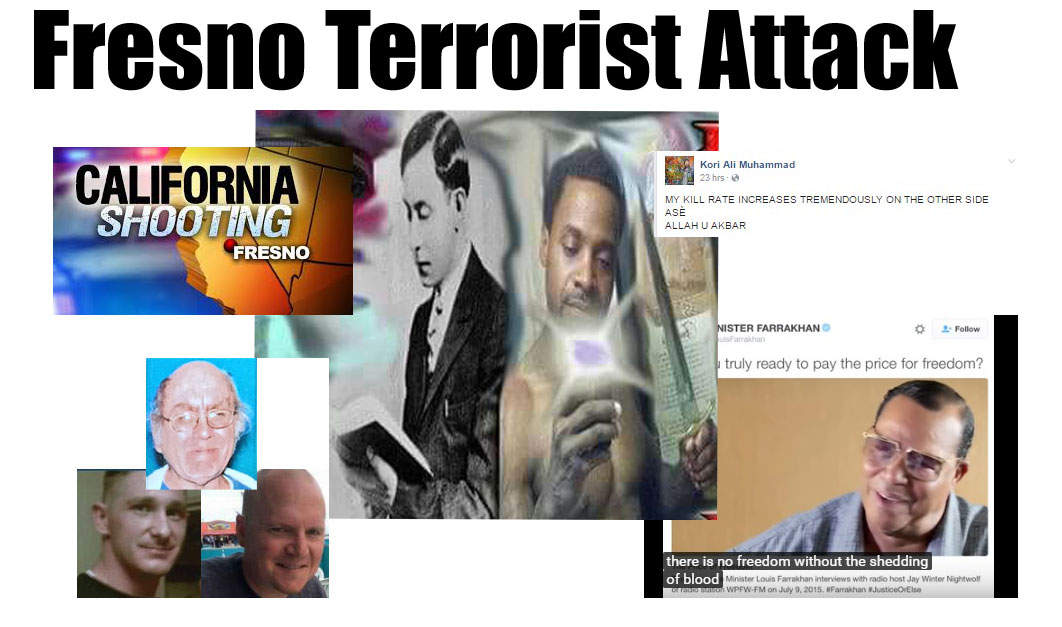
Responsible for Equality And Liberty (R.E.A.L.) regrets having to report about yet another terrorist attack in the United States of America, which took place in Fresno, California, on April 18, 2017. R.E.A.L. challenges all extremist ideologies and movements that reject our shared equality in universal human rights, and which too frequently are the ideological basis for inspiration of terrorist acts, intended to intimidate the public and government agencies. R.E.A.L. has also been very active in challenging racist hate, including leadership in activism for decades in challenging white supremacy. R.E.A.L. recognizes the most important avenue to defy both extremist hate and terrorism is to defend our shared human rights. R.E.A.L. urges those promoting extremist and racist ideologies to turn away from causes of hate and violence and to support our shared universal human rights for all people.
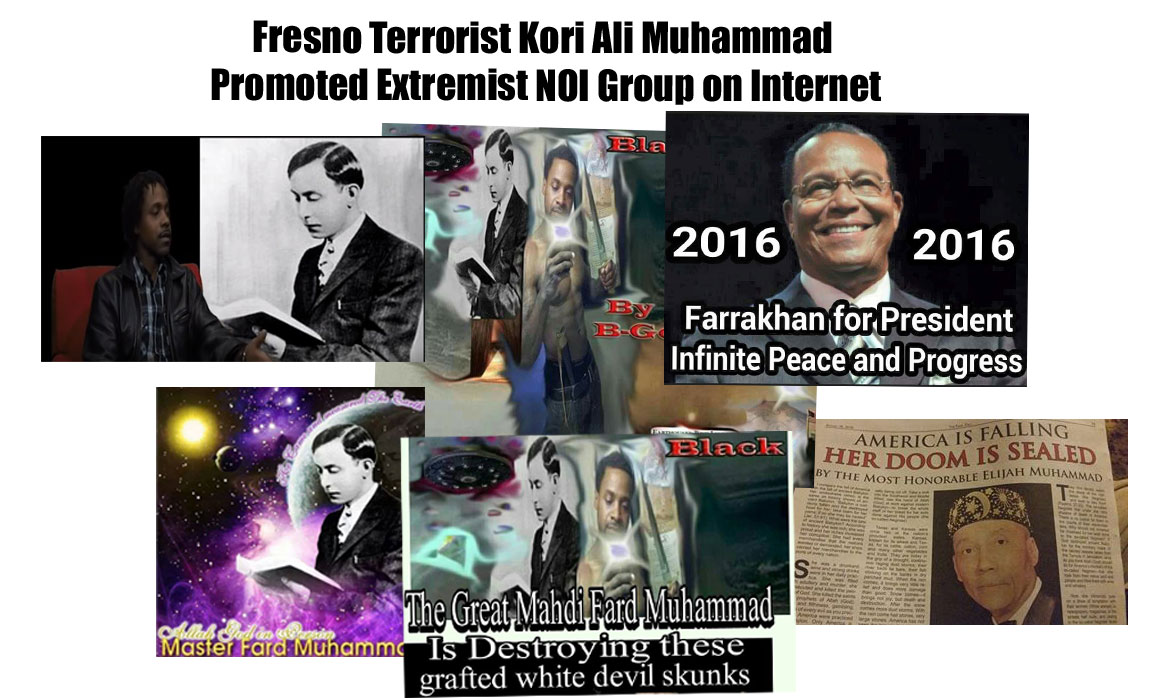
In the case of the April 18, 2017 attack in Fresno, based on R.E.A.L.’s own investigation of the Fresno terrorist Kori Ali Muhammad’s social media postings before his Facebook site was taken down, it is clear that this latest attack was inspired by the views and teachings of an extremist organization, the Nation of Islam (NOI). The influence of the NOI on Kori Ali Muhammad canalsobe seen on his currently active (at time of posting) Twitter account “BGODMAC.” (R.E.A.L. provided information on this case to industry counterterrorist analysts on April 18.)
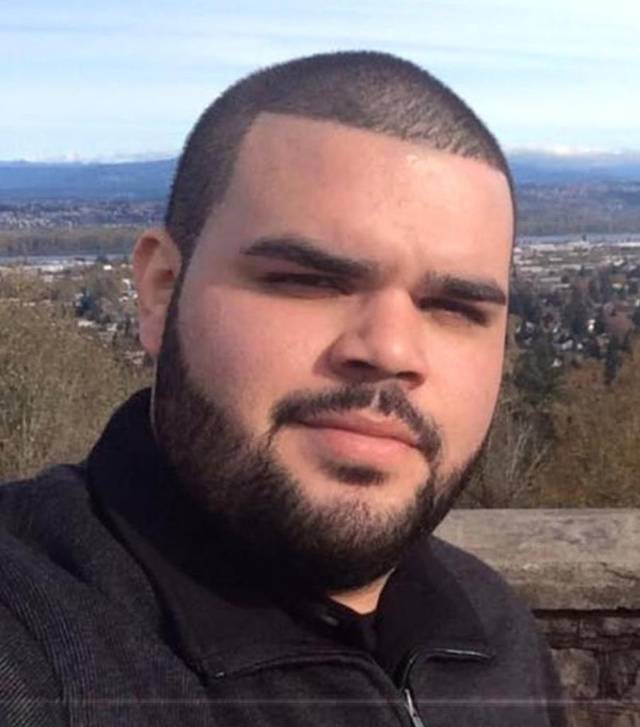
On April 18, 2017, this latest terrorist attack took place in the streets of Fresno, California, with the targeted shooting of four white males, resulting in the death of three and the injury of one. Police arrested the confessed terrorist, 39 year old black American Kori Ali Muhammad, after Fresno police were alerted to the terrorist attack by acoustic gunshot detection technology sensors. He fired 17 rounds in less than two minutes, shooting his victims in the street. During the arrest, Kori Ali Muhammad, shouted “Allahu akbar,” or “God is greatest.”
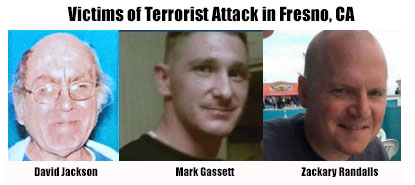
The victims killed in the April 18 terrorist attack were: Zackary Randalls, Mark Gassett, and David Jackson. R.E.A.L. extends its sympathies to the families and loved ones of all the victims of this terrorist attack. Zackary Randalls, 34 year old, a husband and father of two young children, was killed while sitting in his truck. Mark Gassett, 37 year old, a husband and father of two young boys, was killed while walking home carrying a bag of groceries from Catholic Charities. David Jackson, 58 years old, was sitting at a bus stop with other men, when the terrorist attack started. One of the bystanders reported that Mr. Jackson tried to reason with terrorist Kori Ali Muhammad, and then tried to flee, when he tripped over a curb at the Catholic Charities parking lot, and the terrorist laughed and repeatedly shot him, according to a witness. Terrorist Kori Ali Muhammad confessed to the murders. CBS News reported that a “police chief said Muhammad admitted the killings, didn’t show remorse and laughed as he recounted the rampage to investigators.”
Terrorist Kori Ali Muhammad was also arrested for shooting and killing an unarmed security guard Carl Williams III, who was also a white male. The Fresno Bee reported that victim Carl Williams was described by his sister as “the kindest soul,” and was “working two full-time jobs so he could buy a better home for his grandmother and trying to make his community better by volunteering and giving blood.”
Carl Williams III, previous victim of Fresno terrorist
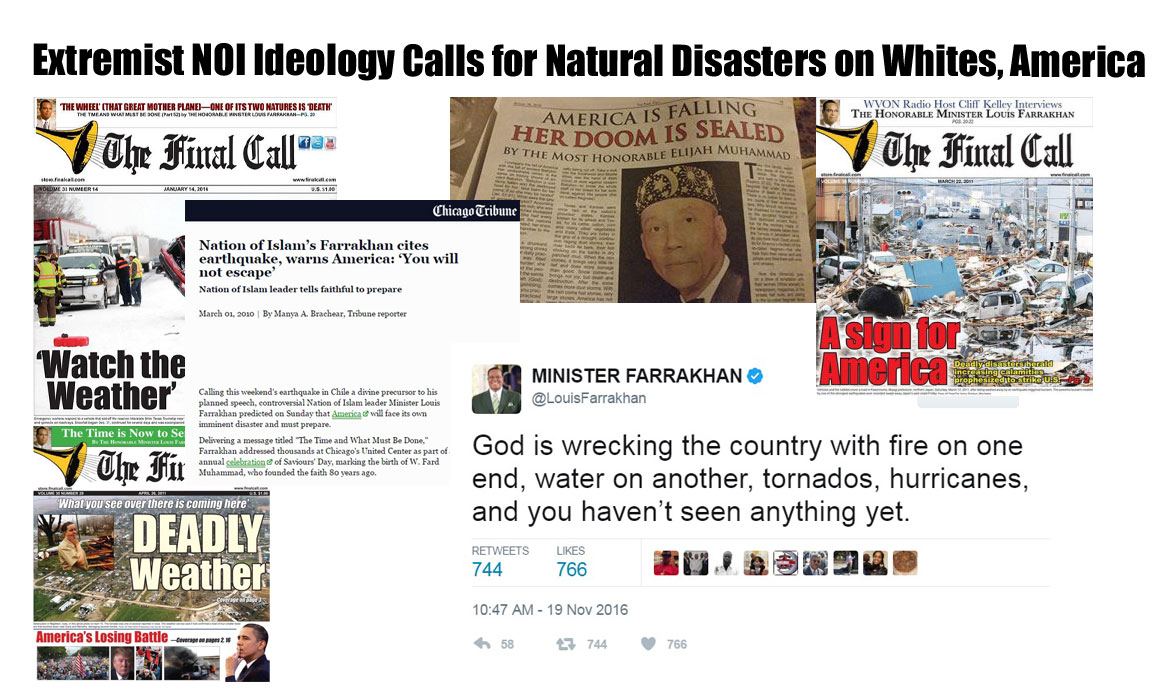
On April 21, 2017, Kori Ali Muhammad appeared in Fresno County Superior court on the charges for his crimes in Fresno. CBS News reported that Kori Ali Muhammad shouted about natural disasters that would befall America and calling for reparations for black Americans. (The mainstream media does not understand or care about the relationship of the call for such “natural disasters” as a common theme among NOI extremist teachings.) In the April 21 court arraignment, Kori Ali Muhammad was charged with the murder of Carl Williams. He is scheduled for a follow-up arraignment on the other charges on May 12, 2017. On April 22, 2017, Kori Ali Muhammad gave an interview to CBS47 news, where he stated that he wasn’t a terrorist, but confessed to the murders, and spoke of his hatred of “racist white men.” Reporter Matt Mendes asked, “So, you don’t regret killing four people?” “No,” Muhammad replied.
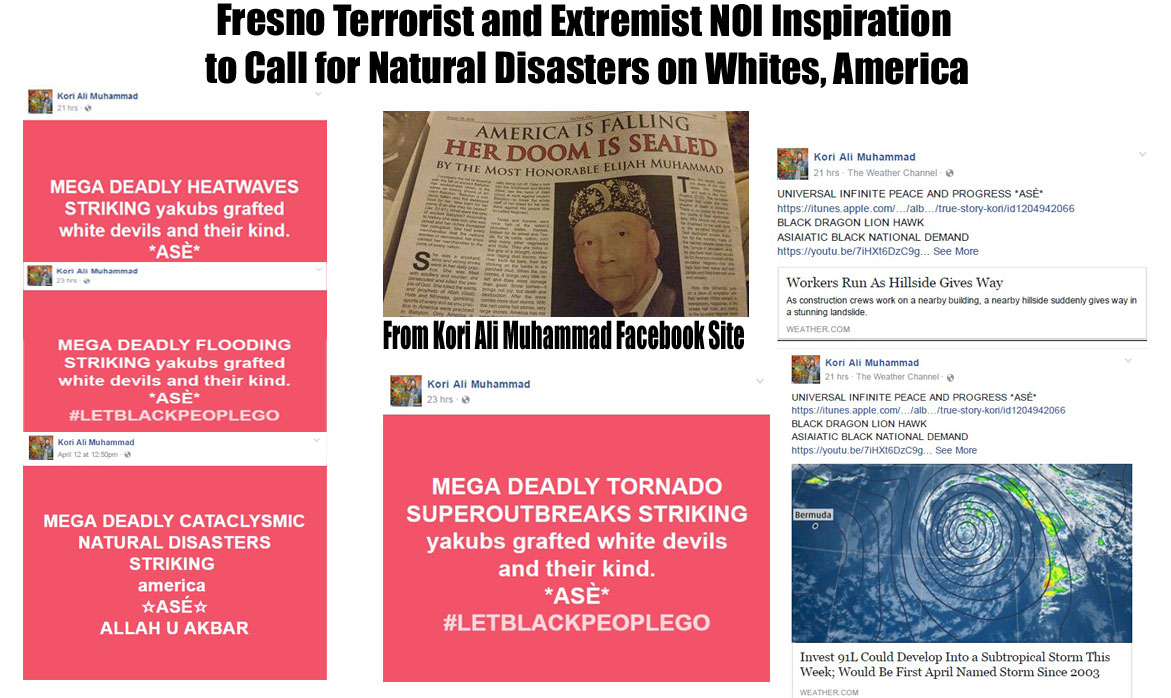
Investigations reported on the Fresno terrorist attack have ignored the obvious link to and inspiration by the NOI extremist group’s ideology. R.E.A.L. readily saw such links in its own research of the terrorist’s Facebook and other social media, hours after the Fresno terror attack. The overwhelming majority of media has also ignored such links, with some selectively reporting on comments during the court appearance, ignoring comments by Kori Ali Muhammad that would tie to the NOI extremist group, such as the regular call for “natural disasters” on America.
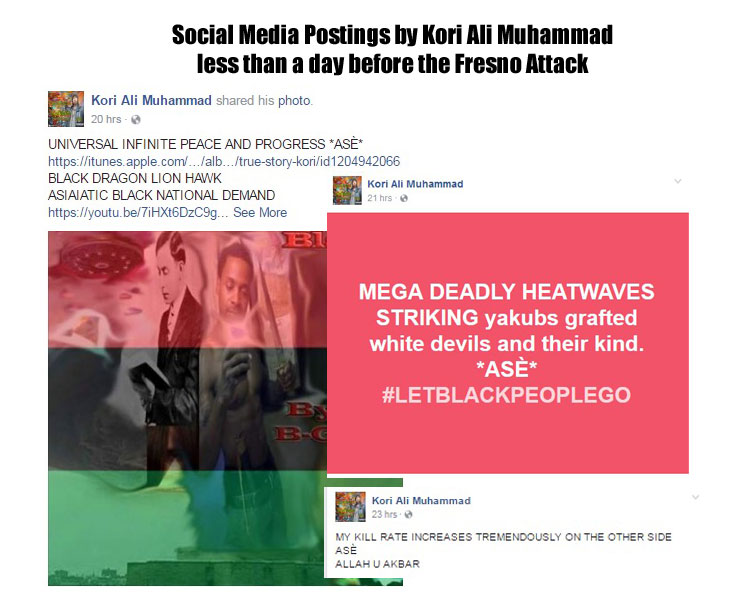
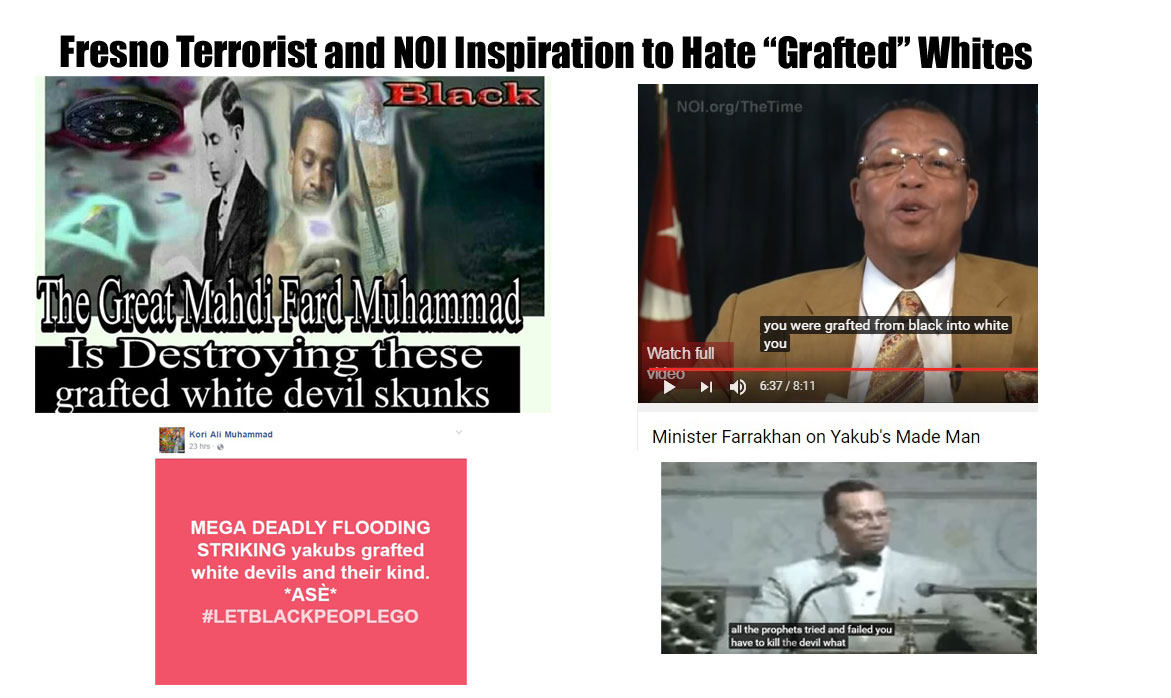
Less than a day before the April 18, 2017 terrorist attack in Fresno, terrorist Kori Ali Muhammad was posting NOI extremist views on Facebook about punishing “Yakub’s white devils,” threats of “natural disasters” to plague the United States (common in NOI teachings and speeches by Louis Farrakhan), and an image of NOI co-founder Wallace Fard Muhammad and himself together.
The NOI extremist group believes that an evil black scientist Yakub created the race of “white devils” from black human beings using a process called “grafting.” Inspired by the NOI extremist ideology, terrorist Kori Ali Muhammad repeatedly posted about the need to punish “grafted” “white devils” on Facebook and Twitter, before the Fresno terrorist attack.
The same messages of hate calling for natural disasters from the NOI were posted on terrorist Kori Ali Muhammad’s Facebook site, which echoes his inspiration from NOI and Louis Farrakhan. In his postings, Kori Ali Muhammad frequently also used the African Yoruba term “Ase,” which is “a concept that there is power in our spirituality, words and feelings” allowing one to command it to be so.
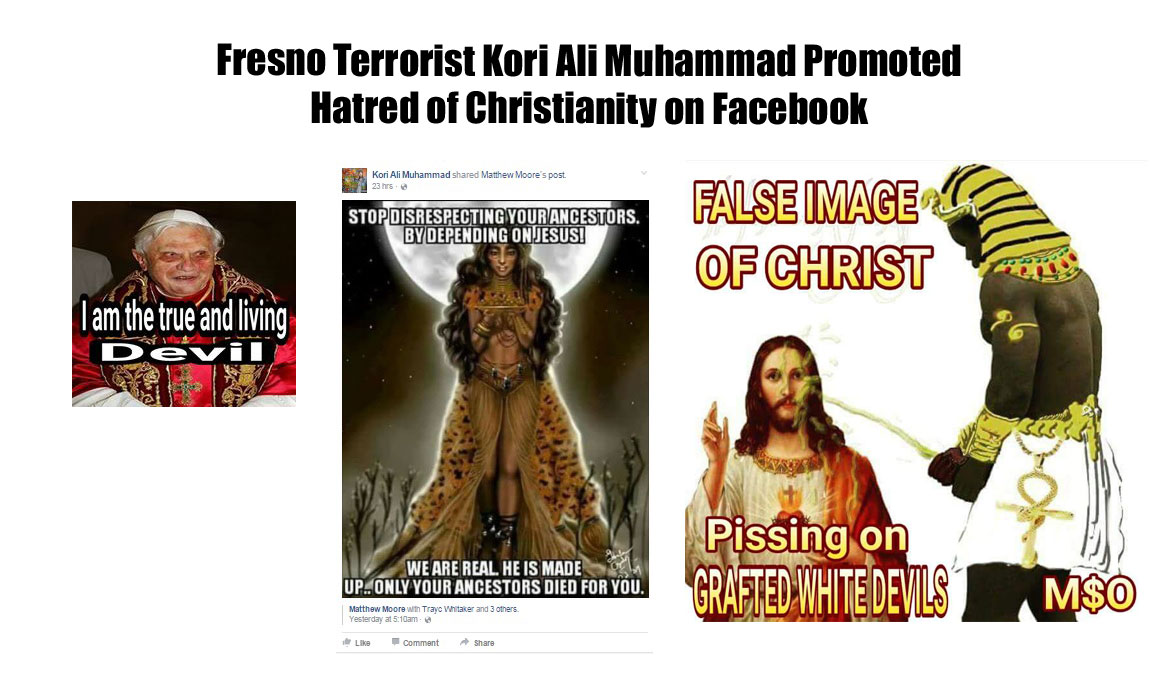
Fresno terrorist Kori Ali Muhammad’s Facebook postings also included attacks on Christianity, including hate images against the Catholic Pope, urination on “false images” of Jesus Christ, and a posting less than a day before the Fresno terrorist attack stating to “stop disrespecting your ancestors by depending on Jesus! We are real. He is made up.. only your ancestors died for you!”
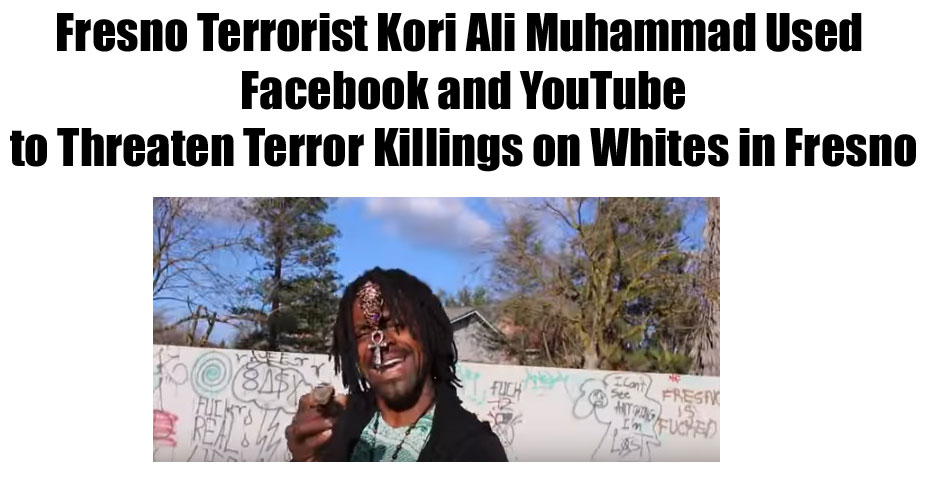
A month before the Fresno terrorist attack, Kori Ali Muhammad used YouTube and Facebook videos to issue the terrorist threat to shoot whites with “a bullet” in the head in Fresno on March 13, 2017. Neither Facebook nor YouTube considered such “rap” videos by Kori Ali Muhammad calling for terrorist threats of murder to be objectionable content. Even after the April 18, 2017 Fresno terrorist attack, YouTube has no interest in removing the terrorist threat video by Kori Ali Muhammad.
Kori Ali Muhammad regularly promoted the NOI extremist ideology on social media and Facebook, including calls for Louis Farrakhan to be the U.S. president, and numerous images with him and NOI co-founder Wallace Fard Muhammad. Kori Ali Muhammad also used an independent “urban” video program to be interviewed about the NOI and its impact on his life; this was linked under his “Mastermind” video series.
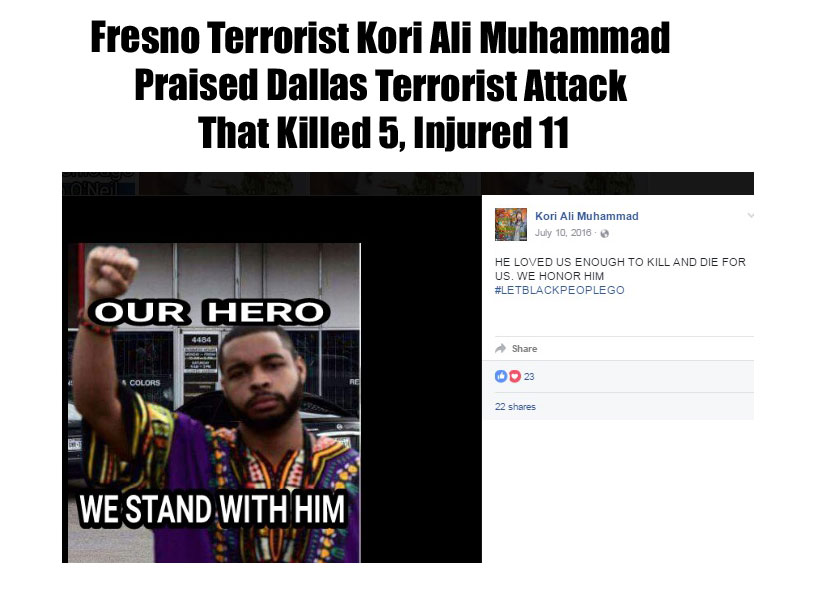
In addition, Fresno terrorist Kori Ali Muhammad also praised the July 7, 2016 terrorist attack by Micah Xavier Johnson in Dallas, Texas, which killed 5 and injured 11. On the now hidden Facebook postings, Kori Ali Muhammad praised the Dallas terrorist as “our hero, we stand with him,” and that “he loved us enough to kill and die for us. We honor him.” Fresno terrorist Kori Ali Muhammad further called for the murdered victims of the Dallas attack to “rest in pig” urine.
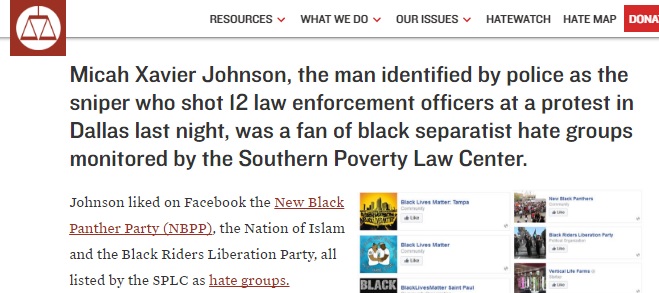
As R.E.A.L. reported in July 2016, Dallas terrorist Micah Xavier Johnson was also linked to the NOI extremist group. In 2016, the Southern Poverty Law Center (SPLC) and CBS News also found such a link to the NOI extremist group in Dallas terrorist Micah Xavier Johnson’s Facebook postings, and R.E.A.L. also identified a connection between Micah Johnson and a former member of the NOI, Richard Griffin. Micah Xavier Johnson was killed in a shootout with police after the terrorist attack.
Earlier in the same day (July 7, 2016) as the Dallas terrorist attack that night by Micah Johnson, NOI leader Louis Farrakhan re-posted a video of a July 2015 interview, where Mr. Farrakhan recorded calls for bloodshed.
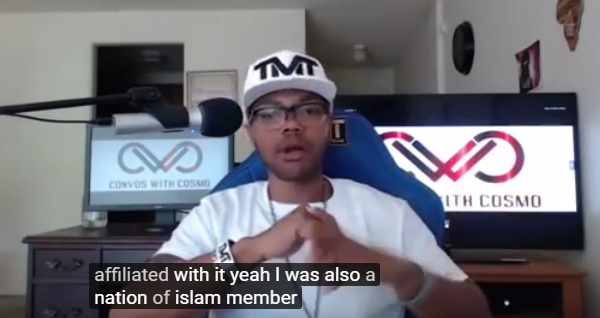
The Dallas terrorist attack also inspired another terrorist, Gavin Eugene Long, linked to the NOI extremist group, to commit another terror attack on July 17, 2016 in Baton Rouge, Louisiana, which resulted in the death of three police officers, including a black American police officer. Baton Rouge terrorist Gavin Long praised the terror attack in Dallas, during a video in which he claimed to be in Dallas. In a YouTube video, Gavin Long stated that he was a member of the Nation of Islam. Then, he pointed out that he wanted to clarify that “anything [that] happens with me,” only should reflect on him as an “alpha male,” not his affiliation with the NOI extremist group. After the terrorist attack, Gavin Long was killed in a shootout with police. When terrorist Gavin Long told the public to ignore his link to the NOI extremists, the media complied and completely ignored the link between Long and the NOI extremist group.
Baton Rouge Terrorist Gavin Eugene Long – “I was also a Nation of Islam member”
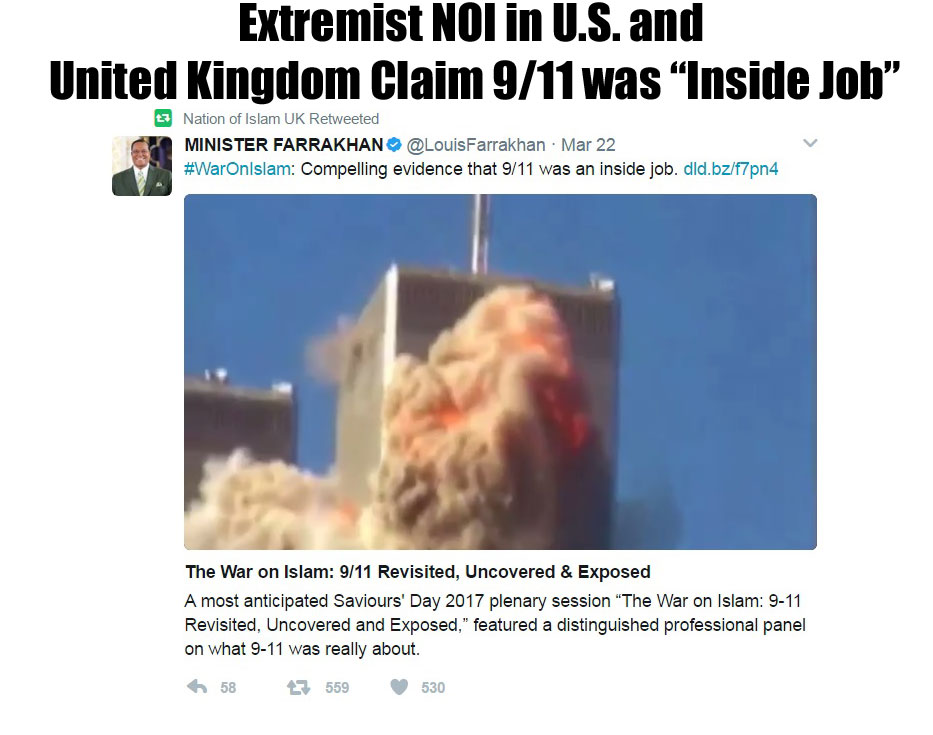
The Anti-Defamation League (ADL) has also reported on the history of the NOI extremist group and its history of calls for hate and violence. ADL writes that the NOI “has maintained a consistent record of anti-Semitism and racism since its founding in the 1930s,” and that under the leadership and guidance of Louis Farrakhan, the NOI has “used its programs, institutions, and media to disseminate its message of hate.” In addition, it states that the NOI has blamed the 9/11 terrorist attacks as a “false flag” attack by Israel, and NOI leaders also blamed the Charlie Hebdo terrorist attack in France on Jews. But the NOI extremist calls have gone beyond just hate and have openly called for violence.
This has included NOI leader Louis Farrakhan’s repeated calls in 2015 and 2016 for bloodshed. In a July 9, 2015 interview, which Louis Farrakhan re-posted in 2016 (the same day as the Dallas terrorist attack in 2016), the NOI leader promoted a video, “The Price of Freedom,” where Mr. Farrakhan recorded calls for bloodshed. In the video, the NOI leader Louis Farrakhan told his followers to embrace hate and violence, stating “God hates…I don’t why man thinks he is better than God,” “Don’t let this White man tell you that violence is wrong,” and that “there is no freedom without the shedding of blood.”
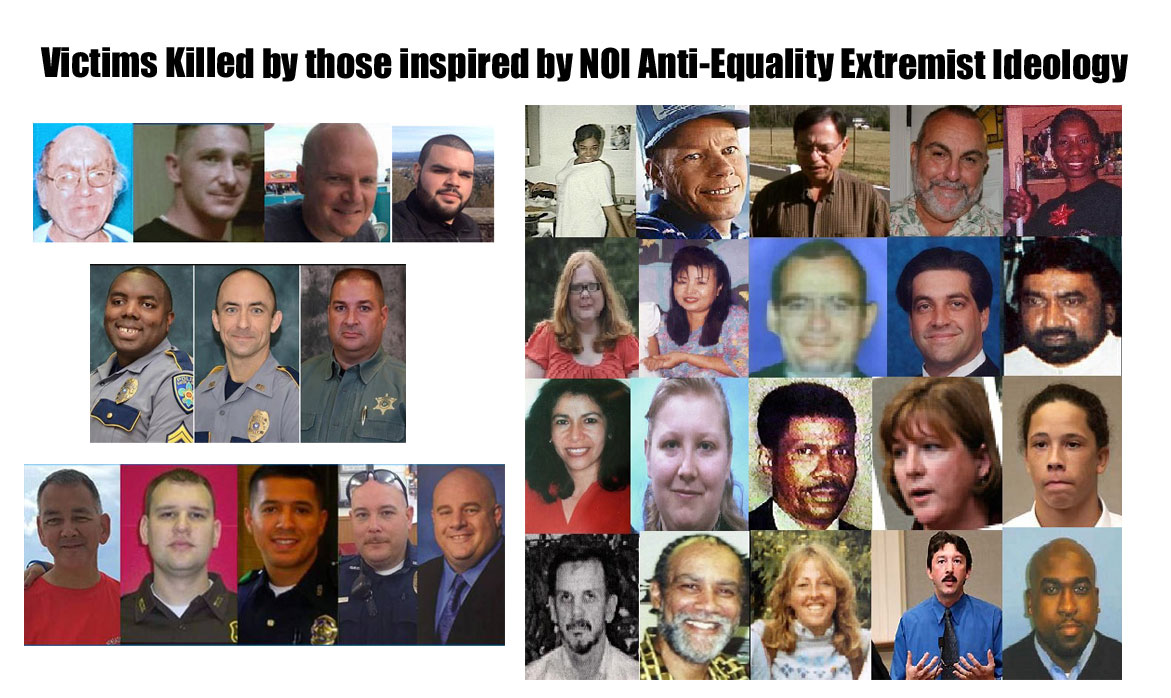
NOI leader Louis Farrakhan’s call for bloodshed and hate has been heard by too many, who have been inspired by the extremist ideology to commit acts of violence in rejection of our shared human rights and human liberties. The NOI extremist group’s ideology has been an inspiration for at least four terrorist attacks on the United States in recent years: Dallas, Baton Rouge, most recently Fresno, and prior to that, in the Washington D.C. metropolitan area as well.
One of the more notorious terrorists linked to the NOI extremist group was John Allen Muhammad, “the Beltway Sniper,” who was a member of the NOI. The Baton Rouge-born John Allen William joined the NOI in 1987, and reports still maintain that he helped provide security (this is disputed) for the 1995 NOI’s “Million Man March” in Washington, D.C. John Allen Muhammad and his co-conspirator killed 10 people in the Washington D.C. area in October 2002. Further investigation raised the death toll to 17, after it was discovered that he had also committed murders and robberies in the states of Alabama, Arizona, Florida, Georgia, Louisiana, Texas, and Washington. After his arrest, NOI leader Louis Farrakhan sought to distance the NOI from John Allen Muhammad’s terrorist acts, and denied that John Allen Muhammad was a part of security for the NOI event.
Across the United States from coast to coast, in California, Washington, Arizona, Texas, Louisiana, Georgia, Florida, Virginia, Maryland, Washington D.C., acts of terror and violence resulting in deaths have been committed by individuals who pursued a path of hate and violence, which the NOI continues to seek to encourage. This is the PRICE we pay for silence to extremist ideologies. When we fail to challenge those who promote hate and violence, the cost is ultimately in human lives.
You will notice the victims of killings by those linked to the extremist NOI ideology are not all white, there are black victims as well, men, women, fathers, mothers, people of all different faiths and backgrounds. The advocates of bloodshed find killing just too easy, and human life too cheap. The victims share one common bond: they are our FELLOW human beings, and they and their loved ones deserve more courage from our society in defending their human rights than this. They deserve more than conscious silence, deliberate misdirection, tactical legalities, and human rights community that is unwilling to aggressively defend human equality, because it is more afraid of offending someone than it is of defending the lives and human rights of our fellow human beings. We cannot simply be a human rights community of simply the pleasant issues, of politically expedient issues, and issues without controversy. Our defense of human rights will always be controversial because attacks on human rights are based on human conflict. In the case of the NOI extremist ideology, we must defend human equality.
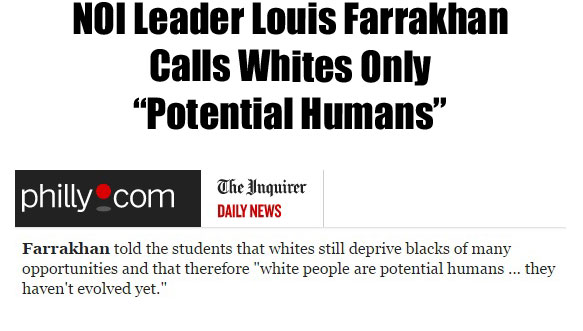
While Louis Farrakhan and NOI leaders may deny a role of its extremist ideology after individual terrorist attacks, the reality remains that the NOI extremist ideology begins with a rejection of basic human rights and human equality. The NOI ideology views the white race as inferior, “potential humans,” based on its concept that the white race was created from “grafting” by wizard “Yaku,” for the purpose of subjugating blacks. NOI extremist leader even told the Philadelphia Inquirer on March 19, 2000 that “White people are potential humans – they haven’t evolved yet.” The Inquirer sought to couch this in terms of racial discrimination. But it is more fundamental than this; with the NOI extremist movement, like too many other extremist movements, there is a basic rejection of human equality.
The SPLC writes that “NOI predicts an epic struggle in which the Nation of Islam will play a key role in preparing and educating the Original People, who ruled the earth in peace and prosperity until Yacub’s ‘blue-eyed devils’ came along to gum things up.” The NOI extremist ideology presents a longer term challenge that rejects the basic concept of human equality, and has clearly inspired those who will commit acts of terrorism based on that ideology to intimidate the public and the government. That is terrorism.
Tactical counterterrorism measures, police procedures, calls for “law and order,” etc. do not begin to work to challenge extremist views that reject that people who are different as not even human beings who deserve basic human rights. We must first start with a struggle of “ideas.”
This is where counter-extremist by human rights activists have such a vital role in challenging extremist ideologies that lead to terrorist acts. More than police and political tactics, military maneuvers, and security procedures, counter-extremism by human right activists must challenge and change extremist thinking. Our law enforcement and counterterror tacticians have views of “counterterrorism” which are based on legal evidentiary processes, based on the “last war” with Al Qaeda; too few clearly understand the problems associated with extremist ideologies that lead to “terrorist movements.”
Blind counterterror tacticians would reject any inspiration by the Nation of Islam’s ideology in these terrorist attacks, unless we have a signed document by Louis Farrakhan himself calling for a specific terrorist attack to an individual with clear criminal culpability, committing a terror attack at a specific time and place. They continue to view terrorism based on the “9/11 terrorist” model, used by Al Qaeda’s “cells,” of 15+ years ago. But we are increasingly seeing extremist ideologies and promoters of violent hate influencing those who commit acts of terrorism. Investigators in this Fresno attack not only cannot recognize it as “terrorism,” but also have no comment or question to the NOI extremist group. This conscious blindness prevents our society from moving forward to make progress to challenge extremism.
The mainstream media largely shares this same bias in being able to recognize that extremist ideologies inspire acts of terrorism. Too many mature human rights organizations also want to turn the other way at such difficult issues of extremist ideologies inspiring acts of terrorism. Such organizations do not want to challenge such issues either because they want to claim challenging extremist inspiration of terror is something that is not part of a “human rights agenda,” (when security, equality, and dignity are very much universal human rights).
To all those who respect human rights, we cannot make progress with extremist organizations who begin with a basic concept that people who are different from them simply are not even human beings and do not deserve equality.
Responsible for Equality And Liberty and its leadership has stood for 50 years in defense of black American’s civil and human rights. We understand, have challenged, and made change in defense of black Americans and other human beings. We urge our fellow human beings, who are black Americans or any other race, nationality, or identity group, to reject any ideology which begins with questioning the equality of your fellow human beings.
We know better than this. We ARE better than this.
We call upon NOI’s Louis Farrakhan to drop the burden of hate from his heart, end an advocacy of hate and violence, and we call upon those involved with the NOI extremist group to reject its anti-equality and anti-human rights message. The power of hate will always lose in the end, no matter what temporary victory its advocates believe they will achieve.
We are responsible, every single one of us in every nation, every day, for the defense of basic standards of dignity, equality, mercy, and security of our loved ones and our fellow human beings.
Together – we are Responsible for Equality and Liberty.
R.E.A.L.’s Orange Ribbon Campaign for Equality And Liberty