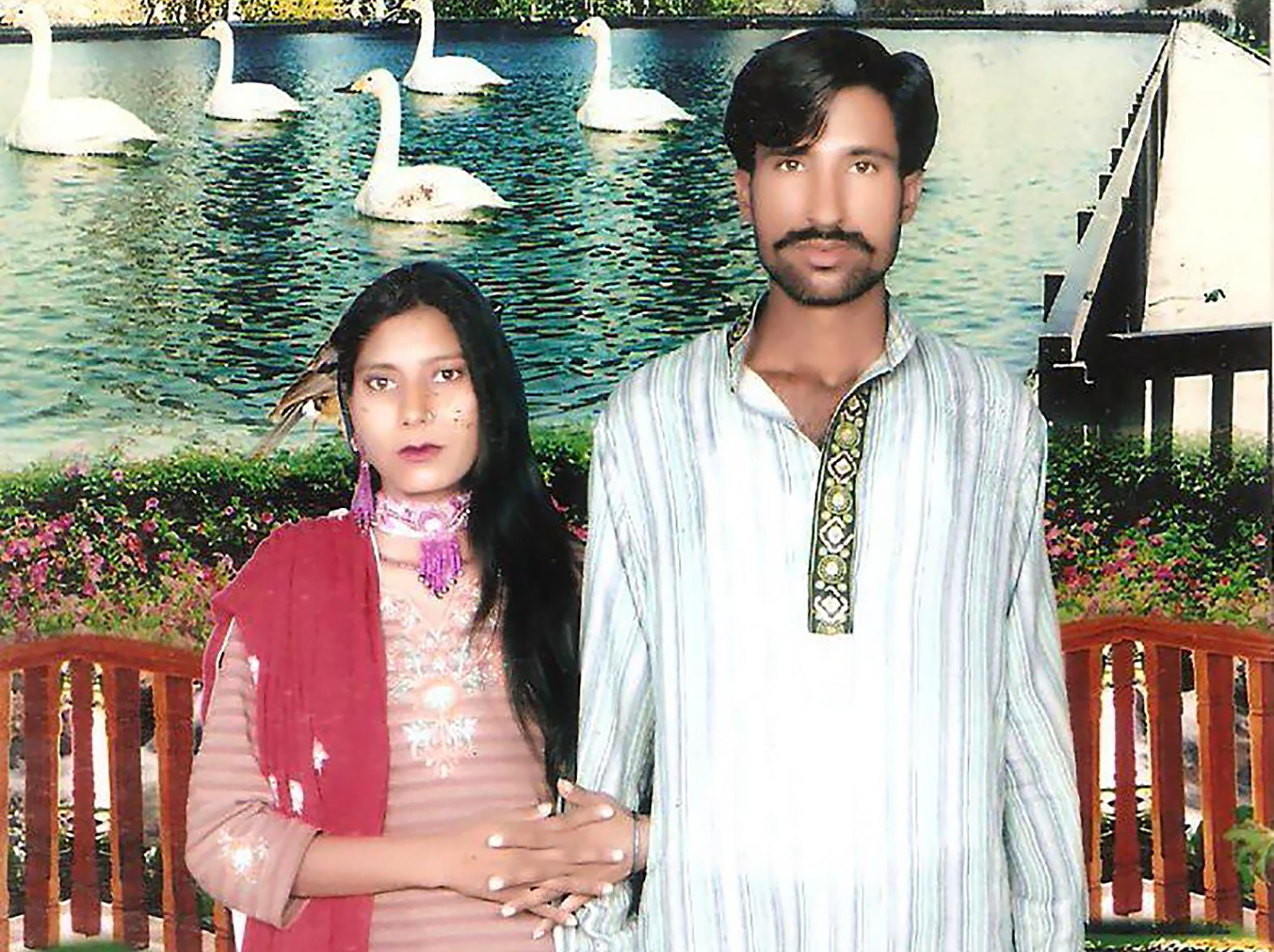
In Punjab, authorities have reportedly arrested 106 people from a mob that who murdered a Christian couple in public, burning their body to death. As R.E.A.L. reported in November 2014, a mob in “Pakistan burned a Christian couple alive, based on false claims of “blasphemy.” The Christian couple, Sajjad Maseeh, 27, and his wife Shama Bibi, 24, were murdered by the crowd as it chanted religious slogans from the Qur’an, their legs broken, and their bodies publicly burned in a kiln. Shama Bibi was four months pregnant, and since her body would not burn properly, it was wrapped in cloth, so the murderous mob could more readily burn her body.” As we previously reported, the mob made their four-year old child watch her parents burn to death, and tried to them kill the baby as well.
Shama Bibi and Sajjad Maseeh were killed by a mob in Kot Radha Kishan, Pakistan.
Responsible for Equality And Liberty (R.E.A.L.) points to this atrocity as one in many such crimes against our fellow human beings, which begins with religious intolerance and the view that violence is an acceptable approach for those who view that they are religiously offended. Free nations must reject such views and such oppression of all people, especially religious minorities targeted by such violence and hatred.
Honest men and women work together for a civil and just society, respecting our shared human rights, which must be enforced by those in law enforcement. Crimes against our human rights, crimes against our fellow citizens, and crimes against our law enforcement must be rejected in a society which believes in justice. Without those who will defend the laws for our human rights, we know the truths that we hold self-evident always under attack.
When we reject injustice anywhere, we also reject injustice against the law enforcement men and women who represent our very laws themselves.
As we reject the violence and abuse of human rights against all of our fellow citizens, we must certainly stand to reject violence and the abuse of the human rights of those in law enforcement as well.
All patriotic Americans and all those who love our shared universal human rights must respect the valor of those who work to preserve those shared rights by enforcing the law.
Crime does not and will not pay.
National Law Enforcement Officers Memorial at Judiciary Square in Washington, D.C. ( Source: Attribution: AgnosticPreachersKid at en.wikipedia:)
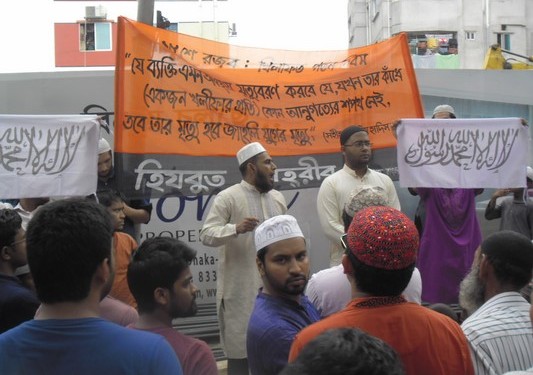
The notorious anti-democracy, anti-human rights organization Hizb ut-Tahrir (HuT), conducted recruitment rallies in front of mosques throughout Bangladesh (Dhaka, Chittagong and Sylhe) to promote their anti-freedom vision.
Extremist organization Hizb ut-Tahrir (HuT), conducted recruitment rallies in front of mosques throughout Bangladesh (Dhaka, Chittagong and Sylhe)
The extremist group Hizb ut-Tahrir, based out of London, United Kingdom, with extremist cells throughout Pakistan, the Middle East, Asia, Europe, and the United States promote a call for the denying the religious freedom for others, rejecting the universal human rights of women, and calling for their extremist view of a Caliphate empire to subjugate free men and women.
Responsible for Equality And Liberty (R.E.A.L.) will continue to use our own free speech to challenge the anti-democracy and anti-human rights view of the extremist organization Hizb ut-Tahrir.
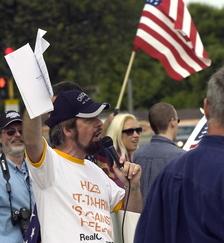
R.E.A.L.’s Jeffrey Imm Leads Protestors to Challenge Hizb ut-Tahrir
We urge human rights activists, and especially our Muslim friends in human rights activism, to reject and denounce the Hizb ut-Tahrir extremist views.
May 11, 2015: Baltimore Sun: “What is so striking about Ms. Mosby’s account is the idea that six different officers would all treat a human being as callously as they are accused of treating Freddie Gray. Those who now complain that they’re afraid to do their jobs are only lending credence to the notion that such reckless debasement is business as usual for the Baltimore City police. As damaging to police-community relations as Gray’s death has been, that would be worse.”
In Pakistan, teenage girl human rights activist Hamna Tariq has spoken on what Mother’s Day means to her and how she continues to seek change for Pakistan girls and women, despite the threats against her. Her message for human rights for girls and women in Pakistan is regularly posted on the website “Amplify Your Voice.”
Hamna Tariq – Teenage Pakistan Human Rights Activist
As reported by NBC: “On Mother’s Day, I gave my mother a cushion with the words “Happy Mother’s Day” sewn on it and I attempted to write a letter to thank her for all she’s done for my brother and me. I made sure that after working around the clock all year, she could get some time to pamper herself. My mother and I love to attend gender equality enhancement seminars together and we bond over a cup of tea in the evenings after I get out of school and she gets free from her work. But both my mother and I know that the idea of “motherhood” has a dark side where we live in Pakistan: all over our country, girls like me are forced to marry and become mothers before the age of 18.”
“In Pakistan, one in 10 girls will be married before they reach the age of 15, one in four will be married before they are 18, and if present trends continue, nearly 2.5 million of the young girls born between 2005 and 2010 will be married before age 18. Marital rape is frequent and remains in a vacuum of the law as a contentious topic. And once girls in Pakistan are married, only a few of them use contraception in spite of their needs to space childbearing. This results in a large population of child mothers, many of them much younger than I am, who had no say in determining their futures.”
“In 2012, at least 1,000 Pakistani women and girls who were mostly victims of child marriage were murdered in so-called ‘honor killings’ carried out by husbands or male relatives over suspicions of adultery or other illicit sexual behavior, according to the Human Rights Commission of Pakistan, a private organization. It said another 7,000 survived similar assaults, including acid attacks, amputations, and immolation.”
“Unfortunately, child marriage, honor killings and domestic violence are not the only challenges facing girls in Pakistan. Pakistan has the world’s second highest number of children out of school, reaching 5.1 million in 2010. This is equivalent to 1 in 12 of the world’s out-of-school children. Two-thirds of Pakistan’s out of school children are girls, meaning over 3 million girls don’t have access to education. Education can make a big difference to women’s future earnings in Pakistan: women with a high level of literacy earn 95% more than women with no literacy skills.”
“I know how lucky I am: my family supports my choices and advocates for my education and healthy upbringing. My mother is an independent thinker and an outspoken supporter of women’s rights. Her wish for me to live a life that is different from the majority of girls in our country. She inspires me to continue her legacy of charting a path towards change for Pakistani women and girls.”
“But my upbringing has not shielded me from the harsh realities of living as a woman in my country. Even though I grew up in a progressive household in Pakistan, I have never been outside my house without male accompaniment, and I am always covered head to toe. I’ve seen my cousins outside of the city married at fifteen to much older men. They did not protest; marriage is all they were raised to expect. Young feminists in the United States have no qualms about fighting for their rights in their home country, but I’m scared that if I return to Pakistan after university to begin a career in women’s rights, I may be harassed – or killed.”
“The issues that plague Pakistani women are widespread across the globe. If nothing changes, there will be 142 million child marriages in developing countries between now and 2021 – or 37,000 girls per day. If nothing changes, as many as 30 million girls will remain at risk of genital mutilation or cutting before their 15th birthday. And if nothing changes, girls will continue to face the barriers that prevent them from pursuing an education.”
“But there are ways we can pressure countries like Pakistan to protect girls and women. The United Nations is currently negotiating its post-2015 development goals, which will be finalized in September, to provide guidance and overall strategy for the next 15 years of international diplomacy and action. As the UN member states, including Pakistan, debate these goals this year, it is critical that they make girls’ rights a top priority and the central focus of the post-2015 goals. I know that the long-term well-being and stability of girls in my country and around the globe can only be guaranteed through sustained leadership from world powers and the UN.”
“This is why I have spoken out for change. In anticipation of negotiations on the post-2015 UN development goals, more than 500 adolescent girls, including me, advised over 25 leading development organizations and issue experts to create The Girl Declaration, a document that lays out the key elements needed in the new development agenda to put the focus on girls, including standards for education, health services, safety, legal reforms, and sexual rights. It’s our hope that the UN listens to the voices of these girls from around the world and puts their rights front and center.”
“Ensuring that adolescent girls grow up healthy, educated, safe and empowered is crucial to breaking the cycle of poverty and building a better future for the world. By focusing international goals on adolescent girls, the UN can not only guarantee a better life for them, but can help tackle some of the most pressing challenges facing Pakistan, and the world today. My mother taught me to fight for the rights of women like me, and I will continue to advocate that no girl should be forced into marriage and early motherhood before she is ready.”
BALTIMORE — Thousands of people have been brought to the Baltimore city jail in recent years with injuries too severe for them to be admitted, newly released records show.
The records, obtained by The Baltimore Sun (http://tinyurl.com/pdbu29k) through a Maryland Public Information Act request, show that correctional officers at the Baltimore City Detention Center refused to admit nearly 2,600 detainees who were in police custody between June 2012 and April 2015.
The records do not indicate how the people were injured or whether they suffered their injuries while in custody. However, they do suggest that police officers either ignored or did not notice the injuries. Suspects are constitutionally guaranteed health care before they are booked into jail.
Baltimore police are under scrutiny for their treatment of detainees following the death of Freddie Gray last month. Gray died of a broken neck that prosecutors said he suffered while riding in a Baltimore police van, and six officers involved in Gray’s arrest are facing criminal charges, including one charged with second-degree murder. Gray’s death sparked rioting and widespread protests in the city and came amid national scrutiny of how police officers treat suspects, particularly black men.
On Friday, the Justice Department announced that it is conducting a civil-rights investigation of Baltimore police.
The records obtained by The Sun showed that 123 of the detainees who weren’t admitted to jail had visible head injuries, the third-most common ailment cited by jail officials. Others had broken bones, facial trauma and high blood pressure.
Police did not comment to The Sun, and department spokespeople did not immediately return messages left by The Associated Press on Sunday.
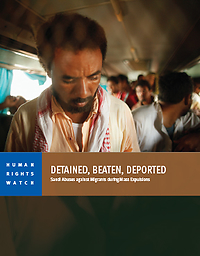
Human Rights Watch published a report “Detained, Beaten, Deported: Saudi Abuses against Migrants during Mass Expulsions,” which was based on interviews with 60 workers deported to Yemen and Somalia who experienced serious abuses during the expulsion campaign. They described beatings and detention in poor conditions before they were deported. Many arrived back in their countries destitute, unable to buy food or pay for transportation to their home areas, in some cases because Saudi officials arbitrarily confiscated their personal property.
To our good friends working to protect the citizens of the United States of America – we have offered this public outreach to active and retired members of the American law enforcement community – to provide a demonstration of our support for the U.S. Constitution, human rights, and the truths that we hold self evident as Americans and as fellow human beings.
We urge our friends in the law enforcement communities to TAKE A STAND so that the public knows the commitment YOU HAVE to our Constitution and the rights we share, and to demonstrate your appreciation and respect for the American people’s trust in you to be representing them in ensuring justice in this great nation.
====================================
Support the U.S. Constitution and International Justice Law
To Members of the American Law Enforcement Community (ONLY) – Active and Retired – we seek your public reaffirmation to support and defend the Constitution of the United States of America, and a public commitment to the equal rights, liberty, human rights, dignity, and justice that we all share, including Amendment 8 to the U.S. Constitution prohibiting “cruel and unusual punishments inflicted.” This includes the Universal Declaration of Human Rights (UDHR), signed by the United States on December 10, 1948, as well as the International Covenant on Civil and Political Rights (ICCPR) signed by the United States on October 5, 1977, and ratified on June 8, 1992.
When you sign this petition, please include the name of the law enforcement organization you support (active or retired), so that we can show the world those who publicly affirm this stance on law and human rights.
Jeffrey Imm
Retired – Federal Bureau of Investigation
usa@realcourage.org
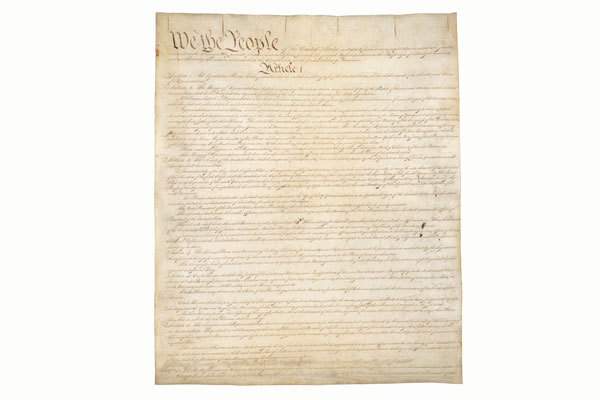
America’s First Law: The Constitution of the United States of America
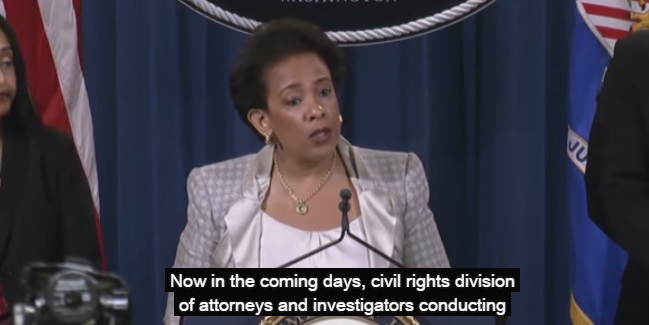
“Good morning, and thank you all for being here. I am joined today by Vanita Gupta, head of the Civil Rights Division, and Director Ron Davis of the Community Oriented Policing Services Office, or COPS.
Over the past few days and weeks, we have watched as Baltimore struggled with issues that face cities across the country today. We have seen the tragic loss of a young man’s life. We have seen a peaceful protest movement coalesce to express the concern of a beleaguered community. We have seen brave officers upholding the right to peaceful protest, while also sustaining serious injury during the city’s unfortunate foray into violence. And we have watched it all through the prism of one of the most challenging issues of our time: police-community relations.
When I traveled to Baltimore earlier this week, I had an opportunity to see the significant work that the city and the police department had done with the COPS Office over the last six months through a collaborative reform process. But despite the progress being made, it was clear that recent events – including the tragic in-custody death of Freddie Gray – had given rise to a serious erosion of public trust. And in order to address this issue, I was asked – by city officials and community leaders – to augment our approach to the situation with a court enforcement model. I have spent the last few days with my team considering which of the Justice Department’s tools for police reform best meets the current needs of the Baltimore Police Department and the broader Baltimore community.
Today, the Department of Justice is opening an investigation into whether the Baltimore Police Department has engaged in a pattern or practice of violations of the Constitution or federal law. This investigation will begin immediately, and will focus on allegations that Baltimore Police Department officers use excessive force, including deadly force; conduct unlawful searches, seizures and arrests; and engage in discriminatory policing. The COPS Office will continue to work with the Baltimore Police Department and the collaborative reform process will now convert to the provision of technical assistance to the Baltimore Police Department. Some may ask how this differs from our current work with the Baltimore Police Department. The answer is: rather than examining whether the police department violated good policies, we will now examine whether they violated the Constitution and the community’s civil rights. This approach has been welcomed by the Baltimore City Fraternal Order of Police, and I want to thank them for their support and their partnership as we move forward.
In the coming days, Civil Rights Division attorneys and investigators conducting the investigation, and the police experts who will assist them, will be engaging with community members and law enforcement. We will examine policies, practices and available data. And at the conclusion of our investigation, we will issue a report of our findings. If unconstitutional policies or practices are found, we will seek a court-enforceable agreement to address those issues. We will also continue to move forward to improve policing in Baltimore even as the pattern or practice investigation is underway.
Our goal is to work with the community, public officials and law enforcement alike to create a stronger, better Baltimore. The Department of Justice’s Civil Rights Division has conducted dozens of these pattern or practice investigations, and we have seen from our work in jurisdictions across the country that communities that have gone through this process are experiencing improved policing practices and increased trust between the police and the community. In fact, I encourage other cities to study our past recommendations and see whether they can be applied in their own communities. Ultimately, this process is meant to ensure that officers are being provided with the tools they need – including training, policy guidance and equipment – to be more effective, to partner with civilians and to strengthen public safety.
For many people across the country, the tragic death of Freddie Gray and the violence that followed has come to personify the city, as if that alone is Baltimore. But earlier this week, I visited with members of the community who took to the streets in the days following the violence to pick up trash and to clear away debris – and they are Baltimore. I visited with elected officials who are determined to help the neighborhoods they love come back stronger and more united – and they are Baltimore. I visited youth leaders who believe that there’s a brighter day ahead – and they are Baltimore too. I visited with law enforcement officers who had worked 16 days without a break, and were focused not on themselves or even their own safety, but on protecting the people who live in their community. They, too, are Baltimore.
I have no illusions that reform will be easy; the challenges we face did not arise in a day, and change will not come overnight. It will take time and sustained effort. But the people I met in Baltimore – from protestors to public officials to an officer who had been injured amidst the violence – all said the same thing: “I love my city, and I want to make it better.” That’s why I’m so optimistic about this process. That’s why I’m so hopeful about the days to come. And that’s why I am confident that, as a result of this investigation and the hard work still ahead, all members of the Baltimore community – residents and law enforcement alike – will be able to create a stronger, safer, more united city together.”
Responsible for Equality And Liberty (R.E.A.L.) supports the freedom of all human rights activists. Through our friends suffering in Balochistan, we are painfully aware of their suffering for the determination to stand for their human rights.
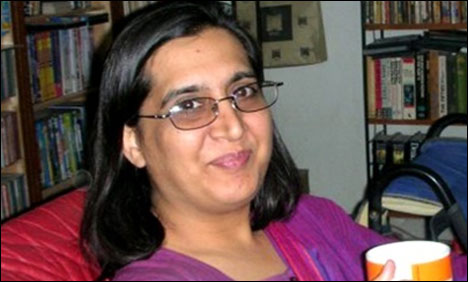
We recently heard the devastating news of the murder on April 24, 2015 of Ms. Sabeen Mahmud, a human rights activist and social NGO worker. She was founder and director of the Pakistan Karachi-based cafe The Second Floor (T2F) and president of the Karachi branch of TiE. She was shot dead by unidentified gunmen on her way home after hosting a seminar at T2F, titled “Unsilencing Balochistan (Take 2),” and her mother was also critically wounded.
Ms. Sabeen Mehmud, Human Rights Activist for Balochistan – Murdered April 29, 2015
Now the Wall Street Journal is reporting another suppression of human rights by the Balochistan human rights activist Mr. Mama Qadeer Baloch, and canceling his conferences in Karachi. He was a guest speaker at the April 24 event where Ms. Mahmud was assassinated.
WSJ states: “Playing host to Mama Qadeer Baloch is a dangerous act in Pakistan. The 73-year-old human-rights campaigner routinely receives death threats; his hosts at public appearances have been targeted for assassination; and on Wednesday, the administration of Karachi University shut a planned lecture to avoid the wrath of the country’s powerful military establishment. Since 2009, Mr. Baloch, a retired bank worker, has kept a solitary vigil on a sidewalk outside the press club in this southern megacity, surrounded by pictures of people he alleges the military abducted from his native Balochistan province, a sparsely populated western province that is rich in minerals.”
The richest and most precious thing that we have are our universal human rights. It is our shared obligation to struggle for consistency and defense of these human rights everywhere in the world.