December 10 – Human Rights Day News Conference and Film on China Human Rights

2012 Human Rights Day – News Conference: “Universal Human Rights, Dignity, and Compassion for All,” including Film on China Human Rights

Human rights groups leaders will hold a joint news conference on December 10, 2012 from 12 to 3 PM ET at the National Press Club’s Zenger Room. The address is: National Press Club, 529 14th Street, NW, 13th Floor, Washington, DC. The keynote theme will be: “Universal Human Rights, Dignity, and Compassion for All.”

The human rights groups will recognize Human Rights Day, and make a renewed call for universal human rights, and dignity, and compassion for all of our fellow human beings.

The event will also include a showing of the documentary: “Free China: The Courage to Believe,” regarding the widespread human rights violations in China and the oppression of the Falun Gong, a type of Taoist and Buddhist meditation practice.

Speakers’ focus will be on human rights issues in the United States, China, Sudan, Pakistan, Balochistan, and the Middle East, including women’s rights and children’s rights. These groups share the common goal of universal human rights for all people, remembering “injustice anywhere is a threat to justice everywhere.”

The event will be sponsored by the following groups, with speakers from their organizations:
(a) Responsible for Equality and Liberty (R.E.A.L.) – Jeffrey Imm on consistency in human rights and compassion for all and the future of our children

(b) Global Service Center for Quitting the Chinese Communist Party – Dr. Charles Lee, who will be addressing the human rights atrocities against the Falun Gong in China and the courage to believe

(c) Darfur Women Action Group (DWAG) – Niemat Ahmadi on the continuing human rights abuses against Darfuri and Sudanese people

(d) Pakistan Christian Congress/Post – Dr. Nazir Bhatti on the human rights abuses against Pakistan Christians and minorities

(e) United for Equality (U4E) – Equal Rights Amendment (E.R.A.) and Women’s Rights Activist Carolyn Cook on consistency for women’s rights

(f) Ahmar Mustikhan, Senior Balochistan Journalist and Human Rights Defender on human rights issues for the Baloch people and around the world.

(g) The International Committee To Support The Non-Violent Movement For Human Rights in Vietnam – Acting Vice Chairman, Mrs. Nathalie Nguyen, who will address “Raising Awareness of Human Rights Violations in Vietnam & Territorial Expansion Policy By The Chinese Communist Party”.

Human Rights Day is celebrated in remembrance of the December 10, 1948 adoption of the Universal Declaration of Human Rights (UDHR) by the United Nations General Assembly.

Conference Coordinator Contact: Jeffrey Imm, Responsible for Equality And Liberty (R.E.A.L.), usa@realcourage.org, 301-613-8789

A report on the 2011 Human Rights Day is online at:
https://www.realcourage.org/2011/12/human-rights-day-2011/

Human Rights Day – Remembering the Universal Declaration of Human Rights (UDHR)

==========================================

Documentary: FREE CHINA: THE COURAGE TO BELIEVE

The film the Chinese Communist Regime doesn’t want you to see…

From the award-winning director of “Tibet: Beyond Fear,” Free China: The Courage to Believe examines the widespread human rights violations in China through the remarkable and uplifting stories of Jennifer Zeng, a mother and former Communist Party member and Dr. Charles Lee, a Chinese American businessman, who along with hundreds of thousands of peaceful citizens are imprisoned and tortured for their spiritual beliefs.

In 1997, while living in different parts of the world, both Jennifer and Charles began to practice Falun Gong, a type of Taoist and Buddhist meditation practice that swept across China in the 1990s. When it was estimated that the number of Chinese practitioners exceeded Communist Party membership, more than 70 million strong the government initiated a brutal crackdown against the spiritual movement that continues to this day. Jennifer, Charles and hundreds of thousands of practitioners were arrested, tortured and forced into slave labor, making products such as Homer Simpson slippers for export to the West. The

As political scandals surface and tensions rise along with more than one hundred and fifty thousand protests occurring each year inside China, this timely documentary also highlights how Internet technologies are aiding human rights activists in China and around the world by allowing online collaboration and uncensored information into closed societies. In addition, the film sheds light on how are-emergence of traditional Chinese culture and spirituality are helping bring about a new China.

But the story doesn’t end here. It’s just the beginning…

Interviewees in the film include:
— Hon. David Kilgour, Former Canadian Secretary of State for Asia-Pacific
— Rep. Chris Smith, US Congressman, Senior Member of the Foreign Affairs Committee (Chairman of its Africa, Global Health and Human Rights Subcommittee)
— Ethan Gutmann, Author of “Losing The New China” and Contributor for The Asian Wall Street Journal
— Dr. Charles Lee, Chinese American Businessman
— Jennifer Zeng, Former Chinese Communist Party Member, bestselling author of “Witnessing History: One Chinese Woman’s Fight for Freedom.” (Now an Australian citizen)
— This is not just a Film. But the start of a peaceful movement towards a Free China.
— For inquiries related to distribution/sponsorship/donations please contact:
http://freechinamovie.com/

==========================================

Directions to Visitors via DC Subway

Exit via Metro Center Subway Station

Walking Directions from Metro Center Subway Station (Red/Blue/Orange Line) to National Press Club on 14th Street NW

METRO CENTER METRO STATION to 14TH ST NW:

1. Exit station through 13TH ST NW & G ST NW entrance.
2. Walk approx. 1 block S on 13th St NW.
3. Turn right on F St NW.
4. Walk approx. 1 block W on F St NW.
5. Turn left on 14th St NW.
6. Walk approx. 1 block S on 14th St NW.

Press Club Directions for Visitors Web Link

BY METRO
Take Metro to Metro Center.
Take the 13th Street Exit, take escalator to 13th Street; you should be at the corner of 13th and G Streets.
Walk one block south to F Street.
Turn right (West) and walk one block to 14th Street
Turn left and walk downhill to the National Press Building lobby.
Enter and take the elevators to the 13th Floor

FROM MONTGOMERY COUNTY
Take River Road south to Goldsboro Road and turn Right.
Turn Left onto Massachusetts Avenue.
Follow Massachusetts Avenue to 14th Street NW and turn right.
From 14th Street turn left onto G Street – the PMI Garage is halfway down the block on the left at 1325 G Street
Walk out of the garage and turn right. At 14th Street turn left. Walk 1 1/2 blocks to the entrance to the National Press Building.
Enter and take the elevators to the 13th Floor

FROM VIRGINIA

I-395 North
Follow signs to 14th Street Bridge; Exit to 14th St
Continue north on 14th St past Washington Monument past Freedom Plaza and Pennsylvania Ave
The National Press Building is in the next block, next door to the J.W. Marriott Hotel

Memorial Bridge
Cross Memorial Bridge to D.C.
Bear left at the Lincoln Memorial.
Right on Constitution Ave
Left on 15th St
Right on F St
The National Press Building is at the corner of 14th and F St next to the J.W. Marriott Hotel

I-66
Take I-66 east across the Roosevelt Bridge into D.C.
This becomes Constitution Ave.
Left on 15th St
Right on F
The National Press Building is at the corner of 14th and F St next to the J.W. Marriott Hotel

FROM BALTIMORE
Take the Baltimore-Washington Parkway south and exit at New York Ave (Route 50)
Follow New York Ave all the way to 14th St and turn left (south).
The National Press Building is at the corner of 14th and F St next to the J.W. Marriott Hotel.

PARKING
The PMI garage is located on the north side of G St between 13th and 14th Streets. Car Park is located at the corner of 15th and F Streets.

=================================
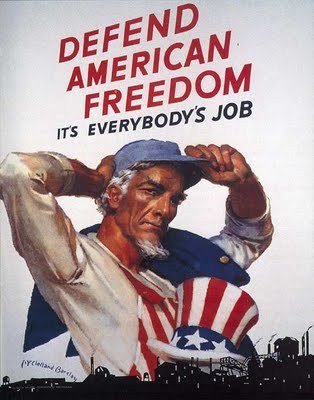
The Choice Americans Must Make for Human Rights

On November 6, 2012 in the United States, Americans will have elections throughout the country. They will be voting on many important issues of human rights at a state level and at a national level, they will vote in elections for their national representative and their next president.

Whatever choice you make as an American on Election Day, there is one choice that Americans must make in terms of Human Rights.

That is to choose one person to be committed and really make a difference for human rights in our nation: YOU.

Of all the candidates, all the speeches, all of the campaigns, none of them can really make a difference without your support.   While we will vote on November 6, the human rights campaigns for our nation and our world will continue on November 7.

On November 7, no matter which campaign is successful, we will continue to have the continuing campaigns for human rights to lead.

On November 7, no matter which cause is advanced, we will continue to have the continuing cause of human equality, liberty, and universal human rights to complete.

On November 7, no matter who is elected into office, we will have one person that we need to look to for responsibility in our future – that person is YOU, and we will need you to continue to be Responsible for Equality And Liberty.

On November 7 (and every day), it will always be a good day to be responsible for human rights, a good day to be responsible for women’s rights and Constitutional equality, a good day for racial harmony,  a good day to work for equal rights for people of every sexual orientation, a good day for freedom of religion and conscience, a good day to show respect to our brothers and sisters in humanity of every identity group, a good day to work for equality without question and without exception….and a good day to be responsible for equality and liberty – in America and around the world.

Make the Choice – to be the one committed to equality and liberty for all.

Why Equality is So Important: The Challenges of Essentialism, Superiority, and Supremacism

Can we pursue equality in human rights, if such equality is only for selected identity groups? Have we succeeded in our commitment to equality only once the identity group we support wins power in the conflicts we are deeply concerned about? While the answer may seem obvious in theory, in practice, we can find some individuals and organizations holding a very different point of view.

— Conflicts and Winning. In conflicts, we see ourselves and others often taking sides with one group, one argument, one position, over another. The challenge is when our positioning in conflicts leads to essentialism of other identity groups. We also see such conflicts focusing on who has “power.” If the individual, group, or ideology we support has “power,” then world affairs seem to be fair, if not then they are unjust. The issue of equality can get lost in the struggle and the debate over these conflicts.

— Equality and Winning in Life. But equality is more than simply who wins in individual conflicts. A commitment to human equality in human rights and dignity is essential to win in life itself. A commitment to human equality is in any long-term peace, progress, and our ongoing necessary relationships with our brothers and sisters in humanity.

— Is Inequality Only an Extremist View? As I have previously pointed out, a number of extreme groups that reject shared human rights also reject human equality in rights and dignity. Their extreme views can often be readily viewed as objectionable by others. But the truth of human equality is not just a challenge for extremist organizations. Human equality is also a truth that cannot be denied by any of us.

— Essentialism Rejects Equality. One challenge to human equality is the concept of essentialism. Those who hold essentialist perspectives believe that various identity groups must inherently behave in certain ways or have certain characteristics. Essentialist thinking believes that people of a certain race, religion, nationality, ethnic group, gender, sexual orientation, or other identity group predominantly have certain characteristics or behaviors that define their identity group. Essentialism generalizes these identity groups and sets expectations for interactions, roles, and world views of such identity groups. Those who support essentialism find such generalizations convenient to set expectations as to what to expect from various identity groups. Essentialists can even believe that their generalizations help them define the proper role and responsibility for members of these identity groups in human society.

— Possibilities, Not Limitations. Based on their generalizations, essentialists view humanity by their perception of its limitations, not by its possibilities. Many seek change. But if we define identity groups by essentialist limitations, can we truly recognize the possibilities for human change and growth? We may see groups of individuals and even large numbers, mobs, within an identity group performing certain actions or having certain shared views. This gives confidence to those who demand that we focus on the limitations of our fellow human beings. But the reality is that even such large numbers within an identity group are still a subset of the identity group itself. They are not EVERYONE in the identity group, as the essentialist argument would like us to believe. We often state how we seek change in society. We cannot work toward lasting change for peace and progress if our society focuses on condemning identity groups, based on their perception or based on the actions of some members of that identity group. We must look for the vistas of opportunity, not the walls of division.

— Generalizations, Not Responsibilities. The essentialist’s general arguments against identity groups also reject individual responsibility for both their identity group and other identity groups. They can view those members of their own identity group “can do no wrong” and they can view that members of another identity group “can do no right.” This is too common in groups involved in social conflict. They feel the need to take the side of their group, rather than to hold individuals accountable for their actions. This prevents some from being able to be critical of individual behavior of some members of such groups. Ironically, this reinforces the very essentialist argument that claims members of an identity group all have the same behavior, which rationalizes discrimination, oppression, even violence against that group. In striving for human equality in human rights and dignity, we are all accountable for our actions. We must not encourage essentialist thinking by failing to have the courage to speak out on our individual responsibilities, and we must recognize our own faults as well. As human beings, we also have human failings and mistakes that we make. Unlike the essentialist view, we must recognize that we can change and we can offer diversity in our beliefs.

— Is Essentialism Benign? The description of essentialist thinking may sound relatively benign. After all, some might argue, don’t we all have the need to generalize about things? Some may also view essentialism as politically expedient. It is simpler to label all members of an opposing group in a conflict in de-humanizing terms, and that view them as incapable of human change and growth. Some may even such essentialism as valuable in helping to “simplify” the debates or view of groups. They may argue that essentialism can be benign, helpful, or even politically strategic. This is not the argument that supports human equality and dignity. Human equality is not for some people. Human equality is for all people.

— Essentialism and De-Humanizing. When we feel compelled to assign essential attributes to an identity group, we DE-HUMANIZE the members of that identity group as individual human beings. They are no longer people. They are labels. From that, the labels become targets for categorization and criticism. It is easy much easier to compare labels then people. We compare labels all the time, when we buy food. We may not see what the label says than to look inside the box. We are busy people. We need to look at the label, make an instant decision, and act. Is this how we should assess the value and worth of our brothers and sisters in humanity? Certainly, we must reject essentialism if we seek to promote human rights and dignity as the inherent for every human INDIVIDUAL.

— The Path from Essentialism to Superiority. History has shown us repeatedly where the path from essentialism can lead. Too often the perspectives and arguments of essentialism then lead towards labels of identity groups, which argue that some identity groups (typically ours) are superior to others. Some may claim that such views of superiority are also harmless. They may argue that it is right to recognize such superiority of an individual identity group so that the group has a rightful leadership role, community role, social role, or even family role. They may argue that it is necessary to recognize that such superiority may even be necessary to “help” other “inferior” identity groups, whose it is viewed will have nothing but pitiful failures if the “superior” group does not show them the proper way to live behave, conduct themselves in life, for our view of progress. I remain shocked how often I hear publicly state the superiority of their identity group over others. They have de-humanized the labels of the other identity group; they have no compunction, no sense of shame or embarrassment towards their claims of superiority over the other identity group, which of course, is comprised of INDIVIDUALS – other brothers and sisters in humanity.

— Superior by Nature. The argument is also frequently advanced by IQ analysts and other “scientists,” by reportedly “scientific studies,” and the like that they can “prove” the superiority of various identity groups by elements in nature. There are those who will use such “scientific” essentialist arguments to demonstrate their “proof” that certain identity groups will predictably act in a certain way, therefore, they conclude, it must be “natural” for them to do so. These frightening arguments by would-be white coats and “scholars” often seek to rationalize superiority of some over others. But these scientific and statistical views fail to recognize our common bonds as brothers and sisters in humanity, the shared world we live in, our common physiology, and our common needs for all of the elements of life, love, and happiness. Some have also provided an extreme focus on the difference between men and women, based on our limited physical difference. Their argument against is that only nature defines us, and that nature defines the superiority of one over another. We are all human beings. We are compassionate, cruel, happy, sad, strong, weak, all at the same time. No one wins by one group being “better” than the other. Human society wins by respecting our EQUAL and shared human rights and human dignity together. Our nature is our shared humanity. Our science must be the way that we can work TOGETHER to respect our individual differences to see our many possibilities.

— The Path from Essentialism to Superiority to Supremacism. We already know where this leads. Too many want to ignore it. They want to live in denial that essentialism and superiority are elements of our lives that we can use “strategically,” that “help others,” that can be “benign,” that are necessary for a cohesive society, and that are necessary for recognizing reality in the world. (Each argument keeps digging the hole of inequality deeper and deeper.) But once we allow ourselves to accept essentialism and the only view the labels of individual identity groups, and once we can view such labels with smug contempt and disdain of our perceived superiority, the rest of the path is a shorter walk. How do you think slave owners viewed slaves? How do you think Nazis viewed Jews? How do you think extremist oppressors in any identity group, at any time in the world got to supremacist roles? They rationalized their supremacism, step by troubled step, using the arguments of essentialism and superiority. Their supremacism was necessary, after all, they argued, for the survival of their own identity group. Their supremacism was a contribution to larger society itself, by ridding itself, oppressing, or putting in bondage – the other identity group. The supremacists argued then (and they also argue now) that their supremacism is not only good, but also that it is an important necessity for the proper functioning of society (based on their view). So now let us look to see where the path of essentialism, superiority, and supremacism leads: slavery, Jim Crow laws, the Holocaust, political prison camps, even genocide. All of those started with essentialist thinking that an individual identity group is inherently only capable of one type of behavior, role, or characteristics in society. All of them began with the idea that our brothers and sisters in humanity are labels, not individual human beings that love, live, and hope just as we do.

— A Choice. We have the choice when we face essentialist behavior in ourselves and others. We can look the other way, or we can urge them to consider the importance of respecting individual humanity. It is often an uncomfortable choice, and one that we would prefer not to have when it comes to comments by those we respect and that we meet. It is often an uncomfortable choice, when it comes to those who we believe have “good intentions.” But good intentions and our social cohesion cannot be realized if we allow the disease of essentialist thinking to go without challenge. We must urge those who promote essentialist views to respect the individuality of other brothers and sisters in humanity, and ask them to offer an outstretched hand, not an upraised fist to all of them, even those with whom they disagree. Our greatest act of love for our fellow human beings is to respect them as individuals, unique, and with vistas of opportunities in their lives – and in ours.

Choose Love.

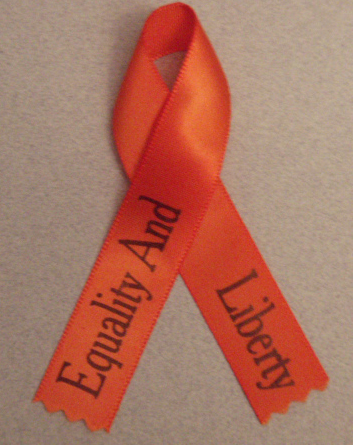
R.E.A.L.'s Orange Ribbon Campaign for Equality And Liberty