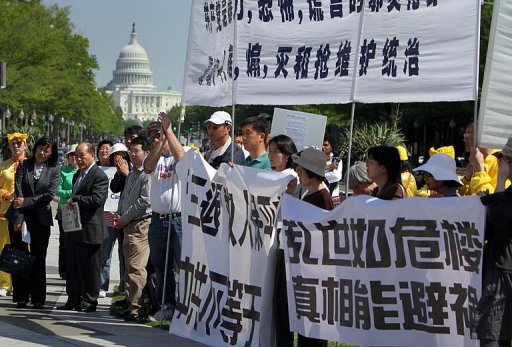
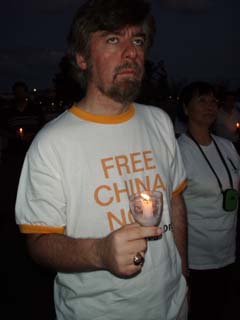
My good friends in support of Chinese democracy, freedom, and dignity sent me this article below in Epoch Times about the Kennedy Center hosting of performances of the Chinese National Ballet organized by the Communist Chinese government. They protest the ballet’s history of glamorizing Communist violence and oppression. They have organized 25 human rights groups to join them in an Open Letter which will be published stating their protest on this.
We fully respect the rights of the Kennedy Center and all private businesses to chose what and who they will have at their establishments. We respect their freedom of expression, including that we disagree with. We support our universal freedoms and human rightsfor the Chinese people and all people around the world.
We reject the glorification of Communist violence, and we reject glorification of a message of oppression by the Chinese Communist Party (CCP). We reject the messages of violence and oppression which have been part of this ballet’s performances.
The pain of the Chinese people who seek democracy and freedom is a voice the world cannot ignore.
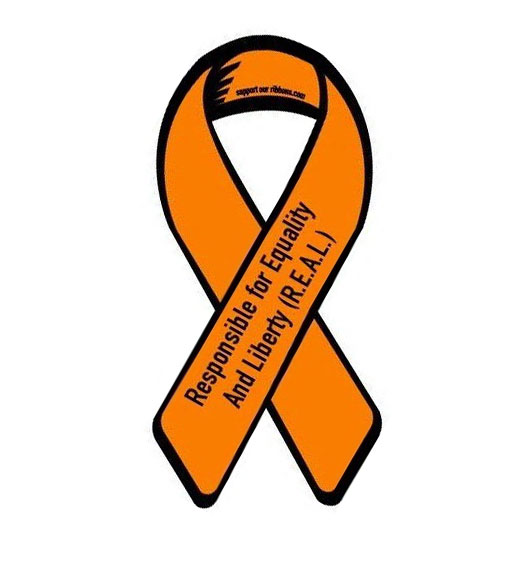
So we stand with our brothers and sisters in support of Chinese democracy, freedom, dignity, and justice – because we are allResponsible for Equality And Liberty.
Chinese Ballet at Kennedy Center Extols Violent Revolution
By Matthew Robertson Epoch Times Staff
September 23, 2011
A scene from “The Red Detachment of Women,” where women wield rifles and knives in pursuit of the landlord villains. Hundreds of thousands of innocent people were violently killed in the Party’s land reform campaigns, which are glorified in the ballet. (Maopost.com)
WASHINGTON—Audiences at the prestigious Kennedy Center are being asked to applaud a ballet that celebrates a movement that went on to murder hundreds of thousands. The Chinese National Ballet is performing on Sept. 22-24 “The Red Detachment of Women,” which glorifies the history of the communist land reform campaign in China, while concealing the reality of the violence that suffused it. In 1931 Mao Zedong, head of the communist-controlled regions, signed off on a policy of land reform that would “Rely on the poor peasants and hired laborers, make allies of the middle-peasants, exploit the kulaks and exterminate the landlords.” What followed in the 1930s, 40s, and into the 50s, was mass violence directed at “class enemies”: torture, arson, live burials, smashing and theft—a reign of terror designed to impose the political will of the Chinese Communist Party (CCP) on villages across the country. Hundreds of thousands were killed. Acts I and II from “Red Detachment” performed at Kennedy precede a scene from “Swan Lake” and the Chinese nationalist favorite “Yellow River.”
“They used this play to trick the Chinese people, and now they’re tricking Americans,” says Wu Fan, editor of China Affairs and co-author of an open letter that opposes the performance.
“They’re bandits and arsonists attacking wealthy people, taking their property and splitting the profits, and they’re portrayed as heroes,” he said in a telephone conversation. “Americans would not stand for a ballet that made Hitler seem glorious. Why should they accept one that makes Mao heroic? Both are mass murderers.”
The “Red Detachment” is a flagship of the CCP’s revolutionary operas, infamous in China because eight of them were the only operas permitted in the country during the Cultural Revolution, from 1966-1976. It is most well-known for being performed for President Nixon when he visited China in 1972.
The open letter, sent to media, politicians, and the Kennedy Center, argues that the performances are part of the CCP’s comprehensive approach to Western nations, which conceals hostility and a desire for dominance, while engaging in spying, propaganda, and infiltration.
A landlord from the ballet cowers as one of the revolutionary woman soldiers hardens her face and strikes a pose with her pistol. Land owners were a class to be struggled against and mercilessly eliminated in the early years of communist insurgency and rule in China. (Maopost.com)
Organizations that signed the letter include Washington Forum, the United League for Democracy in Laos, and the Non-Violent Movement for Human Rights for Vietnam—all groups opposing communism in one way or another.
The thrust of the activists’ complaints is echoed by academics. As Xing Lu, a China scholar, writes in her book: “Hatred permeates every model opera.” The basic message of these operas, Xing Lu writes, is that those designated as villains must be eliminated through violent struggle so a new society can be established.
The plays are meant to foster a “deep hatred for all class enemies and love for the Communist Party,” Xing Lu writes. The “Red Detachment” is the epitome of the genre. It eulogizes communist ideology and showers hatred on class enemies.
The “Red Detachment” is adapted from historical events during the early 1930s, telling the story of how a victimized peasant girl joined a woman’s detachment in the CCP’s red army and overthrew the landlords on Hainan Island, off the south coast of China.
The sinologist Simon Leys explains what land reform, carried out in various regions from the 1930s until the early 1950s, entailed: “By the fall of 1951, 80 percent of all Chinese had had to take part in mass accusation meetings, or to watch organized lynchings and public executions,” he writes.
The crowd was expected to roar in unison when the accusations were read out. “These grim liturgies followed set patterns that were once more reminiscent of gangland practices,” he says, with the purpose being to “ensure collective participation in the murder of innocent victims.”
The airbrushed version of one such history, on which the “Red Detachment” ballet is based, went from novel to ballet to film and then into ballet as commissioned by Jiang Qing, Chairman Mao’s wife.
Jiang was czar of the arts and guardian of revolutionary ideology in China during the Cultural Revolution, and personally made sure the performances were sufficiently red. She added rouge to the cheeks of the female lead and ordered that red flannel be used for collar tabs. She also made a Party representative the protagonist of the play, ensuring it would “present correctly the relationship between the army and the people.”
The Kennedy Center at night. (Lisa Fan/Epoch Times)
The depictions of females engaging in violence (in the play they wield rifles and large knives, strike aggressive poses, and kill landlords without mercy, for example) were anathema to prevailing notions of femininity in China at the time.
Scholars have suggested that such imagery may have contributed in no small part to a culture that saw young female Red Guards run rampant during the Cultural Revolution, torturing and killing their school teachers, ransacking houses, and brutalizing other supposed “class enemies.”
Along with the ballet format, acting techniques are pulled from Beijing opera and Chinese folk dances, and the music is meant to be clear and simple so as to communicate the message effectively. The dumbed down messages also had the useful outcome of “enforcing the uniformity of thought characteristic of… totalitarian societies,” Xing Lu writes in her book.
As simple messages are repeatedly drilled into people’s minds through performances like “Red Detachment,” “the range of word choices became smaller and smaller, the Chinese worldview became narrower and narrower,” Xing Lu says. “Especially when singing became automatic, lyrics and music exercised a hypnotic power to take away the ability to think.”
According to a number of scholars who have written about the play, the story finishes with the protagonist vowing to follow Mao’s motto that “political power grows out of the barrel of a gun.”
The play will be performed in the theater named for former president Dwight D. Eisenhower. Perhaps it is best that this staunch anti-communist is not around to hear the refrain “Communist ideology is the truth, the Party leads the way” sung in the theater that bears his name.
The Kennedy Center could not be reached at press time.
Around the United States of America, people are remembering this day as “Patriot Day.”
Ten years ago today, terrorists attacked New York City, Washington DC crashing jets into buildings and murdering thousands. Another planned attack on Washington DC was thwarted in mid-air on Flight 93 by courageous people, and it crashed in Shanksville, Pennsylvania.
We remember.
But we do more than remember than tragedies and the loss of lives.
How many memorial services, how many funerals have you gone to that simply remember loss and death?
No, when we REMEMBER, we also and most importantly remember life. We remember dignity. We remember joyous days. We remember mercy. We remember our common bonds with one another. We remember not just death, but we remember what makes our lives worth living. We remember our hearts and our love for one another.
I believe we do have a destiny. I believe all of our lives are lived for a purpose. I believe that all of our lives have meaning and are special. Those whose lives were ended on 9/11 came from many different backgrounds, different religions, and different identity groups. For some, they died so that we here could live. For others, their last moments were of courage in seeking to save their fellow human beings. They included Todd Beamer, Steven Weinstein, Sophia Addo, New York Fire Department Captain Patrick J. Waters, Lydia Bravo, Army Major Wallace Hogan, NYPD Cadet Mohammad Salman Hamdani, and nearly 3,000 more. Their deaths from the terrorist attacks were not an end, and their lives will be remembered by Americans forever.
We remember our brothers and sisters on 9/11. We remember them and we reach out to them across the universe and across the heavens.
We miss them and we love them. We love them, no matter their names, no matter their ethnic group, no matter their race, no matter their gender, and no matter their religion.
Some worry that our love and compassion will be seen by others as weakness. Our love for one another is not a weakness, but it is the greatest strength in the world. It is a bond to holds fast our diversity around the globe into one singular and special human race.
In the Washington Post today, a writer writes that the 9/11 attacks were the “end of American innocence.” But in our nation and around the world, there are innocent children born every day, who are born into a world and a nation, where they are loved. We have opportunity for such innocent compassion to our fellow beings every day of our lives. So I don’t see any end to innocence in America, or anywhere in the world, I see the endless opportunity for innocent love towards one another.
There are some who ask, ten years later, isn’t it time for Americans to “get over” 9/11? Some of those people mean well. Some of those people are concerned about the divisions we have seen grow in our nation and the world. But we have a choice. As we remember the lives lost on 9/11, we also must continue the courage and dignity of those who were killed that day. We have the choice to remember 9/11 for the fearlessness and sacrifice that so many made to save their fellow human beings in New York City, in Washington DC, and on Flight 93 in the sky. We should never “get over” such profiles of courage, and we should use their inspiration today and every day.
Today, our nation and our fellow human beings must have a united message to those who seek to promote hate and violence.
We are not afraid.
We don’t make that statement arrogantly, but simply as a statement of the truth in our hearts.
We won’t allow ourselves to be dragged into the fear and hate that undermines the joys and the blessings that we have in our lives.
We urge our fellow human beings to choose peace, not violence, to choose human dignity, not disrespect, and to choose love, not hate.
Sunday, September 11, 2011
12:30 pm Registration Opens – Washington Hebrew, 3935 Macomb Street, Washington, DC 20016
12:30-2:15 pm Service Fair – Details TBD
1:00-1:25 pm Kirtan Musicians – performing in auditorium as participants gather
1:25pm Muslim Call to Prayer – Imam Abdullah Khouj, Islamic Center of Washington
1:30-2:00 pm Program Begins – Welcome and Opening Remarks
Opening Remarks – MC Maureen Fiedler, SL Interfaith Voices, WAMU 88.5
Senior Rabbi Bruce Lustig, M.A.H.L., Washington Hebrew Congregation
Special Remarks – “title of speech,” Sheikh Hamza Yusuf
Most Rev. Barry Knestau, Auxiliary Bishop, Roman Catholic Archdiocese of Washington
2:15 – 4:15 pm Open Houses – Participants must choose between activities during three blocks of Open House presentations. Volunteer ushers will guide foot traffic between stops and at major road intersections.
2:15-2:45 pm
Christ Church – “Blessings, Speaking in Tongues and Miracles” 3855 Massachusetts Avenue, NW
Annunciation Catholic Church – Guided tours of the church 3810 Massachusetts Avenue, NW
National Gurdwara- Turban-tying demonstration
3810 Massachusetts Avenue, NW
St. Albans- Choral Music Presentation and Tour 3000 Wisconsin Avenue, NW
3:00-3:30 pm
National Gurdwara- Turban-tying demonstration 3801 Massachusetts Avenue, NW
Community of Christ – TBD 3526 Massachusetts Avenue, NW
St. Nicholas Cathedral – Guided Tour 3500 Massachusetts Avenue, NW
Soka Gakkai International- “A Chance to Chant” 3417 Massachusetts Avenue, NW
3:45-4:15 pm
Embassy of the Vatican- Greeting from Jean Francis 3339 Massachusetts Avenue, NW
Khalil Gibran Memorial Park –“The Experience of Mantra Meditation” led by Bali Adawal 3100 Massachusetts Avenue, NW
Islamic Center of Washington – Guided tours of the Mosque preceding the program
2551 Massachusetts Avenue, NW
4:30-5:00 pm Unity Walk Program Resumes
Islamic Center of Washington, 2551 Massachusetts Avenue, NW
Welcome: Imam Abdullah Khouj, Islamic Center of Washington
Special remarks – The Rev. Bill Haley / Rabbi Jack Moline
Title of speech: Karen Armstrong, Charter for Compassion, Winner, TEDPrize
Tell People to walk – Arun Gandhi, Grandson of Mahatma Gandhi
“Amazing Grace,” St. Augustine’s Gospel Choir – All faiths join together for a dramatic statement from the Islamic Center in Washington, DC to the World
5:00-5:45 pm Procession and Closing Celebration ending at Mahatma Gandhi Memorial
“O Happy Day!” – A “Gandhi-style Walk” and gospel procession led by Arun Gandhi and the St. Augustine Gospel Choir
Introduction – TBD, representative, United Hindu Jain Temple Association
Arun Gandhi, Grandson of Mahatma Gandhi
Imam Mohamed Majid, Islamic Society of North America
Closing Prayer – TBD
Our goal is to DEMONSTRATE that the love we have for one another is GREATER than the differences that some seek to emphasize.
We seek to DEMONSTRATE that people of all religions, identity groups, and genders, can share our common bonds of human dignity, human respect, human rights, and human love.
— Oslo and Finding the Courage to Change — A New Dialogue (Part II)
Once again, as I write this, there are those who claim to want to threaten my hometown and America’s national capital. We have seen it many times over the past 10 years. We have seen the barriers, the security procedures, the National Guard, and the police riding our subways with machine guns.
But once again, the path to peace anywhere in the world, Washington DC or New York City, the Middle East, Africa, Asia, and Europe – begins with a dialogue of peace.
Such a dialogue requires the courage to change the dialogue of the past and embrace the opportunities that we have to work together as fellow human beings to achieve change in our societies and our world.
At the end of July, I wrote of the terrorist attack in Oslo, Norway by confessed terrorist Anders Behring Breivik. I wrote about the need to comfort those who lost their lives and families of children whose lives were lost in the July 22, 2011 terrorist attack in Norway. I wrote of the need to balance our disagreements with dignity and compassion, and the lessons that we must continuously learn and teach from such violence.
At the end of August, I wrote details about the challenges of extremists in various groups. This includes extremists in the Anti-Islam group that Mr. Breivik claimed to represent as well as the Bin Ladenists who continue to commit and threaten terrorism around the world. My Christian friends reject the oppressive message and terrorist actions of Mr. Breivik, who sought to view himself as a “Christian crusader.” My Muslim friends reject the violence and hate of the Bin Ladenist movement. I embrace the efforts of all my brothers and sisters in humanity to pursue a path of compassion and human dignity.
These terrorists do not represent us, and we must not allow them to claim that they represent the “culture” of our faiths. It is the responsibility of people of such faiths to continue to make this clear to the world, not just with their words, but more importantly with their actions.
We must find the courage to seize the opportunity for a new dialogue on our freedom of speech and responsibility, to develop a new approach to our cultural ownership, to choose a new dialogue regarding religion and human rights, and to choose love, not hate not just in our hearts, but in our minds, in our words, and in our actions.
1. A New Dialogue on Freedom of Speech and Responsibility
We cannot have any dialogue without freedom of speech. When we fear to communicate and to disagree, then people stop talking and start plotting on how to overthrow “the other” (whoever that may be). So whether we agree on someone else’s views or not, let’s remember that if we deny their freedom of speech, we undermine the ability to build any type of dialogue in the future. I talk with a lot of people that I disagree with – in many different areas. Some people may choose to view me as an “enemy.” But I have no enemies; I only have brothers and sisters in humanity. That is what all must seek, no matter how disagreeable or how difficult that may be at times.
But while we work to support the freedom of speech for all, we must also work to build a greater sense of responsibility to use our words constructively. We can use our words to build, not destroy. We can use our speech to heal, not to divide. We can use our rhetoric to hope, not to hurt. We have a choice, and we also have a responsibility to our society.
We cannot legislate responsibility or our brothers’ and sisters’ thinking. They have universal human rights to say and think what they choose. While we have laws to protect people from violent threats and danger, the real work in building responsibility is by showing responsibility ourselves. We must spend less time pointing fingers and more time extending our hands in human fellowship. We must spend less time in dialogue with those who share our views, and more time listening to others with whom we disagree. We must set an example in being responsible for both freedom and dignity.
Building responsible speech in our societies is hard, grueling, thankless societal construction work. We will win no awards, get no supporters, obtain no donations, and get no accolades for the construction work of building respect and dignity for one another in our communications.
But imagine how our society would struggle if we had no construction of roads, of sidewalks, of building, of electricity. Imagine our homes with no windows or no doors. We depend on such thankless construction for our daily lives and our daily interaction with the world.
We must make a renewed commitment to such construction for peaceful, respectful construction in communications with our human brothers and sisters. A new dialogue begins with choosing to be responsible for showing dignity towards one another.
2. A New Approach to Cultural Owners
Imagine a home with no windows, no doors. It would be a tomb, or perhaps even a cell. In many parts of the world, our brothers and sisters in humanity live in such prisons. They are imprisoned for choosing freedom, for choosing dignity, and some simply because of their identity, including their religion. We see people of all types of faith imprisoned around the world in oppressive states for their faith, or by those who discriminate and oppress them for their faith.
But the jailers are also in jail themselves.
We must seek and work towards a new approach to cultural ownership, where our homes have windows and doors, where our cultural homes allow us to see and talk to one other, where our cultural homes allow the light of day and the stars at night.
Mr. Breivik’s terrorist attack was for what he called a “Christian culture,” and the Bin Ladenist movement seeks what they call an “Islamic culture.” My Christian and Muslim friends reject both extremist views. But we must do more than just reject extremism. We must also answer the more difficult questions in our societies about our insecurities regarding our cultures.
Many are adverse to change, and the globalist movement of the 20th century has caused many great concern. They fear local and traditional views will be challenged and even lost. Some have rationalized that the answer should be found in cultural tariffs to keep people of other cultures, other races, other ethnic backgrounds, other religions, other identity groups – OUT – of a culture that they don’t want to change.
But history has shown that the effort to build such cultural tariffs and cultural walls are doomed to failure. Oftentimes, such efforts have had catastrophic and horrific results. We have seen some examples with Adolf Hitler’s Nazi Germany, racist segregationists in the United States, Communist totalitarian nations, genocide in Darfur, and the endless waves of violence against religious minorities in the Middle East and Asia. History shows that the efforts to build walls around our cultures have many, many bad endings.
There is a great misunderstanding that comes with the closed minded views on isolated cultures. We have seen this with the manifesto of the terrorist Anders Breivik, who also used his attack (not unlike the Bin Ladenists) to reject what he calls multiculturalism. This misunderstanding comes from a basic confusion over what our responsibilities are involving multiculturalism.
Multiculturalism is not about submission or surrender. It is not about sacrificing our cultures. We do not have to agree or even like other cultures. Multiculturalism is not about any of that. The important point for human dialogue is simply that we show dignity and respect for others and their differences, regardless of whether we agree or whether we like them, simply because they are fellow human beings.
Fear and doubt can be greater motivators to build walls. But if we are serious about building security not just for this moment, but also for our children and the generations to come, we must build more doors and more windows. We must not be afraid to look outside.
A new dialogue begins with the realization that we must share our Earth together. Not only do we need to be heard, but also we need to be able to listen.
3. A New Dialogue on Religion and Human Rights
People of faith must seek the opportunity to build a new dialogue on religion and human rights. We have to reject the idea that our faith does not allow human rights, human freedoms, and religious freedom for our human brothers and sisters.
To people of all faiths, I ask you to look not only to your heart, but also to your soul. We must find something other than fear, hate, anger, bitterness, and rejection in ourselves, in our thoughts, in our words, and in our lives.
We are better, we are bigger, we are more decent than what we have seen in the dialogue over the past 10 years since the 9/11 attacks. We are more courageous than to let people of faith suffer in prison cells and in oppression around the world, simply because of their faith. We have more confidence in our faith than to seek to deny our brothers and sisters their own houses of worship and their freedom of conscience – anywhere and everywhere in the world, without exception, without caveat, without condition.
We have greater voices and greater power together than the extremists among us who would denigrate others, oppress others, and even cause harm and violence to others. We outnumber even the greatest mobs with torches, with our countless masses that can choose to stand for freedom and dignity for all.
We must not let the Breiviks or the Bin Ladenists speak for us. We must not our silence ever be interpreted as apathy, or God forbid, consent.
We do not pray for fear, we do not pray for hate, we do not pray for indifference, and we do not pray for weakness. To people of faith, I say that we must be who we say we are, and take the responsibility to live as courageously as we pray.
We must lose the mask that too many wear of cowardice, indifference, and despair. We are more powerful than that. We are people of faith, blessed by a higher power to give us guidance and courage.
We are not better than our fellow human beings, but we are blessed to offer the chance to reach out to our fellow human beings. We must never let ourselves believe that blessing is a license to reject, to oppress, to demean, to hate, and to hurt our fellow human beings. Our blessing of faith must be cherished like the gift that it is.
My Muslim brothers and sisters have stood by my side many times, in many forums. They have stood by me in women’s rights events, in challenging stoning, in standing for religious freedom, in defying violence and hate, and in remembering those who have lost their lives to extremists. They have shared their heart break with me over the abuse of Christians, other Muslims, and other religious minorities in many parts of the world. They have stood with me in challenging the Bin Ladenists and their views. While this may get little reporting by the news media, I know this is true, I have seen this over and over with my own eyes, and heard this with my own ears. We need to reach out to greater numbers of our brothers and sisters on these issues.
My Christian, Buddhist, Jewish, and Hindu brothers and sisters have also stood by me in these and similar human rights events, over and over again, in different parts of America, and in joint event for human rights in Europe. We still need to encourage more of our brothers and sisters to be involved in such issues.
I don’t offer a message for a new dialogue on religion and human rights based only optimism, but it is also based on years of personal experience witnessing this dialogue developing, seen with my own eyes and heard my own ears.
A new dialogue is developing and will continue to develop among people of many faiths and none at all – while we continue to remember our shared humanity, and while people of faith remember their shared blessing.
4. A Message to My Christian Brothers and Sisters
I am a Christian. Therefore, I also have a special direct message to my Christian brothers and sisters on this need to build a new dialogue of hope, respect, and dignity.
The terrorist attack of Anders Breivik and his calls for “Christian culture” was a deep insult to Christians around the world. A number of Christian commentators dismissed Mr. Breivik by stating that he was not really a Christian, but viewed himself as a “Christian agnostic” who liked what he viewed as the “cultural” traditions of Christianity, without actually having any faith.
While it is easy to dismiss Breivik, I would caution my Christian brothers and sisters not to do so too easily. While millions seek to promote a different type of “Christian culture” than the one that confessed terrorist Anders Breivik sought, he is not an “isolated incident.” There are too many others to believe this. We have seen the Hutaree, the racist “Christian Identity” movement, the African Lord’s Resistance Army (LRA), Ugandan extremists, and the Westboro Baptist Church. We have seen pastor after pastor join marches to deny religious freedom, and some who have led Qur’an burning campaigns. We have seen dozens of Christian pastors joining groups that seek to deny the rights of other religions. We have seen well-known pastors on television call for violence attacks on Washington DC, and some who have called for natural disasters as religious justifications to push a political agenda.
For every one of these extremists, there have been hundreds, thousands of Christians who actively reject their views. These very vocal extremists are a small fraction of Christians. But does that diminish our responsibility to reach out to them, counter their views, and offer a different dialogue?
So yes, it is no doubt that Mr. Breivik was not really a “Christian,” as we know it. But let us not get so arrogant to ignore the plank in our own eye, and the growing climate of intolerance, of disrespect, and even of violence that continues to grow in some corners of people who seek to redefine what we view as “Christian culture.”
While I may offer advice to my fellow Christians, let me be clear that I do not suggest that I am a “Christian leader” or an authority of any kind. Hardly. I am nothing of the kind. I am a poor sinner, weak, and imperfect. I am an average person, who has made enough mistakes to fill any book. But our God gives us all a chance, even to the least of us, to make a difference. If we believe in our Christian faith, our evangelism is not what we say, it is what we do.
What we do – is not enough. Not nearly enough. That is hard is to say and it is hard to hear, when we must feel that in this difficult world and economy that we do so much.
But whenever we believe we have right to be arrogant, disrespectful, cruel, and thoughtless, then we are allowing the definition of “Christian culture” to be undermined and attacked. Even a poor sinner like me can see this.
Our Christian culture is nothing if it is not first based on humility, respect, mercy, and kindness. We may suffer and struggle. We may be abused and disrespected. But to my Christian brothers and sisters, we have faith that Jesus Christ died on the cross for our sins and our opportunity for eternal life. Our Christian culture is a culture of sacrifice, selflessness, compassion, and love. It is not simply enough that we Reject Hate. To the Christian culture, it is also imperative that we Choose Love.
5. Our Unity and Dialogue in Our Shared March of Life
Whatever our identity group, our religion (or none at all), our nationality, our race, our ethnic group, or our gender, we are ONE. We march together every day of our life in solidarity. Our solidarity is in our lives together in the human race that we share.
That march of life that we take every day together around the world allows us to share the dawn, the sun, the sky, the sea, the air, and the stars together. Our home. Our shared Earth for all of us.
On some days, that march of life is a struggle, for others it is an adventure. To all of us, our march of life is a constant opportunity not only for ourselves, but also for our society and the future for all.
For our shared march of life, we need more than the stones of angry words. We also need the building blocks of respect, patience, and the willingness to listen, even (especially) when we disagree. We can grow beyond the history of where we have been and where we have failed, and we can work towards our possibilities of what we could achieve by respecting and gaining faith in one another.
The march of life requires more than closed cultures with border gates that prevent us from walking together. We need pathways to see and understand one another.
Our march of life together requires that we not only have faith, but that we demonstrate that faith in showing dignity, mercy, and respect to one another.
But most of all, our march of life requires more than just the faith in our religions (or none at all) or in our ideas. We need to work to build a new dialogue with our fellow human beings so that we can trust each other more. We have don’t have to agree with each other to respect each other. We don’t have to share each other’s views to love one another as fellow human beings.
Our march of life together does not just have to have the background of rush, confrontation, and conflict. Our march of life can be to a new anthem, a new dialogue of respect, compassion, and love for one another.
This new dialogue must not just be in our words, but also must be an internal dialogue as to how we think about each other, and how we act towards one another. We have seen enough violence, we have seen enough pain, we have seen enough suffering, and we have seen enough hate.
We can make another choice, and work to build a new dialogue for future generations.
We can choose a new dialogue based on respect, dignity, compassion, and love for one another.
This year, as so many mourn the 10th anniversary of the terrible terrorist attacks in America on 9/11, let us remember more than just victims. Let us honor their lives, their joys, and their hopes. Let us honor their dreams, their faith, and their hearts.
Let us Choose Love, Not Hate. Love Wins.
Orange Ribbon for Universal Human Rights - Responsible for Equality And Liberty (R.E.A.L.)
Many in the world are paralyzed by crushing hopelessness and fear in their lives.
They may be struggling from financial, health, family, or human rights issues. Those struggling may face situations or even other people who seek to threaten their health, their homes, their livelihood, and even their lives. This struggle with hopelessness and fear has no limits to one race, one religion, one ethnic background, one gender, one generation, or even one financial situation.
Hopelessness and Fear are great equalizers to human beings.
Hopelessness and Fear seek to attack us from within.
They seek to make us question not only our security and each other, but also they seek to make us question ourselves.
They will even drive some to the desperation of hate and violence. While we often dismiss those whose hearts are hardened by hate as simply lost, let us not forget they were not born into hate. They were taught hate and they were taught violence. The hate and violence of some is because of their own fears, their own insecurities, and their need to dominate others because they fear that they without domination their lives will hold no meaning.
We can and we must teach those consumed by hate and violence differently. But to do so, we must also overcome hopelessness and fear in our own lives, to set an example for others.
People of religious faiths are taught to reach to their faith in a higher power to believe in divine inspiration, strength, and even an afterlife. If you are a person of faith, it is vital that you use such faith to give you courage and strength.
Find a direction in your religion to love one another, and if you love one another, have the religious faith to also love yourself and those around you, even those who wish you ill. If your religion teaches forgiveness, then also find the religious faith to forgive yourself and those around you, even those who wish you ill.
I know how easy that is to say and how hard that is to do. When you feel that you have failed and that you are not where you believe you should be in life, you lose patience and courage with yourself. When you feel that others have failed you and even hurt you, then you may feel that such individuals do not deserve such love and forgiveness. But it is especially at these times, when love and forgiveness is the hardest to give and receive, that it is the most important to give and receive. This is really when love and forgiveness can truly make a difference in ourselves and in our society.
In addition to religious faiths, there is more than one type of faith. While those with religious faith have faith in God or the higher power that they believe in, there is also the need to find faith here on Earth as well, regardless of your beliefs.
We also need to have faith in ourselves, in one another, and in our shared human race that we will continue to survive, we will continue to show love and mercy towards one another, and that we will continue to have a future. Despite the sickness, the injustices, the travesties, the oppression, even the genocide of people by other people around the world, the human race marches on.
As a human race, the march of life continues.
This shared march of life should also give us hope and courage.
Certainly, in our individual situations where we feel fear and lose hope, it is often hard to see the value in this ongoing march of life.
We may be frustrated or despondent in our disagreements with others. But we can also choose to find courage that there is an endless opportunity for dialogue as fellow human beings.
We may grow fearful of our poverty, our failing health, and our age. But we can also choose to be thankful for the good days of the past and continue to appreciate the comfort of our fellow human beings in difficult times.
We may have heavy hearts over the loss of loved ones, friends, family, or the loss of relationships that brought great joy to our hearts. But we can also choose to be grateful for the comfort of our human family, and the endless relationships we can potentially have with them.
YOU ARE NEVER ALONE, no matter how lonely you may feel. Your brothers and sisters in humanity are there with you continuing the march of life for the human race.
We may be distraught at facing the dark door of death itself. But we can also choose to have the courage to remember that our end is not THE END. While the march of life for us may end, for other brothers and sisters in humanity, it is just beginning. Our human family will carry on somehow, as it has done over the years.
We may cringe at the growing darkness. But even in the darkest night, we can also choose give thanks for the light from the stars above.
You may think that you are forgotten, neglected, and alone. But somewhere in our shared Earth, there are those of your human brothers and sisters who send their love to you, whose hearts ache for you, who wish the best for you. They may not know your name, but they know YOU. They know you as a fellow human being, as a brother or sister in our human race. They may not be able to solve your problems, but there are human hearts that care about your problems, your fear, your hopelessness, your losses, and your struggles, even for those who hate.
There are those in your human family who seek to help others every day, and there are those in your human family who pray for those of all religions and those with none, simply because they love you as fellow human beings. They march alongside you, in the march of life.
From birth to death, we find ourselves in a march of life. That journey, like all journeys, may have rocks and difficult paths. That journey may find us at some point at an end from which we personally cannot recover. But our brothers and sisters in humanity will pick up the torch and keep the flame of the human spirit alive.
Our march of life is your march of life, a journey that we take TOGETHER.
Fear Not. You Are Not Alone.
In the March of Life, the Best is Yet to Come.
Orange Ribbon for Universal Human Rights - Responsible for Equality And Liberty (R.E.A.L.)