“As we in the West eye a rising China we cannot overlook that one in 20 Chinese has renounced the Chinese Communist Party (CCP) and/or its affiliated organizations.”
“Dr. Yubin Pang, Chair of the Quitting CCP Service Center in Washington, D.C., says, “The CCP’s various political movements and persecutions have cost about 80 million lives in China in the past 6 decades, and there is injustice, corruption, and a widening income gap in China.” According to statistics released by the Chinese regime, the unrest in China has grown to 10 times the amount in 1993 with over 100,000 incidents last year. As more people awaken to the true nature of the CCP, the number of people to publicly renounce the CCP and/or its affiliated organizations has reached 71 million–one out of 20 Chinese in Mainland China. The day before Hu Jintao visits Washington, hundreds from New York, New Jersey, and the mid-Atlantic states will join the DC Rally to support those who renounced communism in China.”
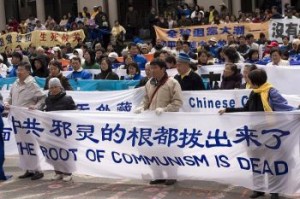
On April 11, 2010, supporters of human freedom will join together at Washington DC’s Freedom Plaza to recognize the growing movement of Chinese citizens in the People’s Republic of China (PRC) that have left the Chinese Communist Party (CCP), as their rejection of Communist totalitarianism. The movement known as the Tuidang and Quit CCP movement states that over 71 million Chinese people have chosen to leave the CCP since December 2004.
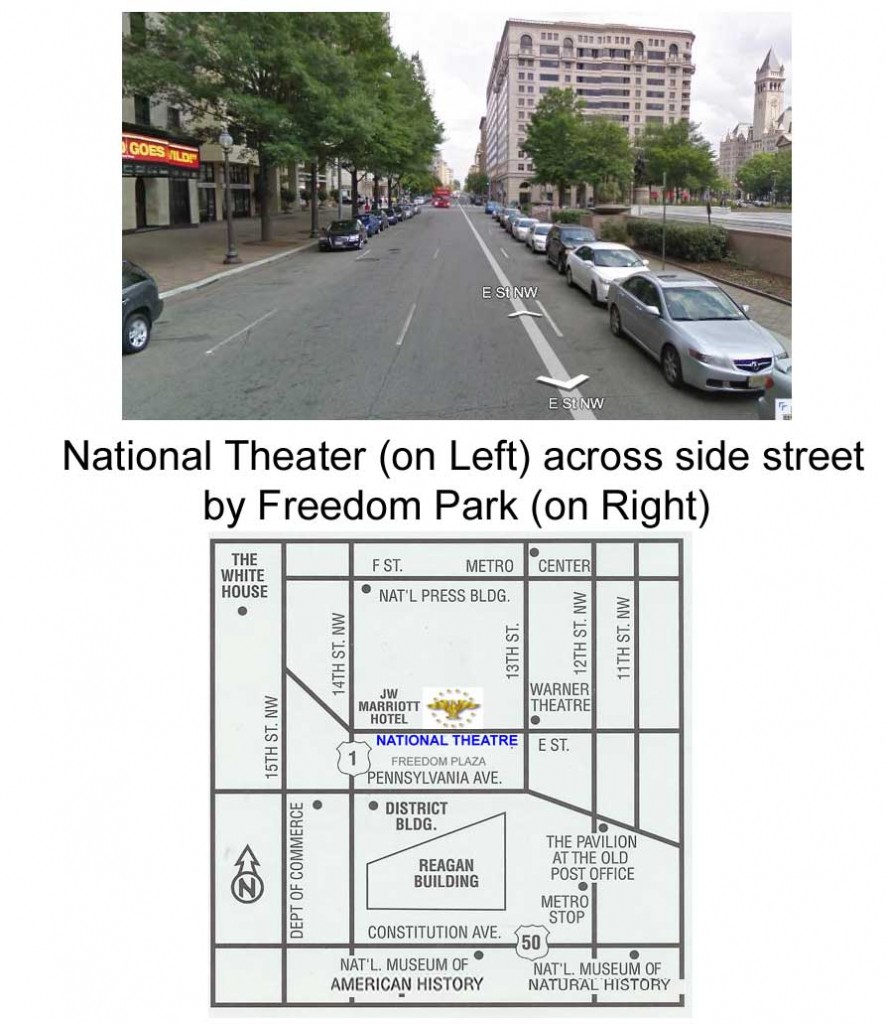
Chinese-Americans and their supporters will gather at the Washington DC Freedom Plaza, which is located on Pennsylvania Avenue NW, between 13th Street and 14th Streets NW. from 2 to 4 PM on Sunday, April 11 to recognize and show solidarity with the Chinese people that seek to embrace freedom.
Image from a NYC Rally Challenging Communism in PRC (Shaoshao Chen/The Epoch Times)
The Tuidang movement or “Quit the Party” movement has seen an increasing wave of resignations from those that now publicly reject Communist totalitarianism in the PRC. The Tuidang movement calls upon the Chinese people to resign their memberships in the Chinese Communist Party (CCP), so that Chinese people in the PRC will have an opportunity for political and human freedom. Resignations include the statement that “I declare that I solemnly denounce the Chinese Communist Party and its affiliated organizations.”
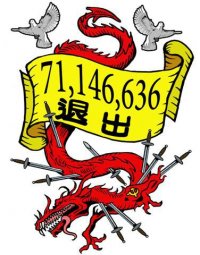
On its Facebook page, Tuidang states that “As of 06/04/10 [April 6, 2010] – 71,146,636 people have submitted statements withdrawing from the Chinese Communist Party or its affiliated organizations. Those who are current members of the CCP or its affiliated organizations are with these statements resigning their membership; former members use these statements to sever all association with these organizations. All are renouncing the CCP totally.” The “Quit CCP” web page states that this number of those resigning from the CCP continues to grow. The “Quit CCP” web site also lists the individual statements of some of those who have resigned from the CCP. In challenging Communist totalitarianism, the Epoch Times reports on “Nine Commentaries” that justify the reason for Chinese people leaving the CCP.
Symbol of the Tuidang Movement of Chinese People Rejecting the Chinese Communist Party (CCP)
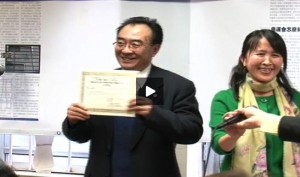
On January 5, 2010, NDTV reported that a former CCP director, Zhang Kaichen, came to America and publicly resigned from the CCP, stating: “”Today I am reborn. I come across the ocean, and solemnly declare to the world that, from today on, I will make a clean break from the evil Chinese Communist Party.” NDTV reported that “Zhang Kaichen is the former Director of the Liaison Branch of the Propaganda Department of the Shenyang CCP Committee in China’s Liaoning Province.”
January 2010: Fomer Chinese Communist Party Official Zhang Kaichen Resigns from CCP in America (Photo: NDTV)
Now the Tuidang and “Quit CCP” web sites state that, as of April 2010, over 71 million had resigned from the CCP. Chinese Americans and their supporters seek to show their solidarity in America’s capital, Washington DC, on April 11, 2010, to let those continuing to struggle against Communist totalitarianism that they stand in unity and in support of their efforts.
Rally Logistics:
— Date: Sunday, April 11, 2010
— Time: 2 to 4 PM Eastern Daylight Savings Time
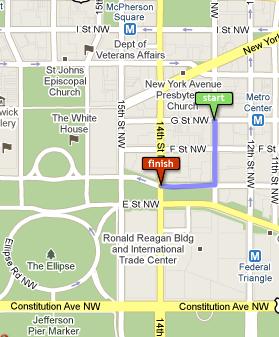
— Location: Freedom Plaza, Washington DC, 20004 – on Pennsylvania Avenue NW between 13th and 14th Streets NW
The Freedom Plaza in Washington DC is named in honor of Martin Luther King, Jr., who worked on his “I Have a Dream” speech in the nearby Willard Hotel. In 1988, a time capsule containing a Bible, a robe, and other relics of King’s was planted at the site.
Freedom Plaza - Washington DC - 14th and Pennsylvania Avenue NW - Site of April 11 Rally for Chinese Freedom
— Parking lots: the nearby National Theater reports the following parking lot areas include:
— PMI
— 1220 E Street, NW – Enter on E Street between 12th and 13th Streets
— 424 11th Street, NW
— 1325 G Street, NW – Enter on G Street between 13th and 14th Streets
— QUICK PARK
— 1301 Pennsylvania Avenue, NW – Enter on 13th Street between E and F Streets
As Obama plans his visit to China in November, he should pay attention to the Tuidang movement. It shows that the Chinese people understand human rights and civil liberties.
By Caylan Ford
posted October 21, 2009 at 12:00 am EDT
Washington —
The lead image on the Sept. 27 edition of the Jinzhou evening newspaper was hardly unusual. In anticipation of the 60th anniversary of Communist Party rule in China, it featured a street lined with enormous red flags beating in the wind.
It would have been nearly indistinguishable from any other Chinese state-run newspaper that day but for one important detail. In the bottom left corner of the photo, scrawled on a bike rack, were eight tiny but clearly visible characters: “Heaven condemns the Communist Party; denounce it and be blessed.”
Similar writings that dare to challenge the divine mandate of China’s rulers appear regularly across China, hanging as banners in city parks, posted on Internet forums, or handwritten on paper bank notes. It is all evidence of a movement that has silently swept the nation. Called Tuidang, which translates simply as “withdraw from the party,” the movement encourages people to publicly renounce their membership in Communist organizations. The implications are manifold. This is the first time since the 1980s that China has seen such a large, organized dissident movement – if an underground one.
The day after the image ran, the Jinzhou newspaper came under investigation by the government. Its website was shut down, and the paper taken out of circulation.
The incident represents a fitting analogy for the state of the Communist Party today. Beneath the pomp and power lie resentment, discontent, and questions. In 60 years of Communist rule, China has endured political and social upheaval that have left deep psychic wounds.
But in the country’s totalitarian climate, the people have few avenues to openly discuss their country’s history or to make peace with their own role in it. Since China has not had its opportunity for truth and reconciliation, its citizens are finding their own ways to do this.
Perhaps that explains the extraordinary appeal of the Tuidang movement, which organizers say has more than 60 million participants. It began in late 2004, when New York-based Chinese dissident newspaper DaJiYuan (Epoch Times, affiliated with the spiritual movement Falun Gong) ran a series of polemic editorials detailing the history of the Communist Party in China.They also proclaimed that the country would not truly be free or prosperous until it was rid of the party, which, it argued was at odds with China’s cultural and spiritual values.
Millions of copies of the articles found their way into mainland China through e-mails, faxes, and underground printing houses. Some Chinese readers say the articles finally confirmed what they suspected all along – about the Great Leap Forward, the Tiananmen massacre, the Cultural Revolution. This offered recognition that their memories were real and their suffering was shared.
But despite appearances, this is not a political movement in the conventional sense. Unlike the student movement of 1989 or the more recent Charter 2008 manifesto – both of which embraced the language of Western democracy – the Tuidang movement employs distinctly Chinese language and meaning. More Confucian than humanist, it often makes its points by drawing on Buddhist and Daoist spirituality.
Denouncing the party is thus not simply political activism, but takes on spiritual meaning as a process of cleansing the conscience and reconnecting to traditional ethics and values.
In December 2004, one month after the articles were published by the dissident newspaper, its editors starting receiving statements from readers declaring their wish to disavow membership in the Communist Party, the Communist Youth League, or the Young Pioneers, sometimes after their memberships had technically expired. Today, statements representing some 60 million people have been sent to the newspaper, which posts them to an online database.
The authenticity of the declarations is impossible to independently verify. Most people sign them using aliases to protect their safety, and there are no provisions to prevent fraudulent postings.
But the numbers are really not the point. For those who do send in their statements disavowing the party, the postings offer a rare platform to vent frustrations, discuss ideas, share stories of suffering, or find forgiveness.
Many relay tales of personal victimization under the Communist Party. Take, for instance, Ding Weikun, a 74-year-old veteran party member from rural Zhejiang Province. In 2003, his town’s government colluded with private developers to seize the land of local farmers. The farmers protested, Mr. Ding wrote, and armed thugs were brought in to suppress them. “I witnessed the killing and injuring of dozens of villagers, on the spot,” he noted. The old man tried to pursue justice by appealing to the local government, but he was arrested and sentenced to prison by the very party that he had served for 40 years.
While some write of their personal suffering, others speak of their crimes. For them, withdrawing from the party is about seeking absolution.
“I have always thought that I was a good man, but looking back I realize that I had gradually lost myself,” wrote Xiao Shanbo, a former party member from China’s northeastern Liaoning Province. “My mind and heart slowly became corrupted. I declare invalid all the words and deeds I have done in the past. These were decisions that I made out of ignorance due to the lies and propaganda of the [Communist Party].”
Mr. Xiao never specifies his crimes, but closes his posting with a plea for forgiveness: “God, please give me this chance! I have gone through much arduous soul-searching, and I intend to change my ways and make up for what I have done.”
The Communist Party has reacted to the phenomenon with predictable disdain. Terms related to the movement are among the most vigorously censored on the Chinese Internet, and at least 71 people have been imprisoned for possessing movement literature or propagating its spread. That means that, if found, the activist who vandalized the bike rack in Jinzhou city will be in serious trouble.
The party may have good reason to be anxious. For decades, its power has relied on an ability to censor information, control public memory, and suppress dissenting views. The statements of participants offer a rare glimpse and great insight into the sources of discontent in China.
The Tuidang movement also shows the manner in which Chinese people understand human rights, civil liberties, and democracy, and how they might reconcile these ideas with a more traditional Confucian worldview. It could perhaps even serve as a precursor for another democracy movement.
But one way or another, the movement certainly challenges the popular view that most Chinese people are satisfied with the status quo. As President Obama prepares for his November visit, it is reason to consider engaging more with the Chinese people, and not only with their government.
Today, as more and more Chinese citizens are remembering their past, they may well change China’s future, too.
Caylan Ford is a master’s degree candidate in international affairs at The George Washington University, where she studies Chinese politics and international security. She is currently writing a thesis on organized dissent in China. She is also a volunteer analyst at the Falun Dafa Information Center and was a staff writer for Epoch Times until 2007.
[Editor’s note: The original version did not give the English name of the referenced newspaper or the affiliation. Additional information about the author has also been added.]
“The United States Congress established the Days of Remembrance as our nation’s annual commemoration of the Holocaust and created the United States Holocaust Memorial Museum as a permanent living memorial to the victims. This year Holocaust Remembrance Day is Sunday, April 11. The Museum designated Stories of Freedom: What You Do Matters as the theme for the 2010 observance. In accordance with its Congressional mandate, the Museum is responsible for leading the nation in commemorating the Days of Remembrance, and for encouraging and sponsoring appropriate observances throughout the United States.”
“Observances and remembrance activities can occur during the week of Remembrance that runs from the Sunday before Holocaust Remembrance Day (Yom Hashoah) through the following Sunday (view the Remembrance Day Calendar). Days of Remembrance are observed by state and local governments, military bases, workplaces, schools, churches, synagogues, and civic centers.”
The International Violence Against Women Act (IVAWA, H.R. 4594, S. 2982), is the most comprehensive piece of legislation addressing violence against women and girls worldwide. Working through the international assistance that the U.S. already provides, this bi-partisan bill would expand our government’s ability to prevent violence against women caught in conflict, support non-governmental organizations that are combating violence on the ground, and put the U.S. unequivocally on the record with countries around the world in saying that ending violence against women and girls is a national priority.
Australia: Jordanian Refugee jailed for strangling ‘too Australian’ wife
— The Age reports: “A man who killed his wife by using her veil to strangle her in their Melbourne home did so in the belief he was entitled to dominate her, a Supreme Court judge has found.”
— “Soltan Azizi was today sentenced to 22 years’ jail by Justice Betty King, who said the Afghani refugee had been physically abusive towards Marzieh Rahimi throughout their 14-year marriage.”
R.E.A.L. summarizes reports on a new proposed domestic violence bill in Pakistan, opposition to it, and reports on domestic violence in Pakistan. In August 2009, a similar bill was reportedly “passed” by the Pakistan National Assembly, but was rejected due to inaction by the Pakistan Senate and the rest of the Pakistan government by December 2009. In January 2010, the U.S. government announced plans for $7.5 billion in aid for Pakistan.
— April 8, 2010: AP reports: “Pakistan edges closer to banning domestic violence” — after acid attack on her face, destroying her left eye, wife Zakia Perveen said “I just thought it was my destiny, my fate.”
— “Rights advocates hope a proposed law banning domestic violence will chip away at such attitudes, giving women a more even playing field and bringing Pakistan in line with a growing number of developing nations that have outlawed spousal abuse.”
— “But Islamist lawmakers in Parliament are objecting, claiming the law could tear apart the social fabric by undermining families.”
— “In 2008, there were at least 7,571 incidents of acid attacks, rapes, spousal beatings and other violence against women, according to The Aurat Foundation, a women’s rights group. Because the group relied mostly on media reports, the figure is likely a vast undercount.”
— “Other surveys have shown up to 80 percent of wives in rural parts of Pakistan fear physical violence from their husbands, while 50 percent of women in urban areas admit their husbands beat them, according to a 2009 U.S. State Department report on Pakistan.”
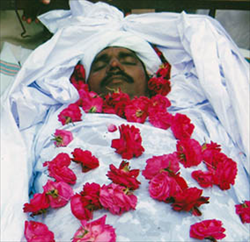
Pakistan: Abused Wife Zakia Perveen - who was attacked with acid in her face by her husband - losing her left eye (AP Photo/B.K. Bangash)
“The number of cases of violence in different categories of offenses and their province-wise breakdown is as follows. There were:
— 1384 cases of murder:
(752 in Punjab; 288 in Sindh; 266 in NWFP; 39 in Balochistan; 39 in Islamabad);
— 604 cases of honor killing:
(245 in Punjab; 284in Sindh; 14 in NWFP; 59 in Balochistan; 2 in Islamabad);
— 1987 cases of abduction/kidnapping:
(1698 in Punjab; 160 in Sindh; 64 in NWFP; 13 in Balochistan; 52 in Islamabad);
— 608 cases of domestic violence:
(271 in Punjab; 134 in Sindh; 163 in NWFP; 22 in Balochistan; 18 in Islamabad);
— 683 cases of suicide:
( 448 in Punjab; 176 in Sindh; 43 in NWFP; 10 in Balochistan; 6 in Islamabad);
— 928 cases of rape/gang-rape:
(786 in Punjab; 122 in Sindh; 7 in NWFP; 4 in Balochistan; 9 in Islamabad);
— 274 cases of sexual assault:
(227 in Punjab; 44 in Sindh; 0 in NWFP; 2 in Balochistan; 1 in Islamabad);
— 50 cases of stove burning:
(33 in Punjab; 10 in Sindh; 4 in NWFP; 1 in Balochistan; 2 in Islamabad);
— 53 cases of acid throwing:
(42 in Punjab; 9 in Sindh; 1 in NWFP; 0 in Balochistan; 1 in Islamabad);
— 1977 cases of violence were of miscellaneous nature (vanni/swara, custodial violence, torture, trafficking, child marriages, incest, threat to violence, sexual harassment, attempted murder, suicide & rape) in the four provinces and Islamabad.”
A year ago, similar media reports stated efforts were in progress on a new domestic violence law in Pakistan. In August 2009, Dawn reported that a “private bill” on domestic violence had passed in the Pakistan National Assembly, which required approval by the Pakistan Senate. The Council of Islamic Ideology (CII) in Pakistan has previously warned that a law against domestic violence will “push up divorce rates,” according to Dawn. But by December 25, 2009, ANI reported “the [Pakistan] Government has seemingly lost sight of it.” On December 25, 2009, ANI reported: “when the bill was sent to the Senate, Mohammad Khan Sheerani, of the JUI-F, raised some objections, leading to a deferment of hearing, and then the Government slept on the matter and now the bill has lapsed… to make it a law the Government was required to get the bill passed through the upper house within 90 days of its receipt.”
— In another report by Shirin Sadeghi, Pakistan group Women Protection Project’s Dr. Khola Iram states “When you talk about domestic violence in Pakistan, some men in the educated classes, for instance, say that women are not the ones who are dying, it’s the police officers, they are all males… They don’t consider citizen security as security of women also.”
— Shirin Sadeghi reports “Dr. Iram is subdued as she explains that Pakistan, a nation of over 90 million women and girls, does not have a domestic violence law.”
— Shirin Sadeghi also tells of how Pakistani women have been “married” to inanimate objects and even pigeons to save their inheritance. Shirin Sadeghi reports: “The concept of marrying a female family member to an inanimate object, such as the Koran, or an animal, is too often employed to ensure that the inheritance will never be lost. ‘We had a case in Bhawalpur where the lady was married to a pigeon just to save the inheritance. I mean, what kind of Islam is that?’ Dr. Iram says.”
Pakistan: Report on Al-Huda International – “Many girls have been ‘transformed’ by Ms Hashmi who now believe in limiting their existence to the four walls of the house”
Israel – SWC to President Obama: Halt Palestinian Authority Glorification of Terror
— SWC: “For the second time in less than a month, the Palestinian Authority (PA) has moved to publicly glorify mass murderers of innocent Israeli civilians.”
— “Just today, a street next to a Presidential compound in Ramallah was renamed in honor of Yehiye Ayash, Hamas’ arch terrorist and chief bomb maker, whose advanced techniques of suicide bombing led to the murder and maiming of hundreds of innocent Israelis on buses and in bus depots throughout the State of Israel.”
— “Join the Simon Wiesenthal Center in urging President Obama, who has focused all of his recent demands on Israel, to immediately and publicly denounce the PA’s hypocritical and dangerous embrace of Hamas heroes.”
One Stormfront forum member wrote “After living through a decade of attacks against the Confederate battle flag and school administrators suspending students who wear Dixie regalia, Virginia Gov. Bob McDonnell (R) is, like a true Johnny Reb, fighting back.”
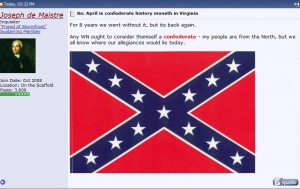
Another Stormfront forum member wrote “For 8 years we went without it, but its back again. Any WN [white nationalist] ought to consider themself [sic] a confederate – my people are from the North, but we all know where our allegiances would lie today.”
Stormfront "White Nationalist Hate Group" Forum Members Praises Virginia Governor McDonnell's Decision on "Confederate History Month"
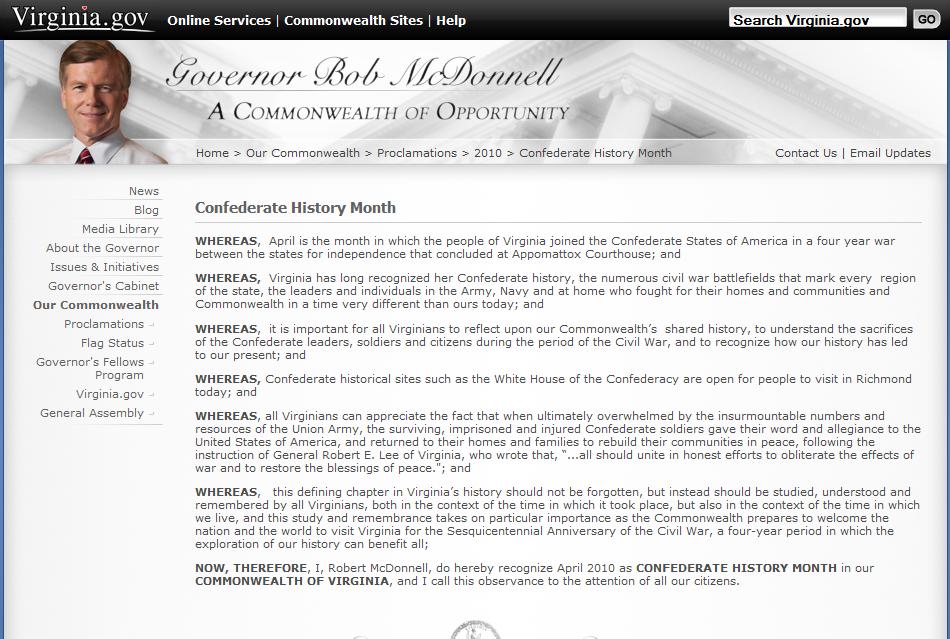
Washington Post: McDonnell’s Confederate History Month proclamation irks civil rights leaders
— Washington Post reports: “Gov. Robert F. McDonnell, reviving a controversy that had been dormant for eight years, has declared that April will be Confederate History Month in Virginia, a move that angered civil rights leaders Tuesday but that political observers said would strengthen his position with his conservative base.”
— “The two previous Democratic governors had refused to issue the mostly symbolic proclamation honoring the soldiers who fought for the South in the Civil War. McDonnell (R) revived a practice started by Republican governor George Allen in 1997. McDonnell left out anti-slavery language that Allen’s successor, James S. Gilmore III (R), had included in his proclamation.”
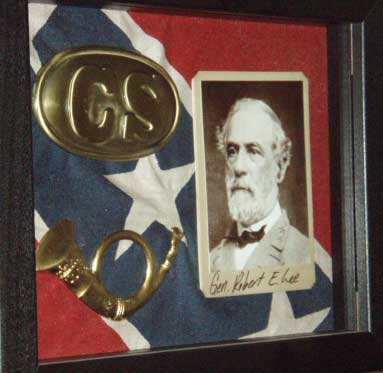
Image from Robert E. Lee Memorial in Arlington, Virginia - Managed by U.S. National Park Service - Where R.E.A.L. Held Its August 28, 2009 Demonstration
Related Reports by R.E.A.L:
Virginia - August 28, 2009: R.E.A.L.'s Jeffrey Imm Challenges Confederate Nostalgia and Racial Hate at Robert E. Lee Memorial
We Have A Responsibility — Jeffrey Imm in Arlington, Virginia: “We have a responsibility to challenge those who would use symbols of division to continue to spread hate and to challenge our shared values of equality and liberty. Reverend Timothy James of the Disciples of Christ recently stated that ‘for African Americans the confederate flag is a system of terror, oppression, separation, and racism.’ We shouldn’t need to be reminded of this. We have seen the use of the Confederate symbol of division used over and over again in our nation. We have seen the Confederate symbol of division used by the Ku Klux Klan. We have seen the Confederate symbol of division used by white supremacist organizations. Most recently, we have seen the Confederate symbol of division in the tragic terrorist attack in June on the Holocaust Memorial Museum. In Virginia and throughout our nation today, there are over 90 Neo-Confederate hate groups that use that symbol of our past divisions to spread hate and to attack our shared values of equality and liberty.”