Minneapolis: Police on the trail of Somali attackers shown in YouTube video
Day: December 24, 2009
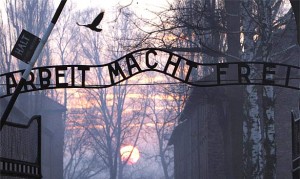
Auschwitz sign ‘stolen to fund Swedish terror attacks’ – Nazi Gang
Auschwitz sign ‘stolen to fund Swedish terror attacks’
— London Times: “The Nazi gang that ordered the theft of the infamous ‘Arbeit Macht Frei’ sign from the gates of Auschwitz concentration camp in Poland planned to sell it to fund violent attacks against the Swedish Prime Minister and Parliament, it was claimed today.”
Sweden: Hate Crimes Against Jews Increase 400 Percent
Antisemitism in Sweden (translated report)
Hate crimes against Jews, greatly increases
— Hanna Hellström
— “Notified Swedish hate crimes against Jews rose by 400 percent in the early year, in connection with the conflict in Gaza.”
— “Police figures reveal that ten percent of the notified anti-Semitic crimes about violence and abuse. JSS is estimated that there is a hate crime per day against the Jews in Sweden. The source also says that they have a closely with the police and that the work is coordinated jointly.”
— “Lena Posner-Körösi, chairman of the Central Jewish Council, says it is more and new players threatening.”
— She states that the threats have been “from both left and right, even the Christian far right, I also feel that the threat from
Muslim extremist groups have increased,” says Lena Posner-Körösi.
— “Ten years ago it was the extreme right, which was the biggest threat, now we find that left-wing extremists and radical Muslim groups are a greater threat to Jews, “says the source of the JSS.”
Pakistan: Christians Celebrate Christmas Under Threat of Attack
— “No Christmas decorations brighten the tent camp sheltering Christians left homeless by the worst violence against minorities in Pakistan this year. Instead, there is a pervasive sense of fear.”
— “The Christians have received cell phone text messages warning them to expect a ‘special Christmas present,’ they say, and are terrified of their tents being torched or their church services being bombed.”
— ” ‘Last year I celebrated Christmas full of joy,’ said Irfan Masih, cradling his young son among the canvas shelters and open ditches of the camp. But now ‘the fear that we may again be attacked is in our hearts.’ ”
— ” ‘They are threatening us, (saying) ‘We will again attack you and will not let you out of homes, we will burn you inside this time,’ he said.”
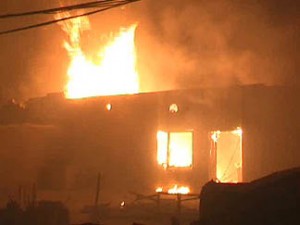
— “It was the fires that most traumatized Gojra’s Christian Colony, a neighborhood in the heart of this Punjabi city about 220 miles (354 kilometers) southwest of Islamabad. In early August, hundreds of Muslims rampaged through the dirt streets, looting and torching homes as panicked residents tried to flee and thick black smoke rose into the air.”
— “Eight Christians died — seven of them from one family trapped in a burning home.”
— ” ‘We are going to celebrate Christmas in sorrow because the whole family is hurt by this,’ said Almas Hameed, whose father was shot dead during the riots. His wife, two of his children and members of his brother’s family all burned to death.”
Human Rights Day – Pakistan Christian Congress Address and Video
US: Iran Increasingly a ‘Police State’
Congo: “Rape with Extreme Violence: The New Pathology in South Kivu, Democratic Republic of Congo”
Rape with Extreme Violence: The New Pathology in South Kivu, Democratic Republic of Congo
Original Source PLoS Medicine – by Denis Mukengere Mukwege, Cathy Nangini
Denis Mukengere Mukwege1, Cathy Nangini2,3*
1 General Reference Hospital of Panzi, Bukavu, South Kivu, Democratic Republic of Congo, 2 Social Aid For the Elimination of Rape (SAFER), Toronto, Ontario, Canada, 3 Brain Research Unit, Low Temperature Laboratory, Helsinki University of Technology, Helsinki, Finland
Citation: Mukengere Mukwege D, Nangini C (2009) Rape with Extreme Violence: The New Pathology in South Kivu, Democratic Republic of Congo. PLoS Med 6(12): e1000204. doi:10.1371/journal.pmed.1000204
Published: December 22, 2009
Copyright: © 2009 Nangini, Mukengere Mukwege. This is an open-access article distributed under the terms of the Creative Commons Attribution License, which permits unrestricted use, distribution, and reproduction in any medium, provided the original author and source are credited.
Funding: The Panzi Hospital receives funds from: PMU (Swedish Pentecostal Mission), ECHO (European Commission’s Humanitarian Aid Office), Lakaremission, UNICEF, Christian Relief Network (CRN, Norway), Norwegian Government (DFID), UNICEF – PAM, FAO – PMU, ICRC, and SAFER (via donations of medical supplies). SAFER is a volunteer-based organization that receives funds from individual donations. SAFER has also received donations from the following organizations: Canadian Auto Workers (CAW) (www.caw.ca), Rights & Democracy (www.dd-rd.ca), Canadian Embassy in Kinshasa (FCIL/CFLI program) (http://www.canadainternational.gc.ca/ken ya/developpement-development/cfli-fcil.a spx?lang=eng&highlights_file=&left_menu_ en=&left_menu_fr=&mission= ), and Global Public Affairs. The funder played no role in the decision to submit the article or in its preparation.
Competing interests: The authors have declared that no competing interests exist.
Abbreviations: CEPAC, Communauté des Eglises de Pentecote en Afrique Centrale; DRC, Democratic Republic of Congo; NGO, nongovernmental organization; REV, rape with extreme violence
* E-mail: research@saferworld.ca
Summary Points
- In eastern Democratic Republic of Congo (DRC), the destructive and sadistic behaviour systematically perpetrated by different armed groups over the last ten years signals a new pathology we classify as rape with extreme violence (REV).
- REV is devastating to populations and can permanently damage women’s reproductive capacity.
- The Panzi Hospital in Bukavu, South Kivu is one of the few established medical centres that has the capacity to treat REV cases.
- Current gaps in the provision of care for REV survivors include a lack of health care infrastructure, insufficient number of qualified psychotherapists, and challenges associated with socioeconomic reintegration.
- Trafficking of the DRC’s minerals directly assists the occurrence of atrocities.
Introduction Top
On any given night in eastern DRC, armed groups of men will overrun a village and divide into bands of three to five, forcing themselves into houses where they seize and serially rape women and young girls. Some mutilate female genitals with guns, pieces of glass, wood, or heated plastic. Some take their victims to the forest and torture them as sex slaves for days, months, or years.
As Stephen Lewis, the former UN special envoy for HIV/AIDS in Africa has said ([1, p. 32]), “the capacity for brutality by so many perpetrators – and on the flip side, the capacity for indifference by so many witnesses – is the ugly apex of a trend gone unchecked.”
This ugly apex has characterized the sexual violence landscape throughout history, across cultures, during times of conflict, and behind closed doors. It is in wartime, however, that rape becomes a coordinated, deliberate, en masse weapon of terror. Systematic rape is now understood as the defining tactic of modern conflicts [2]. The mass rape of hundreds of thousands of women have been reported in Europe and Nanking during the Second World War [3], Bangladesh [3], Rwanda [4], and the former Yugoslavia [4]. In both Rwanda and Yugoslavia, the International Criminal Tribunal has recognized rape as a means of ethnic cleansing and genocide [5],[6].
The ongoing violence in the eastern DRC is exemplary of the use of rape to not only terrorize, displace, and demoralize, but also to deliberately incur severe sexual trauma on a level that merits analysis in and of itself. This tactic has escalated over the past ten years in eastern DRC with impunity, garnering little international attention or response. The latest figures estimate 1,100 rapes per month as assessed between November 2008 to March 2009 [7]. One of us (DM) is a gynaecologist and obstetrician who has been treating sexual violence survivors in South Kivu for a decade and as such is a first-hand witness to the brutality and scale of this kind of rape. The purely destructive and sadistic behaviour perpetrated by different armed groups signals a new pathology in South Kivu that we classify as rape with extreme violence (REV).
In this article, we document the medical consequences of REV through the lens of the Panzi Hospital in Bukavu, South Kivu, one of the few established medical centres that has the capacity to treat REV cases. In the ongoing conflict of the DRC, much remains unknown and undocumented; we draw heavily on a few reports by nongovernmental organizations (NGOs) and other observers about the use and impact of rape in the DRC, and on our own extensive experience in the field.
Rape with Extreme Violence Top
We consider rape an efficient form of biological warfare that is inexpensive to implement, effective over large areas, and does not particularly endanger the attackers. Its effectiveness relies on the perception, deeply embedded in patriarchal societies, that women’s sexuality is a prefecture of male ownership, and it is linked to the persistence of unequal gender relations and particularly to the way women’s bodies are regarded ([8], p. 45). Its impact is multiplied when the woman becomes pregnant and the attack is then passed on to the next generation [9].
Rape with extreme violence, as evidenced in the DRC today, is implemented in three ways: (i) gang rape, usually by three or more men, leading to a high risk of injury; (ii) genital mutilation; and (iii) intentional transmission of sexually transmitted diseases such as chlamydia and HIV. Extremely violent rape has been documented in the report of 492 REV survivors in South Kivu: 57.3% of the women were convinced that the extreme violence and cruelty inflicted on them by armed forces was “proof that there was a plan to destroy and exterminate the Congolese people or in any case the communities that these women belonged to” ([8], p. 48). Seventy-two percent of women reported that they were tortured during the rape itself (beaten, wounded with machetes, genitally mutilated/burned by drops of plastic melted by flame), and 12.4% had had objects inserted into their vaginas (sticks, bottles, green bananas, pestles coated in chili pepper, rifle barrels); some women, after being raped, were killed by shots fired into their vaginas ([8], p. 34). Many women interviewed also believed that the rapes are aimed at destroying women’s identity by means of “ethnic cleansing,” and that spreading HIV/AIDS and impregnating women are also deliberate acts ([8], p. 49). Such a strategy was prevalent in the Rwandan genocide ([10], p. 49]).
The Panzi Hospital Top
The Panzi Hospital is located in Bukavu, South Kivu, a city that has been relatively secure in recent years compared with surrounding areas in the forest and in North Kivu where there are direct military clashes. In terms of sexual violence treatment, it is the best-funded hospital in South Kivu, primarily receiving funds from Communauté des Eglises de Pentecote en Afrique Centrale (CEPAC), the largest democratically governed church network in the DRC, and external NGOs. The Panzi Hospital is a referral hospital, receiving the most severe REV cases from smaller centres, owing to its expertise in surgical repair of urogenital trauma, including urological-genital and rectal-genital fistulas, simple and diverse genital and/or anal wounds, diverse genital mutilation, and other complications such as fractures of the pelvis and femur.
Despite its support network and the overwhelming need for the services it provides, the Panzi Hospital continually faces a shortage of money, supplies, and resources to expand its base of qualified personnel. These shortfalls have, on occasion, impacted the hospital’s ability to provide core medical services to sexual violence survivors. Currently the Panzi Hospital is running at maximum capacity, treating ten sexual violence survivors per day and devoting 200 of its 350 beds to these cases.
Sexual violence survivors are offered free treatment at the Panzi Hospital. Patients are first triaged, and those suffering from tuberculosis, malnutrition, or psychosis are identified. Screening for HIV, syphilis, and vaginal infections is provided, and if the rape has occurred within 72 hours, patients receive postexposure prophylaxis. In-hospital care is provided for those needing surgical treatment resulting from rape or childbirth trauma. Usual cases include urogenital fistula, enteric fistula, and trauma to the perineum.
Psychological screening and treatment are also provided by a welfare worker, social assistant, or psychologist, depending upon the severity of the trauma. As part of the spiritual therapy provided at the Panzi Hospital, the hospital chaplain helps in domestic reconciliation between husbands and wives. Husbands are counselled not to blame their wives for their traumas and the couple is counselled to forgive their aggressors to overcome their anger and bitterness.
From 1999 to August 2006, the Panzi Hospital treated 9,778 patients, of which 7,519 (76.9%) were confirmed as rape survivors. Table 1 shows the physical health profile of these patients. Three quarters of patients were in the 6- to 45-year age group. Attacks on women of child-bearing age severely impacts family life (to the extreme that many women are abandoned by their husbands) or the future prospect of one, brought on by the shame of rape and the associated psychological and physical consequences.
doi:10.1371/journal.pmed.1000204.t001
In an analysis of 836 raped women treated at the Panzi Hospital in 2006, the majority were married (56%) or widowed (21%); a sizeable fraction of women were abandoned by their husbands (11%). The majority of women were attacked at home (55%), in the field (19%), or in the forest (17%).
The Panzi Hospital is building its efforts to empower survivors who have nowhere to go after treatment and who often have limited skills. A number of programs are ongoing at the hospital, including: baking, soap works, sewing, embroidery, soy-milk/fruit juice making, tanning of leather goods, literacy, and microfinancing. Between 1999 and August 2006, 3,049 women have been enrolled in these programs.
Impact of Rape Top
The war in eastern DRC has widowed a large number of women, forcing them to become heads of households without having had any preparation for this role. The war has destroyed women’s means of production and, as a result, they live below the poverty line and many rely on food aid (when available) ([8], p. 25). Many women and girls have also been forced into survival sex, which makes them particularly vulnerable to sexual violence. An increase in domestic violence—a common fallout of war—has also been observed, as unemployment among men and uncertainty regarding the country’s political future is on the rise ([8], p. 26).
REV has devastating consequences: it damages social cohesion and the identity of the rape survivor, which is exacerbated when rape is committed in public, searing shame into the collective memory of the community. The long-term outcomes translate into the slow death of a population incapable of reproducing. The impact of military rape on the population as a whole has far-reaching effects that ultimately undermine national, political, and cultural solidarity; it confuses the loyalties of all survivors and the identities of subsequent generations: “There is more than one way to commit genocide. One way is mass murder, killing individual members of a national, political or cultural group. Another is to destroy a group’s identity by decimating cultural and social bonds. Martial rape does both.” ([11], p. 8).
Gaps in the Provision of Care Top
It is tremendously important that access to medical care be established for as many rape survivors as possible. There are three main gaps in the provision of care: lack of health care infrastructure, an insufficient number of qualified psychotherapists, and the socioeconomic reintegration gap. A functioning health care system needs to be established to define health territories or areas that can effectively manage sexual violence cases. Such cases can be identified and treated at this level, and, if necessary, the decision to transfer patients to a superior facility can be made. In this way, the access to health care would become more evenly distributed across the province, and would, additionally, alleviate the incoming patient load on the Panzi Hospital, which treats the most severe cases. The Panzi Hospital could participate in the training of personnel and play an advisory role in the system; however, money and resources remain the biggest obstacles in establishing such a network. Medical care, while essential, is but the first milestone to be reached for a holistic recovery. Psychosocial treatment is essential to help re-establish dignity and the desire to live. However, the sheer volume of rape has created an enormous gap in psychosocial care in a region where the number of qualified psychotherapists is very limited. Given the large number of survivors and the long period of time required for healing, it is necessary to train social workers in each health region and help them get settled for the long term to allow localized provision of care.
Of approximately 3,600 women treated per year at the Panzi Hospital, about one-third have sufficient economic support to allow them to recover their dignity and place in society. Some provision of social-economic care has been provided at the Panzi Hospital since last year, including programs for trade apprenticeship, management of microfinance grants, informal education, and literacy teaching. Daycare is also provided for schoolgirls who have children as a result of rape.
Gaps in Information Top
The Panzi Hospital is one of the few establishments in the DRC maintaining detailed records of sexual violence reports. This is important not only for characterizing and assessing the consequences of the crisis, but also for understanding the underlying factors that fuel REV.
In 2002, a UN Panel of Experts provided extensive documentation supporting the link between economic exploitation and human rights abuses, revealing that various armed groups have built up a self-financing war economy centred on mineral exploitation ([12], p. 5) (Box 1). The Panel also determined that companies and individuals operating in the DRC who, directly or indirectly, contribute to the revenues of the “elite network”—a small core of political and military/rebel elites and business persons involved in exploitation activities ([12], p. 6)—“contribute to the ongoing conflict and to human rights abuses” ([12], p. 32). We examined whether Panzi Hospital data support the link between sexual violence and mineral wealth, and we compared regions in South Kivu characterized by REV with their known mineral resources. Figure 1 shows the regional breakdown of rape location from Panzi Hospital records (1999–Aug 2006) and corresponding mineral assets compiled from publicly available sources. The area of the circles is proportional to the fraction of the hospital’s survivors attacked in these regions. The areas are centred around: Walungu (3,251 [33.2%]), Kabare (3,050 [31.2%]), Bukavu (1499 [15.3%]), Shabunda (951 [9.7%]), and Uvira (785 [8.0%]). A small proportion (242 [2.5%]) of cases treated at the Panzi Hospital occurred outside of South Kivu. Since data regarding the mode of transport to the hospital were not available, the map has not been corrected for transport bias.
(A) Regional breakdown of rape location of sexual violence survivors who received treatment at the Panzi Hospital (1999-Aug 2006). The Bukavu area, where the Panzi Hospital is located, is shown in red. (B) Known mineral deposits near the five regions (black dots) identified in the left panel. Sources: [15]–[18].
doi:10.1371/journal.pmed.1000204.g001
Box 1. Mineral Wealth in Regions Where REV Is Rampant
Publicly available data indicate that the five foci of REV in South Kivu (Figure 1) are rich in mineral resources and under the control of armed forces.
The Walungu region is rich in gold and cassiterite (a tin oxide mineral), and is one of the administrative territories of the FDLR (Democratic Liberation Forces of Rwanda), along with Kabare, Shabunda, and Uvira [19]; the FARDC (Armed Forces of the Democratic Republic of Congo) have also been documented as being actively involved in gold and cassiterite mining in the Walungu area [15]. A 210-km transect (the Twangiza-Namoya gold belt, gold box in Figure 1B), running southwest from Bukavu through the Walungu area, contains large gold deposits [17].
Kabare (Nindja) has deposits of coltan (which contains tantalum, widely used in electronics manufacture). The FDLR [19] and several other militias have been implicated in the control of Kabare mines [20], and Uvira is close to gold and cassiterite reserves [16].
Shabunda is a small mining town extremely rich in mineral resources, especially gold, coltan, and cassiterite, and is surrounded by jungle. It has been largely held by Rwandan forces and was heavily besieged by Mai-Mai militiamen who kidnapped townswomen for use as sex slaves. In 2002, the Guardian reported 2,000 women still missing [21]. Rebel forces have set up their own mining company in Shabunda (Great Lakes Mining Company), which monopolizes the exploitation of natural resources [22].
The correlation between sexual violence and mineral wealth needs to be consolidated with more data and further analysis, and is crucial for informing better REV response and prevention strategies.
Gaps in International Response Top
Despite the legal structures in place recognizing rape as a crime against humanity and a war crime [13], sexual violence remains low on the international radar. While mass rape in the eastern DRC continues to be documented widely by NGOs and the UN, this has yet to curb the use of REV and end impunity for such crimes against humanity.
Part of the indifference may be a result of misrepresentation of the conflict in DRC as a “civil war.” In fact, the Congo conflicts have involved the armies of seven African states, and criminal groups from the armies of Rwanda, Uganda, Zimbabwe, and the DRC have benefited by building up “a self-financing war economy centred on mineral exploitation” ([12], p. 5]). Violence is indeed carried out by “warlords and drug-crazed child soldiers” [14], but the driving mechanism behind the war is a rational system that ultimately benefits the military, commercial, and political elites from the DRC and other countries [12]. Finding the political will to restrain the activity of the elite networks and their supporters is “the most important element in effectively halting the illegal exploitation of resources” [12], p. 28]. Only then can the new pathology of rape with extreme violence be eradicated. Our recommendations for addressing REV in DRC are contained in Box 2.
Box 2. Recommendations for Addressing REV in DRC
We make the following recommendations in response to five key factors that contribute to the widespread deployment of REV:
- Ensure that leaders in the eastern DRC and neighbouring regions take responsibility and act to end the atrocities in DRC.
- Help create and train a national army and police force that are ready and able to protect civilians.
- Develop a mechanism for the traceability of minerals as a way forward for ultimately reducing the reliance of armed groups on DRC’s resources.
- Address impunity for sexual violence in the International Criminal Court (ICC) and the current national courts, including the period before the creation of the ICC.
- Assist all organizations that provide psychological, medical, legal, and social care to REV survivors.
Supporting Information Top
Alternative Language Summary S1.
French translation of the summary points by Dr. Olivier Couture.
(0.03 MB DOC)
Author Contributions Top
ICMJE criteria for authorship read and met: DMM CN. Wrote the first draft of the paper: CN. Contributed to the writing of the paper: DMM.
References Top
- Lewis S (2007) Stephen Lewis calls for a new UN initiative to end sexual violence in the eastern region of the DRC. Nairobi. Press release. Available: http://stephenlewisfoundation.org/news_speech_item.cfm?news=1990&year=2007 . Accessed 20 March 2009.
- The PLoS Medicine Editors (2009) Rape in war is common, devastating, and too often ignored. 6(1): e1000021. doi:10.1371/journal.pmed.1000021.
- Brownmiller S (1975) Against our will: men, women, and rape. New York Simon and Schuster, 472 p.
- United Nations Office for the Coordination of Humanitarian Affairs OCHA (2008) Sexual and Gender-Based Violence in Conflict: A Framework for Prevention and Response. Available: http://ochaonline.un.org/News/InFocus/Se xualandGenderBasedViolence/AFrameworkfor PreventionandResponse/tabid/4751/language/en-US/Default.aspx . Accessed 08 August 2009.
- Prosecutor v. Furundzija (1995) Case no. IT-95-17/1 (International Criminal Tribunal for the former Yugoslavia, Trial Chamber).
- Prosecutor v. Jean Paul Akayesu (1996) Case No. ICTR-96-4-T (International Criminal Tribunal for Rwanda, Trial Chamber).
- Twenty-seventh report of the Secretary-General on the United Nations Organization Mission in the Democratic Republic of the Congo. United Nations Security Council. Available: http://www.reliefweb.int/rw/RWFiles2009.nsf/FilesByRWDocUnidFilename/MUMA-7QR3FD-full_report.pdf/File/full_report.pdf . Accessed 02 August 2009.
- Women’s Bodies as a Battleground:Women and girls during the war in the Democratic Republic of Congo, South Kivu (1996–2003) Réseau des Femmes pour un Développement Associatif (RFDA), Réseau des Femmes pour la Défense des Droits et la Paix (RFDP), International Alert. Available: http://www.international-alert.org/pdf/sexual_violence_congo_english.pdf . Accessed 25 November 2009.
- Shanks L, Schull MJ (2000) Rape in war: the humanitarian response. Canadian Medical Association Journal 163: 1152–1156. Find this article online
- Rehn E, Sirleaf ES (2002) Women, War, Peace: The Independent Experts’ Assessment on the Impact of Armed Conflict on Women and Women’s Role in Peace-Building.Progress of the World’s Women 2002, Vol. 1. UNIFEM. Available: http://www.unifem.org/resources/item_detail.php?ProductID=17 . Accessed 08 August 2009.
- Card C (1996) Rape as a weapon of war. Hypatia 11: 5–18. Find this article online
- (16 October 2002) Final report of the Panel of Experts on the Illegal Exploitation of Natural Resources and Other Forms of Wealth of the Democratic Republic of the Congo. United Nations Security Council. Available: http://www.undemocracy.com/S-2002-1146.pdf . Accessed 25 November 2009.
- (17 July 1998) Rome Statute of the International Criminal Court. Available: http://untreaty.un.org/cod/icc/statute/romefra.htm Accessed 25 November 2009.
- Gettleman J (2008 17 October) Rape victims’ words jolt Congo into change New York Times. Available: http://www.nytimes.com/2008/10/18/world/africa/18congo.html . Accessed 23 April 2009.
- (2008 9 October) Control of mines by warring parties threatens peace efforts in eastern Congo. Global Witness. Available: http://www.globalwitness.org/media_library_detail.php/663/en/control_of_mines . Accessed 20 April 2009.
- Muhigirwa F (2009) Coltan artisanal mining in South Kivu, DR Congo. Challenges and Perspectives. CEPAS (Centre d’Etudes Pour l’Action Sociale). Available: www.ua.ac.be/download.aspx?c=USOS&n=69905&ct=66168&e=180526 . Accessed 20 April 2009.
- Banro Corporation Web site (2009) Available: http://www.banro.com/s/Properties.asp. Accessed 20 April 2009.
- Shamika Resources Web site. Available: http://www.shamikaresources.com/ Accessed 20 April 2009.
- Rafti M (2005) South Kivu: a Sanctuary for the Rebellion of the Democratic Forces for the Liberation of Rwanda Institute of Development Policy and Management, University of Antwerp. Available: http://www.ua.ac.be/objs/00152969.pdf. Accessed 19 April 2009.
- Barouski D Blood minerals in the Kivu provinces of the Democratic Republic of Congo Global Policy Forum. Available: http://www.globalpolicy.org/security/issues/congo/2007/0601bloodmin.htm . Accessed 19 April 2009.
- Astill J (2002 24 July) Congo: an everyday story of horror and grief. The Guardian. Available: http://www.guardian.co.uk/world/2002/jul/24/congo.jamesastill . Accessed 5 April 2009.
- Mampasu C (2002 March) Shabunda: the ‘forgotten Kosovo’ Humanitarian Exchange Magazine. Available: http://www.odihpn.org/report.asp?id=2410. Accessed 24 April 2009.
Report: Communist China Mass Murderer’s Image on White House Christmas Tree Ornament
FOX News reports: White House Christmas Decor Featuring Mao Zedong Comes Under Fire
— Communist Totalitarian Mass Murderer’s Image on White House Christmas Tree Ornament

— New York Times: For the Holidays, White House Uses Barneys Decorator
— The Globe and Mail book review by Geoffrey York on Mao: The Unknown Story:
…. a shocking new book has concluded that Mao was the bloodiest mass murderer in history, a sadistic thug who enjoyed torture and was willing to sacrifice half of China’s population for his dream of global domination.
The biography, based on 10 years of archival research and interviews with people in Mao’s inner circle, is a stunning challenge to China’s conventional view of the Communist leader.
The book estimates that Mao caused the deaths of 70 million people in peacetime, making him a far worse killer than Hitler or Stalin. It portrays him as a sociopath who loved killing and allowed millions of peasants to starve to death while he exported food to pay for his nuclear weapons; a man whose legendary achievements in the Long March were an invention; a man who turned China into a cultural desert of misery and violence, while maintaining dozens of luxury villas and a troupe of female sexual partners.
One of the book’s two authors is Jung Chang, the Chinese writer whose family memoir, Wild Swans, became one of the biggest-selling non-fiction books of all time. Her co-author is her husband, Jon Halliday, a historian who gained access to Soviet archives on Mao.
Their 814-page biography, Mao: The Unknown Story, is to be published in Canada and the United States in October. The book is already a bestseller in Britain, where critics have hailed it as a major work. A Chinese translation is planned, although the Chinese edition is unlikely to circulate outside Taiwan and Hong Kong.
China’s rulers have acknowledged that Mao made some ‘serious mistakes,’ but only ‘in his old age.’ And they continue to praise him lavishly, decades after his death. ‘Comrade Mao Zedong was a great Marxist; a great proletarian revolutionary, strategist and theorist; a great patriot and national hero,’ President Hu Jintao said on the 110th anniversary of Mao’s birth in 2003.
The new biography, however, paints Mao as bloodthirsty tyrant who was never interested in Marxism or helping China’s impoverished peasants, but was obsessed only with personal power and military dominance. He rose to power because of his ruthlessness and cruelty, and because he was installed and financed by Moscow. Beginning with his earliest purges, in which he ordered the torture and death of thousands of Red Army soldiers in 1929, he believed in violence.
As early as 1927, the biography says, Mao was lauding China’s peasant associations for their use of terror and torture to break down the dignity of their enemies. He exulted that their violence was ‘wonderful’ and ‘a kind of ecstasy never experienced before.’
After seizing national power in 1949, Mao launched a brutal campaign that killed three million ‘counter-revolutionaries.’ Executions were usually done in public. ‘His aim was to scare and brutalize the entire population, in a way that went much further than either Stalin or Hitler, who largely kept their foulest crimes out of sight,’ the authors write.
By the late 1950s, Mao was starving his people to pay for his dream of making China a nuclear-armed superpower. He treated the peasants as dehumanized slave labourers, feeding them less than Auschwitz death-camp inmates. The authors estimate that during the Great Leap Forward, almost 38 million Chinese died of starvation, the worst famine in recorded history.
Another three million people died violent deaths in the Cultural Revolution, and Mao enjoyed seeing films of his enemies being tortured and humiliated, the authors say. In some provinces, the killings reached such a frenzy that cannibalism was practised.
Throughout all of this, Mao repeatedly told his aides that he was willing to let half of China’s population die for the cause of world revolution and his superpower dream.
Even the myth of Mao’s heroism in the Long March of 1934-35 is exposed as a sham. His Nationalist enemies deliberately allowed his army to escape along a prearranged 9,000-kilometre route, and Mao himself was carried most of the way on a bamboo litter.
New York Times: A bleak anniversary : Mao the mass murderer — By Jonathan Mirsky
It is impossible to imagine official homage in Germany for Hitler or in Russia for Stalin. And yet Mao was a destroyer of the same class as Hitler and Stalin. He exhibited his taste for killing from the early 1930’s, when, historians now estimate, he had thousands of his political adversaries slaughtered. Ten years later, still before the Communist victory, more were executed at his guerrilla headquarters at Yan’an.
Hundreds of thousands of landlords were exterminated in the early 1950’s. From 1959 to 1961 probably 30 million people died of hunger — the party admits 16 million — when Mao’s economic fantasies were causing peasants to starve and he purged those who warned him of the scale of the disaster.
Many more perished during the Cultural Revolution, when Mao established a special unit, supervised by Prime Minister Zhou Enlai, to report to him in detail the sufferings of hundreds of imprisoned leaders who had incurred the chairman’s displeasure.
One of the chairman’s secretaries, Li Rui, wrote recently, “Mao was a person who did not fear death, and he did not care how many were killed.” The writers of the Kaifang article tell us what this meant for China: “Mao instilled in people’s minds a philosophy of cruel struggle and revolutionary superstition. Hatred took the place of love and tolerance; the barbarism of ‘It is right to rebel!’ became the substitute for rationality and love of peace. It elevated and sanctified the view that relations between human beings are best characterized as those between wolves.”
It is common in academic circles, not only in China but in the West, to consider Mao as a thinker, guerrilla leader, poet, calligrapher and literary theorist. Mao specialists tend to divide his career into two periods: before 1957, when Mao “the visionary” fought his way with tenacity and brilliance to party leadership and set about transforming China from a fragmented, backward society into a unified nation; and after 1957, in which Mao became power-crazed and dragged China into violence and economic stagnation.
The signatories of the Kaifang broadside, however, see Mao whole: “Under Mao, the ideological obsession with ‘attacking feudalism, capitalism and revisionism’ severed links with traditional Chinese culture, with modern Chinese culture and with Western civilization, deliberately placing the country beyond the mainstream of human civilization.”
This seems reasonable. Yet few of Mao’s closest comrades, or their successors today, ever admitted publicly, even after his death, that from his earliest years of authority whatever Mao proposed, encouraged or commanded was underpinned by the threat of death. This was also the secret of Stalin’s power, and of Hitler’s. The Kaifang writers note that “Mao Zedong’s writings poisoned the soul and the language of the Chinese race; and his violent, hate-filled, loutish language remains a problem to this day.”
In 1973 Mao suggested, apropos of Hitler, that the more people a leader kills, the more people will desire to make revolution. Mao would have approved the killing of unarmed protesters in spring 1989 not only in Tiananmen but in dozens of cities throughout China, and would have hailed the party’s “hate-filled” insistence to this day that the 1989 demonstrators were criminals who deserved what they got.
At a recent American seminar on Mao a professor from Beijing who specializes in Mao studies asked me if I was suggesting that the millions of Chinese who admire and love Mao are revering a mass killer. I replied that such veneration was China’s tragedy.
Germany: Time reports on Rise in Nazi Violence
Iran: Court in Iran refuses to release French student Clotilde Reiss
— London Times reports:
— “A Tehran court has ordered that a teacher from Lille must remain under house arrest at the French Embassy after hopes for her release were set back by Franco-Iranian tensions over a prisoner swap.”
— “After a three-hour hearing, Clotilde Reiss was told that she would be summoned again before the conclusion of her trial on charges of spying and provoking unrest. President Ahmadinejad raised the prospect last week that Ms Reiss, who was arrested after the anti-government demonstrations in June, could be nearing the end of her ordeal as a pawn between Tehran and Paris. In Copenhagen on Friday President Ahmadinejad said that Tehran was eager to resolve the case, and that this would happen if French leaders ‘correct a little their behaviour’.”
— “French officials said this was a reference to Ali Vakili Rad, an Iranian serving a life sentence in France for the 1991 murder in Paris of the Shah’s former Prime Minister, Shapour Bakhtiar. At his trial, Rad said that he had been acting on orders from Tehran when he stabbed Bakhtiar more than 20 times.”